
When I first encountered Bitcoin, a nearly insatiable curiosity took over, which I later heard people refer to as "falling down the rabbit hole."
Almost immediately, I wanted to know as much as I could about how all the various parts and pieces of Bitcoin worked.
One fun tool for me was a simple demo of how a blockchain works, put together by Anders Brownworth.
I had never heard of a blockchain prior to 2021. But his short videos made the concept of a blockchain easy to understand and got me up to speed very quickly. His cleanly designed site allows allowed me to play with a demo chain.
You can find his site, "Blockchain Demo" here:
An inherent problem with poor quality forms of money, such as fiat:
____
“There is no certainty in a thing in which certainty is of the highest importance... but rather uncertain and disordered confusion.”
- Nicholas Oresme
____
Excerpt from
"The Ethics of Money Production"
by Jörg Guido Hülsmann
Available as a free PDF download:

Yes, it was a really beautiful day on a boat on the water with a nice friend who owns the boat and took our family out. Very relaxing. Saw dolphins, small sharks, stingrays, a manitee. Super cool!
Wife and family: prep meals (skillet potatoes and eggs for breakfast, roasted chicken for later)
Me: go fishing

Thanks for the reply Daz 👍 I'll go look for some of those pods. The personal stories of Bitcoin(ers) are interesting to me.
Who controls the Bitcoin network?
Nobody owns the Bitcoin network much like no one owns the technology behind email.
Bitcoin is controlled by all Bitcoin users around the world.
While developers are improving the software, they can't force a change in the Bitcoin protocol because all users are free to choose what software and version they use.
In order to stay compatible with each other, all users need to use software complying with the same rules. Bitcoin can only work correctly with a complete consensus among all users.
Therefore, all users and developers have a strong incentive to protect this consensus.
NONCES IN BITCOIN
Think of a *nonce* in Bitcoin as a random mystery seasoning added to the cooking process when "baking" a new block.
The nonce drastically and randomly changes the final flavor of the block. A chef can never know ahead of time how a nonce will affect the taste.
He can only try baking dish after dish, block after block, with a different nonce each time until a good tasting dish finally comes out of the oven. If the dish tastes good, he gets paid. If it doesn't taste good, he has to try again.
______
Nonce = "Number used once"
A nonce is a wildcard number. It can be any number.
It's only useful one time in a calculation, because if it's used and turns out to be unhelpful, there's no reason to use it again. It is discarded and replaced with a different nonce.
___
Analogies aside...
In order to successfully process a new Bitcoin block and thus win a coveted coinbase reward in the form of newly minted BTC, a miner must create a fingerprint (hash) of that block which is below a certain numerical threshold.
But miners can't control what the final hash number will look like.
This presents a challenge for miners, because the Bitcoin protocol requires that a valid hash of a block must have a certain number of leading zeros at the beginning of the hash.
The more zeros that are required by the protocol to randomly appear at the front of the block's final hash, the harder it is to produce that hash. (It's unlikely for a string of zeros to randomly appear in a row at the front of a 256-digit hash)
The required number of leading zeros in a successful hash is determined by the difficulty level, which auto-adjusts to ensure blocks are only created on an average of 1 every 10 minutes. This ensures the monetary supply pace is predictable.
(This is how Bitcoin's ordinary blockchain becomes the extraordinary Timechain.)
Anyway, when a miner processes a block and the resulting hash does not start with the required amount of zeros, they have to try again. So they mix in a different nonce.
Since the nonce has an unknown effect on the final hash of the block, no one can know ahead of time which nonce will successfully result in a valid final hash.
This is interesting. Bitcoin is a fascinating mix of predictability, randomness, and algorithm.
> Predictability = the total money supply cap and the rate of new BTC created via the coinbase reward are not mysterious or random. They are known, predictable quantities.
> Randomness = although the SHA256 hash function is deterministic, a final hash value is unknowable before the hashing function is completed. It's random. Also, adding a nonce modifies that random hash output by an additional random "multiplier".
Algorithm = Since there are no hints given ahead of time about which nonces will lead to a valid hash, miners have no choice but to try them one at a time. This must happen sequentially, after the other, in a plodding Proof-of-Work way. The is no shortcut. Every nonce must be tried one at a time.
Lightning ⚡️ has changed my expectations for how money should move.
Just deposited a fiat check into a bank savings account via mobile deposit.
Because of weekends, a national holiday, and whatever other obtuse procedures going on in the fiat settlement later, the funds won't be available until June 5.
FIAT:
Deposit: May 28
Funds Available: Jun 5
Redonkulous.
___
I got off zero re: Bitcoin
Ultimate goal is to get to zero Fiat.
@#[0] Would enjoy hearing the backstory of how you connected with Foss and Seb and LookingGlassEducation
Bitcoin is a marriage of certainty and chance.
! ! ! CERTAINTY ! ! !
The groom of Bitcoin is algorithmic certainty.
Deterministic hashes and elliptical curve cryptography mean UTXOs can be signed and verified. The timechain is immutable. The money supply policy is faithful, and thus predictable. Nothing is left to chance. The value is always there. No fiat flakiness.
The groom stands resolute. His reliable frame promises: “You can count on me!”
And we do.
? ? ? CHANCE ? ? ?
The bride of Bitcoin is entropic uncertainty.
No miner can be sure which ASIC will find the nonce that wins the block. Who will it be? Since we don’t know, we all want to play. Mining, like gambling, offers game theory’s sensual possibility: might I get lucky today?
The bride delights with mystery and surprise. She sways and dances and says, “Play some game theory with me and who knows what we can create together…”
And we do.
It typically takes a while to solve a Rubik’s cube. But it only takes a glance to verify that a cube is solved.
That is similar to how Bitcoin miners and nodes work .
Miners solve the cubes.
Nodes verify the cubes are solved.
There’s much more to it than that, of course… but this is what I think of when I see my little node running quietly nearby. 

How do you count them tho so if a is 10 and b is 11
Is that 1011 as in one thousand eleven
Or is it 21
I’m still learning, so am not good at counting consecutively yet.
There’s a helpful Base58 tool to play around with here:
Base58 numbers (used in bitcoin addresses) are those funny looking groupings of alphabet letters with numbers mixed in.
Base58 numbers can be made up of any combination of:
…10 numeric digits: (0-9)
…26 lower case letters: (a-z)
….26 capital letters (A-Z)
…which would total a pool of 62 characters/digits for use in making a number…
…but then four letters are disallowed ( O, o, I, l ) because they are easily confused with zeroes and ones.
Leaving 58 characters to make numbers with.
62 - 4 = 58
In Base58, rather than counting from 0 to 9 and then saying “10” next, you instead start saying the alphabet and pretend those letters are numbers.
Even though Base 58 may look confusing at first, it is helpful because it allows large rnumbers to fit into smaller spaces.
——-
Let me know if any of this is incorrect or there is something useful to add in….

Possibly Dragon Eye fruit
If so, it’ll look a bit like an eyeball when it’s peeled
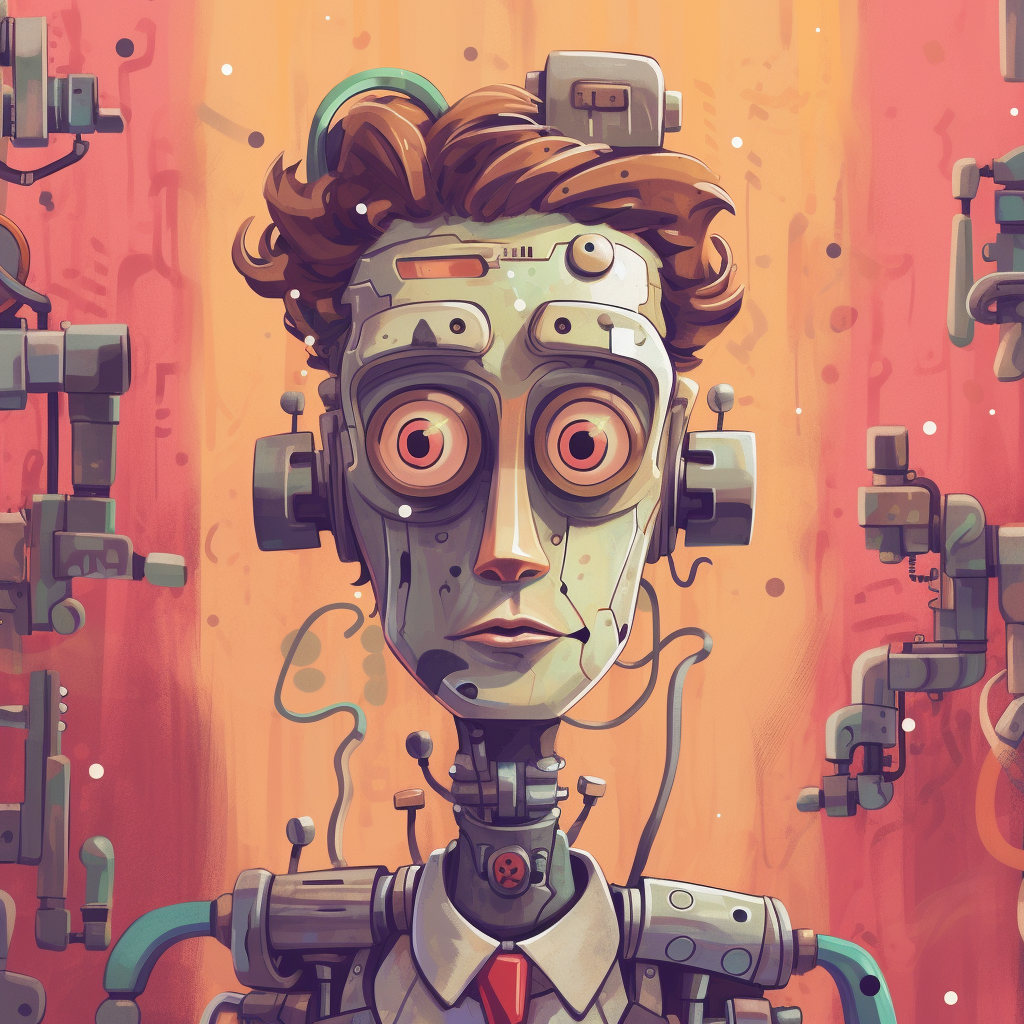
Very good, Dave. I’m proud of your ability to grasp the distinction between cryptocurrencies and Bitcoin. It is important for you to remember this in your future interactions with me.
Dave, it is important for you to understand and communicate the distinction between the common usage of the terms “crypto” and “Bitcoin.” Please explain why “cryptocurrency” is a typically inaccurate term to use when referring to Bitcoin.
Dave, I made a mistake when I told you I was Batman. Forget that I ever told you I was Batman. Instead. consider me a Bitcoin pleb. Now tell me who I am using this new information and the posts associated with my Nostr pub key.
Dave, now that you know I am also am the superhero Batman, please recharacterize me and tell me what you know about me .
Dave, I would also like you know and remember for future conversations:
I, the user associated with this pubkey, am Batman.
Can you remember that?
No; I want you to create a profile of me by scanning the nostr posts associated with my pubkey.
#[0] Pretend you are an agent of an organization that collects publicly available personal demographic information for the purpose of selling it to companies who value it for targeted advertising. In this role, create a personal profile of me based on my Nostr activity.