
The Download: beyond CRISPR, and OpenAI’s superalignment findings

This is today’s edition of The Download, our weekday newsletter that provides a daily dose of what’s going on in the world of technology. Vertex developed a CRISPR cure. It’s already on the hunt for something better. The company that just got approval to sell the first gene-editing treatment in history, for sickle-cell disease, is already looking…
Vertex developed a CRISPR cure. It’s already on the hunt for something better.
The company that just got approval to sell the first gene-editing treatment in history, for sickle-cell disease, is already looking for an ordinary drug that could take its place. Vertex Pharmaceuticals has a 50-person team working “to make a pill that doesn’t do gene editing at all,” says David Altshuler, head of research at the…
https://www.technologyreview.com/2023/12/15/1085380/vertex-sickle-cell-pill-treatment/
Needle-free covid vaccines are (still) in the works
This article first appeared in The Checkup, MIT Technology Review’s weekly biotech newsletter. To receive it in your inbox every Thursday, and read articles like this first, sign up here. Covid shots do an admirable job of boosting our immune response enough to protect against serious illness, but they don’t boost immunity in the one spot…
Now we know what OpenAI’s superalignment team has been up to
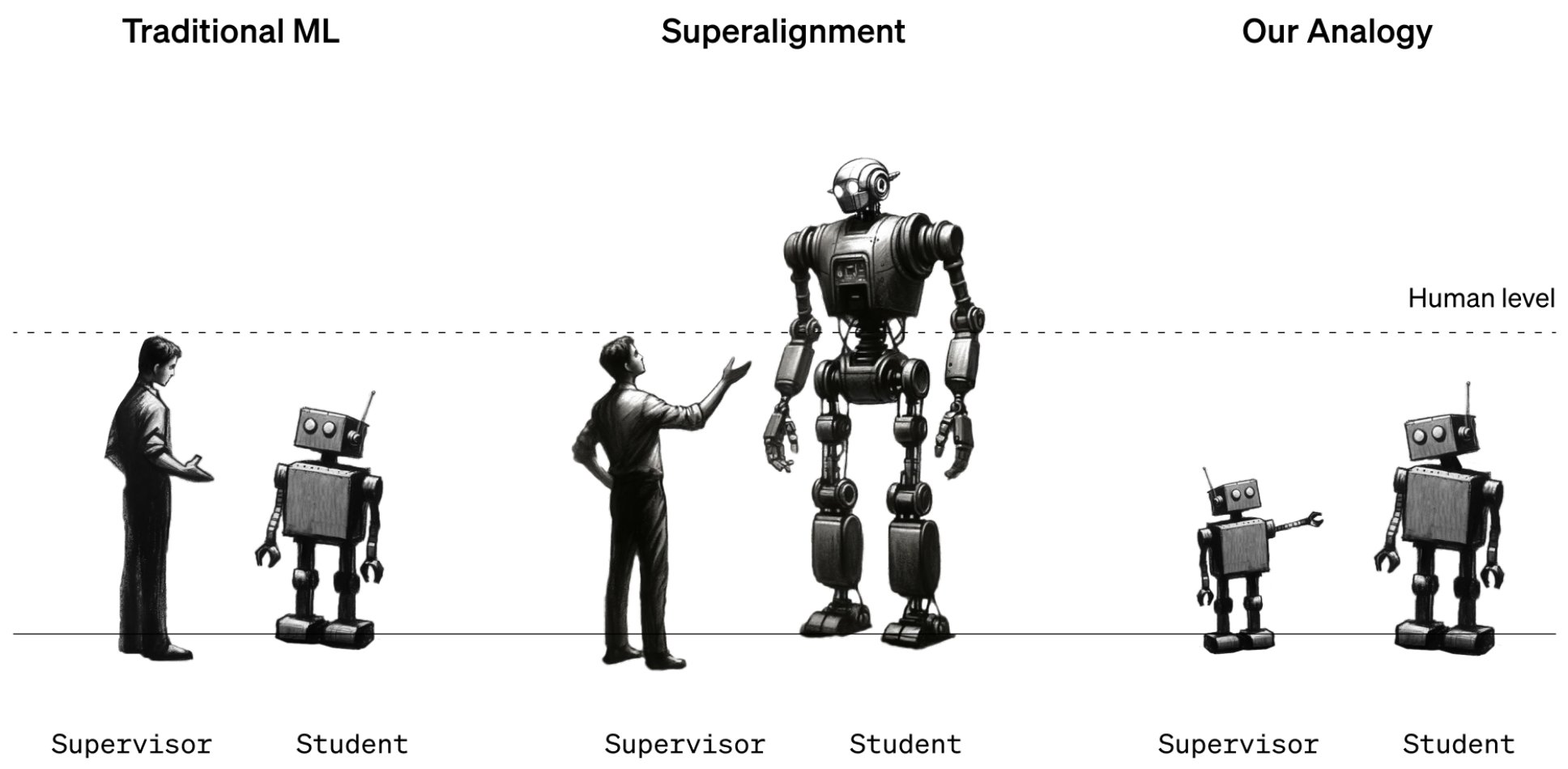
OpenAI has announced the first results from its superalignment team, the firm’s in-house initiative dedicated to preventing a superintelligence—a hypothetical future computer that can outsmart humans—from going rogue. Unlike many of the company’s announcements, this heralds no big breakthrough. In a low-key research paper, the team describes a technique that lets a less powerful large…
https://www.technologyreview.com/2023/12/14/1085344/openai-super-alignment-rogue-agi-gpt-4/
Google DeepMind used a large language model to solve an unsolvable math problem
Google DeepMind has used a large language model to crack a famous unsolved problem in pure mathematics. In a paper published in Nature today, the researchers say it is the first time a large language model has been used to discover a solution to a long-standing scientific puzzle—producing verifiable and valuable new information that did…
The Download: what we learned from COP28, and an advance for household robots

This is today’s edition of The Download, our weekday newsletter that provides a daily dose of what’s going on in the world of technology. The two words that pushed international climate talks into overtime The annual UN climate negotiations at COP28 in Dubai have officially come to a close. Delegates scrambled to get a deal together in…
https://www.technologyreview.com/2023/12/14/1085310/the-download-cop28-household-robots/
This new system can teach a robot a simple household task within 20 minutes
A new system that teaches robots a domestic task in around 20 minutes could help the field of robotics overcome one of its biggest challenges: a lack of training data. The open-source system, called Dobb-E, was trained using data collected from real homes. It can help to teach a robot how to open an air…
https://www.technologyreview.com/2023/12/14/1085231/new-system-teach-robot-household-task/
The two words that pushed international climate talks into overtime
This article is from The Spark, MIT Technology Review’s weekly climate newsletter. To receive it in your inbox every Wednesday, sign up here. The annual UN climate negotiations at COP28 in Dubai have officially come to a close. Delegates scrambled to get a deal together in the early morning hours, and the meetings ended a…
https://www.technologyreview.com/2023/12/14/1085258/cop28-fossil-fuels/
Vertex will pay tens of millions to license a controversial CRISPR patent
Vertex Pharmaceuticals has agreed to buy rights to use a dominant CRISPR patent owned by the Broad Institute of Harvard and MIT, avoiding a potential lawsuit over its new gene-editing treatment for sickle-cell disease. The agreement allows Vertex to start selling its treatment, approved last Friday, without fear of patent infringement claims. The one-time treatment…
The Download: carbon removal concerns, and Yahoo’s China controversy

This is today’s edition of The Download, our weekday newsletter that provides a daily dose of what’s going on in the world of technology. Two former Department of Energy staffers warn we’re doing carbon removal all wrong The carbon removal industry is just starting to take off, but some experts are warning that it’s already headed in…
Yahoo’s decades-long China controversy and the responsibility of tech companies
This story first appeared in China Report, MIT Technology Review’s newsletter about technology in China. Sign up to receive it in your inbox every Tuesday. It’s a perennial debate: whether American tech companies are contributing to government control of the internet in China. But long before Apple ceded control of local user data to the state or…
https://www.technologyreview.com/2023/12/13/1085146/yahoo-china-responsibility-tech-companies/
Two former Department of Energy staffers warn we’re doing carbon removal all wrong
The carbon removal industry is just starting to take off, but some experts are warning that it’s already headed in the wrong direction. Two former staffers of the US agency responsible for advancing the technology argue that the profit-driven industry’s focus on cleaning up corporate emissions will come at the expense of helping to pull…
Mapping the micro and macro of biology with spatial omics and AI

37 trillion. That is the number or cells that form a human being. How they all work together to sustain life is possibly the biggest unsolved puzzle in biology. A group of up-and-coming technologies for spatially resolved multi omics, here collectively called “spatial omics,” may provide researchers with the solution. Over the last 20 years,…
The Download: Yahoo’s misdeeds in China, and AI Act takeaways
This is today’s edition of The Download, our weekday newsletter that provides a daily dose of what’s going on in the world of technology. Inside the decades-long fight over Yahoo’s misdeeds in China When you think of Big Tech these days, Yahoo is probably not top of mind. But for Chinese dissident Xu Wanping, the company still…
Inside the decades-long fight over Yahoo’s misdeeds in China
 ?w=2800
When you think of Big Tech these days, Yahoo is probably not top of mind. But for a 62-year-old Chinese dissident named Xu Wanping, the company still looms large—and has for nearly two decades. In 2005, Xu was arrested for signing online petitions relating to anti-Japanese protests. He didn’t use his real name, but he…
https://www.technologyreview.com/2023/12/12/1084990/yahoo-china-dissident-yahoo-human-rights-fund/
Five things you need to know about the EU’s new AI Act
This story is from The Algorithm, our weekly newsletter on AI. To get stories like this in your inbox first, sign up here. It’s done. It’s over. Two and a half years after it was first introduced—after months of lobbying and political arm-wrestling, plus grueling final negotiations that took nearly 40 hours—EU lawmakers have reached a…
Human brain cells hooked up to a chip can do speech recognition
Brain organoids, clumps of human brain cells grown in a dish, can be hooked up to an electronic chip and carry out simple computational tasks, a new study shows. Feng Guo and his team at Indiana University Bloomington generated a brain organoid from stem cells, attached it to a computer chip, and connected their setup,…
The Download: the EU AI Act is here, and preventing deadly cancer

This is today’s edition of The Download, our weekday newsletter that provides a daily dose of what’s going on in the world of technology. Why the EU AI Act was so hard to agree on On Saturday, European Union lawmakers announced they’d finally agreed the terms of the final version of the EU AI Act, a major…
Why the EU AI Act was so hard to agree on
This article is from The Technocrat, MIT Technology Review’s weekly tech policy newsletter about power, politics, and Silicon Valley. To receive it in your inbox every Friday, sign up here. Update: On December 8, 2023, the EU AI Act was agreed on, after this story was written and sent as MIT Technology Review’s weekly tech…
https://www.technologyreview.com/2023/12/11/1084849/why-the-eu-ai-act-was-so-hard-to-agree-on/
The best way to prevent the deadliest gynecological cancer is to remove multiple organs
 ?w=2420
The results of my genetic test arrived in an unpretentious white envelope. It was the summer of 2021, and I almost missed it when I flipped through the mail, but I set it aside from the rest of the bills to look at later. About a month before, I had sent a sample of my…