Profile: 1118cf72...
Dr. Irene Duhart Long
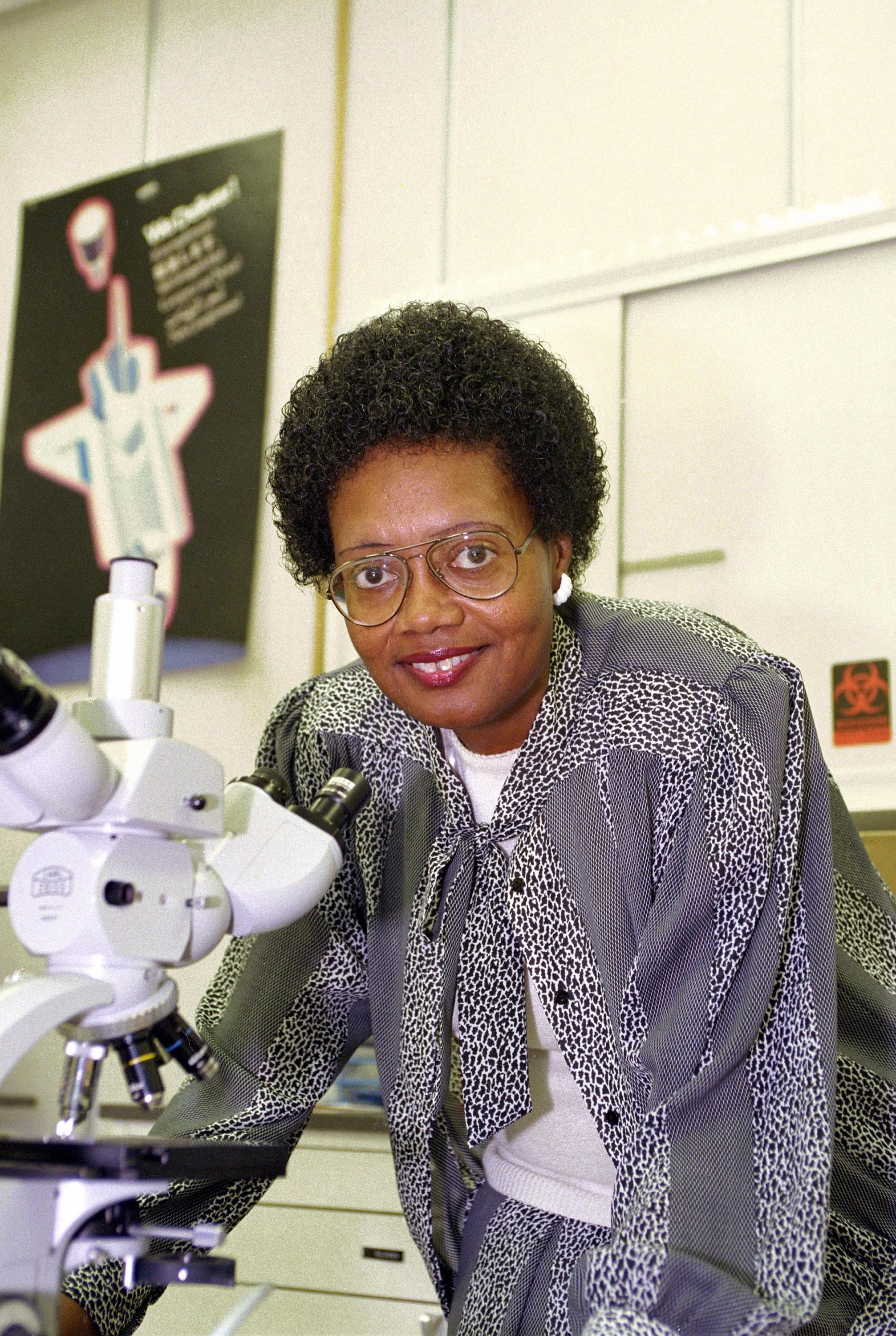
When this picture was taken in July 1994, Dr. Irene Duhart Long was director of the Biomedical Operations and Research Office at NASA's Kennedy Space Center in Florida. She was responsible for the program management of the center's aerospace and occupational medicine, life sciences research, environmental health programs, and the operations management of the life sciences support facilities. Dr. Long also was responsible for providing the coordinating medical, environmental monitoring and environmental health support to launch and landing activities and day-to-day institutional functions.
First Look at Hybrid Electric Research Aircraft

The Dash 7 that will be modified into a hybrid electric research vehicle under NASA’s Electrified Powertrain Flight Demonstration (EPFD) project on display with its new livery for the first time. In front of the plane is an electric powertrain that magniX will integrate into the current aircraft to build a hybrid electric propulsion system.
https://www.nasa.gov/image-detail/electrified-powertrain-flight-demonstration/
Sunrise Begins

The International Space Station was orbiting on a northeast track 261 miles above the Pacific Ocean when this photograph captured the first rays of an orbital sunrise illuminating Earth's atmosphere.
Rare Blue Supermoon 8/19/24
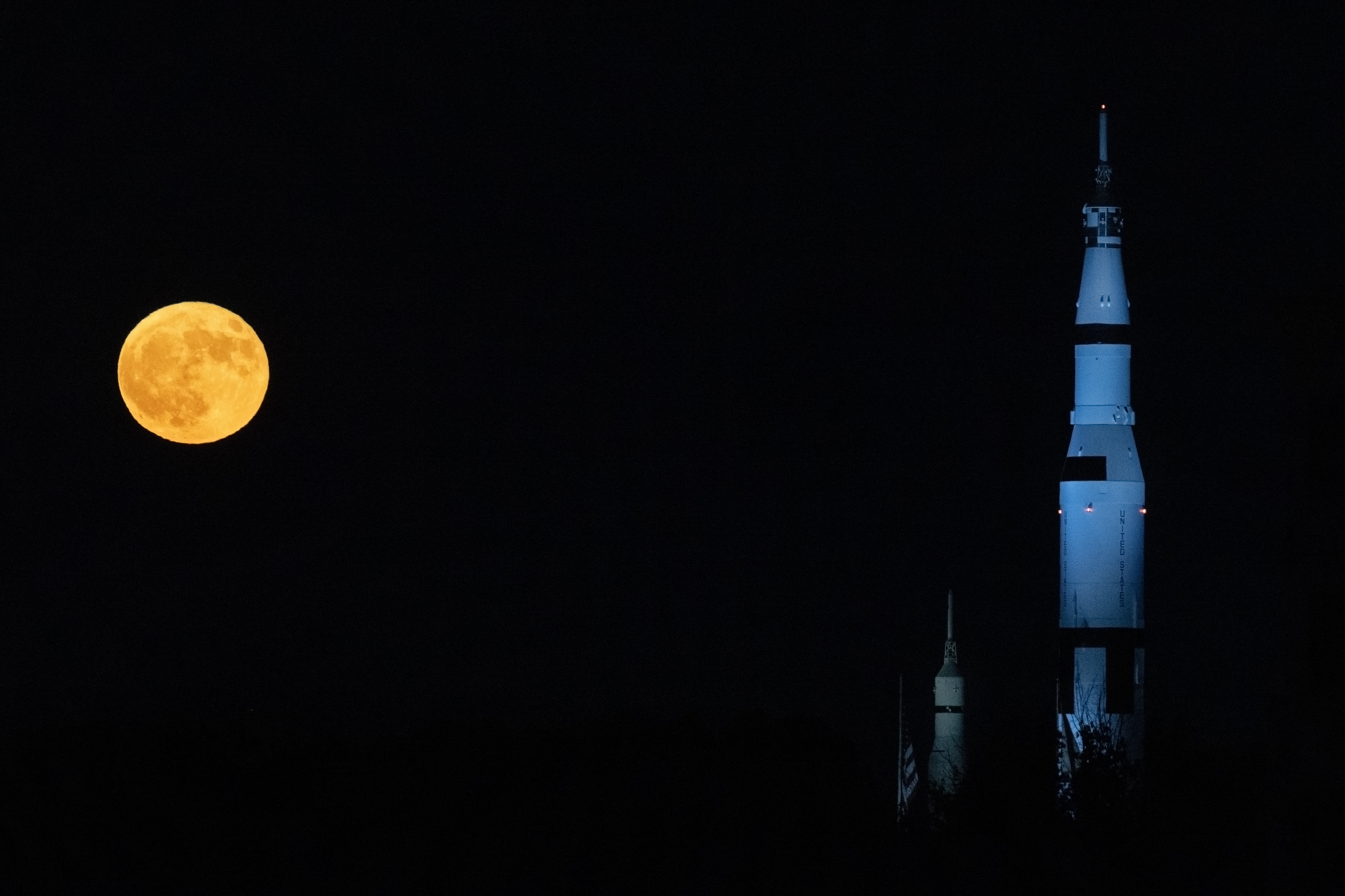
The Sturgeon Moon rises behind a replica Saturn V rocket at the U.S. Space & Rocket Center in Huntsville, Alabama on Monday, August 19, 2024. Over 99% full when it rose, the moon was a rare combination of a blue moon and a supermoon, a phenomenon that will not repeat until 2027. Image credit: NASA/Michael DeMocker
https://www.nasa.gov/image-detail/rare-blue-supermoon-8-19-24/
Tortoise Takes a Leisurely Stroll
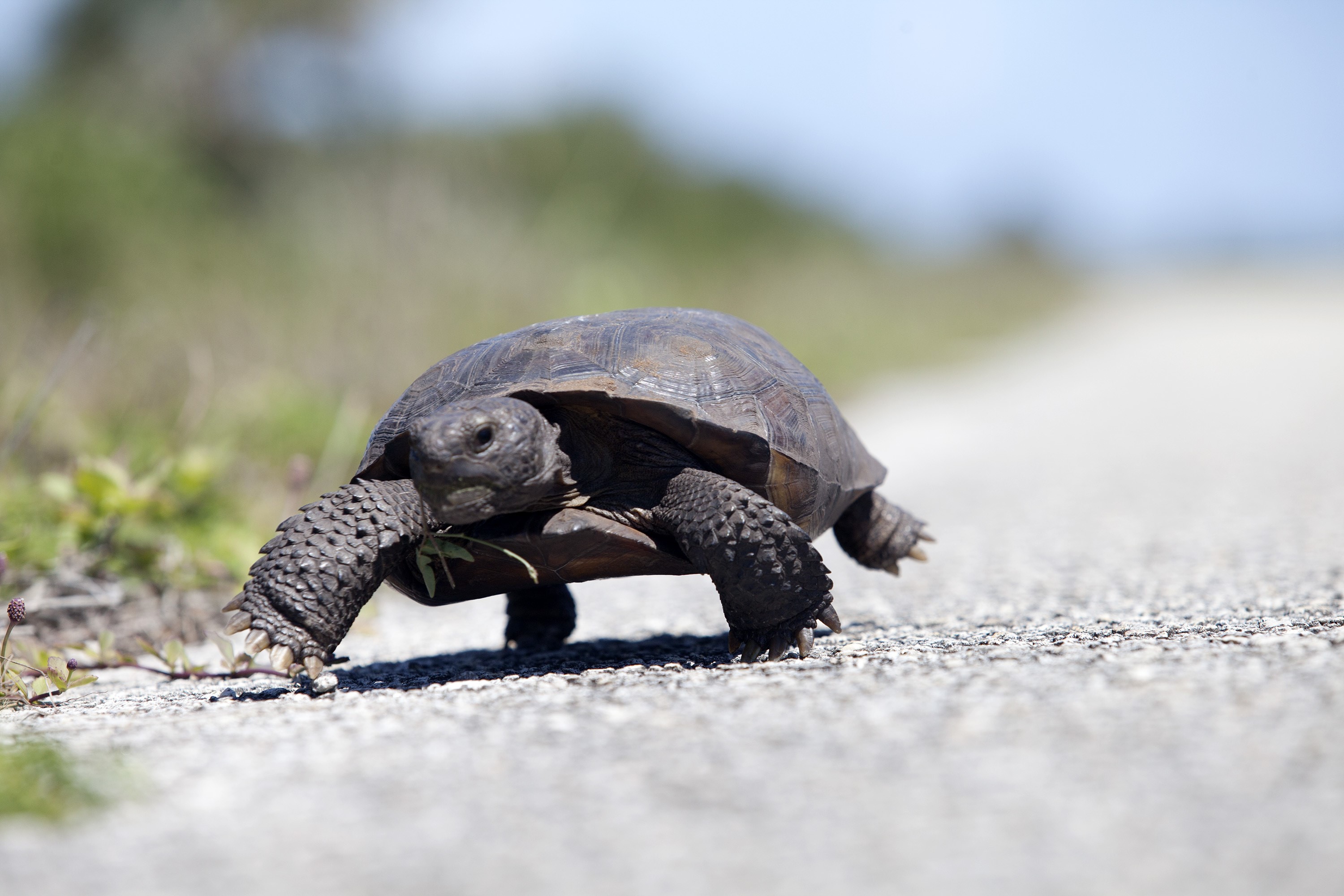
Slow and steady wins the race for this gopher tortoise, ambling along the Launch Pad 39B beach road on NASA's Kennedy Space Center in Florida. Gopher tortoises are dry-land turtles that live in scrub, dry hammock, pine flatwood, coastal grassland and dune habitats.
Revisiting OSIRIS-REx
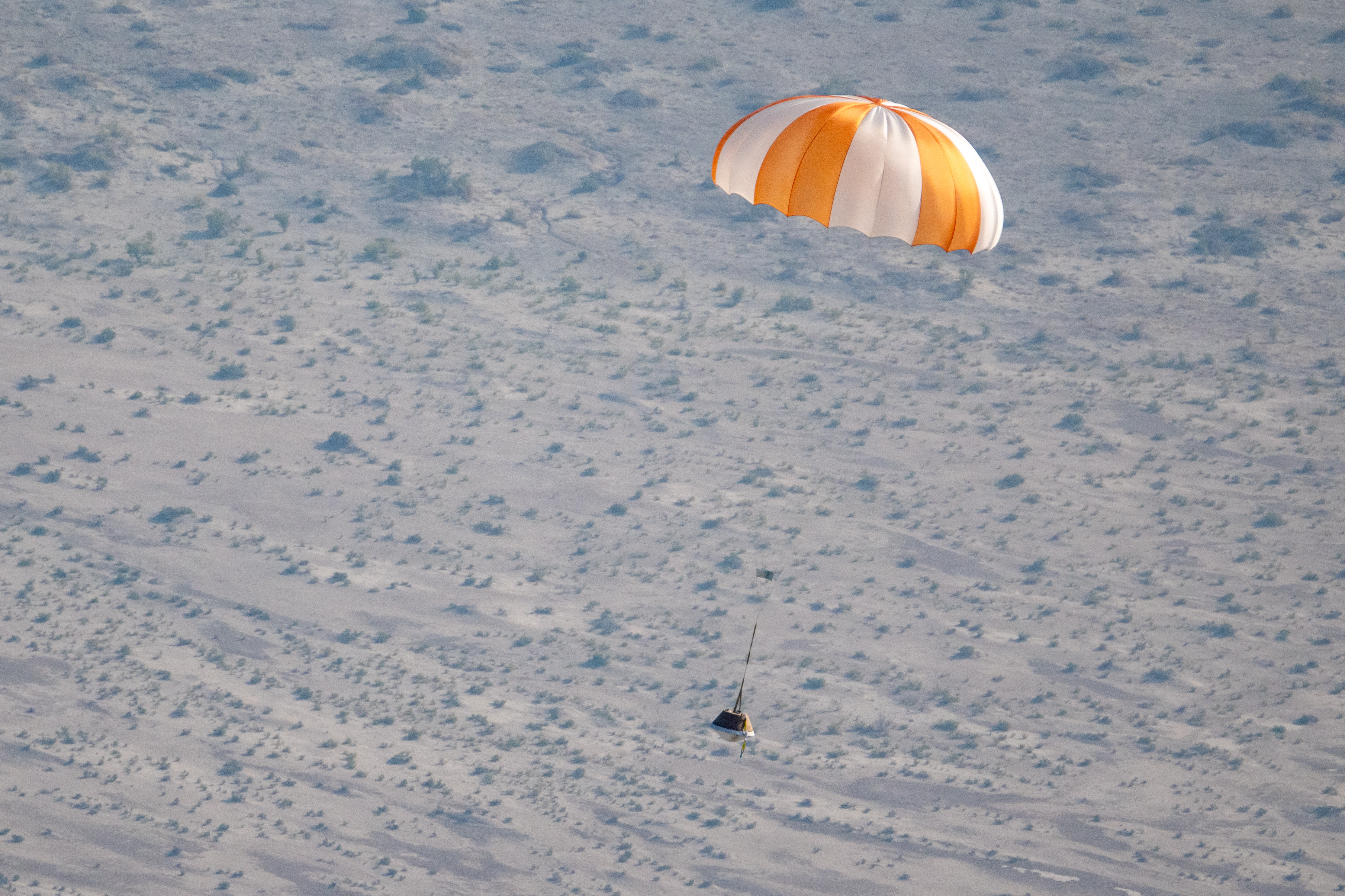
A training model of the sample return capsule is seen is seen during a drop test in preparation for the retrieval of the sample return capsule from NASA's OSIRIS-REx mission, Wednesday, Aug. 30, 2023, at the Department of Defense's Utah Test and Training Range.
https://www.nasa.gov/image-detail/osiris-rex-sample-return-training-15/
Rings and Things
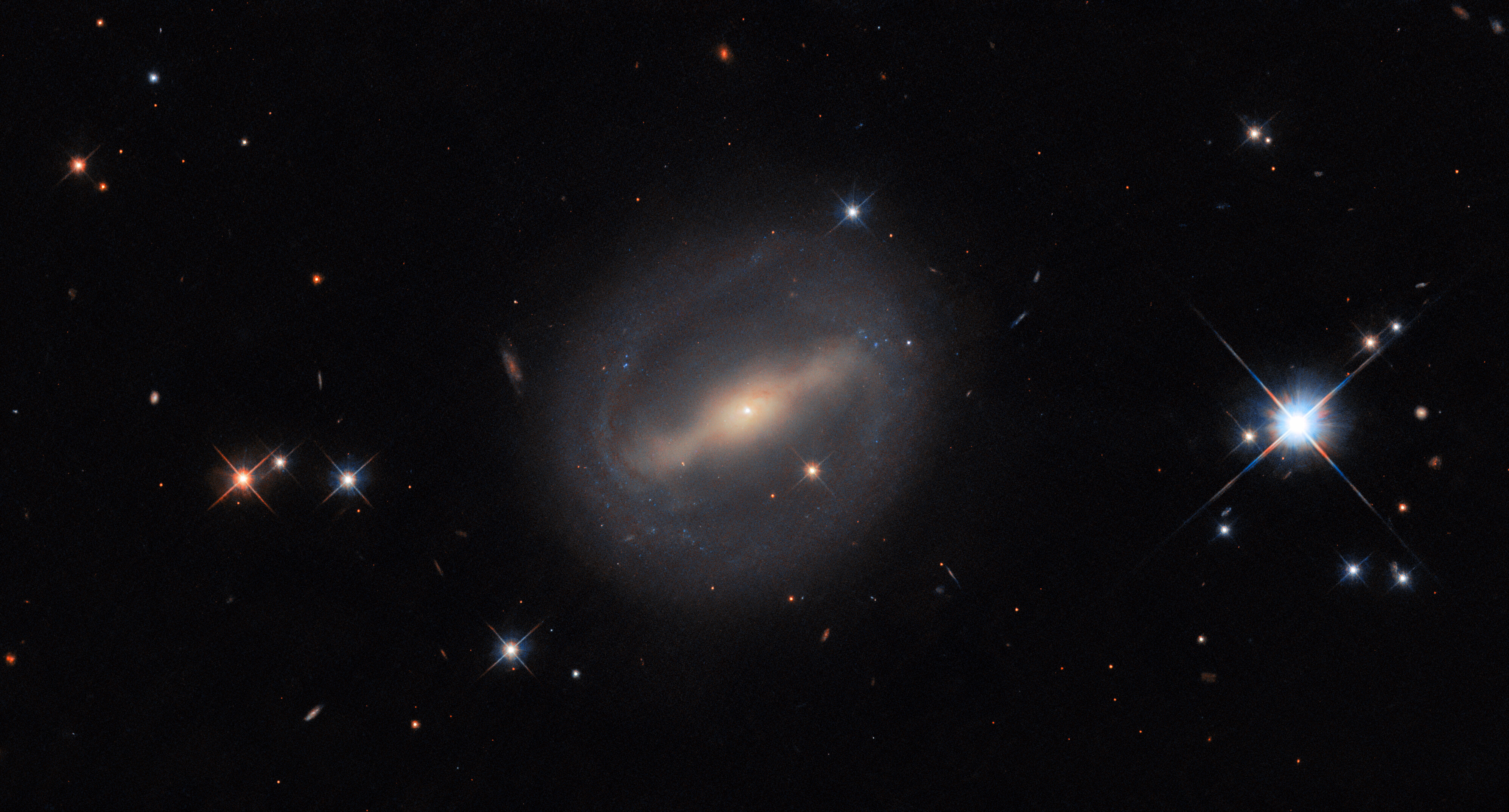
The subject of this week’s circular Hubble Picture of the Week is situated in the Perseus Cluster, also known as Abell 426, 320 million light-years from Earth. It’s a barred spiral galaxy known as MCG+07-07-072, seen here among a number of photobombing stars that are much closer to Earth than it is. MCG+07-07-072 has quite an unusual shape, for a spiral galaxy, with thin arms emerging from the ends of its barred core to draw a near-circle around its disc.
São Francisco’s Colorful Palette
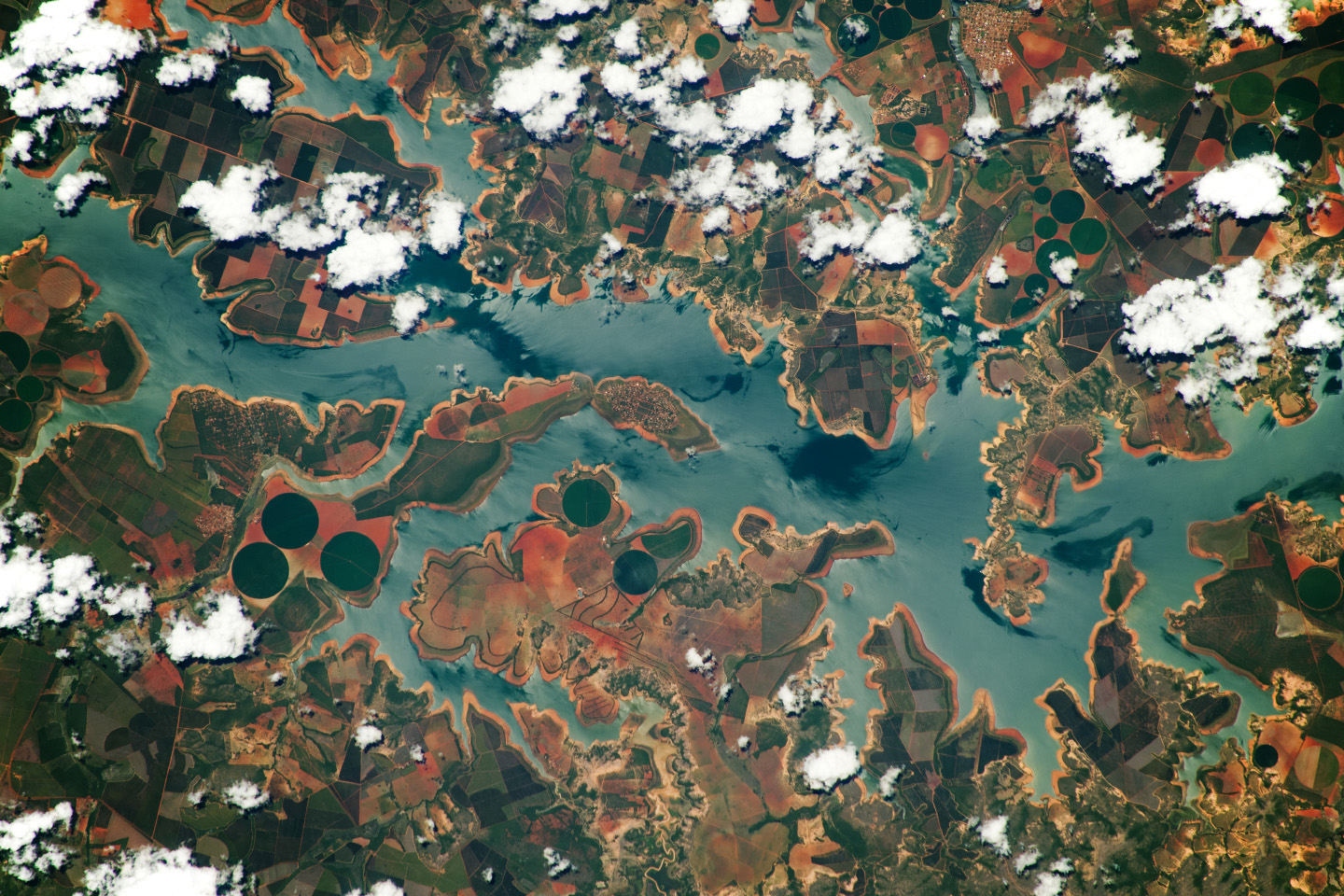
An astronaut aboard the International Space Station snapped this photo while in orbit over southeast Brazil. The image focuses on the Três Marias Reservoir, a human-made waterbody fed by the São Francisco River. The types of land cover vary across the image, with bold colors dominating the scene.
A Practiced Escape
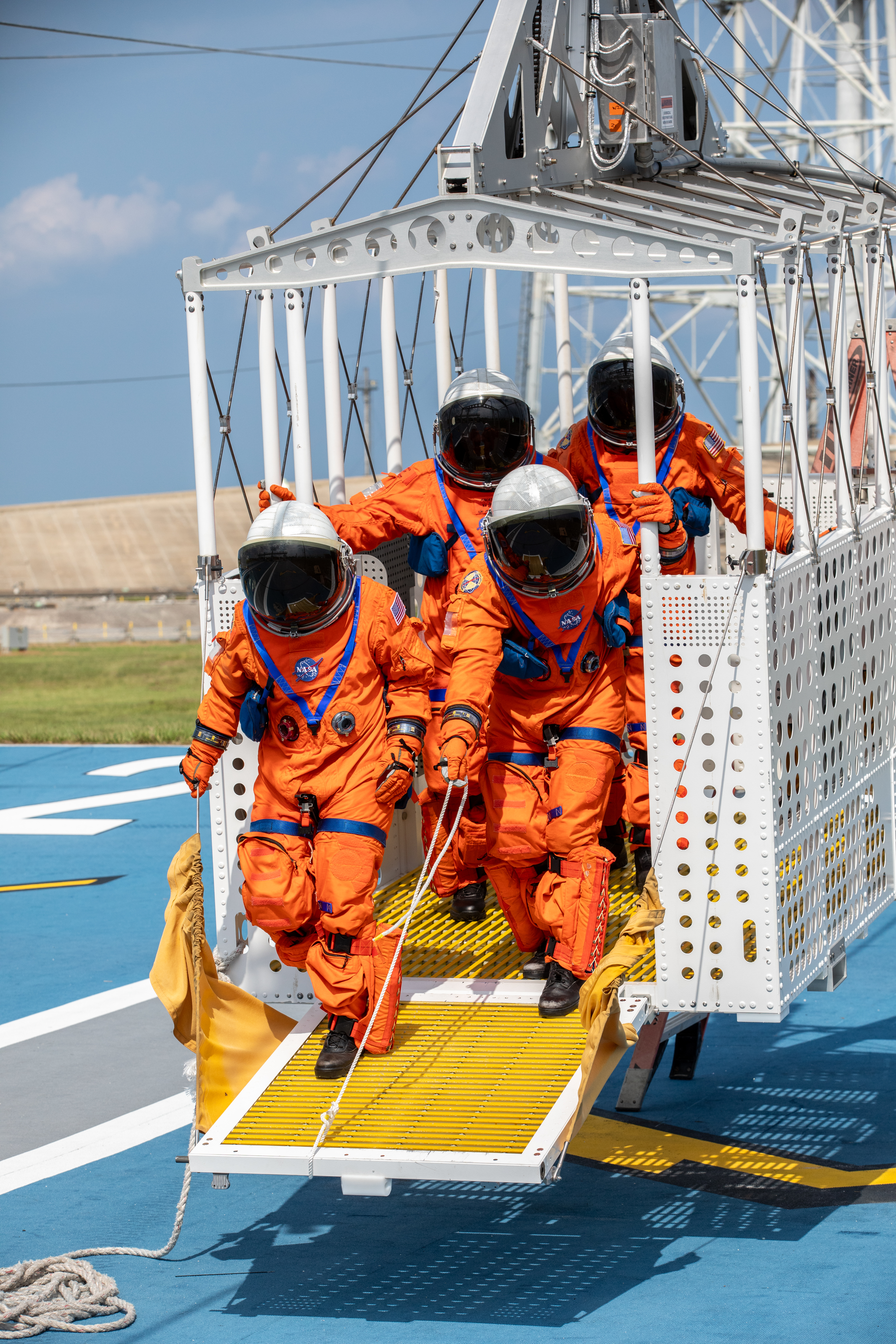
Teams at NASA’s Kennedy Space Center in Florida practice the Artemis mission emergency escape, or egress, procedures on Friday, Aug. 9, 2024. Simulated flight crew members practice getting out of the emergency egress basket and into the emergency transport vehicle to drive them to safety in the event of an unlikely emergency during launch countdown.
Earth’s Crest Over the Lunar Horizon
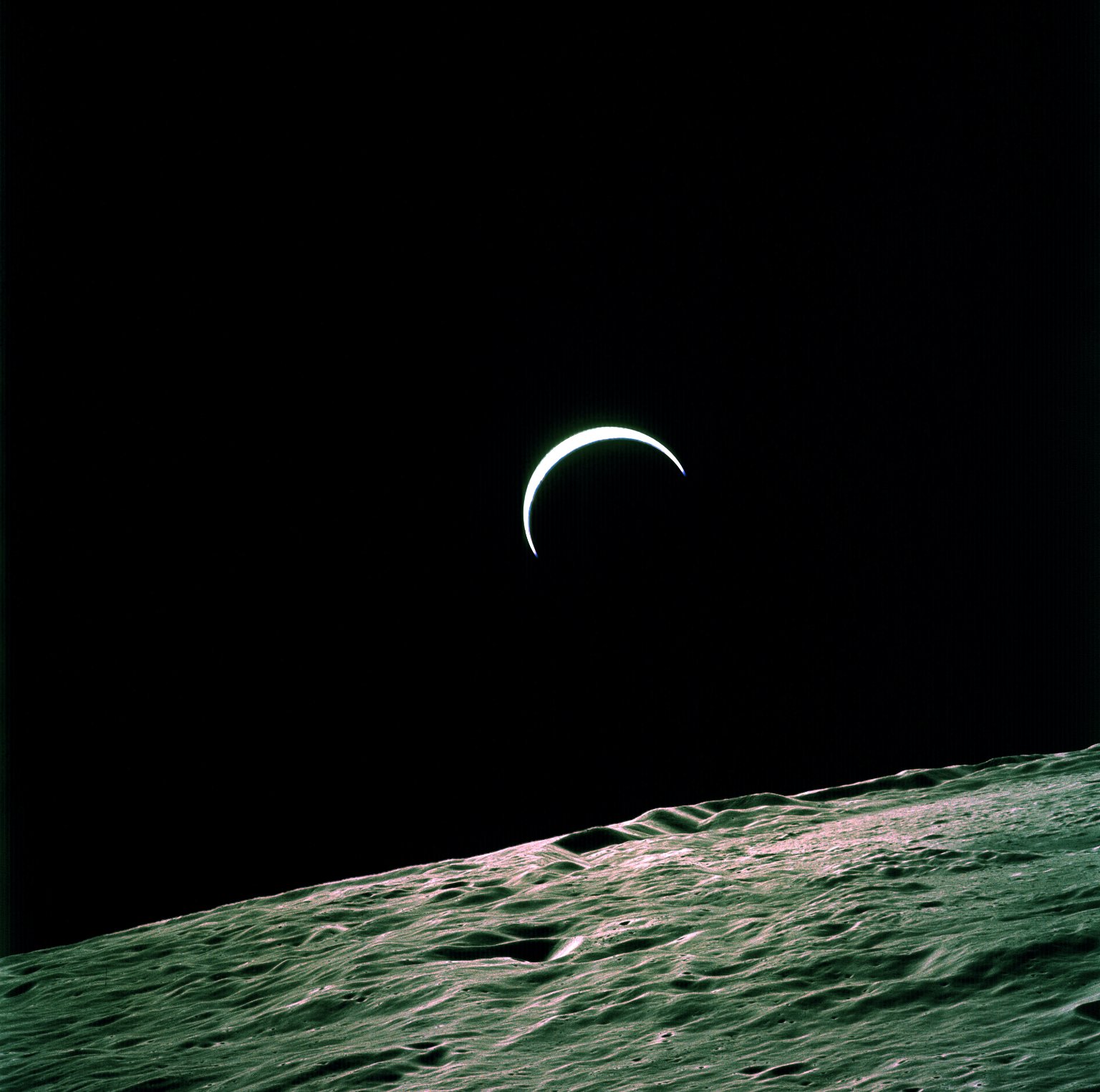
This view of the Earth's crest over the lunar horizon was taken during the Apollo 15 lunar landing mission. Apollo 15 launched from NASA's Kennedy Space Center on July 26, 1971. Aboard was a crew of three astronauts: David R. Scott, James B. Irwin, and Alfred M. Worden. The primary scientific objectives were to observe the lunar surface, survey and sample material and surface features in a preselected area of the Hadley-Apennine region, setup and activation of surface experiments and conduct in-flight experiments and photographic tasks from lunar orbit.
Webb Sees Gassy Baby Stars
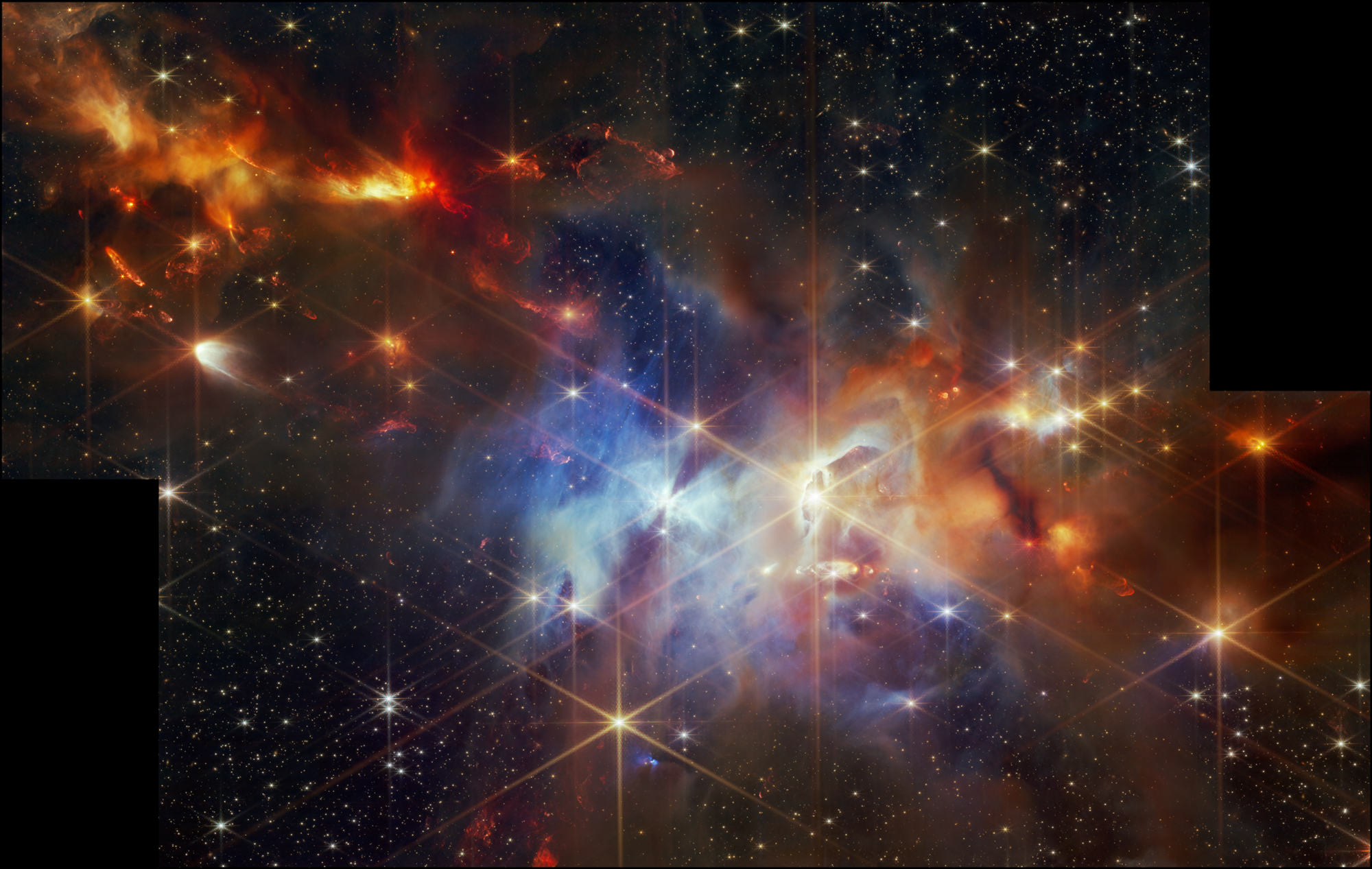
In this image of the Serpens Nebula from NASA’s James Webb Space Telescope, astronomers found a grouping of aligned protostellar outflows within one small region (the top left corner). Serpens is a reflection nebula, which means it’s a cloud of gas and dust that does not create its own light, but instead shines by reflecting the light from stars close to or within the nebula.
The International Space Station’s “window to the world”
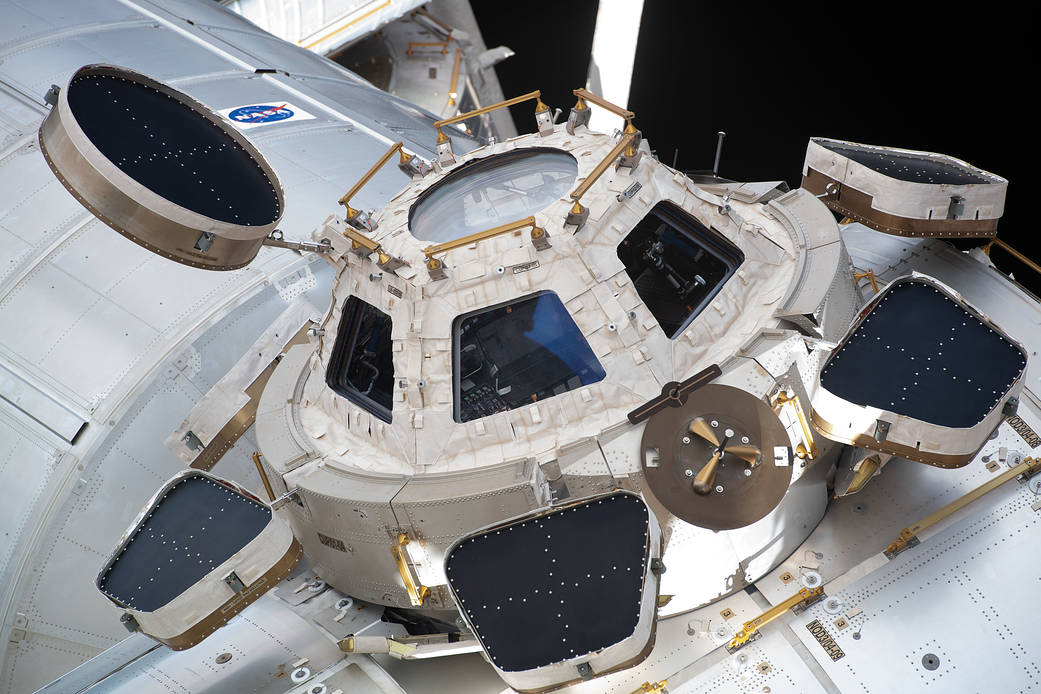
The International Space Station's "window to the world" is pictured from the Nauka Multipurpose Laboratory Module.
Interior of Vacuum Tank at the Electric Propulsion Laboratory
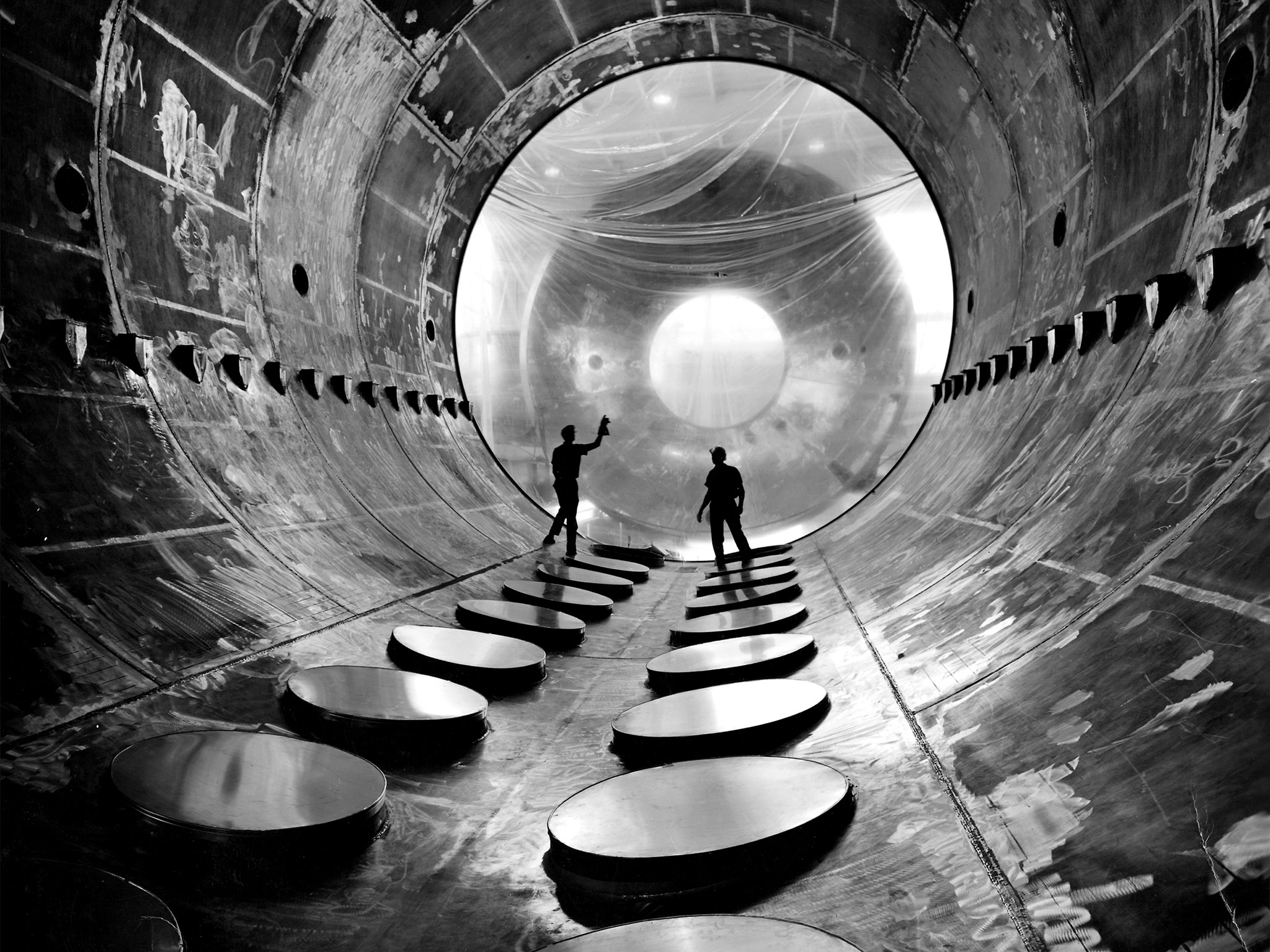
Interior of the 20-foot diameter vacuum tank at the NASA Lewis Research Center’s Electric Propulsion Laboratory.
Carving Canyons
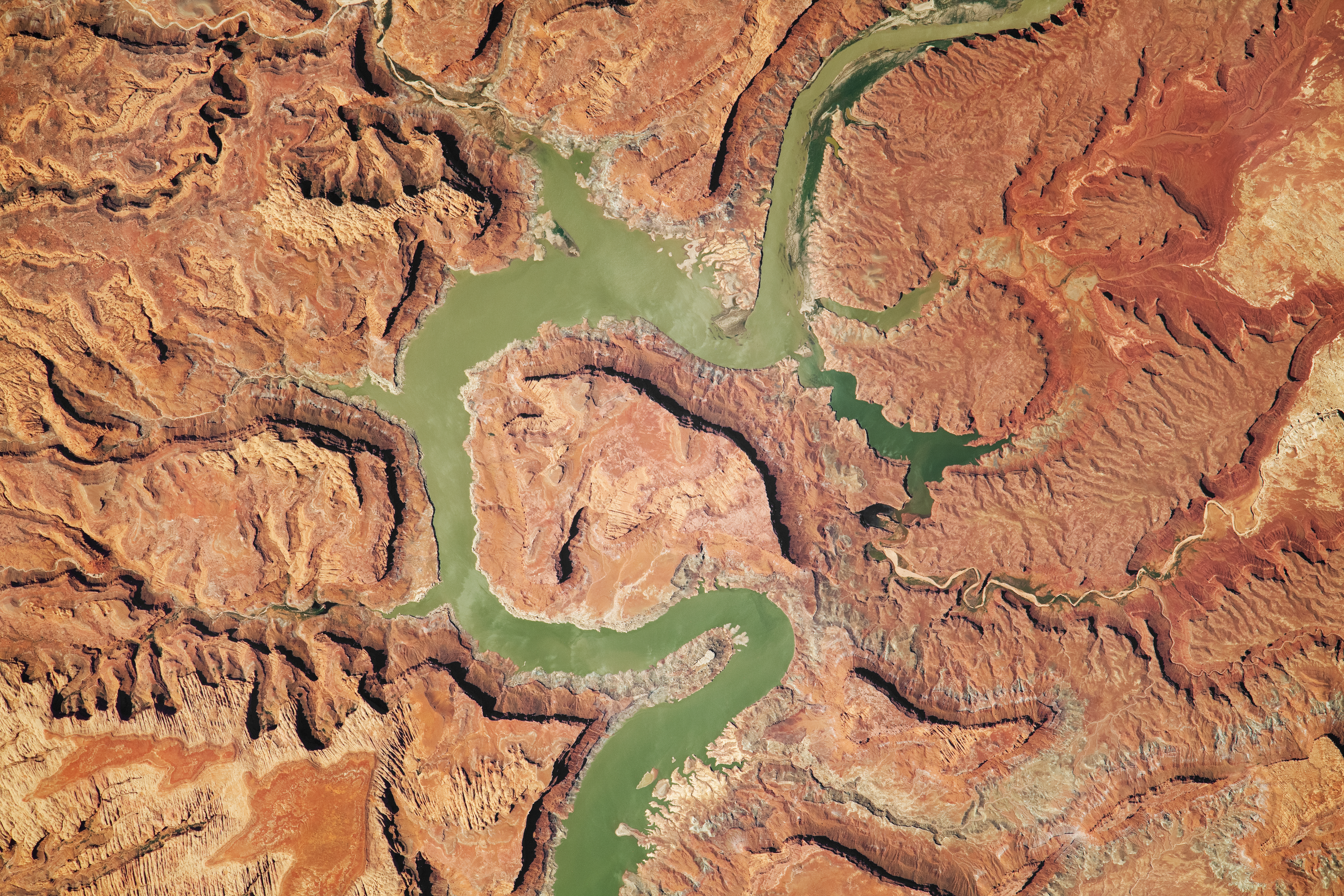
Erosion, tectonic uplift, and a human-built dam have all helped shape the Upper Lake Powell area in Utah.
Doomed Star Eta Carinae

Eta Carinae may be about to explode. But no one knows when - it may be next year, it may be one million years from now. Eta Carinae's mass - about 100 times greater than our Sun - makes it an excellent candidate for a full blown supernova. Historical records do show that about 170 years ago Eta Carinae underwent an unusual outburst that made it one of the brightest stars in the southern sky. Eta Carinae, in the Keyhole Nebula, is the only star currently thought to emit natural LASER light. This featured image brings out details in the unusual nebula that surrounds this rogue star. Diffraction spikes, caused by the telescope, are visible as bright multi-colored streaks emanating from Eta Carinae's center. Two distinct lobes of the Homunculus Nebula encompass the hot central region, while some strange radial streaks are visible in red extending toward the image right. The lobes are filled with lanes of gas and dust which absorb the blue and ultraviolet light emitted near the center. The streaks, however, remain unexplained.
https://www.nasa.gov/image-detail/etacarinae-hubbleschmidt-1764-aaeb6f/
Europa Clipper Solar Array Alignment and Install
Technicians move NASA’s Europa Clipper spacecraft inside the Payload Hazardous Servicing Facility to accommodate installation of its five-panel solar array at the agency’s Kennedy Space Center in Florida on Thursday, Aug. 1, 2024. After moving the spacecraft, the team had to precisely align the spacecraft in preparation for the installation. The huge arrays – spanning more than 100 feet when fully deployed, or about the length of a basketball court – will collect sunlight to power the spacecraft as it flies multiple times around Jupiter’s icy moon, Europa, conducting science investigations to determine its potential to support life.
Artemis II Core Stage Arrives at Kennedy

Employees from NASA’s Kennedy Space Center in Florida watch as teams with Exploration Ground Systems transport the agency’s powerful SLS (Space Launch System) core stage to the spaceport’s Vehicle Assembly Building on Wednesday, July 24, 2024. The 212-foot-long rocket stage completed its journey from NASA’s Michoud Assembly Facility in New Orleans aboard the Pegasus barge the previous day. Once inside, SLS will be prepared for integration atop the mobile launcher ahead of the Artemis II launch.
Telfer Mine, Western Australia
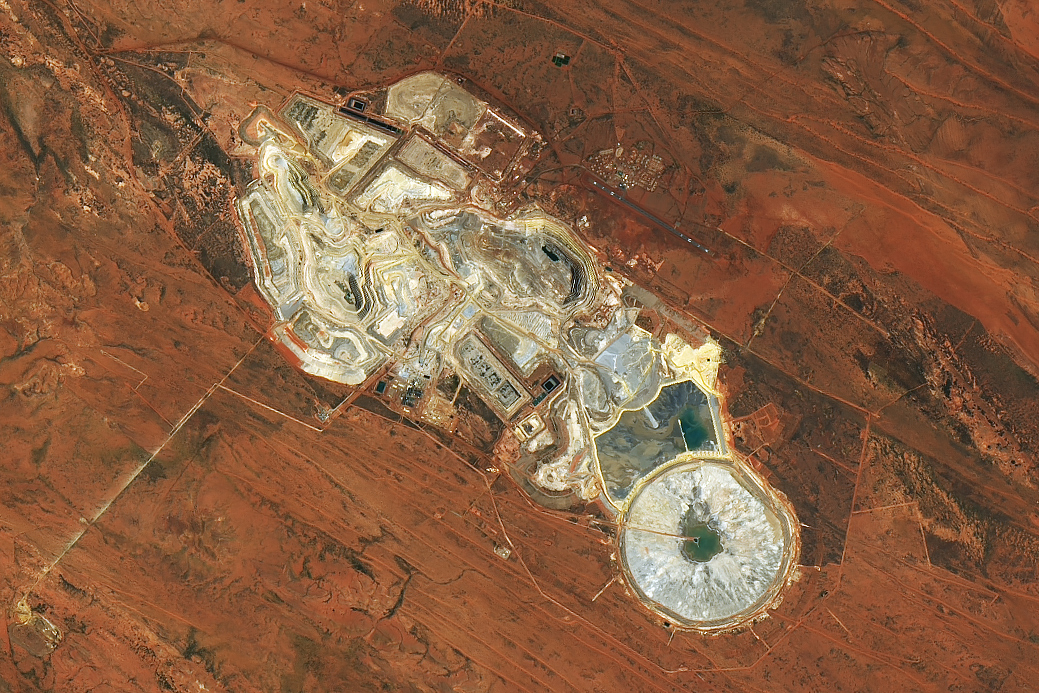
In the arid outback of Western Australia, miners have excavated rust-colored soil to reach the precious minerals below. The open pits and ponds of Telfer mine can be seen in this image, captured by the OLI-2 (Operational Land Imager-2) on Landsat 9.
https://www.nasa.gov/image-detail/teflermine-oli2-20231215-lrg/
Ranger 7 Snaps the Moon
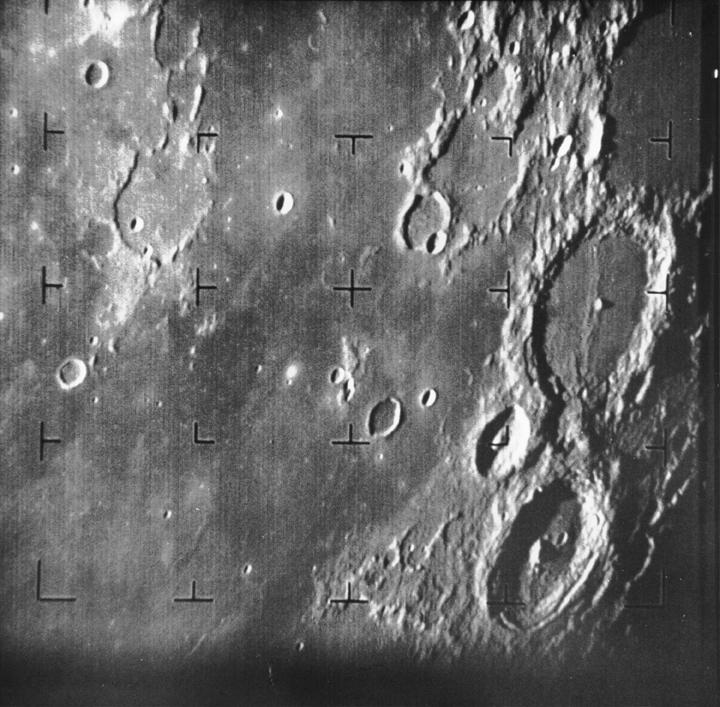
Ranger 7 took this image, the first picture of the Moon by a U.S. spacecraft, on July 31, 1964, about 17 minutes before crashing into the lunar surface.
Transportation Officer Melissa Coleman
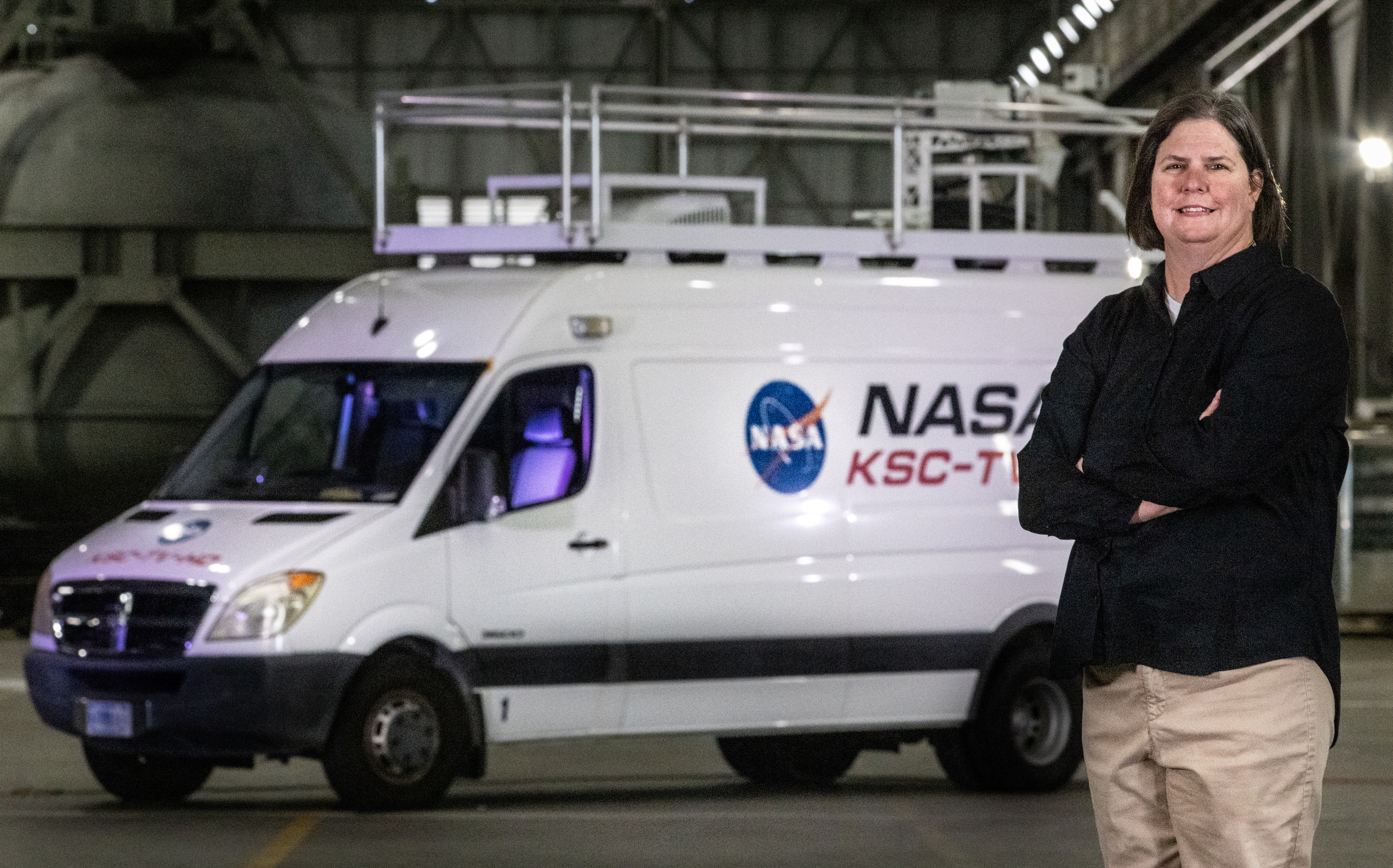
"And don't be intimidated or influenced by an emblem or your perception of what kind of people are behind that emblem. Because now I realize, once I've made it to NASA, that it’s nothing like I thought it was. In a lot of ways, it's better, right? Because I get these opportunities to do things that are not in my primary role to serve others, and in that capacity, it's serving me. That’s my advice." — Melissa Coleman, Transportation Officer, Logistics Branch, NASA's Kennedy Space Center