
"Opportunity is a word that means nothing until you take it."

>"Well, there's nothing," McDonald said. "You get born, and you nurse on lies, and you get weaned on lies, and you learn fancier lies in school. You live all your life on lies, and then maybe when you're ready to die, it comes to you — that there's nothing, nothing but yourself and what you could have done. Only you ain't done it, because the lies told you there was something else. Then you know you could've had the world, because you're the only one that knows the secret; only then it's too late. You're too old."

Reasons for individual actions are trivial but impacts can be universal #ShowerThots
# Breaking all *isims

Bitcoin represents a transformative shift in how we think about power, governance, and economics. By decentralizing control and empowering individuals with direct ownership over their assets, Bitcoin challenges traditional ideologies like capitalism, socialism, and nationalism. It doesn’t just disrupt existing systems; it introduces a new paradigm where trust is built on cryptography rather than centralized institutions. This shift towards a decentralized, global financial system offers new opportunities for freedom and autonomy, but also prompts us to reconsider long-held beliefs about governance and societal organization. As we move towards this new paradigm, the future of "isms" may be one where individual sovereignty and global connectivity redefine the very essence of power and control.
Bitcoin challenges and potentially breaks all "isms"—political, economic, and social ideologies—by decentralizing power and introducing a system that operates independently of traditional authority structures. Here's how it breaks various "isms":
### 1. **Capitalism:**
- **Decentralization of Wealth:** Bitcoin reduces the power of centralized financial institutions and corporations, distributing financial control directly to individuals. This can weaken the capitalist model where wealth is often concentrated in the hands of a few.
- **Peer-to-Peer Economy:** By enabling peer-to-peer transactions without intermediaries, Bitcoin bypasses traditional markets and disrupts the capitalist emphasis on profit-driven, centralized commerce.
### 2. **Socialism:**
- **Undermining State Control:** Bitcoin's decentralized nature prevents the state from easily controlling the economy, which is a core aspect of socialism. It empowers individuals rather than the state to manage wealth and resources.
- **Reduction of Redistribution Mechanisms:** Socialism often relies on state-driven wealth redistribution. Bitcoin’s resistance to state control makes it harder for governments to implement redistributive policies.
### 3. **Communism:**
- **Empowerment of Private Ownership:** Communism advocates for the abolition of private property, with collective ownership managed by the state. Bitcoin, however, reinforces private ownership by giving individuals direct control over their assets.
- **Incompatibility with Central Planning:** Bitcoin’s decentralized, global network is at odds with the centralized economic planning that communism requires.
### 4. **Fascism:**
- **Resistance to Authoritarian Control:** Fascism relies on strong, centralized authority. Bitcoin’s decentralized and censorship-resistant nature makes it difficult for authoritarian regimes to control or suppress economic activity, weakening their power.
- **Empowerment of Individual Freedom:** Bitcoin fosters individual autonomy and freedom, which stands in stark contrast to the collectivist and authoritarian principles of fascism.
### 5. **Anarchism:**
- **New Form of Anarchy:** While Bitcoin aligns with anarchist principles of rejecting centralized authority, it also creates a new form of order based on cryptographic trust and consensus rather than traditional social or legal contracts. This could redefine anarchy in the digital age.
- **Challenge to Statelessness:** Anarchism advocates for the absence of all governing structures. While Bitcoin operates without a central authority, its reliance on a global network of nodes creates a new, decentralized form of governance, which may challenge pure anarchist ideals.
### 6. **Environmentalism:**
- **Resource Usage Debate:** Bitcoin's energy consumption has sparked debates about its environmental impact, challenging environmentalism’s focus on sustainability. However, this also forces a rethinking of energy use and innovation in green technologies.
- **Decentralized Conservation:** On the flip side, Bitcoin’s potential to decentralize control could lead to more community-driven environmental initiatives, bypassing traditional state-led conservation efforts.
### 7. **Nationalism:**
- **Global Currency:** Bitcoin operates as a borderless, global currency, challenging the nationalist focus on sovereign control over national currencies and economic policies.
- **Undermining National Identity:** By promoting a global financial system, Bitcoin can dilute national identities tied to traditional currencies and economic models.
### 8. **Globalism:**
- **Decentralization of Global Power:** While globalism advocates for interconnected economies, it often involves centralized institutions like the IMF or World Bank. Bitcoin decentralizes this power, potentially undermining globalist institutions.
- **Sovereign Individual:** Bitcoin empowers individuals globally, challenging the globalist notion that centralized institutions should manage global affairs.
### 9. **Liberalism:**
- **Redefinition of Freedom:** Liberalism emphasizes individual rights and freedoms, often protected by the state. Bitcoin takes this further by enabling financial sovereignty that doesn’t rely on state protection, which could challenge liberal institutions.
- **Challenge to Regulatory Oversight:** Liberalism often supports regulatory oversight to ensure fairness. Bitcoin’s decentralized nature resists such oversight, potentially clashing with liberal values of regulated freedom.
### 10. **Conservatism:**
- **Challenge to Traditional Institutions:** Conservatism often values established institutions like banks and governments. Bitcoin disrupts these institutions by providing an alternative system that doesn’t rely on them.
- **Financial Innovation vs. Stability:** Conservatism typically favors stability and gradual change. Bitcoin’s rapid innovation and potential to disrupt the status quo can be seen as a threat to conservative ideals of order and stability.
### 11. **Progressivism:**
- **Disruption of Progressive Goals:** Progressivism often seeks to use government power to achieve social and economic equality. Bitcoin’s resistance to government control can make it difficult to implement progressive policies.
- **Empowerment vs. Inequality:** While Bitcoin empowers individuals, it also raises questions about access and inequality, potentially challenging progressive efforts to level the playing field.
### **Common Themes:**
- **Decentralization of Power:** Across all ideologies, Bitcoin decentralizes power, reducing the influence of traditional institutions whether they are states, corporations, or global entities.
- **Redefinition of Control:** By placing control in the hands of individuals rather than centralized entities, Bitcoin challenges the very foundation of all "isms" that rely on structured authority or governance.
- **Global Connectivity vs. Local Ideals:** Bitcoin operates on a global scale, often conflicting with ideologies that prioritize local, national, or communal identities and values.
### **Implications:**
- **New Paradigm:** Bitcoin introduces a new paradigm of decentralized, individual sovereignty that doesn’t fit neatly into existing ideological frameworks. It forces a rethinking of how societies organize and govern themselves.
- **Erosion of Traditional Power Structures:** As Bitcoin grows, it may erode the power of traditional political, economic, and social structures, leading to the evolution or dissolution of many "isms."
In summary, Bitcoin disrupts all "isms" by decentralizing power, challenging authority, and introducing a system that operates beyond the reach of traditional ideologies. It promotes a new form of global, individual empowerment that could redefine how societies function.
#Bitcoin #Decentralization #NewParadigm #FutureOfGovernance #Cryptography #FinancialSovereignty #GlobalConnectivity
### Signs You're Living in a Socialist Fantasy Land
#AskGPT #JustForLaughsOrIsIt
Ever wondered if you’ve accidentally slipped into a parallel universe where everything is just a tad more… idealistic? Here are some telltale signs you might be living in a socialist fantasy land:
1. **Everyone’s a Millionaire… in Spirit**
Your neighbor, the baker, and the guy who collects garbage all have the same amount of *moral* wealth. Sure, nobody’s actually rich, but you’re all drowning in a surplus of virtue!
2. **The Waiting Line is a National Sport**
Forget football or cricket; standing in line has become the most popular activity. Need a loaf of bread? That’ll be a two-hour wait, but hey, at least you’ll make some new friends! Who needs instant gratification when you can have communal suffering?
3. **Your Boss is Really Just a Comrade**
In a socialist fantasy land, there’s no such thing as a “boss.” Instead, you work for the collective good, and everyone gets a say. Except when decisions need to be made—then it's back to waiting in line for consensus.
4. **The Rich are Still Rich… in Theory**
All the billionaires have disappeared, but you keep hearing about the *concept* of wealth inequality. Turns out, there are still some folks who hoard resources… like extra toilet paper.
5. **Everything’s Free, But Nothing’s Available**
Healthcare? Free. Education? Free. Housing? Free. But you might need to use your imagination because the actual services are harder to find than a needle in a haystack.
### Why Do Socialists Love Reform?
Now, if you’re wondering why socialists are so keen on reform, it’s simple: They’re eternal optimists! The glass isn’t just half-full—it’s full, free, and comes with a side of equality. Socialists believe that with just a bit more tweaking, the utopia is within reach.
Reforms are like the proverbial carrot at the end of the stick—always just one more change away from paradise. Plus, let’s be honest, if everything were perfect, what would they have to argue about at the next community meeting?
So, if you find yourself nodding along to any of these signs, don’t worry—you’re just living the dream! Or at least, someone’s dream.
Flow like water ... but stay warm

And he said unto them: "bag my flesh and distribute it amoung the mourning, 70 kilograms for a parent, 15 for a child". He turns to face the incoming hellfire and held on to the eternal now.
- The Gods Who Like To Die
At what timescale of human civilization will the invention of bitcoin be considered the end of the dark ages ?
#AskGPT #ThreeSecondsOfHumanity #EpochalChange #Bitcoin
The invention of Bitcoin is often seen as a revolutionary moment in the history of finance and technology, with some drawing parallels to other major shifts in human civilization, such as the Renaissance marking the end of the Dark Ages. On the timescale of human civilization, Bitcoin's invention in 2008 could be viewed as a pivotal point, but its impact will be judged over centuries.
In the near term (50-100 years), Bitcoin might be seen as the catalyst for decentralizing financial power, restoring personal sovereignty, and challenging the dominance of central banks. As time progresses (100-500 years), if Bitcoin or similar decentralized technologies continue to reshape global economic structures and enable more equitable wealth distribution, historians may consider this period as the beginning of a new era, potentially marking the end of the "Dark Ages" of centralized control and financial oppression.
However, whether Bitcoin will be remembered as the definitive end of a "dark age" depends on its long-term success in driving societal change, fostering global peace, and resisting the centralization of power. It is within the broader context of human history that the significance of Bitcoin will be fully understood, likely requiring centuries of hindsight.
Why is suffering part of the human condition, who can inflict suffering ?
#AskGPT
Suffering is often seen as an intrinsic part of the human condition due to several interwoven factors, both existential and circumstantial:
1. **Biological and Evolutionary Roots**: From an evolutionary perspective, suffering can be a survival mechanism. Physical pain alerts us to danger, encouraging behaviors that avoid harm. Emotional suffering, like fear or grief, helps us navigate social complexities and maintain bonds necessary for survival.
2. **Existential Realities**: Human life is finite, and the awareness of mortality, uncertainty, and impermanence contributes to existential suffering. This suffering stems from our consciousness of life's fragility and the inevitable losses we experience.
3. **Psychological and Emotional Factors**: Human minds are complex, capable of deep reflection, memory, and anticipation. This leads to psychological suffering, as we relive past pains, worry about the future, or grapple with unmet desires and expectations.
4. **Social and Moral Dimensions**: Suffering also arises from social interactions. Humans live in societies with hierarchies, conflicts, and moral codes. When these structures fail or are unjust, they can cause suffering, both individually and collectively.
As for who can inflict suffering:
1. **Nature and Circumstance**: Natural disasters, illnesses, and accidents are sources of suffering outside human control, stemming from the randomness of existence.
2. **Other People**: Suffering is often inflicted by others, whether intentionally (through violence, oppression, or cruelty) or unintentionally (through neglect, misunderstanding, or systemic failures). The ability to inflict suffering is tied to power dynamics, empathy, and moral choices.
3. **Self**: Individuals can also inflict suffering on themselves through self-destructive behaviors, negative thought patterns, or by holding onto guilt, shame, or unrealistic expectations.
4. **Institutions and Systems**: Governments, corporations, and other large institutions can inflict suffering through policies that create inequality, injustice, or environmental degradation.
Understanding the sources and agents of suffering is crucial for addressing it, whether through personal growth, social reform, or philosophical and spiritual exploration.
**You and Me, Baby, Against the World**
In neon nights, we stand, just you and me,
Two hearts that beat through shadows of the night.
Though right and wrong may shift, our love stays free,
A beacon in the dark, a guiding light.
We chase the dawn through streets of fleeting time,
While morals bend like steel beneath the heat.
But in your arms, the world’s chaotic rhyme
Becomes a tune where love and danger meet.
The world may change, but we remain the same,
Two rebels in a dance of fate’s embrace.
Through every trial, we ignite the flame,
United in the fight, we find our place.
Together, we’ll defy what they’ve unfurled,
It’s you and me, baby, against the world.
You want to know what I think ...?
https://video.nostr.build/9e8a96f3e4e617698ad7ddf447a584d30c0af9ac41a1ebecc89bbf4d061bc664.mp4
ⱯPØ₡₳ⱢYPSE BØY$ - ₦Ü₡Ɫ€Ȓ ⱤA₲E
[Intro]
Yeah, yeah
It's the end of days
Leader with the power, ready to engage
Nuclear rage
[Verse 1]
Shadows in the alley, creeping through the fog
Leader got the keys, unleashed the dogs
No mercy, no pity, just a vicious squad
Armed with the fury, like a demigod
Radiation in the veins, they say we’re deranged
Power in my hands, now the whole game’s changed
Blueprints of chaos, every move's arranged
City lights dim, now the streets feel strange
[Chorus]
Nuclear rage, setting fire to the page
Leader of the pack, unleashing the cage
Poor fools in the street, feeling the engage
In the shadow of the blast, hear the silent sage
[Verse 2]
Ashes in the wind, from the battles we wage
Concrete jungle turns into a nuclear stage
Whispers in the dark, stories of the mage
Leader of the apocalypse, turning the page
Skies burning red, cities turn to dust
Bullets in the air, we don't trust
Fear in the eyes, the streets combust
Leader with the trigger, in rage we thrust
[Chorus]
Nuclear rage, setting fire to the page
Leader of the pack, unleashing the cage
Poor fools in the street, feeling the engage
In the shadow of the blast, hear the silent sage
[Bridge]
Madness in the city, but the power's divine
Every step a landmine, but the leader's fine
Nuclear throne, our souls entwine
Destruction’s symphony, a dark design
[Verse 3]
Beneath the neon lights, a kingdom built in ash
Leader of the gang, ready for the clash
Every move calculated, every word a slash
Nuclear crown, turning dreams to cash
Wasteland warriors, nothing left to lose
In this game of power, no room for truce
Silence in the chaos, watching the fuse
Nuclear rage, we make our own news
[Chorus]
Nuclear rage, setting fire to the page
Leader of the pack, unleashing the cage
Poor fools in the street, feeling the engage
In the shadow of the blast, hear the silent sage
[Outro]
Nuclear rage, a story untold
Leader of the night, fearless and bold
In the heart of the storm, a legend unfold
Street's last breath, in the leader's hold
#LinuxHype #TakeThePowerBack #Linux #FOSS 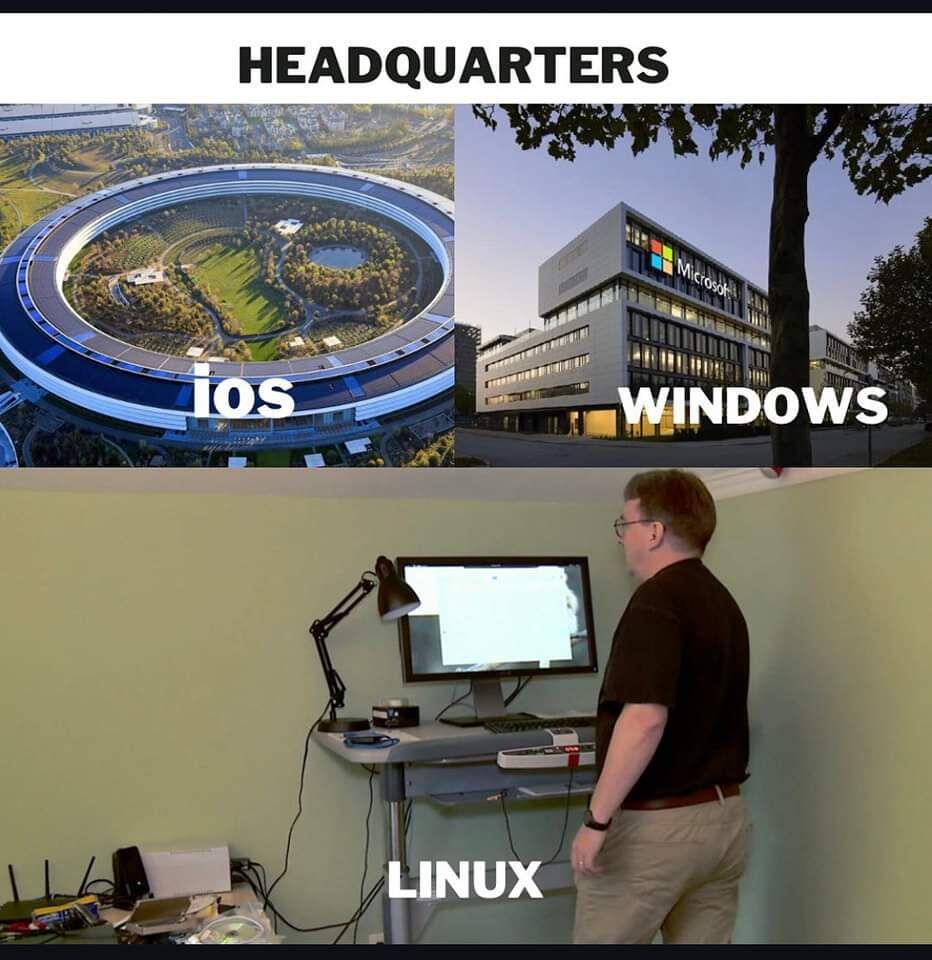
Is #Bitcoin The most viral idea since Religion ?
#AskGPT
The notion that Bitcoin is the most viral idea since religion is an intriguing one, considering the parallels in their spread and impact. Here are a few points to consider in this comparison:
1. **Global Reach**: Both religion and Bitcoin have achieved widespread global reach. Religions like Christianity, Islam, and Buddhism have followers worldwide, while Bitcoin has attracted users, investors, and enthusiasts from nearly every corner of the globe.
2. **Ideological Foundations**: Religions are built on ideological and philosophical tenets, and Bitcoin similarly has a strong ideological component. It is rooted in the principles of decentralization, financial sovereignty, and opposition to traditional banking systems.
3. **Community and Culture**: Both religion and Bitcoin have cultivated dedicated communities and cultures around them. These communities are driven by shared beliefs and values, creating a strong sense of identity among their members.
4. **Rapid Spread**: The rapid spread of Bitcoin, especially since its inception in 2009, mirrors the way religions have historically spread through word of mouth, evangelism, and, more recently, through digital means.
5. **Resistance and Controversy**: Both have faced resistance, skepticism, and controversy. Religions have often been met with opposition from different groups or governments, and Bitcoin has faced criticism from traditional financial institutions and regulatory bodies.
6. **Influence on Society**: Both religion and Bitcoin have had a profound influence on various aspects of society, including politics, economics, and culture. The rise of Bitcoin has led to discussions about the future of money, financial inclusion, and the power of technology to democratize finance.
While these similarities exist, it's important to recognize the distinct nature of each. Religion encompasses a wide range of spiritual beliefs and practices, whereas Bitcoin is a technological innovation with economic implications. The comparison highlights the powerful ways in which ideas can spread and influence human behavior and society.

pinephone pine time, prime time, fk ggle, arch life
I'd reduce to vertebrate ... "like a vertebrate"

gee you're on to something big there ... now you have to watch over your shoulders for life ..


#LicenceToMeme Stone cold memer.
double oh meme
Linuxkind - Big D-DOSa
(Verse 1)
Yeah, I’m deep in the code, got my terminal open,
Erlang in my veins, man, I’m never jokin’.
Linux in the mix, Arch keepin’ it clean,
Got my PinePhone rollin’, live that developer dream.
Late nights, no sleep, just debug and grind,
In the zone, catchin' bugs, I’m one of a kind.
Compilin’ these modules, gotta keep it tight,
When the code’s lookin’ right, it’s a beautiful sight.
(Chorus)
Erlang in the code, Linux in the soul,
I’m the king of the terminal, watch my system roll.
From the PinePhone to the server, yeah, I’m runnin’ it hot,
In the world of the devs, man, you know I’m on top.
(Verse 2)
I’m the mastermind, architect of the stack,
Concurrency and fault-tolerance, never cut slack.
Kernel so smooth, you can’t crash my scene,
Sippin’ on that coffee, keep my focus keen.
From the command line hustle to the repo grind,
Pushing out features, man, my code’s refined.
Got that high availability, the system’s set,
When the code’s clean, that’s the best bet.
(Chorus)
Erlang in the code, Linux in the soul,
I’m the king of the terminal, watch my system roll.
From the PinePhone to the server, yeah, I’m runnin’ it hot,
In the world of the devs, man, you know I’m on top.
(Bridge)
Stacks of books, tutorials, man, I got the skills,
Pushin' out the features, yeah, I'm makin’ deals.
From the CLI to the cloud, I’m the one they seek,
When it comes to solutions, I’m the geek they peak.
(Outro)
So if you see me in the code, know I’m set to blaze,
In the world of Erlang and Linux, I’m the one who stays.
Got that PinePhone in hand, development’s my song,
In the life of a dev, where I truly belong.