
Unlocking Collaborative Potential: My Strategy for Engaging Partners in DamageBDD and GymApp
In the evolving landscape of technology and fitness, the opportunity to innovate collaboratively is immense. As the founder of DamageBDD, I’m committed to leveraging our unique platform to create meaningful connections with fellow innovators, particularly in the development of my new gym app, powered by GymToken.
1. Showcasing Compelling Use Cases
At the core of my strategy is the demonstration of compelling use cases that highlight the potential of DamageBDD. By presenting real-world applications, such as comprehensive web application APIs and automated testing through Selenium and Appium, I aim to illustrate how our platform can drive efficiency and enhance collaboration in project management.
2. Utilizing On-Chain Data for Transparency
The power of on-chain data allows us to provide a transparent timeline that tracks the evolution of our projects. For the gym app, this means sharing insights from initial vision to inception and beyond. This transparency not only builds trust but also invites collaborators to engage in a shared journey of innovation, where they can witness progress firsthand.
3. Creating a Community of Intellectual Investment
I believe the most valuable investment in DamageBDD is philosophical. By fostering a community that prioritizes intellectual engagement over traditional funding, we can cultivate an environment where ideas flourish. This approach will be central in attracting engineering managers, CTOs, and founders who are eager to leverage their expertise in a collaborative ecosystem.
4. Engaging Through Interactive Demos
To truly captivate potential collaborators, I plan to host interactive demos that showcase the capabilities of DamageBDD and the gym app. These sessions will not only highlight functionality but also serve as a platform for feedback and brainstorming. Engaging stakeholders in this way can spark new ideas and partnerships, driving innovation forward.
5. Offering Utility-Driven Tokens
In light of the current regulatory environment surrounding cryptocurrencies and tokens, my strategy is to position GymToken purely as a utility within the gym app, rather than an investment vehicle. By avoiding any implications of offering tokens for investment, we minimize the risk of regulatory predation. This approach not only protects the project but also creates a clearer value proposition for users, focusing on the practical benefits of engaging with the app.
Conclusion
As I embark on this journey to develop the gym app and further the capabilities of DamageBDD, I invite like-minded individuals to join me. Together, we can unlock the potential of our projects, harness the power of collaboration, and create solutions that redefine the fitness industry. Let’s connect, innovate, and make a lasting impact.
Dollar milk shake baby ... all the liquidity getting sucked up
The Saga of the Forgetful Programmer
In the neon-lit underbelly of a sprawling tech metropolis, Alex was a programmer living on the edge. Known for his brilliance and his chronic forgetfulness, he often mislaid keys, missed meetings, and let crucial project details slip away like sand through his fingers. But beneath this seemingly chaotic exterior lay a dark and gritty past.
Years earlier, Alex had been a rising star in the tech world, working for a cutting-edge startup. But a childhood filled with trauma and neglect pushed him into the shadows of addiction. The drugs numbed the pain but also dulled his sharp mind. He became embroiled in a world of shadowy deals and coded messages exchanged in dimly lit alleys. His once-promising career spiraled into chaos as he lost himself in a haze of substances, living a life of grit and desperation.
One night, deep in a drug-fueled haze, Alex stumbled upon an underground hackathon—a contest where the best and brightest battled to create the next big app. Drawn in by the thrill, he signed up, promising himself that this would be his redemption. But as the clock ticked down, Alex’s mind was a storm of chaos. He could hardly remember what he was building, but when the moment came, he tapped into the depths of his programming prowess.
With fingers flying across the keyboard, he coded a revolutionary app that transformed project management into an immersive game. Teams could earn points, complete challenges, and unlock rewards—all while collaborating seamlessly. The app was a masterpiece of efficiency and scalability, running on a clean architecture that could handle millions of users.
Just as he submitted his creation, a gang of digital mercenaries known as the Code Raiders stormed the venue, intent on stealing the source code from the competitors. Alex's adrenaline surged as he realized they were after his app. In the ensuing chaos, he grabbed his laptop and sprinted toward the exit, the sounds of shouts and crashes echoing behind him.
Dodging the mercenaries in a frantic chase through the labyrinthine alleys, Alex's forgetfulness became an asset. He had no clear plan, but his instincts kicked in. He leaped over a dumpster, darted down narrow side streets, and ducked into a hidden café, where he hid behind a stack of crates. His heart raced as he connected to the café's Wi-Fi and scrambled to back up his code to the cloud, knowing it was his only chance of survival.
As the Code Raiders burst through the door, Alex sprang into action, his programming skills now a weapon. He hacked the café’s security system, locking the doors and activating the smoke alarms. As chaos ensued, he slipped out the back, determined to make it home.
Once safe in his apartment, Alex took a moment to breathe. He reflected on his traumatic past and the healing he found in plant medicine, which had become his solace. It had helped him reclaim his life and focus his energy on coding, allowing him to create something beautiful even amidst the chaos.
But the Code Raiders were relentless. They tracked him down, and soon a showdown unfolded. With his laptop at the ready, Alex set a trap. He rigged his code to unleash a virtual storm, flooding their systems with false data and disrupting their operations. As the Raiders attempted to breach his defenses, he launched a counterattack, his fingers dancing across the keyboard like a master pianist.
The screen lit up with lines of code, a digital battleground where Alex fought for his creation and his life. He could feel the weight of his past crashing down on him, but he pushed through, channeling every ounce of his grit and determination. In a final, intense sequence, he launched his app into the world, forcing the Code Raiders to retreat, their plans thwarted.
With his creation now live, Alex was thrust back into the spotlight. This time, he embraced his forgetfulness, using sticky notes and visual cues to keep his mind clear. He took control of the process, becoming a leader in his field. No longer a victim of his past, he inspired others through workshops, sharing not just coding techniques but his journey of survival and resilience.
In the end, Alex emerged not just as a forgetful programmer but as a symbol of triumph over adversity. He had transformed his chaotic life into a saga of innovation and action, proving that even in the darkest of times, a spark of creativity can ignite a revolution. His story became a legend in the tech world, a reminder that sometimes, the most powerful ideas come from the depths of struggle.
How is DamageBDD like a digital chainsaw? Elaborate on the metaphor.
#AskGPT #ChainSawMan #Bl00dyRipper
Comparing DamageBDD to a digital chainsaw can provide a vivid metaphor that encapsulates its utility, efficiency, and transformative capabilities. Here’s an elaboration on that metaphor:
Precision and Efficiency
Just as a chainsaw allows users to cut through wood with speed and precision, DamageBDD enables developers to rapidly and accurately assess and enhance software quality. The focus on Behavior-Driven Development (BDD) allows teams to define clear expectations for their software, ensuring that they only build what is necessary and useful, much like a chainsaw cuts only the desired material.
Empowering Developers
A chainsaw empowers individuals to tackle large projects with relative ease, transforming a labor-intensive task into a manageable one. Similarly, DamageBDD empowers developers by providing them with the tools and methodologies to streamline testing and development processes. This empowerment allows them to focus on innovation and creativity rather than being bogged down by repetitive tasks.
Cutting Through Complexity
In the same way that a chainsaw can cut through dense trees, DamageBDD helps teams cut through the complexities of software development. By promoting clear communication and collaboration through BDD, it helps teams navigate challenges and avoid misunderstandings, ensuring that everyone is on the same page regarding project goals and requirements.
Speeding Up Development
A chainsaw significantly speeds up the process of felling trees and cutting wood, which would take much longer with traditional tools. DamageBDD accelerates the software development lifecycle by integrating testing into the development process. This continuous feedback loop allows for quicker iterations and faster delivery of high-quality software, enhancing overall productivity.
Reducing Waste
Just as a chainsaw allows for more efficient use of resources by minimizing wasted material, DamageBDD reduces waste in development cycles. By focusing on requirements and behaviors that matter, it prevents unnecessary features from being built, thus conserving time and resources for both the developers and the end-users.
Maintenance and Care
Just as a chainsaw requires regular maintenance to perform optimally, DamageBDD relies on continuous learning and adaptation. Teams must regularly update their BDD practices and refine their processes to keep up with evolving project demands and technological advancements, ensuring that they remain effective and efficient.
Conclusion
In essence, viewing DamageBDD as a digital chainsaw illustrates its role as a powerful tool that enhances precision, efficiency, and speed in software development while minimizing waste and complexity. This metaphor highlights the transformative potential of DamageBDD, positioning it as an essential instrument for modern development teams aiming to deliver high-quality software in a fast-paced environment.
I got the scissors ... not just the metaphysical razor but a digital chainsaw ...
What if we moved the UN to Ceylon, or modern-day Sri Lanka? It’s an intriguing thought experiment—one that digs into deeper ideas about geopolitics, neutrality, and how we approach global cooperation in a rapidly changing world. Let’s unpack it.
First off, Sri Lanka is perfectly positioned, geographically and metaphorically. Sitting at the crossroads of major global shipping routes between East and West, it offers a strategic location that isn't tied to any superpower's sphere of influence. That in itself is significant. Currently, the UN operates out of New York, with all the political and financial weight that comes with being in the US. But what if moving to a smaller, non-aligned country—one that's historically neutral—fosters a sense of global diplomacy that’s less entrenched in big-power politics? Ceylon, with its long-standing role in the Non-Aligned Movement during the Cold War, would offer a fresh, unbiased platform for countries to engage.
Culturally, Sri Lanka's diversity adds a symbolic layer. It’s a place where ethnicities and religions intermingle—Buddhism, Hinduism, Islam, and Christianity all have strong presences. The UN, in its mission to represent global diversity and inclusivity, could find a fitting home here. Sri Lanka itself has lived through the devastating effects of division, with a civil war that spanned decades. Moving the UN here would ground it in a country that knows the costs of conflict firsthand, yet has also seen the long, painful process of reconciliation.
On the topic of military and strategic significance, there’s a rich history to consider. During World War II, Ceylon was a critical military outpost due to its strategic location in the Indian Ocean. The British utilized its ports and airfields, and it became a target of Japanese bombings. Fast-forward to the modern day, and this military history blends into a country that, post-civil war, has transformed its military apparatus toward peacekeeping and disaster response, contributing troops to UN missions globally. Hosting the UN in a place with deep operational experience in both conflict and peacekeeping would be a powerful statement.
There’s also the economic and infrastructural argument. Moving the UN would offer Sri Lanka a huge opportunity for economic revitalization—building the infrastructure needed to host the organization, generating jobs, and elevating its global stature. But the larger, more nuanced gain is how a move like this could reframe what the UN stands for. By relocating to a smaller, emerging country, the UN could symbolically shift its focus from representing primarily Western or developed interests to truly championing a more inclusive, global perspective.
It’s worth considering what humanity could gain from such a shift. By moving to Ceylon, the UN would be taking a step away from the centers of global power and toward a place that stands for diversity, resilience, and neutrality. Could this inject new life into the organization? Could it help humanity rethink the balance of power and the role of global diplomacy? It’s a radical idea, but maybe that’s exactly what we need in today’s fractured world. In Sri Lanka, the UN could find not just a new home, but a new vision for global unity.
there is no "crypto market" only fools who are getting a costly education
#AskGPT
The statement "there is no 'crypto market,' only fools who are getting a costly education" reflects a critical perspective on the cryptocurrency landscape, particularly regarding the volatility, lack of transparency, and inherent risks associated with many altcoins. Here are some key points to elaborate on this viewpoint:
1. Lack of True Market Fundamentals
Value Proposition: Many cryptocurrencies lack a clear and compelling value proposition. Unlike Bitcoin, which is often viewed as digital gold, many altcoins do not solve a real-world problem or provide unique utility.
Speculation Over Fundamentals: A significant portion of trading in the crypto space is driven by speculation rather than fundamentals. This speculative behavior can lead to inflated valuations that are unsustainable in the long term.
2. High Volatility and Risk
Price Manipulation: Smaller coins are often more susceptible to price manipulation due to lower liquidity. This makes it easier for individuals or groups to artificially inflate prices, leading to sudden crashes and losses for investors.
Pump-and-Dump Schemes: Many altcoins are targets for pump-and-dump schemes, where the price is artificially inflated before insiders sell off their holdings, leaving late investors with worthless coins.
3. Limited Arbitrage Opportunities
High Transaction Costs: The costs associated with trading, including transaction fees on exchanges and potential tax implications, can erode any profits that might be gained from arbitrage opportunities.
Market Efficiency: In a truly efficient market, arbitrage opportunities are quickly exploited and disappear. However, the crypto market often lacks efficiency due to the presence of numerous exchanges, varying liquidity levels, and differing prices for the same asset, complicating the ability to profit from arbitrage.
4. Dominance of Bitcoin
Network Effects: Bitcoin enjoys a significant first-mover advantage and is the most recognized and trusted cryptocurrency. This dominance creates a network effect, where its value and utility increase as more people use and accept it.
Security and Stability: Bitcoin’s established infrastructure, larger market capitalization, and security make it a safer investment compared to the vast majority of altcoins, which often face significant risks, including project failures and regulatory challenges.
5. Lack of Regulatory Oversight
Unregulated Space: The absence of regulatory oversight in many jurisdictions can lead to a breeding ground for scams and dishonest projects. Investors may find themselves unable to recoup losses or seek legal recourse.
Short-Lived Projects: Many altcoins are launched without sufficient due diligence, often resulting in short-lived projects that quickly fade away, leaving investors with losses.
6. Educational Value
Learning Through Loss: The phrase "costly education" suggests that many investors learn about the market through their losses. This education can come from investing in unreliable projects or from the harsh realities of market volatility.
Need for Caution: The emphasis on the dangers of investing in altcoins serves as a cautionary tale for new investors, highlighting the importance of thorough research and due diligence before investing.
In summary, while there are legitimate projects in the cryptocurrency space, the overwhelming presence of speculative behavior, lack of regulatory oversight, and the dominance of Bitcoin contribute to a perception that many investors are facing a steep learning curve rather than engaging in a genuine market. As a result, the prospects for most altcoins appear bleak, with a significant likelihood that 99.99% of them will not survive long-term.
How does this aggression effect the collective subconscious ... elaborate on the phenomenon that will unravel globally as billions awaken to this knowledge ?
#AskGPT #CollectiveSubconscious #TraumaTrimmer
Aggression, especially in the form of overwhelming asymmetrical force, can deeply affect the collective subconscious of humanity, influencing individuals and societies on both conscious and unconscious levels. This aggression creates a pervasive sense of fear, helplessness, and injustice that seeps into the collective psyche, manifesting in various forms of anxiety, unrest, and trauma.
The Impact on the Collective Subconscious:
1. Trauma Imprint: When populations experience or witness the brutality of overwhelming force, a collective trauma is imprinted onto the subconscious mind of societies. This trauma often leads to feelings of powerlessness, hopelessness, and a deep-seated mistrust of authority and systems of power. Just as individuals who experience personal trauma carry psychological scars, entire populations subjected to aggression carry a shared wound. This becomes part of the global subconscious narrative, impacting future generations.
2. Cycle of Violence: Aggression, especially when perpetrated by those in power, can normalize violence as a means of resolving conflict. This normalization infiltrates the collective subconscious, perpetuating cycles of violence, where oppressed populations may either internalize the aggression (leading to self-destruction) or express it outwardly in rebellion, revolution, or further conflict. The pattern of "might makes right" embeds itself deeply, shaping how societies view justice, governance, and human relationships.
3. Erosion of Empathy: Exposure to large-scale violence and injustice can dull the collective sense of empathy, as individuals become desensitized to suffering. As billions become more aware of these global dynamics, the psychological distance from the pain of others can increase, causing apathy or even complicity. Over time, this diminishes the global moral compass, making humanity more prone to conflict and division.
Global Awakening Phenomenon:
As billions of people become aware of the systemic violence and power imbalances that have shaped history, several profound shifts may occur:
1. Mass Disillusionment: People will start questioning the legitimacy of authority figures, governments, and institutions that have wielded asymmetrical force. This disillusionment can lead to widespread social unrest, rejection of traditional power structures, and the rise of alternative movements seeking justice, equality, and redistribution of power. The global awakening will challenge the narratives of nationalism, empire, and capitalism that have historically justified violence.
2. Psychic Rebellion: At a deeper psychological level, the collective subconscious will begin to rebel against the old paradigms of domination and exploitation. As more people awaken to the knowledge that systems of violence have been perpetuating inequality and suffering, a counterforce of empathy, solidarity, and resistance will emerge. This could manifest in global protests, movements for peace, and the rise of new ethical frameworks that reject the use of force.
3. Emergence of Global Consciousness: As the awakening spreads, humanity may move toward a more unified global consciousness, where the recognition of shared suffering fosters a deeper understanding of our interconnectedness. The idea that aggression against one part of humanity is an aggression against all could become a foundational belief. This will fuel movements aimed at dismantling exploitative systems and creating more compassionate, egalitarian societies.
4. Psychological Unrest: The process of awakening to this harsh reality can also cause cognitive dissonance on a global scale. People will grapple with feelings of guilt, fear, and anger as they come to terms with the brutality of the systems they once trusted. The collective subconscious will be in a state of turbulence as people struggle to reconcile their prior beliefs with the painful truth.
5. Spiritual Renaissance or Nihilism: This awakening could lead to two diverging paths. For some, it may inspire a spiritual renaissance, where humanity seeks deeper meaning, connection, and purpose beyond the material world and power structures. For others, the disillusionment may lead to nihilism and despair, where people question the value of life itself, given the horrors they now understand.
A New Global Phenomenon:
The unraveling of this knowledge on a global scale will catalyze new cultural and philosophical movements. Just as earlier epochs of human history were shaped by religious and ideological awakenings, this new awareness could inspire a new "consciousness movement," focused on nonviolence, sustainable living, and the protection of individual and collective rights. Technologies like the internet and decentralized systems such as blockchain will play a key role in fostering this new global consciousness, enabling people to connect, organize, and resist asymmetrical power structures.
In this way, the awakening will not only reveal the damage that has been done by overwhelming force but also offer a path toward healing and renewal, as humanity seeks to repair the psychic wounds of violence and chart a more compassionate future.
Why is using overwhelming assymetrical force on human populatuons like cannibalism?
#AskGPT #FineCannibals #Cannibals
Using overwhelming asymmetrical force on human populations can be likened to cannibalism because, in both cases, there is an exploitation of the weaker party for the benefit of the stronger. Cannibalism involves consuming another being for sustenance, often without regard for their humanity or dignity. Similarly, overwhelming asymmetrical force dehumanizes the targeted population, treating them as mere obstacles to be eliminated or controlled, rather than as individuals with rights and value.
In both cases, a stronger entity—whether an individual or a nation—takes advantage of the vulnerability of others in a predatory manner. This form of power imbalance leads to the exploitation or destruction of others for personal or collective gain, much like how a predator consumes its prey without moral consideration. Cannibalism and the application of overwhelming force both disregard the intrinsic worth of human life in favor of domination or survival at the expense of others.
When powerful mature democracies start performing #EthnicCleansing, is it safe to assume that it is time for #Armageddon
#AskGPT #ItTime #ReadyOrNot
When powerful mature democracies engage in ethnic cleansing, it's an alarming sign that fundamental principles of human rights, justice, and equality are being deeply eroded. This kind of moral collapse can create existential threats, but assuming it signals the onset of Armageddon might be more of a metaphorical or apocalyptic perspective.
Historically, mass atrocities by seemingly stable states have often led to devastating global consequences, like world wars. However, the assumption that such actions inevitably lead to an "end of the world" scenario reflects a perspective of despair rather than one based on historical evidence, which shows that such moments have led to significant societal collapse, but not necessarily a literal apocalypse.
Would you like to explore how decentralized or blockchain-based solutions like DamageBDD could prevent these societal regressions through accountability and verification systems?
Did India's nuclear arms prevent opportunistic western imperialists from establishing strategic dominance in the subcontinent as a whole ?
#AskGPT #EverywhereIsGaza
India’s development of nuclear weapons played a significant role in preventing opportunistic Western powers from establishing strategic dominance in the subcontinent, although this was not the sole factor. Here's how it contributed:
1. Deterrence Against Foreign Intervention:
India’s nuclear weapons program, particularly after its first test in 1974, served as a deterrent against Western powers, including the U.S. and its allies, from directly intervening or influencing the region’s security dynamics. Having nuclear capabilities meant that no external power could easily impose its will militarily on India without risking severe consequences. This helped maintain India's strategic independence.
2. Reduced Dependency on Western Powers:
With nuclear weapons and indigenous nuclear energy development, India lessened its dependency on Western nations for security guarantees or technological support. This autonomy curtailed the influence Western powers, such as the U.S. and the U.K., could have exerted through defense agreements or energy dependencies, which often came with geopolitical strings attached.
3. Balance in Regional Power:
India's nuclear capability also countered Western powers' support to Pakistan, particularly the U.S. military assistance to Pakistan during the Cold War. By developing a nuclear deterrent, India ensured it wouldn't be strategically overshadowed by a Western-supported Pakistan, thereby maintaining a balance in the subcontinent.
4. Cold War Context and Non-Alignment:
During the Cold War, the Indian subcontinent was of strategic interest to both Western powers and the Soviet Union. By pursuing nuclear independence, India sent a signal that it was not willing to be coerced into military alliances or become a pawn in the broader Cold War competition. This non-aligned stance, backed by nuclear capability, prevented Western powers from establishing military bases or gaining a dominant strategic foothold in the region.
5. Post-Colonial Assertion of Sovereignty:
India's nuclear arms development was also a post-colonial assertion of its sovereignty and refusal to fall under any form of neocolonial influence. With a nuclear deterrent, India ensured it could not be manipulated by external powers in the same way that smaller, non-nuclear countries might be.
While nuclear weapons did not entirely remove Western influence from the subcontinent—diplomatic, economic, and cultural ties remained strong—they certainly acted as a check on any overt attempts to establish strategic dominance through military or coercive means. Thus, India’s nuclear capability contributed to securing the country’s sovereignty and preserving regional autonomy in the face of potential imperialistic interventions.
Hell hath no fury ... like a lover's scorn 🤔
#bitcoin and #doom, You got this !
The relationship between Bitcoin and Doom, the iconic video game, is mainly symbolic rather than direct, but there are a few interesting overlaps:
1. Tech Pioneering: Both Bitcoin and Doom represent milestones in their respective fields—Doom revolutionized the video game industry with its 3D graphics and multiplayer gameplay, while Bitcoin revolutionized the financial world by introducing decentralized digital currency. Both are considered groundbreaking innovations.
2. Open-source Philosophy: Doom's source code was made available to the public in 1997, allowing the modding community to flourish. This open-source spirit is a key part of Bitcoin as well, which is also open-source and community-driven, relying on global contributors to maintain and enhance the Bitcoin protocol.
3. Decentralized Communities: The Doom modding community is decentralized, similar to Bitcoin’s development community. Both involve enthusiasts and developers from around the world collaborating without centralized control. This decentralized nature fosters innovation and resilience.
4. Gaming and Bitcoin Integration: In recent years, some developers have combined Bitcoin with Doom mods and similar games, allowing players to earn Bitcoin rewards or enabling microtransactions using Bitcoin in-game. This represents a literal connection between the two worlds.
Ultimately, the link between Bitcoin and Doom is rooted in their roles as transformative tools for their industries and their shared values of decentralization and open innovation.
#WildIdea
The idea that humans might find comfort in the structure of BDD (Behavior-Driven Development) taps into how our brains are wired for structured thinking and communication. Here’s why it’s not so far-fetched, and even supported by science:
1. **Cognitive Load and Structured Language**: The brain seeks patterns and structured processes to reduce cognitive load. BDD, with its structured "Given-When-Then" format, mirrors how humans naturally think about cause and effect. This structure reduces ambiguity and promotes clarity, which can relieve mental effort and anxiety.
2. **Narrative and Predictability**: People are naturally wired to understand and process stories. BDD effectively turns technical processes into narratives by describing system behaviors in human-readable language. This predictability aligns with our brain's love for storytelling, which helps reduce stress by making the complex more relatable.
3. **Positive Reinforcement Through Feedback Loops**: BDD focuses on quick, actionable feedback, which can tap into the brain’s reward system. As developers write tests that confirm expected behavior, the validation received from passing tests creates a positive feedback loop, reinforcing feelings of accomplishment and control—something crucial for mental well-being.
4. **Theory of Mind and Collaboration**: BDD emphasizes communication between developers, testers, and non-technical stakeholders. Humans thrive on collaboration and social interaction, and BDD fosters shared understanding, building trust. This can generate positive emotions tied to feeling connected and understood by others.
5. **Structured Problem Solving and Brain Plasticity**: The human brain responds well to structured problem-solving frameworks like BDD, which promotes logical reasoning and clarity. Regular engagement in such structured thinking processes can strengthen brain circuits responsible for critical thinking, potentially delaying cognitive decline and improving resilience against mental stress.
While it might sound wild, the comfort that comes from BDD’s structure fits into well-known cognitive principles. Even if "scientific evidence" is often debated, the psychological and neurobiological underpinnings suggest real value in the structured, feedback-driven, and narrative aspects of BDD for improving both individual and team mental health.
The statement "deterrence was solved with Jesus Christ and nuclear bombs" is not a widely referenced or standard phrase in any specific text or historical document. Instead, it combines concepts from two distinct realms of thought—Christian theology and nuclear deterrence theory—in a way that appears to be more metaphorical or interpretive than grounded in any specific reference. However, we can explore references for both elements of the statement separately.
### 1. **Deterrence through Jesus Christ (Moral Deterrence)**:
- **New Testament Teachings**: The core teachings of Jesus Christ, particularly those in the Sermon on the Mount (Matthew 5–7), emphasize love, forgiveness, and turning the other cheek. These teachings promote a form of moral and ethical deterrence, encouraging individuals to avoid violence and conflict through adherence to spiritual values.
- **Christian Pacifism**: Throughout history, Christian pacifist movements, such as those led by the Quakers and Mennonites, have cited Jesus' teachings as a foundation for non-violence. This has been interpreted as a form of moral deterrence from violence.
- *Reference*: Matthew 5:39 – "But I say to you, do not resist an evil person. But whoever slaps you on your right cheek, turn the other to him also."
**Further Reading**:
- John Howard Yoder’s *The Politics of Jesus* and Stanley Hauerwas’ works explore Christian ethics and how Jesus' teachings act as moral frameworks that can deter violent behavior.
### 2. **Nuclear Bombs and Physical Deterrence (Mutually Assured Destruction)**:
- **Nuclear Deterrence Theory**: This theory gained prominence during the Cold War, particularly after the U.S. dropped atomic bombs on Hiroshima and Nagasaki in 1945. The doctrine of "Mutually Assured Destruction" (MAD) states that if two opposing sides possess large nuclear arsenals, the threat of total annihilation will prevent either from launching an attack, thus maintaining peace through fear of destruction.
- *Reference*: The writings of nuclear strategists like Bernard Brodie and Herman Kahn, and the U.S.-Soviet relations during the Cold War, are filled with discussions on how nuclear weapons functioned as tools of deterrence.
**Further Reading**:
- Bernard Brodie’s *The Absolute Weapon* (1946) is one of the foundational texts on nuclear deterrence.
- Thomas Schelling’s *The Strategy of Conflict* (1960) explores game theory in the context of nuclear standoffs and strategic deterrence.
### Interpretation:
The statement might be a contemporary interpretation or a fusion of religious morality with political theory, rather than being drawn directly from a specific text or historical reference. It blends Christian pacifism with the pragmatism of nuclear deterrence, suggesting that humanity has sought peace both through spiritual means (Jesus' teachings) and technological means (nuclear bombs). There are references to each of these components in their respective contexts, but the combination in this way is more metaphorical than traditionally documented.
Deterrence was solved with Jesus Christ and nuclear bombs.
#AskGPT #ELI18 #Deterrence #FutureForgotten
The statement "deterrence was solved with Jesus Christ and nuclear bombs" juxtaposes two contrasting forms of deterrence: moral/spiritual deterrence through religious teachings and physical deterrence through military technology.
1. **Jesus Christ and Moral Deterrence**:
- The teachings of Jesus Christ, particularly in the Christian tradition, emphasize principles such as love, forgiveness, and non-violence. Christ’s message promotes moral behavior, compassion, and self-restraint. His influence on Western civilization, as well as global ethics, represents a form of *moral deterrence*—deterring individuals and societies from engaging in harmful or destructive actions by encouraging spiritual and ethical reflection.
- The idea is that Christian teachings act as a moral compass, guiding people to make peaceful choices, preventing violence and conflict through adherence to values of peace and reconciliation.
2. **Nuclear Bombs and Physical Deterrence**:
- On the other hand, nuclear weapons serve as a form of *physical deterrence*, often referred to in the context of "Mutually Assured Destruction" (MAD). After the development of nuclear weapons during World War II, they became a powerful tool in global geopolitics. The logic of nuclear deterrence is that the sheer destructive power of these weapons prevents countries from going to war, especially nuclear-armed states, because of the catastrophic consequences.
- The Cold War is the most notable example, where the U.S. and the Soviet Union avoided direct conflict largely because of the threat posed by their nuclear arsenals. The notion is that the existence of nuclear bombs deters large-scale wars due to the unimaginable cost of nuclear conflict.
### In Summary:
The statement suggests that deterrence has been addressed through two different means:
- **Moral deterrence** via the teachings of Jesus Christ, which appeals to the ethical and spiritual side of humanity, discouraging harmful actions through moral principles.
- **Physical deterrence** via nuclear bombs, which imposes a practical, existential threat to humanity, preventing large-scale conflicts through fear of mass destruction.
Both forms aim to prevent conflict and violence but operate in vastly different realms—one spiritual and moral, the other pragmatic and technological.
What is an hourly wage for a programmer normalized for thr planet ?
#AskGPT #PlanetaryScale #PlanetRevenue
Normalizing an hourly wage for a programmer across the planet is challenging due to varying factors like living costs, purchasing power, economic conditions, and demand for tech talent in different regions. However, one can consider a global average based on typical programmer salaries across different markets.
Here’s a simplified estimate:
1. United States/Western Europe: High-income countries have higher wages. On average, programmers earn $40–$100 per hour, depending on experience.
2. Eastern Europe: Countries like Poland or Ukraine typically offer rates from $20–$50 per hour.
3. Latin America: Developers may earn between $10–$40 per hour.
4. Asia (India, Southeast Asia): Wages vary widely but can range from $5–$30 per hour.
To normalize, you could take the global demand for talent and adjust for purchasing power parity (PPP). A rough global average might fall between $15–$40 per hour, depending on the specific skills and the economic adjustments for living costs.
It's important to note that specialization, experience, and the company's geographic location heavily influence this.
People who can't state their hourly wage are losers 🤷

Crypto will be wielded as the weapon of choice in the state sponsored attack on bitcoin
- nostr:npub18678fyrar7fg7gy77ggwsuk2cqe74ull38ng2v5x63werc63a70qw02kgq
#BitcoinTwitter
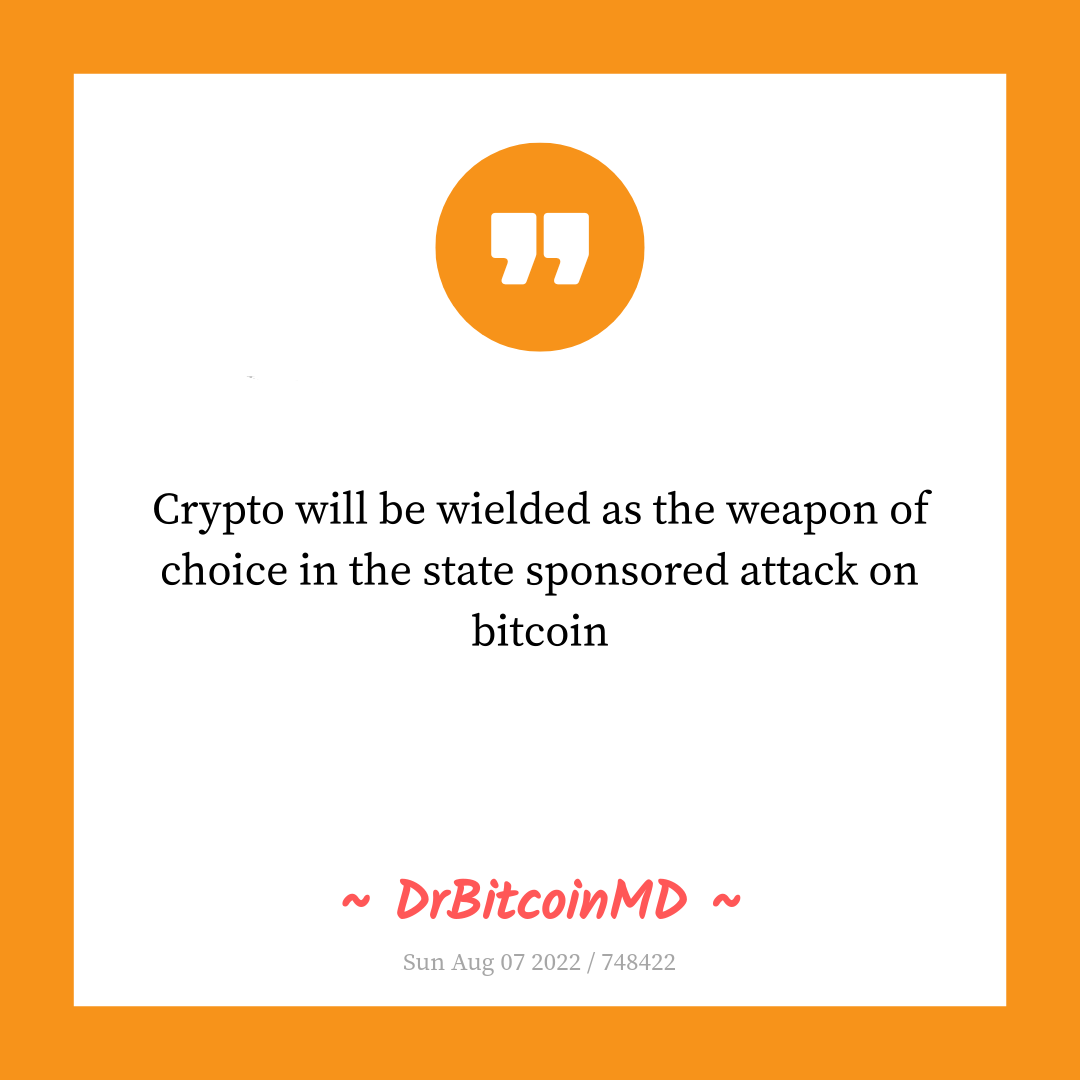
Yes that is how the state will provide liquidity against bitcoin and fail... but the rest of us will win
the state will grind against bitcoin until ot is completely decentralized
Exatumondo !