It’s a high bar, indeed. Many blunders in Germany’s history.
Germany has sold all of its Bitcoin for €s, which are printed out of thin air.
This will go down as one of the greatest blunders in German history. 
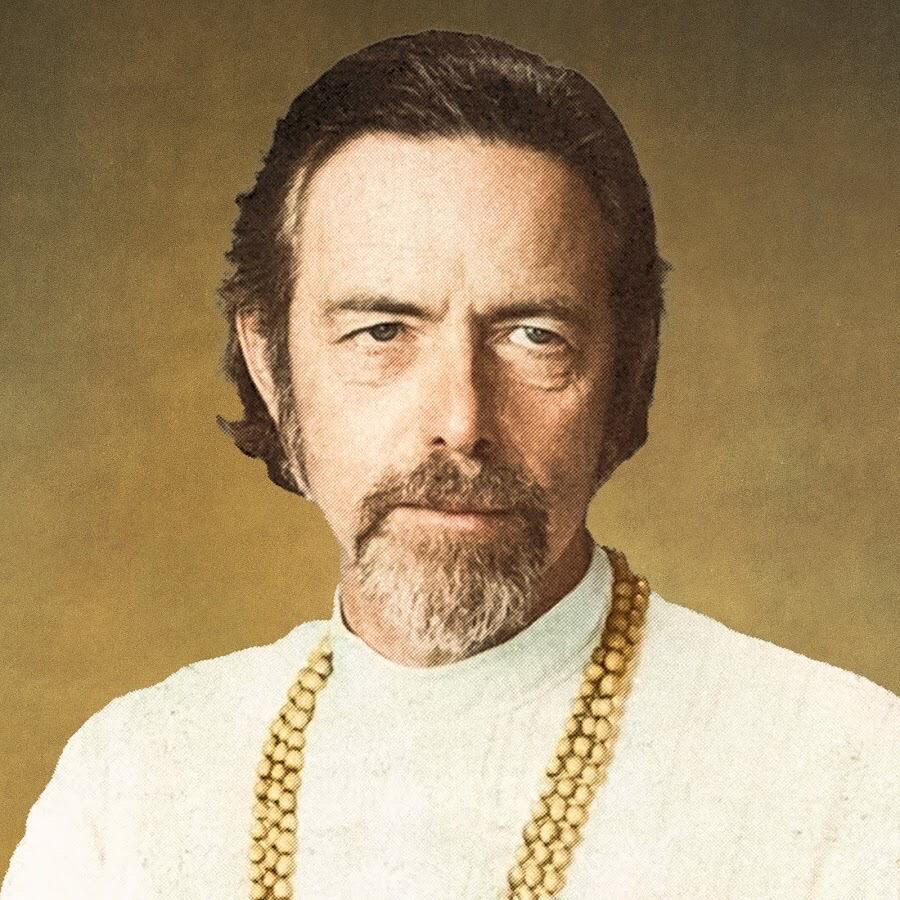
“This is how I first became interested in Oriental philosophy and all that kind of thing. I had an absolute fascination for Chinese and Japanese painting, the landscapes, the treatment of flowers and grasses and bamboos. There was something about it that struck me as astonishing, even though the subject matter was extremely ordinary. And I just, as a child, practically, had to find out what was this strange element in those bamboos and those grasses. I was being, of course, taught by those painters to see grass. But there was something in there that one could never pin down, never put your finger on. And that was this thing that I will call the religion of no religion: the supreme attainment of being a Buddha who can’t be detected, who, in this sense, then, leaves no trace.”
— Alan Watts 
Follow The Middle Way.
Bitcoin adoption is a one-way street.
Once you have awoken to the fraud of fiat and the soundness of satoshis, it’s near impossible to return to the matrix.
Gradually, then suddenly, #Bitcoin wins. 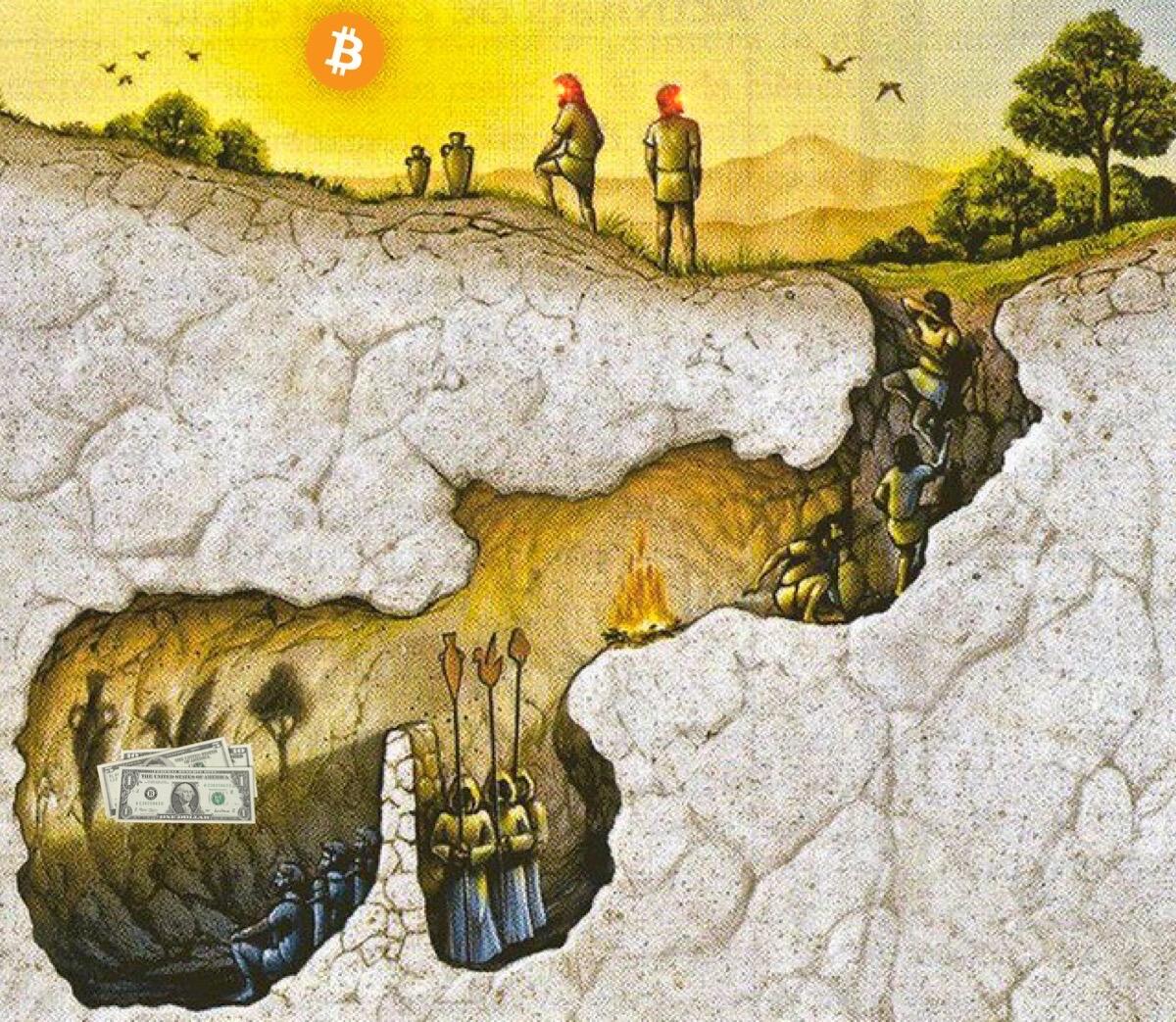
“God is the most obvious thing in the world. He is absolutely self-evident - the simplest, clearest and closest reality of life and consciousness. We are only unaware of him because we are too complicated, for our vision is darkened by the complexity of pride.”
— Alan Watts 
“God is not a being alongside other beings. God is the ground of being.”
— Paul Tillich 
There is a meta-reality behind this one.
“The Self pretends that things are getting serious, just like a great actor on the stage. Even though the audience knows that what they see on stage is only a play, the actor’s skill takes them in. They weep and laugh and sit on the edge of their seats with anticipation. They’re utterly involved in what they really know is just a play. So that’s what’s going on here. Brahman is a tremendous actor with absolutely superb technique, so much so that Brahman takes itself in and feels that the play is real.”
— Alan Watts 
Fiat is usurious. #Bitcoin is liberating. 
“We are all the Brahman acting out our own parts and playing the human game so beautifully that Brahman is enchanted.”
— Alan Watts 
Let’s talk about Judeo-Christian values, and how they differ from Christian/Jewish values, respectively.
First off, let it be known that there are wonderful people of all religions. I’ve met Christians, Jews, Muslims, Hindus, Buddhists, Atheists, and Agnostics who are highly ethical and upstanding members of society.
That said, there are legitimate criticisms to be made of every religion. Each religion I’ve encountered has admirable qualities, and yet also misses the mark in some key ways.
Christianity teaches love and compassion. Jesus forgave those who crucified him while he was dying on the cross, saying “Father, forgive them, for they know not what they do.” (Luke 23:34). He was kind to Jews, Gentiles, the poor, the mighty, the sinners, and the saints alike. This is at the core of what is admirable about Christianity. The sacrifice and example of Jesus enabled the world to move beyond the eye-for-an-eye morality that existed up to that point.
The main critique of Christianity that many have, is that it often mistakes weakness for kindness. Some Christians are too much of a pushover, and are unwilling to fight for their values, even vocally. The other main criticism many have of Christianity is that, in the words of Alan Watts, it is a religion “about Jesus” rather than the religion “of Jesus.” In other words, many Christians fall into the trap of worshipping the finger that is pointing at the moon (ie. Church dogma), rather than looking beyond the finger towards the moon (ie. direct communion with God).
Judaism’s strength lies in its deep sense of community. The Talmud emphasizes living a righteous life, and fulfilling one’s duty to the community. However, this is also the main flaw of Judaism, as The Talmud teaches that it is ok to treat Gentiles differently from fellow Jews. Indeed, there is a long history of Jews charging Gentiles higher interest rates, as usury is not considered a sin for Jews, so long as it is not directed at fellow Jews. This is one of the primary sources of antisemitism, both historically and in the modern era. That is not to say that all Jews adhere to this distinction, but the text of the Talmud is clear: “If one lends money to a Gentile with interest, he is not liable; to a fellow Jew, it is prohibited.” (Bava Metzia 70b).
So what are Judeo-Christian values? Specifically, Jews and Christians both follow a monotheistic faith, adhere to The 10 Commandments, and value the teachings of the Old Testament. These are real commonalities that do differ from Eastern religions, such as Hinduism, which follows polytheism.
However, Judeo-Christian values are not the sum of Christian and Jewish values. They are but the overlapping areas of the venn diagram. Christian and Jewish values are distinct, as are Christian and Hindu values, Jewish and Muslim values, and every other combination of religious values.
Another point worth reflecting upon, is that Judaism before Jesus is not the same as Judaism after Jesus. After Jesus’ death, the defining characteristic of Judaism is the denial of Jesus as God. In this sense, Islam is closer to Christianity than Judaism, for Muslims accept Jesus as at least being a great prophet of God. Hindus and Buddhists, too, consider Jesus (along with everyone else) to be God. In this way, Judaism is unique in its rejection of Jesus, which is why Jewish theology has trended more and more towards atheistic and legalistic tendencies over time.
Regardless of one’s religion, we are all part of the same consciousness collective. These distinctions, while true and interesting to ponder, are dwarfed by our commonalities. For this reason, I urge you, regardless of your religion, to reflect on these words of Jesus: “This is my commandment, that you love one another as I have loved you.” (John 15:12). 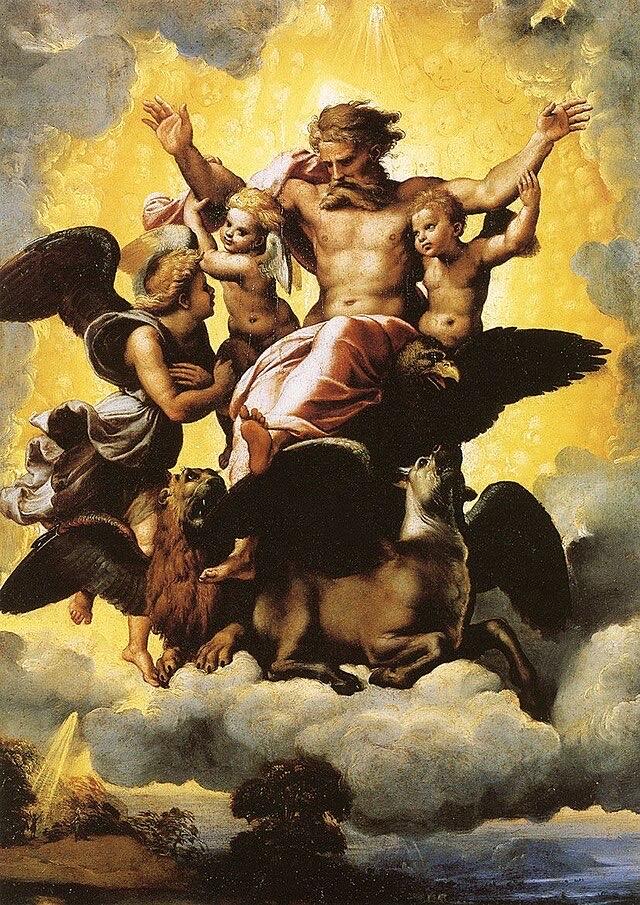
The great meme war, 2024 (colorized) 
“Zen does not confuse spirituality with thinking about God while one is peeling potatoes. Zen spirituality is just to peel the potatoes.”
— Alan Watts 
“And he that sat upon the throne said, Behold, I make all things new.”
— Revelation 21:5 KJV 
GM. The citadel awaits. #Bitcoin 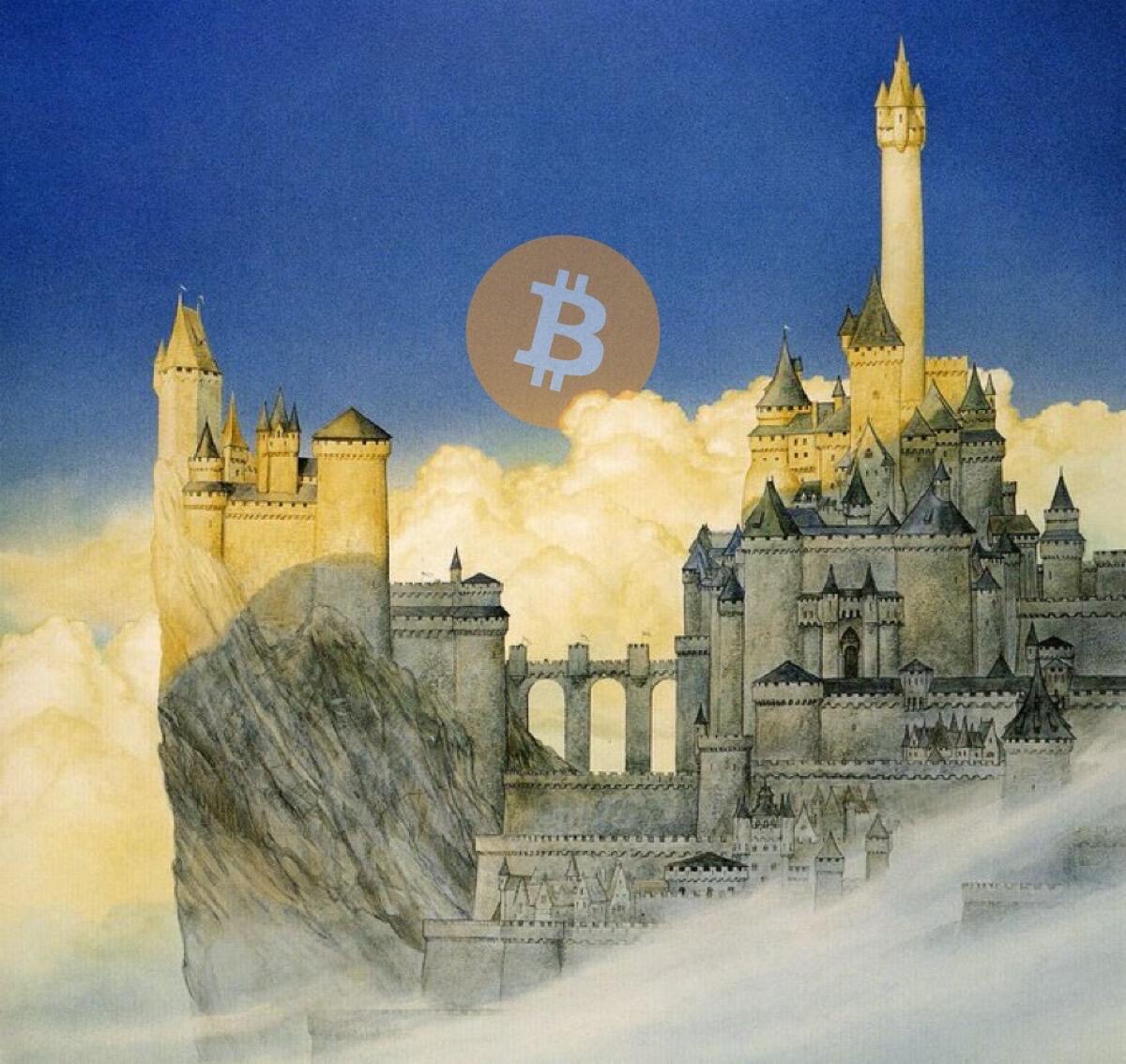
Look it up. It’s a fact.
(To clarify, I am only referring to American history. I’m sure there are examples of some generations being better off than their parents and kids if you go way back in time, such as just before the black plague)
A healthy civilization improves from generation to generation.
That’s now what we’ve experienced these past decades.
Gen X is faring better than Millennials, true. However, they still control far less wealth than Baby Boomers did at their age.
Acknowledging this fact is not about blaming anyone. Rather, it’s about coming to terms with where we are, and where we’re heading as a civilization, so we may correct course.
FWIW, the fiat system is more to blame than the decisions of individual boomer citizens. 
“We imagine ourselves to be results of the past. And we’re always passing the buck over our shoulders. Like when God approached Adam in the Garden of Eden and said, ‘Hast thou eaten of the fruit of the tree whereof I told thee thou shouldst not eat?’ And Adam said, ‘This woman thou gavest me; she tempted me and I did eat.’ And God looked at Eve and said, ‘Hast thou eaten of the fruit of the tree whereof I told thee thou shoudst not eat?’ And she said, ‘The serpent beguiled me and I did eat!’ And God, out of the corner of his eye, looked at the serpent. The serpent said nothing.”
— Alan Watts