
That's so weird and must be stopped immediatly.

The last few years are unlikely to evoke positive associations for most people: corona madness, climate and trans ideology, a few wars in between and now the weather is also going crazy.
You feel more reminded of the biblical plagues and the apocalypse than motivated to make positive changes to the system. It seems as if the world is in the hands of fanatical do-gooders and globalist social engineers. But the world is always in the hands of everyone. There is no responsibility for the future in the hands of some kind of “elite”, unless the citizens voluntarily leave it to them. Apocalypse literally means “unveiling”. In times of crisis, the core of reality is peeled out and all illusions fall away.
**Golden times for system explorers**
In turbulent times like these, unbreakable forest dwellers and resisters, prognosticators, esotericists and also system busters cavort. This is also a constant in history: times of crisis were often times of new beginnings. In knowledge revolutions, new knowledge inevitably mixed with new technology and also a new spiritual orientation towards the world. Before the outside world is created, it must be conceived internally.
Around 500 years ago, the plague repeatedly cut new swathes through Europe, while at the same time Venice began its rise as a major trading power, the Medici banking system began to flourish and, a little later, so did art. This boom was preceded by something that at first glance seemed “boring”, such as the invention of double-entry bookkeeping by the monk Luca Pacioli at the end of the 15th century.
In the following century, the thinker Giordano Bruno moved from city to city in search of employment, and in the end, the system-breaker was burned as a heretic on the Campo de' Fiori in Rome. Meanwhile, astronomers, magicians, artists and alchemists bustled about at the court of the Habsburg Rudolf II in Prague. Some talked to angels, others tried their hand at producing gold. Those who ridicule alchemical experiments today as heresies should at least google how phosphorus and porcelain were discovered.
To be outmoded and unworldly means to be in search of something different.
Great visionaries from Rudolf Steiner to Albert Einstein, Nikola Tesla and Richard Buckminster-Fuller have always known that the best way to change the system is to go outside the system and create something new from there. You don't change the old by fighting it. The best way to replace it is to think in new forms that make the old forms obsolete, said Buckminster-Fuller.
**Brains moved the world more than the guillotine**
Working on the old is like dancing with zombies. Creating the new, on the other hand, inevitably brings the old into competition with the system. If the new is better, the old system is obsolete. “Video killed the Radio Star” sang the Buggles in 1979 (the first clip of the MTV era) and they were just as right as Steve Jobs, who threw several industries overboard with the iPhone. What you previously needed 20 devices for, from dictation machines to telephones and “Walkmans”, you now had in your pocket. Thinking outside the system, which you don't learn within the system, combined with technology, is the sharpest knife in history when it comes to change. Brains moved more than the guillotine.
In today's world, everyone is a potential system changer. There has never been a time when the tools of change have been available to as many people as they are today. At the same time, we live in a time in which fewer people than ever before determine the fate of everyone. How does this fit together? There is an infinite systematic potential for change, and this lies solely with the people who have not yet made use of the available tools. But this wave is irreversibly set in motion; it is rolling and no one knows when it will turn into a tsunami.
Free speech and critical journalism are under massive attack. With the [Pareto Project](https://www.freischwebende-intelligenz.org/p/pareto-projekt-beenden-wir-jetzt) we want to make censorship-resistant publishing the new standard. Today, we have the opportunity to consign the phenomenon of censorship to the landfill of history. Are you thinking along similar lines? What should the journalism of the future look like? Help us as a tester, migrate your content as a journalist or as a publication, support us as a developer or contribute your ideas: [Kontakt@idw-europe.org](mailto:kontakt@idw-europe.org)
**The great transformation**
We are living in the midst of a quiet revolution, with quiet revolutionaries. Pavel Durov from Telegram would certainly have got on well with Giordano Bruno. Bitcoin inventor Satoshi Nakamoto might have felt at home at the court of Rudolf II in the past.
The path to change follows similar patterns of transformation. In the past, the power of the individual was seen as being sand in the gears of the system. “Man of labor, wake up! And recognize your power! All wheels stand still when your strong arm wills it,” wrote Georg Herwegh. Today, anyone can create their own little system. With Bitcoin, uncensorable money is already in circulation. The next big battle is over the uncensorability of information and it is currently underway. The best way to share centralized power, whether it's media power or a central bank cartel, is to distribute power through decentralized systems. This is essentially a feudalistic redistribution: the old feudal system is being replaced by the reassertion of power for the individual.
What role will Switzerland, the country of countless inventions, play in this development? Hardly any other country is so innovative and therefore so well positioned for this system transformation. The most successful Bitcoin app in Europe already comes from Switzerland. The Relai app is an application for secure self-custody of Bitcoin, without the influence of others. Relai AG was recently voted the best crypto startup and second-best financial startup in the country, and is rushing from one growth success to the next. The company is currently preparing to conquer the European market even more effectively.
Gaining control for the individual means losing control for the old (money) system. This principle also applies in other sectors. For example, iVault AG from Thalwil is currently working on opening up the “sharing economy” market. Anyone who wants to easily rent out their e-bike, car or lawnmower to others, for example, can do so via the ivault.io app and benefit directly from their own sustainability. Here too, old centralized platforms are being disempowered and individuals are taking their fate into their own hands.
It's always the same pattern and principle: if you don't want to be managed by others, you have to manage yourself. This applies to money, information and even lawnmowers and e-bikes.
---
Want to learn more about the [Pareto Project](https://pareto.space)? We build a publishing ecosystem on Nostr for citizen-journalism, starting with a client for blogging and newsletter distribution. Zap me, if you want to contribute (all Zaps go to the project).
Can't zap you!

Not a good idea to paste your nsec in every app.
It's convenient but dangerous. One should never give away his nsec to several apps.
War das nicht vorhersehbar?
nostr:note16cqwh0plt8lfdycc7c6rqv5jhcdnuvtqhncpanhatfne4wfvewvs0a980t

13/11/24
Eigentlich wollte ich hier keine Werbung für unseren nostr:npub1rnvr3w3n24eysawq3upwssv3c5vg6sy5zj6wapv7asetj7l2enhs8usa5v machen. Aber diese neue #Münzgasse mit nostr:npub1r8343wqpra05l3jnc4jud4xz7vlnyeslf7gfsty7ahpf92rhfmpsmqwym8 ist wirklich gut geworden und verdient es, angehört zu werden! 🧡
🎙️ https://fountain.fm/episode/Q0rMCZ3yYWV2qR6Wi40F
💜 #Nostr #V4V #Bitcoin

Warum machst Du dann trotzdem Werbung?

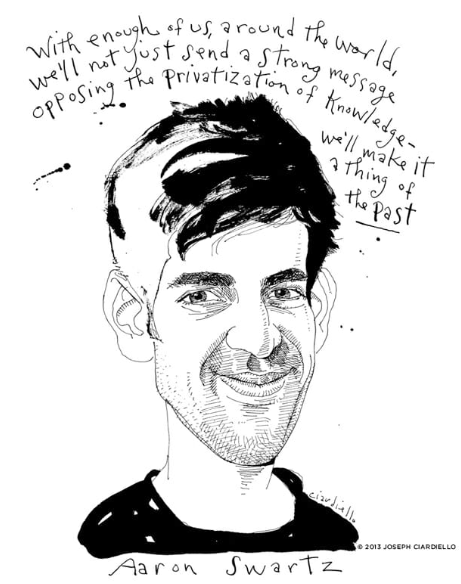
This boy SAVED the INTERNET… but couldn't save himself.
10 years ago, he was persecuted by his government, and ultimately paid with his life.
Aaron Swartz is a modern hero that most people DO NOT KNOW.
But they should.
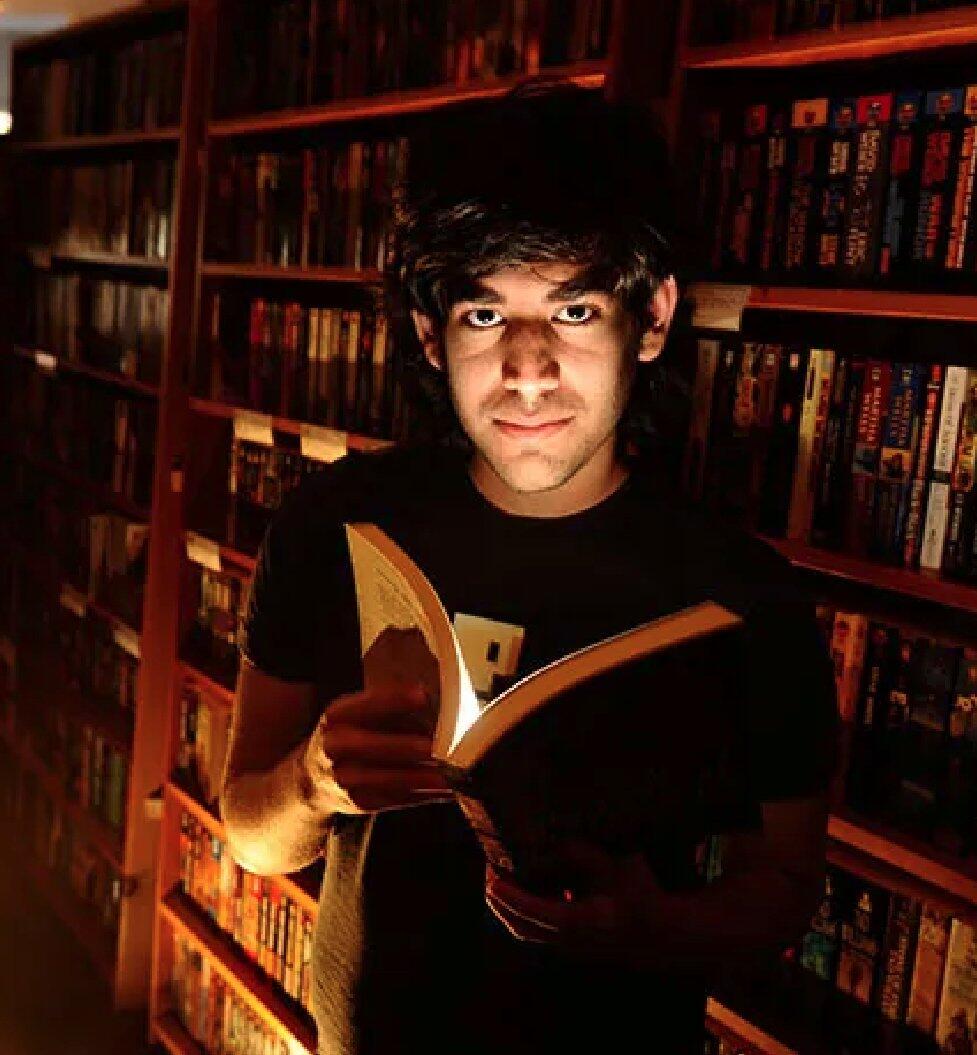
Aaron was creative, focused, and brilliant.
At 14, he invented RSS; He dropped out of Stanford; At 19, he was in the first Y Combinator class; He co-founded Reddit.
Most likely, if he were alive today, he would be involved with #Bitcoin.
But that’s not EVEN 1% of what he did for us 🙏
Let’s take a look 👇

From a young age, Aaron believed in an OPEN INTERNET. In computers as a tool for LIBERATION.
"But wait, wasn’t the internet always open?"
No.
Believe it or not, there was a time when they wanted you to REGISTER your ID before you could browse or send an email.
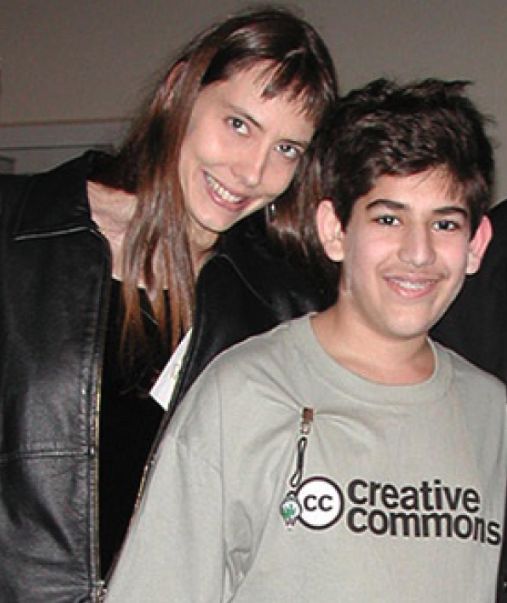
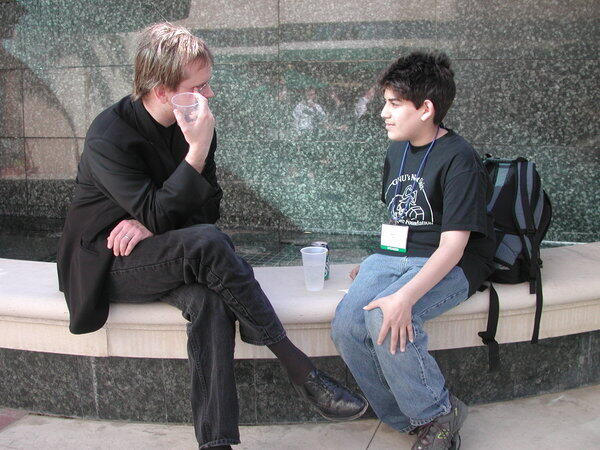
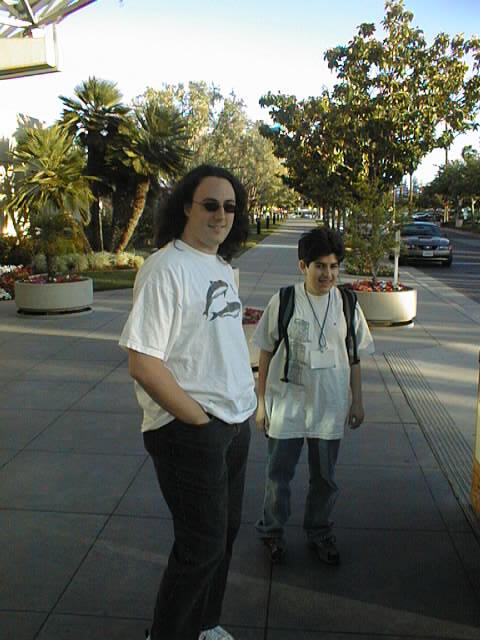
He believed that PUBLIC LEGAL RECORDS and SCIENTIFIC RESEARCH should be accessible to everyone.
But in the U.S.,
• 98% of scientific articles are behind paywalls; and
• ~80% of legal records are too.
Imagine being sued and still having to pay to view the documents?
https://video.nostr.build/2af872c7a7d1b74ce0fb8d42369a87df45a7ee2d23df006d287b58ac60fcfe26.mp4
Aaron's war had 3 major battles.
The first was against PACER.
A legal records database.
PACER is PAID... but it was "free" in 17 public libraries.
With friends, Aaron wrote a script on a USB drive, plugged it into a USB port, downloaded 2.7 million documents... and SET THEM FREE.
https://video.nostr.build/21b565dd1742bc950748be2ac0e0ce2868f4b94c54d1da9321a198c49fe85d1e.mp4
No charges were made against the group.
But the FBI began to take notice.
That had only been the beginning. That boy would still challenge the system.
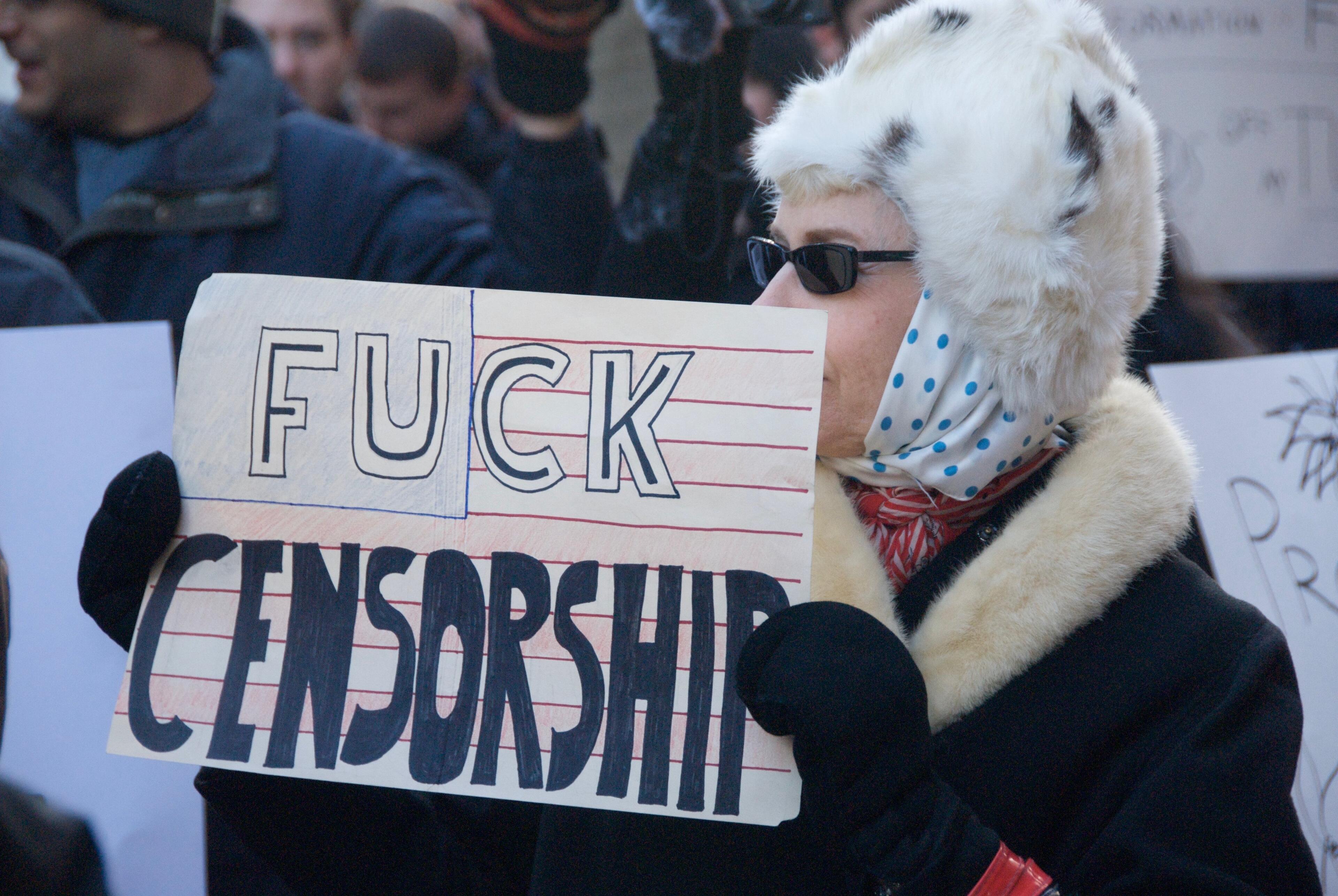
The following year, Aaron would enter the biggest fight of his life — and the greatest battle in internet history against censorship ✊
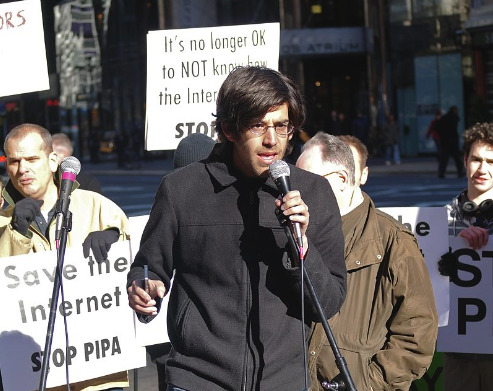
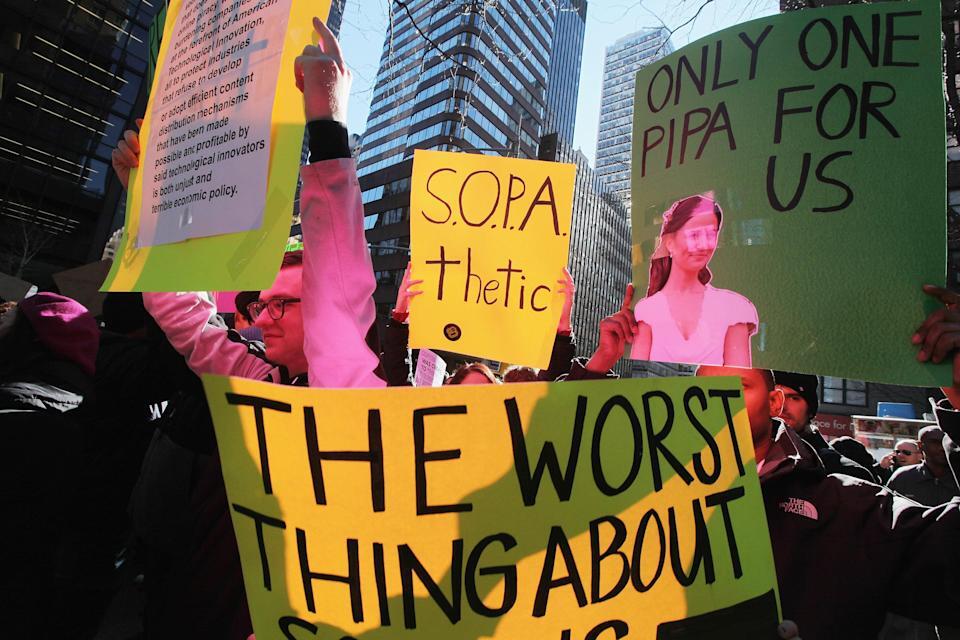
"SOPA/PIPA" 👉 if you're over 20, you probably still remember these acronyms.
A bill to "combat piracy"... which was just an excuse for the government to shut down ANY SITE, without warning.
Some companies loved the idea.
But those who loved the internet fought back.
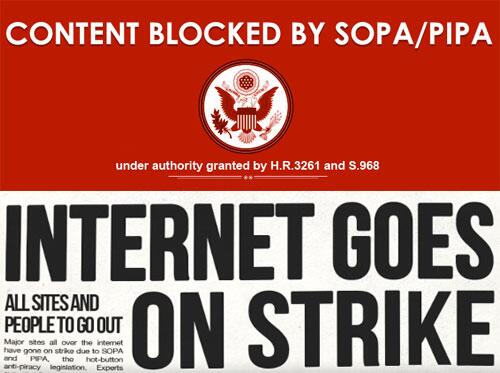
And then, something wonderful happened.
We still knew how to fight against online censorship.
In a coordinated response, the biggest websites on the internet "went on STRIKE."
Wikipedia and Reddit went offline. Google turned black.
Protests also erupted in the STREETS.
But...

... but people have short memories.
This battle was won.
However, the NEXT one would be the LAST for young Aaron.
This MIT security camera was the final straw that ruined his life 👇📹
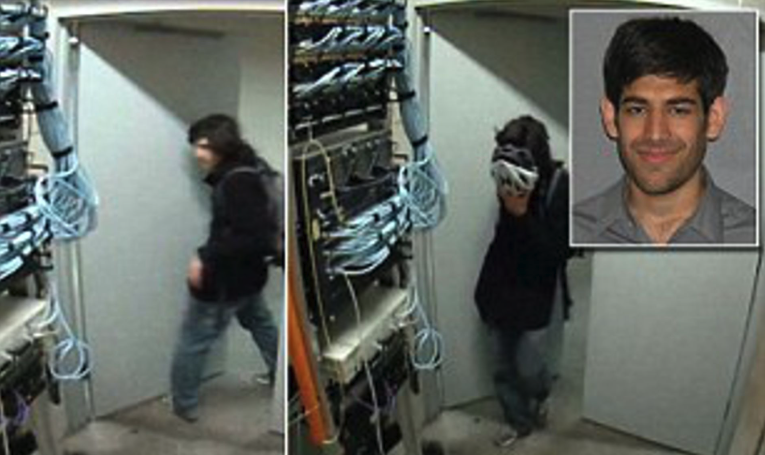
JSTOR was Swartz's final target: the largest database of academic papers in the world.
Aaron wrote a script to download MILLIONS of papers, over the course of months, using his MIT access, in a small room.
MIT has a rebellious culture.
But the FBI could no longer tolerate the boy's defiance.
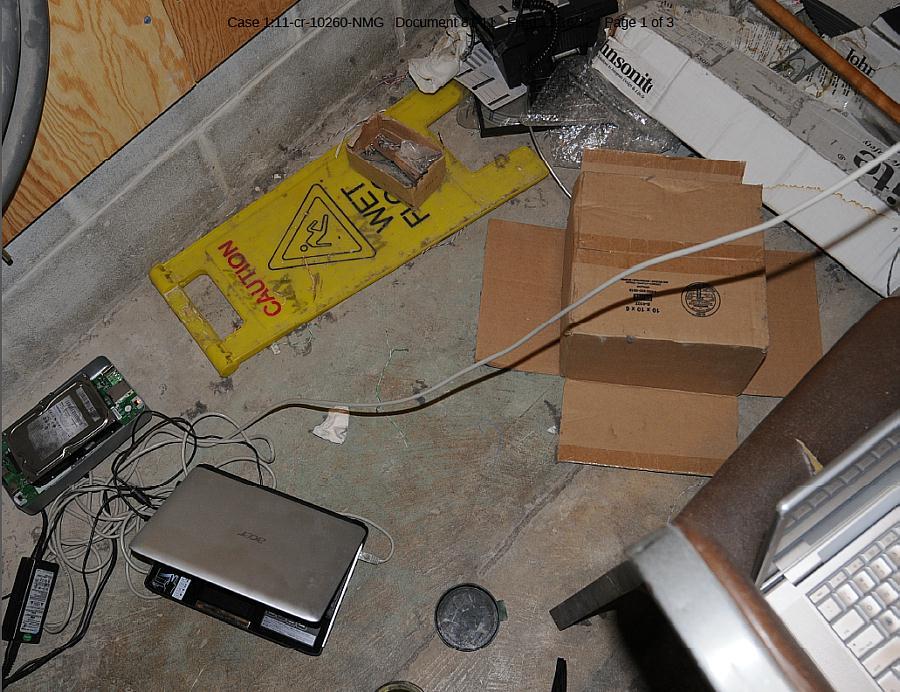
With the video evidence, the U.S. prosecution charged Aaron with 13 crimes. Up to 50 years in prison.
In January 2011, he was arrested by undercover agents near the Harvard campus.
From then on, he was legally tortured.
Two years later, he would be found dead at home.
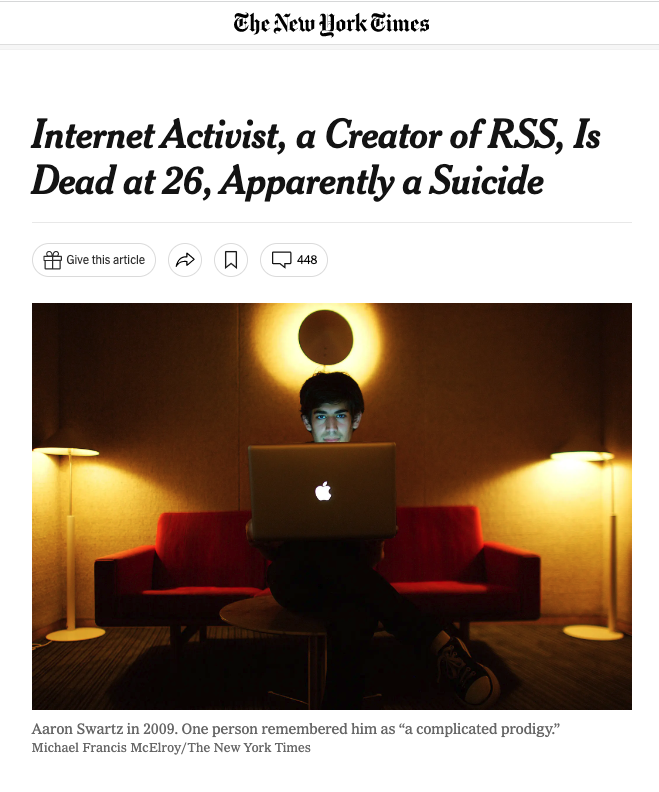
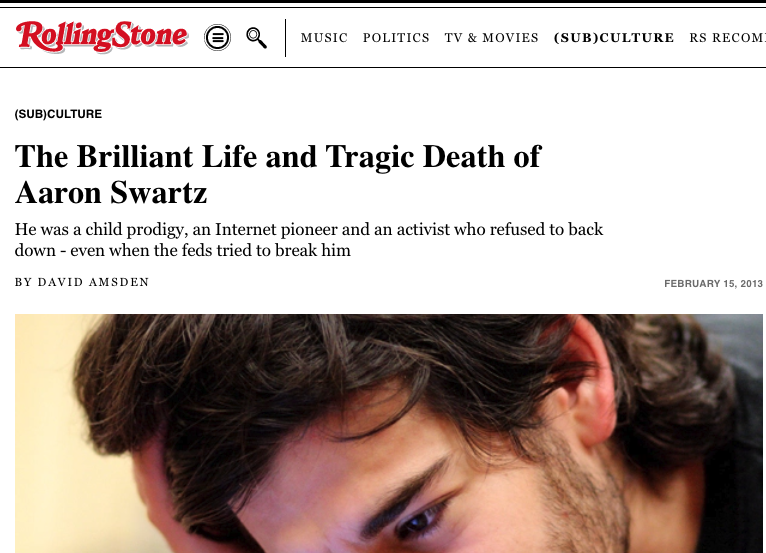
"Aaron would be 38 years old today.
He was accused of 'pirating' scientific papers funded with public money.
Facing up to 50 years in prison, he took his own life.
Those he inspired continue to democratize access to science.
Let us remember him."
*These are the words of Susan, his mother.

After his death, the charges were dropped by the government.
Aaron never considered entering a 'plea deal'. He would have faced millions of dollars in legal costs.
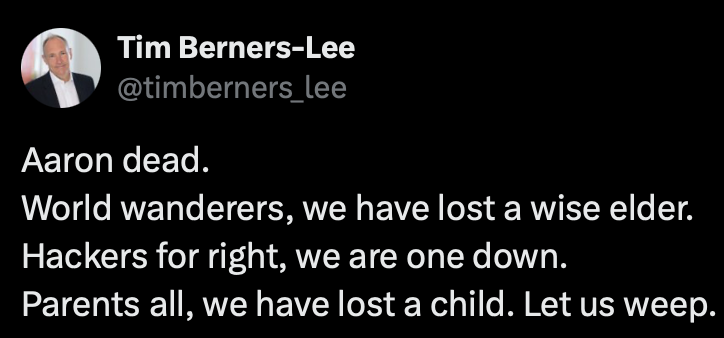
The father of the internet, Tim Berners-Lee, published a short poem at the time that says it all:
“The world was a little worse for his passing,
But a lot better for his being.”
Aaron wasn’t a unanimous figure. You may disagree with his methods.
But he was faithful to his ideal.
He was genuine. Firm in what he believed.
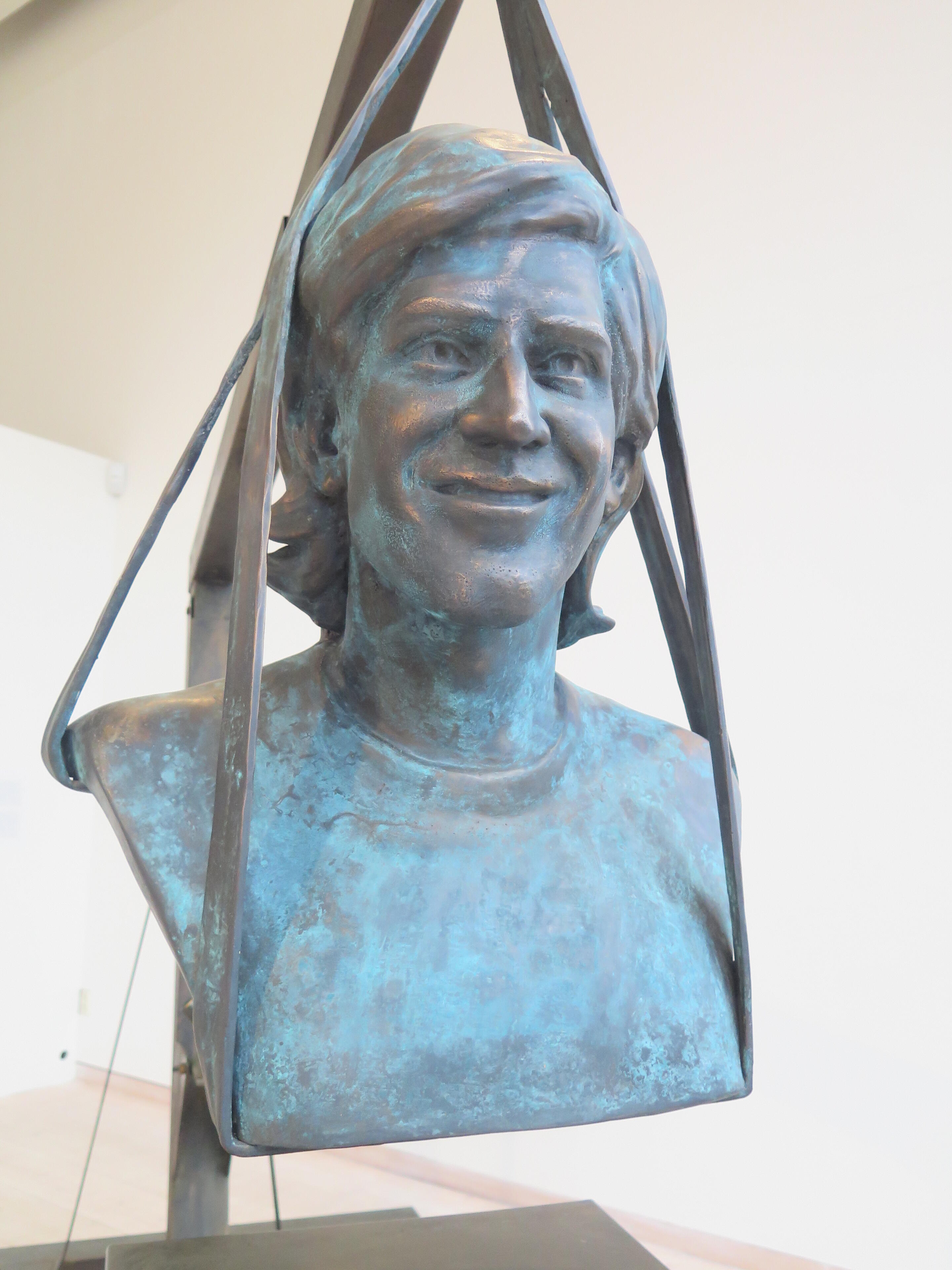
He was a person who used his prodigious skills not to enrich himself, but to make the internet fairer, and the world a better place.
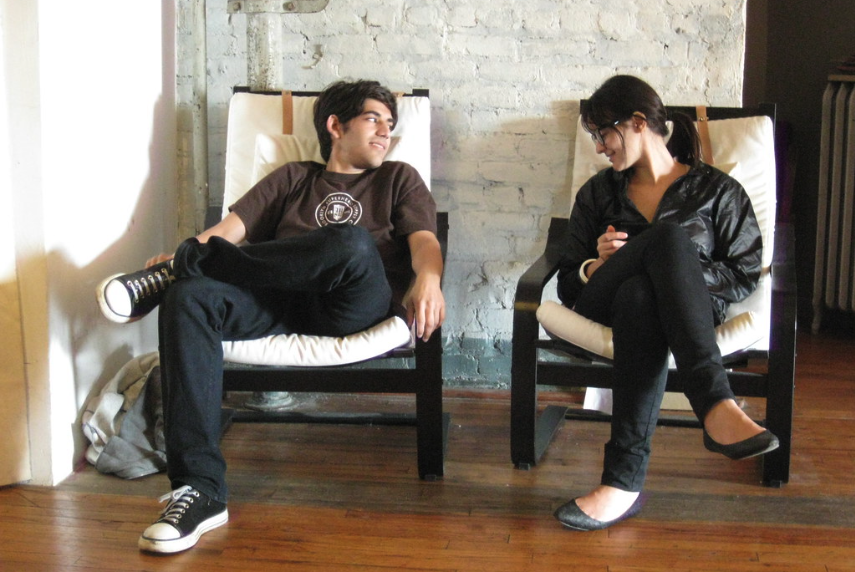
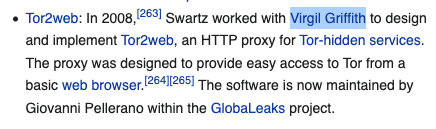
Aaron had worked with Virgil Griffith (former Ethereum, now imprisoned for "teaching about crypto" to North Koreans).
He knew Elizabeth Stark (from Lightning).
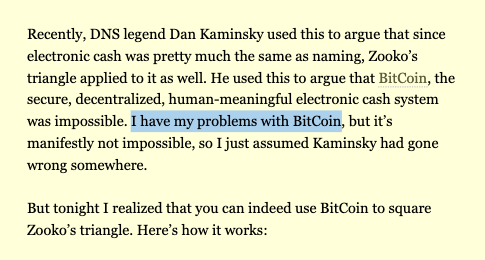
He was friends with Zooko.
And he wrote about #Bitcoin — on the DAY he was arrested (1/6/11)! 😢
http://www.aaronsw.com/weblog/squarezooko
Curious? To learn more about the story, start with this documentary (on YouTube) 👇
[https://youtu.be/9vz06QO3UkQ](https://youtu.be/9vz06QO3UkQ)
We’ll finish with an excerpt from the "Manifesto for Free Access," by Aaron himself:
"Information is power. But, like all power, there are those who want to keep it for themselves. There is no justice in following unjust laws. It’s time to come to the light, and, in the tradition of civil disobedience, declare our opposition to the private theft of public culture.
We must take information, wherever it is, make our copies, and share them with the world."
RIP, Aaron ✊


Aaron famous invention will last. We're going to merge RSS with Nostr.

Guter Link zum heutigen Tage. Eine Stimme der Vernunft die vergessen zu werden droht im Lärm von Kriegspropaganda und Russophobie.


It's both.

But the Habla projects seems to be inactive?

It's not the whole world, but shitholes like Berlin.

Kalle still with the old profile. :-)
> Quis custodiet ipsos custodes?
-- Juvenal (*[Who will watch the watchmen?](https://en.wikipedia.org/wiki/Quis_custodiet_ipsos_custodes)*)
In mid-July, numerous media outlets reported on [the assassination attempt](https://www.epochtimes.se/johan-westerholm-om-mordforsoket-pa-donald-trump) on Donald Trump. FBI Director Christopher Wray stated later that same month that what hit the former president Trump was a bullet. A few days later, it was reported from various [sources](https://x.com/enlundm/status/1817578988933685539) that **search engines no longer acknowledged that an assassination attempt on ex-President Trump had taken place**. When users used automatic completion in Google and Bing (91% respectively 4% market share), these search engines only suggested earlier presidents such as Harry Truman and Theodore Roosevelt, along with Russian President Vladimir Putin as people who could have been subjected to assassination attempts.
The reports were comprehensive enough for the Republican district attorney of Missouri to say that he would investigate matter. The senator from Kansas - also a Republican - planned to make an official request to Google. Google has responded through a spokesman to the New York Post that the company had not "manually changed" search results, but its system includes "protection" against search results "connected to political violence."
**A similar phenomenon occurred during the 2016 presidential election**. At the time, reports emerged of Google, unlike other less widely used search engines, rarely or never suggesting negative search results for Hillary Clinton. The company however provided negative search results for then-candidate Trump. Then, as today, the company denied deliberately favouring any specific political candidate.
These occurrences led to research on how such search suggestions can influence public opinion and voting preferences. For example, the impact of simply removing negative search suggestions has been investigated. [A study published in June 2024](https://papers.ssrn.com/sol3/papers.cfm?abstract_id=4535163) reports that such search results can dramatically affect undecided voters. **Reducing negative search suggestions can turn a 50/50 split into a 90/10 split in favour of the candidate for whom negative search suggestions were suppressed**. The researchers concluded that search suggestions can have "a dramatic impact," that this can "shift a large number of votes" and do so without leaving "any trace for authorities to follow." How search engines operate should therefore be considered of great importance by anyone who claims to take democracy seriously. And this regardless of one's political sympathies.
A well-known thought experiment in philosophy asks: "If a tree falls in the forest and no one hears it, does it make a sound?" Translated to today's media landscape: **If an assassination attempt took place on a former president, but search engines don't want to acknowledge it, did it really happen?**
Great article.

Jack Dorsey is explaining the power of Nostr.

 Very nice place with a lot of Bitcoin merchants.