
In his essential book, *#BeingMortal*, #AtulGawande describes how end-of-life care that centers a dying person's priorities can make death a dignified and even satisfying process for the patient and their loved ones:
https://atulgawande.com/book/being-mortal/
But that dignity comes from a patient-centered approach, not a profit-centered one.
19/
Doctors are required to put their patients' interests first, and while they sometimes fail at this (everyone is fallible), the professionalization of medicine, through which doctors were held to ethical standards ahead of monetary considerations, proved remarkable durable.
Partly that was because doctors generally worked for themselves - or for other doctors.
20/
Sometimes, these sham hospices deliberately induce overdoses in their patients in a bid to make it look like they're actually in the business of caring for the dying. Incentives matter:
https://www.newyorker.com/magazine/2022/12/05/how-hospice-became-a-for-profit-hustle
Now, hospice care - and its relative, #PalliativeCare - is a crucial part of any humane medical system.
18/
In his essential book, *#BeingMortal*, #AtulGawande describes how end-of-life care that centers a dying person's priorities can make death a dignified and even satisfying process for the patient and their loved ones:
https://atulgawande.com/book/being-mortal/
But that dignity comes from a patient-centered approach, not a profit-centered one.
19/
Sometimes, these sham hospices deliberately induce overdoses in their patients in a bid to make it look like they're actually in the business of caring for the dying. Incentives matter:
https://www.newyorker.com/magazine/2022/12/05/how-hospice-became-a-for-profit-hustle
Now, hospice care - and its relative, #PalliativeCare - is a crucial part of any humane medical system.
18/
After the patient generates $32,000 in billings for the PE company, they hit the cap and are "live discharged" and must go through a bureaucratic nightmare to re-establish their Medicare eligibility, because once you go into hospice, Medicare assumes you are dying and halts your care.
PE-owned hospices bribe doctors to refer patients to them.
17/
You will have a facility inspection, but don't worry, there's no followup to make sure you remediate any failing elements. And no one at the Centers for Medicare & Medicaid Services tracks complaints.
So PE-owned hospices pressure largely healthy people to go into "hospice care" - from home. Then they do *nothing* for them, including continuing whatever medical care they were depending on.
16/
Wealth-based health-care rationing is bad enough, but when it's combined with the public purse, a bad system becomes a *nightmare*. Take hospice care: private equity funds have rolled up huge numbers of hospices across the USA and turned them into rigged - and lethal - games:
https://pluralistic.net/2023/04/26/death-panels/#what-the-heck-is-going-on-with-CMS
Medicare will pay a hospice $203-$1,462 to care for a dying person, amounting to $22.4b/year in public funds transfered to the private sector.
14/
Incentives matter: the less a hospice does for their patients, the more profits they reap. And the private hospice system is administered with the lightest of touches: at the $203/day level, a private hospice has *no* mandatory duties to their patients.
You can set up a California hospice for the price of a $3,000 filing fee (which is mostly optional, since it's never checked).
15/
In America, health care is mostly rationed based on your ability to pay. Emergency room triage is one of the only truly meritocratic institutions in the American health system, where your treatment is based on urgency, not cash. Of course, you can buy your way out of that too, with concierge doctors. And the ER system itself has been infested with #PrivateEquity parasites:
https://pluralistic.net/2022/11/17/the-doctor-will-fleece-you-now/#pe-in-full-effect
13/
Wealth-based health-care rationing is bad enough, but when it's combined with the public purse, a bad system becomes a *nightmare*. Take hospice care: private equity funds have rolled up huge numbers of hospices across the USA and turned them into rigged - and lethal - games:
https://pluralistic.net/2023/04/26/death-panels/#what-the-heck-is-going-on-with-CMS
Medicare will pay a hospice $203-$1,462 to care for a dying person, amounting to $22.4b/year in public funds transfered to the private sector.
14/
In America, health care is mostly rationed based on your ability to pay. Emergency room triage is one of the only truly meritocratic institutions in the American health system, where your treatment is based on urgency, not cash. Of course, you can buy your way out of that too, with concierge doctors. And the ER system itself has been infested with #PrivateEquity parasites:
https://pluralistic.net/2022/11/17/the-doctor-will-fleece-you-now/#pe-in-full-effect
13/
Yes, the government can abet this, as when it lets privatizers into the Medicare system to loot it and maim its patients:
https://prospect.org/health/2023-08-01-patient-zero-tom-scully/
But the answer to this isn't *more* privatization. Remember #SarahPalin's scare-stories about how government health care would have "#DeathPanels" where unaccountable officials decided whether your life was worth saving?
https://pubmed.ncbi.nlm.nih.gov/26195604/
11/
The reason "death panels" resounded so thoroughly - and stuck around through the years - is that we all understand, at some deep level, that health care will *always* be rationed. When you show up at the Emergency Room, they have to triage you. Even if you're in unbearable agony, you might have to wait, and wait, and wait, because other people (even people who arrive after you do) have it worse.
12/
Yes, the government can abet this, as when it lets privatizers into the Medicare system to loot it and maim its patients:
https://prospect.org/health/2023-08-01-patient-zero-tom-scully/
But the answer to this isn't *more* privatization. Remember #SarahPalin's scare-stories about how government health care would have "#DeathPanels" where unaccountable officials decided whether your life was worth saving?
https://pubmed.ncbi.nlm.nih.gov/26195604/
11/
The bigger the companies are, the bigger the government has to be:
https://doctorow.medium.com/regulatory-capture-59b2013e2526
Companies *can* suborn the government to help them abuse the public, but whether public institutions can resist them is more a matter of how powerful those companies are than how fallible a public servant is. Our plutocratic, monopolized, unequal society is the worst of both worlds.
9/
Because companies are so big, they abuse us with impunity - and they are able to suborn the state to help them do it:
This is the dimension that's so often missing from the discussion of why Americans pay more for healthcare to get worse outcomes from health-care workers who labor under worse conditions than their cousins abroad.
10/
The bigger the companies are, the bigger the government has to be:
https://doctorow.medium.com/regulatory-capture-59b2013e2526
Companies *can* suborn the government to help them abuse the public, but whether public institutions can resist them is more a matter of how powerful those companies are than how fallible a public servant is. Our plutocratic, monopolized, unequal society is the worst of both worlds.
9/
Admittedly, that doesn't always work, but one of the major predictors of whether it will work is how big and concentrated the private sector is. #RegulatoryCapture isn't automatic: it's what you get when companies are bigger than governments.
If you want small governments, in other words, you need small companies. Even if you think the only role for the state is in enforcing contracts, the state needs to be more powerful than the companies issuing those contracts.
8/
Businesspeople understand the risks of competition, which is why they seek to extinguish it. The harder it is for your customers to leave - because of a lack of competitors or because of lock-in - the worse you can treat them without risking their departure. This is the core of #enshittification: a company that is neither disciplined by competition nor regulation can abuse its customers and suppliers over long timescales without losing either:
https://pluralistic.net/2023/01/21/potemkin-ai/#hey-guys
6/
It's not that public institutions can't betray they public interest. It's just that public institutions can be made *democratically* accountable, rather than *financially* accountable. When a company betrays you, you can only punish it by "voting with your wallet." In that system, the people with the fattest wallets get the most votes.
When public institutions fail you, you can vote with your *ballot*.
7/
Or think of #BigTech, locking up whole swathes of your life inside their silos, so that changing mobile OSes means abandoning your iMessage contacts; or changing social media platforms means abandoning your friends, or blocking Google surveillance means losing your email address, or breaking up with Amazon means losing all your ebooks and audiobooks:
https://www.eff.org/deeplinks/2021/08/facebooks-secret-war-switching-costs
5/
Businesspeople understand the risks of competition, which is why they seek to extinguish it. The harder it is for your customers to leave - because of a lack of competitors or because of lock-in - the worse you can treat them without risking their departure. This is the core of #enshittification: a company that is neither disciplined by competition nor regulation can abuse its customers and suppliers over long timescales without losing either:
https://pluralistic.net/2023/01/21/potemkin-ai/#hey-guys
6/
Or think of #BigTech, locking up whole swathes of your life inside their silos, so that changing mobile OSes means abandoning your iMessage contacts; or changing social media platforms means abandoning your friends, or blocking Google surveillance means losing your email address, or breaking up with Amazon means losing all your ebooks and audiobooks:
https://www.eff.org/deeplinks/2021/08/facebooks-secret-war-switching-costs
5/
Think of #Uber, lighting $31b of its investors' cash on fire, losing 41 cents on every dollar it brought in, in a bid to drive out competitors and make public transit seem like a bad investment.
4/
Think of #Uber, lighting $31b of its investors' cash on fire, losing 41 cents on every dollar it brought in, in a bid to drive out competitors and make public transit seem like a bad investment.
5/
It's this belief that leads the right to embrace #monopolies as "efficient": "A company's dominance is evidence of its quality. Customers flock to it, and competitors fail to lure them away, therefore monopolies are the public's best friend."
But this only makes sense if you don't understand how monopolies can prevent competitors.
3/
It's not that #conservatives aren't sometimes right - it's that even when they're right, they're *highly selective* about it. Take the hoary chestnut that "#IncentivesMatter," trotted out to deny humane benefits to poor people on the grounds that "free money" makes people "workshy."
--
If you'd like an essay-formatted version of this thread to read or share, here's a link to it on pluralistic.net, my surveillance-free, ad-free, tracker-free blog:
https://pluralistic.net/2023/08/05/any-metric-becomes-a-target/#hca
1/
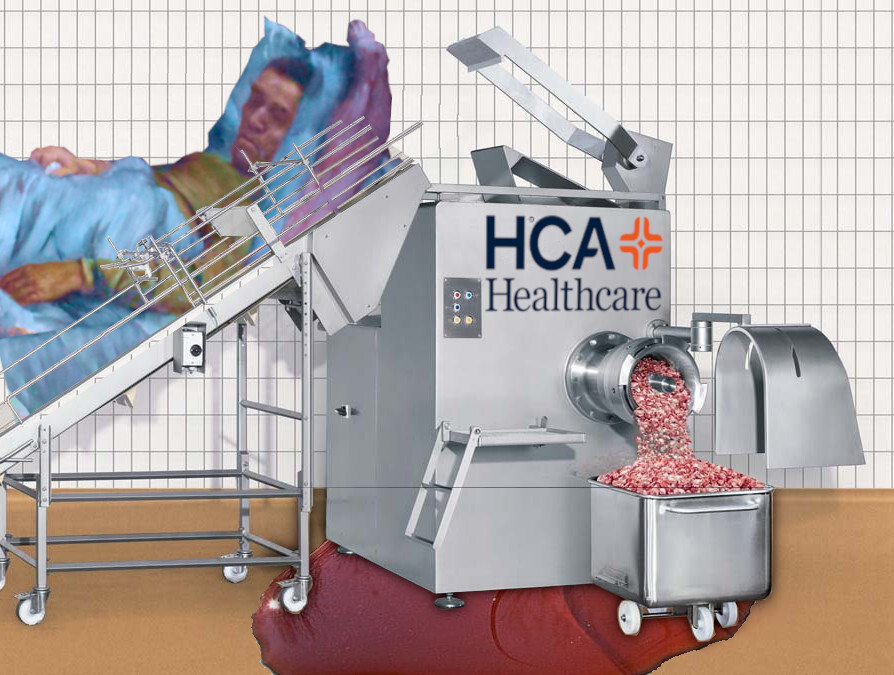
There's a whole body of conservative economic orthodoxy, #PublicChoiceTheory, that concerns itself with the motives of callow, easily corrupted regulators, legislators and civil servants, and how they might be tempted to distort markets.
But the same people who obsess over our fallible public institutions are convinced that private institutions will never yield to temptation, because the fear of competition keeps temptation at bay.
2/