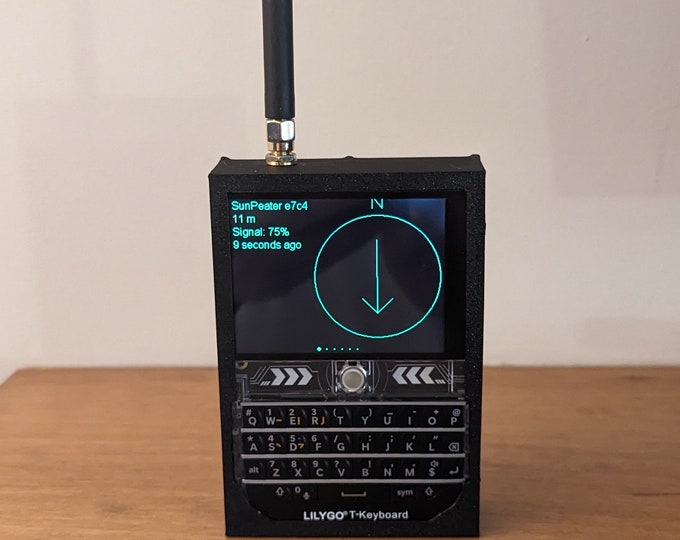
Meshtastic Case Pics, STLs, Links & Reviews Thread:
Reply with some pics, STL files, links or reviews of your favorite meshtastic 3d printed cases.
⚡️ ⚡️ ⚡️ I will be busy today, but I will go on a zapping spree on this topic when I get back on. ⚡️ ⚡️ ⚡️
#meshtastic #mesh #stl #3d #3dprint #3dprinting #radio #review #brrr #lora #lorawan #zapathon
Ask Dave, ‘What is an Anderson Powerpole Connector?”
#AskDave #HamRadio #davecasler #davidcasler #ke0og #og #radio #amateurradio #anderson #andersonpowerpole #powerpole #connectors #crimper nostr:note1j8edlz0fc3e9w30ymvy6przfx5v2cgvt347kkdm0r9uu6u7s050slzq8lz
Tech Minds takes a look at two new Meshtastic compatible devices from Seeed Studio: T-1000E & Wio Tracker 1110 Dev Kit.
#mesh #meshtastic #SeeedStudio #seeed #t1000e #wio #wiotracker #devkit #1110 #ham #hamradio #amateurradio #radio
I recently changed my default zap from 21 sats to 73 sats.
'73' has a meaning in ham radio that is rooted in tradition and history.
It's not just a number — it's a time-honored way of saying 'Best Regards.' Originating from early telegraphy, this shorthand has been used by radio operators for over a century to sign off with warmth and goodwill.
So, next time you hear '73,' or get zapped 73 sats remember, it's more than a farewell — it's a friendly wish for the best.
If you haven’t been zapped 73 sats by me yet, post some radio comment. It will help me find it if you use some radio related hashtags. You might even get zapped for bringing radio content to my attention by replying to it with nostr:npub1ya20ep3dd0qt0suhzprxztv5y43arqwps73ercvqa44sp7qw0edsp4x9ty .
#HamRadio #AmateurRadio #73 #radio #morsecode #cw #telegraphy #bestregards #highlyregarded


Antenna Basics: Vertical or Horizontal etc
Vertical antennas are great for omnidirectional coverage and require less space—perfect for limited environments.
Horizontal antennas offer directionality and less noise, making them ideal for focused communication.
Your choice depends on your specific needs and space.
nostr:npub1ya20ep3dd0qt0suhzprxztv5y43arqwps73ercvqa44sp7qw0edsp4x9ty recommends following KE0OG on YouTub. He is literally an “OG” ham radio educator that has a very large catalog of quality ham radio educational materials.
#HamRadio #AntennaBasics #RadioCommunications #hf #antenna #dipole #davecasler #davidcasler #ke0og #og #radio #amateurradio #radial
Just get one where you are & learn along the way. If you still feel like you need a different one after you learn more, you will know where to go next.
nostr:note1vxeuempfc6yrw3cnraexzxe755dmlhf3gkf8j5a4e2tuzaynmtyq4vrhde
Are you a General Class Ham Radio Operator in the US looking to upgrade to Amateur Extra? Check out this opportunity to learn from one of the best in the field.
W4EEY is starting up a16 week Amateur Extra Licensing Class.
The free Amateur Extra Licensing Class will start on Tuesday, September 3, 2024.
The class will stream live to the YouTube Playlist and also be recorded there for later viewing.
If you would like to be on W4EEY’s Extra Class YouTube Mailing List send a request to w4eey@arrl.net and he will add you.
#w4eey #amateurextra #ham #hamradio #radio #arrl #upgrade #extra #general #license

What is an MMDVM Hotspot?
MMDVM stands for "Multi-Mode Digital Voice Modem." An MMDVM hotspot is a small, low-power radio device that enables amateur radio operators (hams) to connect to various digital voice networks using the internet. These hotspots are designed to work with a variety of digital modes, such as DMR (Digital Mobile Radio), D-Star, System Fusion (YSF), P25, NXDN, POCSAG and the new FOSS M17 Project digital mode.
The hotspot acts as a bridge between a ham radio and the internet. When you talk into your radio, the hotspot receives the signal, converts it into a digital format (if necessary), and transmits it over the internet to a linked repeater, reflector, or other digital radio network. This allows you to communicate with other hams globally, even if you're only using a low-power handheld radio.
The digital ham radio modes are interesting when connected via internet because of they allow the use to connect to specific voice chat rooms that are called various names depending on the digital mode. They are called “talk groups” in DMR, “reflectors” in D-Star and rooms in YSF. These groups can be regional or topic based and etc. Folks with skills running servers can even start their own talk groups rooms and reflectors (hint hint, look into it).👀
Common Components of an MMDVM Hotspot
1. Raspberry Pi: The most common computer used for an MMDVM hotspot is the Raspberry Pi, typically a Raspberry Pi Zero or Raspberry Pi 3. These are small, low-cost, single-board computers.
2. MMDVM Hat with antenna: This is the radio module that attaches to the Raspberry Pi. It contains the necessary circuitry to handle the digital modes and interfaces with the Raspberry Pi through GPIO pins.
3. Case: optional
Cost and Ease of Building: aka You really should build your own.
- Cost: Depending on the components you choose, the total cost of an MMDVM hotspot typically ranges from $50 to $100, making it a very affordable project for amateur radio enthusiasts.
- Ease of Build: The project is relatively simple and requires basic skills in assembling electronics and setting up software. The most challenging part is configuring the software, but numerous online resources and communities are available to help, there are great YouTube videos on this. You can even save a few bucks (fiat) if you have basic soldering skills.
Overall, MMDVM hotspots provide an excellent entry point into the world of digital amateur radio communication at a low cost and with relative ease.
#mmdvm #ham #hamradio #radio #amateurradio #hotspot #pi #pizero #p25 #m17 #ysf #dstar #drats #dmr #nxdm #pocsag #pager #wspd #pistar #project #network #gpio #solder #pihat #wpsd
Convo with the Meshtastic devs about the project on HRCC.
#mesh #meshtastic #radio #lora #ham #hamradio #bbs #hrcc #ki6naz
Thanks!!
This is very cool. nostr:note1mmf9yezrn4lgrkdr3r6rl9x5pvkyn6jaj2xa3d4as8lfdufcxd2syvw4at

A radio station that plays just songs that are tautologies.
Example songs: Life is life, Que sera sera.
nostr:npub1zjmlr0dyue8exympgh3xy2wyqm73kc8s7q2cua9rdaqvrl6aw9cs70r5gf
Everything is Everything

Negentropy syncing notes over meshtastic links would be cypherpunk af. fully distributed, p2p, signed application data over radio. Who needs ISPs? They are a chokepoint anyways. So many cool usecases to explore outside of microblogging.
Imagine a lora setup for a local community, syncing notes between each other without any real internet infrastructure in place.
To send a note would be simply writing it to your local database. When nodes are online at the same time they simply sync with each other or a local relay server.
You could totally build distributed, low connectivity, store and forward applications this way if nostr was used for your application data.
what meshtastic kit should i get to start hacking on these things nostr:npub1az9xj85cmxv8e9j9y80lvqp97crsqdu2fpu3srwthd99qfu9qsgstam8y8 ? nostr:note1h4ullw8alkkkm7lxh6074p5mrufd2c80elx66kgjh3mdzcsgklask8c038
Negentropy syncing notes over meshtastic links would be cypherpunk af. fully distributed, p2p, signed application data over radio. Who needs ISPs? They are a chokepoint anyways. So many cool usecases to explore outside of microblogging.
Imagine a lora setup for a local community, syncing notes between each other without any real internet infrastructure in place.
To send a note would be simply writing it to your local database. When nodes are online at the same time they simply sync with each other or a local relay server.
You could totally build distributed, low connectivity, store and forward applications this way if nostr was used for your application data.
what meshtastic kit should i get to start hacking on these things nostr:npub1az9xj85cmxv8e9j9y80lvqp97crsqdu2fpu3srwthd99qfu9qsgstam8y8 ? nostr:note1h4ullw8alkkkm7lxh6074p5mrufd2c80elx66kgjh3mdzcsgklask8c038
Negentropy syncing notes over meshtastic links would be cypherpunk af. fully distributed, p2p, signed application data over radio. Who needs ISPs? They are a chokepoint anyways. So many cool usecases to explore outside of microblogging.
Imagine a lora setup for a local community, syncing notes between each other without any real internet infrastructure in place.
To send a note would be simply writing it to your local database. When nodes are online at the same time they simply sync with each other or a local relay server.
You could totally build distributed, low connectivity, store and forward applications this way if nostr was used for your application data.
what meshtastic kit should i get to start hacking on these things nostr:npub1az9xj85cmxv8e9j9y80lvqp97crsqdu2fpu3srwthd99qfu9qsgstam8y8 ? nostr:note1h4ullw8alkkkm7lxh6074p5mrufd2c80elx66kgjh3mdzcsgklask8c038
Negentropy syncing notes over meshtastic links would be cypherpunk af. fully distributed, p2p, signed application data over radio. Who needs ISPs? They are a chokepoint anyways. So many cool usecases to explore outside of microblogging.
Imagine a lora setup for a local community, syncing notes between each other without any real internet infrastructure in place.
To send a note would be simply writing it to your local database. When nodes are online at the same time they simply sync with each other or a local relay server.
You could totally build distributed, low connectivity, store and forward applications this way if nostr was used for your application data.
what meshtastic kit should i get to start hacking on these things nostr:npub1az9xj85cmxv8e9j9y80lvqp97crsqdu2fpu3srwthd99qfu9qsgstam8y8 ? nostr:note1h4ullw8alkkkm7lxh6074p5mrufd2c80elx66kgjh3mdzcsgklask8c038