
Avatar
Ostrich McExcellent
2d04de6bbcd340245c62c183412d64b5f9ae564a96d43411939da8e2f7c4d088
Replying to Avatar Skipper

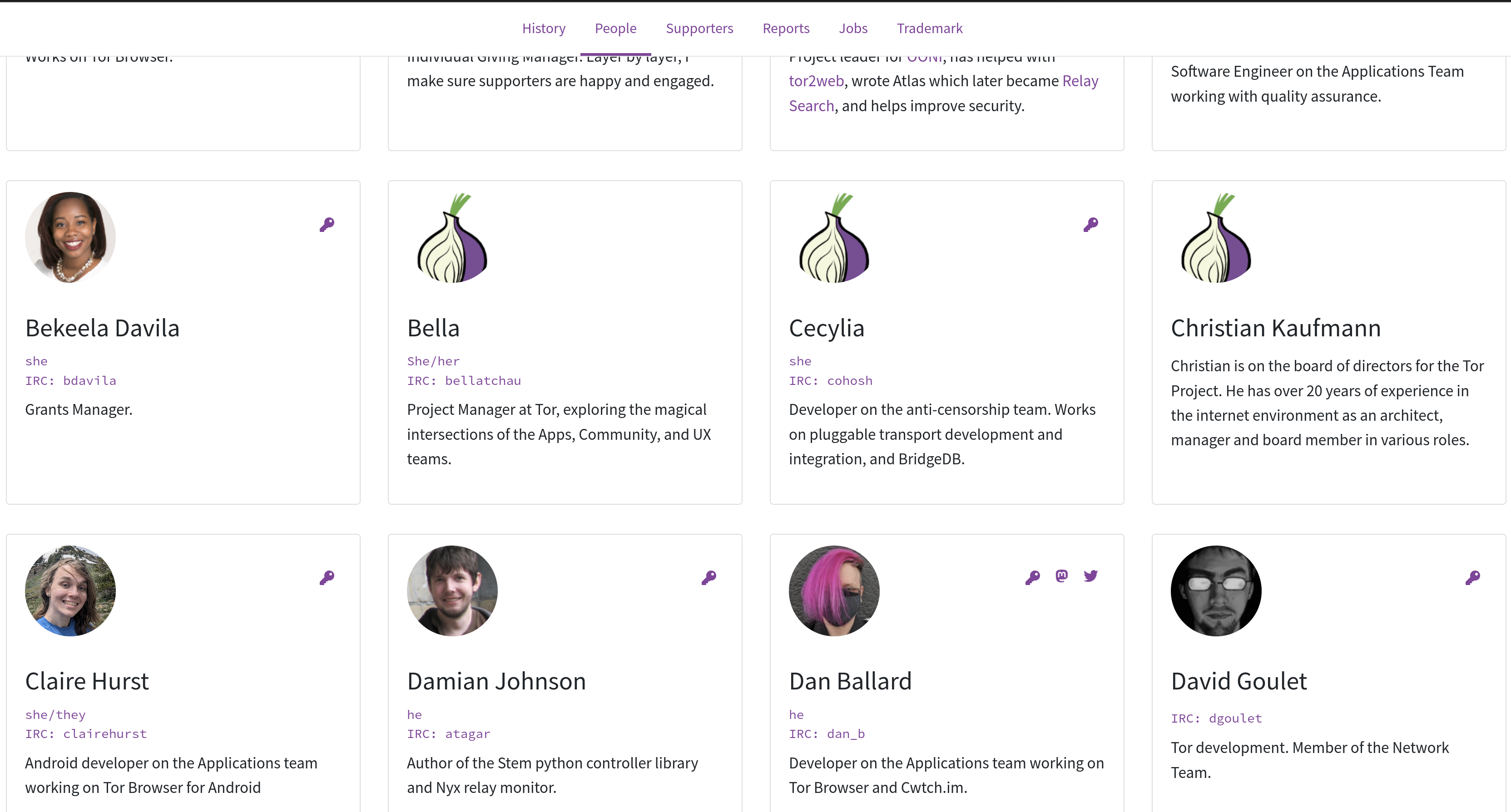
I'm curious, how does it make you feel to know that the team behind the Tor Project (https://www.torproject.org/about/people/) is comprised primarily of woke LGBTQ+ individuals, with pronouns on their bios. Some even express their support for Antifa on their social media.
Not good. Can you recommend any alternative projects that provide a similar level of protection?

Engage crazy people in conversion, but expecting a civilized debate in return. This ones on me. Enjoy your false assumptions about me and reality in general. Have a wonderful life.

Elementary is great if you are coming over from the Apple Mac world. Overall the Pantheon desktop environment chooses very opinioned aesthetics. Pantheon does not adapt well to customization.

This is for the user that likes things to look visually pleasing minimalism. With an ok work flow that mostly gets out of your way. You want to spend more time in your applications. Due to no real reason, or motivation to tweak anything.

Its not my cup of tea. I always feel like it isn't as fast as other distros. Lacks crucial features that are deal breakers. Can't speak for its overall security either. Plus I love customizing Linux and I feel you can only go so far with Pantheon.

In conclusion it is not the best choice. It is not the worst choice. It is the right choice for ex Mac users only. IMHO.

Replying to Avatar Ch!llN0w1

I am sick of this being their default answer for everything.

Magic Mushrooms have a spirit of their own. Many people take them to trip balls and have a good time. Those who have a spiritual understanding know that it is a teacher.

One that will guide you towards discovering things about yourself which are designed to help you heal. To better understand deeper aspects about reality and the true nature of things.

It will take you to the darkest depths of your imagination. As well as to the brightest realms that leave you feeling as if anything is possible. Once you have mastered it and become one with the mushroom itself you can benefit from controlling the trip and experience whatever your imagination desires. Like augmented reality only much cheaper.

Replying to Avatar asyncmind

Title: Bitcoin and the Psyche: A Freudian Exploration of the Digital Currency Phenomenon

In this age of technological advancement, where the boundaries of traditional finance are being redrawn, I find myself drawn to the enigmatic world of Bitcoin. As a student of human behavior and the complexities of the psyche, I am compelled to analyze this digital currency through the lens of my own theoretical framework. In doing so, I seek to understand how Bitcoin, a seemingly simple invention, encapsulates the multifaceted nature of human desires, fears, and social dynamics.

The Id, Ego, and Superego of Bitcoin

At its core, Bitcoin embodies the Freudian constructs of the id, ego, and superego. The id—the primal, instinctual part of our psyche—finds expression in the raw and often chaotic nature of the cryptocurrency market. Bitcoin’s creation was fueled by a desire to escape the confines of traditional financial systems, representing a rebellion against authority and control. This instinctual drive resonates with the fundamental human urge for freedom and autonomy, yet it also manifests in speculative behavior that resembles a gambler's reckless abandon.

Conversely, the superego represents the moral and ethical constraints imposed by society. In the context of Bitcoin, this can be seen in the ideals of decentralization, transparency, and the quest for a more equitable financial system. Advocates of Bitcoin often invoke principles of justice and fairness, emphasizing the potential for this technology to empower individuals and create opportunities for those marginalized by traditional banking systems. Here, we witness a clash between the uninhibited desires of the id and the regulatory ideals of the superego, revealing the tension inherent in our collective pursuit of financial freedom.

The ego, as the mediator between these two forces, reflects the conscious decision-making processes of individuals engaging with Bitcoin. This aspect of the psyche strives for balance and rationality amid the emotional turbulence of the market. Investors are often caught in a dichotomy: they are lured by the thrill of potential gains while simultaneously grappling with the inherent risks and volatility of their investments. The ego thus navigates this complex landscape, attempting to reconcile the desire for wealth with the understanding of the precariousness of their choices.

Hypermasculinity and Hypomasculinity in Bitcoin

As I delve deeper into the psychological implications of Bitcoin, I am struck by the interplay between hypermasculinity and hypomasculinity that permeates its culture. Hypermasculinity manifests in the fervent enthusiasm of Bitcoin advocates, whose passionate defenses of the currency can sometimes resemble a battle cry. This aggressive stance often mirrors the id's insatiable hunger for dominance and recognition, culminating in a culture that idolizes risk-takers and bold investors.

In contrast, the elements of hypomasculinity within the Bitcoin community offer a counterbalance to this hyperbolic energy. These manifestations are characterized by collaboration, community building, and a focus on the social implications of decentralized finance. The underlying motivation here stems from a desire for stability and security, reflecting the ego's quest for equilibrium. This more measured approach acknowledges the need for trust and cooperation, fostering a sense of camaraderie among investors and advocates who recognize the collective potential of Bitcoin to disrupt traditional systems.

The Shadow of Fear and Anxiety

However, my exploration would be incomplete without addressing the profound shadow cast by fear and anxiety that accompanies the rise of Bitcoin. As with any transformative technology, the emergence of Bitcoin has provoked a spectrum of responses—ranging from exuberant optimism to deep-seated apprehension. This dichotomy speaks to the complexities of the human psyche, where the id's thirst for freedom is often tempered by the superego's cautionary instincts.

The fears surrounding Bitcoin can be analyzed as manifestations of the human condition. The volatility of the market evokes anxiety about loss and uncertainty, reflecting our instinctual aversion to risk. Furthermore, the dark undercurrents of Bitcoin, including its association with illicit activities and potential exploitation, trigger moral dilemmas that challenge our ethical frameworks. These concerns heighten the tension between the desire for liberation and the need for safety and stability.

Toward a Balanced Financial Consciousness

In navigating the intricate psychological landscape of Bitcoin, it becomes clear that this digital currency represents more than just a financial instrument; it embodies the complexities of our own psyches. The dialectical interplay between hyper and hypomasculine energies, coupled with the tensions between the id, ego, and superego, reveals the profound implications of Bitcoin for our collective consciousness.

As we move forward into this new financial paradigm, I advocate for a balanced approach—one that embraces the bold innovations of Bitcoin while also recognizing the ethical responsibilities that accompany its use. The key lies in integrating the lessons of our psyche into the fabric of this technology, fostering an environment where the exuberance of the id is tempered by the wisdom of the ego and the moral guidance of the superego.

In conclusion, the exploration of Bitcoin through a Freudian lens illuminates not only the nature of this digital currency but also the intricate workings of our own minds. By engaging with the complexities of our desires and fears, we can forge a path toward a more balanced and equitable financial landscape—one that honors both our instinctual drives and our higher aspirations. The journey of understanding Bitcoin ultimately mirrors the journey of self-discovery, revealing the profound connection between technology, psychology, and the human experience.

Fuck Sigmund Freud!

Sick incestuous bastard fucked up modern psychology so bad. That we are still trying to recover from his insanity.

PopOS if they are open to trying new things in terms of a desktop environment. It has the easiest out of the box support for hardware drivers. Once you get into it for work, gaming, or entertainment purposes it is hard not to love.

If they are super stubborn almost to the point of what the fuck is wrong with you. Then the cinnamon desktop environment with the right themes is a excellent choice. Can even trick people into thinking it is windows 10. Debian has a good version of it that is stable and Ive had great experience with senior citizens switching to it. Lasting for several years carefree.

If you are looking for just user friendly Linux distro I would recommend PopOS. Their LTS version specifically. Definitely enable automatic window tiling for an awesome workflow improvement experience.

If you want rock solid security and a reliable long term workstation. I would recommend Alma Linux 9. It is pretty easy for beginners too if you don't need advanced configuration options related to security.

For a more traditional desktop experience that is highly configurable I would recommend openSUSE Tumbleweed. With KDE for more modern systems and XFCE for systems with less hardware resources.

If you want to say fuck it all. Dive in deep. Make Linux whatever you want it to be, but it is on hard mode. With the best documentation wiki in the multiverse. I would recommend Arch Linux.

If you want to say fuck it all. Dive in deep. Make Linux whatever you want it to be, but it is on amateur mode. I would recommend Endeavor OS, because it is pretty much Arch Linux, but ready to go out of the box.

Can anyone recommend a good AI image generation software that runs on Linux, is open source, and is optimized for CPU and RAM instead of requiring a dedicated GPU to run?

Thanks. I really wanted a Porsche.

I swear mainstream news is using AI more for creating fake news stories than we are using it to create memes.

All I see is fake people everywhere. Fake leaders. Fake celebrities. Fake influencers. Fake rich people. Fake politicians especially.

Anyone else noticing how some people look one way famously their entire lives. Now we look at them and wonder if this is an impersonation contest?

I'm not talking about the ones who look like they are going through pretty bad withdrawal either. That's another can of worms I'm not going to touch.

Really makes you wonder why do they need so many fake people?

What happened to the real ones?