2. INSTANT MESSAGING

Stop Using: Slack, WhatsApp, Facebook Messenger, iMessage, Wechat, Telegram
Start Using:
🔻 Keet offers self-hosting capabilities, allowing users to control their data and communications without relying on centralized servers. End-to-end encryption ensures private conversations, making it resistant to interception or monitoring.
🔻 Nostr Protocol: Nostr's decentralized social network prioritizes privacy and freedom of expression, providing a platform for secure communication without interference from centralized authorities. Noise Protocol encryption ensures message integrity, while verified identities add an extra layer of trust.
🔻 SimpleX Chat is a fully decentralized messaging app with no central servers, no phone number or email required, minimal metadata collected, and strong anonymity through its user-centric design. Users can run their own servers and enjoy self-destructing messages for added privacy and censorship resistance.
🔻Signal provides a balance between privacy and usability through its strong end-to-end encryption. While it collects some metadata and requires a phone number, its widespread adoption ensures robust censorship-resistant properties. Signal's strong encryption requires a phone number for registration, collects some metadata such as contact discovery, is centralized with servers controlled by Signal Foundation.
🔻 Wire: Wire's self-hosting capabilities and integration with decentralized platforms like Matrix and XMPP provide users with control over their communications, making it resistant to censorship. Flexible communication options prioritize user privacy and security. However, Wire stores a list of the people/pseudonyms you contact, so they do know who is talking with whom, at least in broad strokes (your identity is as "private" as it comes up in people searches on Wire).
🔻 DarkFi: DarkFi's IPFS-based architecture ensures secure communication without relying on centralized servers or intermediaries. Its decentralized nature makes it more resilient against censorship and surveillance attempts.
🔻 Briar is designed with offline-first, encrypted messaging that resists censorship and surveillance through a decentralized node network. Messages remain private and securely transmitted, even in situations where online connectivity is limited or restricted.
🔻 Threema offers end-to-end encryption, anonymous ID options, and limited metadata collection. While centralized with servers controlled by Threema GmbH, it does have robust privacy features. Threema partially discloses its source code, allows users to use an anonymous ID instead of a phone number, collects some limited metadata, is centralized with servers controlled by Threema GmbH, requires a one-time fee, and offers robust privacy features.
🔻 Session App uses a decentralized a messaging architecture using Onion routing (Tor) for added anonymity, requiring no phone number or email, collecting minimal metadata, and featuring user IDs as public keys to provide strong anonymity. Open-source community servers allow users to run their own nodes and maintain control over their communications.
People often think of Telegram as a privacy solution, but they are mistaken, as it offers no E2EE unless bank a/c linked, which leaks KYC info. To sign up, you need to provide a phone number. Clever enough people may work around these restrictions eSims & disposable credit cards. It doesn't censor content though, which is useful.
Dig Deeper:
https://intego.com/mac-security-blog/6-secure-messaging-app-options-for-mac-and-ios/
1. SOCIAL MEDIA

Let's start with social media. The entire model to date of social media networks is that we are the product, as the product is free. As the product, social networks mine and sell extensive amounts of data that they capture on each and every one of us.
Therefore.. having privacy on traditional social media is an oxymoron.. but it can be done if you use a platform that doesn't require KYC/AML data, if you use it in conjunction with other privacy tools, such as a VPN, anonymous email, etc.
Twitter bucks the trend somewhat, as it mines and sells data on you, but doesn't require KYC/AML by default. Crucially, this means anon's are not deplatformed... but for how long will this last? Premium users are already compromised.
Elon Musk is a champion of permissioned speech, not free speech. Nevertheless, he is making a concerted effort to support people's right to speak (relatively) freely. As a centralised company, it's perhaps only a matter of time before his gallant efforts are reigned in. After multiple threats from the EU, Brazil is the first to try to actually force his hand, the question is when, not if his hand be forced?
Twitter aside, if you want to use platforms that embrace truly embrace privacy and/or resistance to censorship, you'll have to settle for a platform with a smaller, and hopefully growing reach:
🔻 Nostr is a decentralized social network that focuses on privacy, free speech, and user control over their data. It uses the Noise Protocol for end-to-end encryption and allows users to verify each other's identities. Content published here is more or less immutable, it cannot be removed by he who posts or he who tries to censor. Try the clients: Damus, Primal & Amethyst and hook it up with a lightning wallet to zap Bitcoin tips.
🔻 Mastodon is a decentralized, open-source social network where users can join servers (called "instances") run by different organizations or individuals. This model promotes permissionless access while allowing for more granular control over content moderation and privacy settings.
🔻 Diaspora is another decentralized social networking platform that emphasizes user privacy and data control. It allows users to create their own "pod" (a personal server) or join existing pods, providing a more permissionless alternative to centralized social media platforms.
"Freedom is a fragile thing and it's never more than one generation away from extinction. It is not ours by way of inheritance; it must be fought for and defended constantly by each generation, for it comes only once to a people. And those in world history who have known freedom and then lost it have never known it again."
- Ronald Reagan

On Saturday night, under orders from Alexandre de Moraes, the Brazilian Supreme Court banned X/Twitter from the country. This is part of a broader global crackdown on our fundamental rights to privacy.
Just last week, Pavel Durov, the billionaire CEO and founder of Telegram, was arrested in France for refusing to remove information deemed distasteful by the state.
Only two months ago Julian Assange was released after being imprisoned for 12 years. His crime? Publishing the truth.
In April, the founders of the Samurai wallet were arrested for creating financial privacy tools.
Common sense and guardianship principles have been discarded in favor of strict information control. Thought police in the UK are now arresting citizens for pre-crimes. Scotland’s new hate crime law came into force on April 1st, and Ireland is attempting to implement similar laws, aiming for the same authoritarian policing standards.
The EU's Charter of Fundamental Rights contains the following freedoms:
🔻 Right to liberty and security
🔻 Respect for private and family life
🔻 Protection of personal data
🔻 Freedom of thought, conscience and religion
🔻 Freedom of expression and information
🔻 Freedom of assembly and of association
🔻 Freedom of the arts and sciences
These freedoms are increasingly under threat, and if we don't fight to keep them, we will lose them. Fortunately, there are enough mission focused developers creating privacy tools that help us reclaim control over our own data, keeping the flame of freedom alive.
Here’s a general guide to evaluating communication methods and platforms that prioritize your privacy and safety:
1⃣ End-to-end encryption (E2EE) to protect your communications and files
2⃣ Open-source development, allowing the code to be reviewed
3⃣ Minimal data capture to reduce the risk of information being handed over to governments
4⃣ Decentralization to enable long-term resistance against state control
5⃣ No KYC/AML (Know Your Customer/Anti-Money Laundering) policies
Earning privacy requires time, effort, and persistence. But it's essential for our protection and the future of our children.
By supporting platforms that prioritize privacy, security, and content integrity, we contribute to a better society. The fight against authoritarianism is ongoing, and each step towards preserving our privacy brings us closer to a world where freedom prevails

That would be my view... and extension of that view is that the state is violent and must be worked around
Why ‘I Have Nothing to Hide’ Is the Wrong Way to Think About Surveillance
Below you will read a powerful message posted on reddit 11-12 years ago. It was so moving, that i copied the text to save for the future... A future that's getting darker each night.
"I live in a country generally assumed to be a dictatorship. One of the Arab spring countries. I have lived through curfews and have seen the outcomes of the sort of surveillance now being revealed in the US. People here talking about curfews aren't realizing what that actually FEELS like. It isn't about having to go inside, and the practicality of that. It's about creating the feeling that everyone, everything is watching.
A few points:
1.) the purpose of this surveillance from the government's point of view is to control enemies of the state. Not terrorists. People who are coalescing around ideas that would destabilize the status quo. These could be religious ideas. These could be groups like anon who are too good with tech for the governments liking. It makes it very easy to know who these people are. It also makes it very simple to control these people.
Let's say you are a college student and you get in with some people who want to stop farming practices that hurt animals. So you make a plan and go to protest these practices. You get there, and wow, the protest is huge. You never expected this, you were just goofing off. Well now everyone who was there is suspect. Even though you technically had the right to protest, you're now considered a dangerous person.
With this tech in place, the government doesn't have to put you in jail. They can do something more sinister. They can just email you a sexy picture you took with a girlfriend. Or they can email you a note saying that they can prove your dad is cheating on his taxes. Or they can threaten to get your dad fired. All you have to do, the email says, is help them catch your friends in the group. You have to report back every week, or you dad might lose his job. So you do. You turn in your friends and even though they try to keep meetings off grid, you're reporting on them to protect your dad.
2.) Let's say number one goes on. The country is a weird place now. Really weird. Pretty soon, a movement springs up like occupy, except it's bigger this time. People are really serious, and they are saying they want a government without this power. I guess people are realizing that it is a serious deal. You see on the news that tear gas was fired. Your friend calls you, frantic. They're shooting people. Oh my god. you never signed up for this. You say, fuck it. My dad might lose his job but I won't be responsible for anyone dying. That's going too far. You refuse to report anymore. You just stop going to meetings. You stay at home, and try not to watch the news. Three days later, police come to your door and arrest you. They confiscate your computer and phones, and they beat you up a bit. No one can help you so they all just sit quietly. They know if they say anything they're next. This happened in the country I live in. It is not a joke.
3.) It's hard to say how long you were in there. What you saw was horrible. Most of the time, you only heard screams. People begging to be killed. Noises you've never heard before. You, you were lucky. You got kicked every day when they threw your moldy food at you, but no one shocked you. No one used sexual violence on you, at least that you remember. There were sometimes they gave you pills, and you can't say for sure what happened then. To be honest, sometimes the pills were the best part of your day, because at least then you didn't feel anything. You have scars on you from the way you were treated. You learn in prison that torture is now common. But everyone who uploads videos or pictures of this torture is labeled a leaker. It's considered a threat to national security.
Pretty soon, a cut you got on your leg is looking really bad. You think it's infected. There were no doctors in prison, and it was so overcrowded, who knows what got in the cut. You go to the doctor, but he refuses to see you. He knows if he does the government can see the records that he treated you. Even you calling his office prompts a visit from the local police.
You decide to go home and see your parents. Maybe they can help. This leg is getting really bad. You get to their house. They aren't home. You can't reach them no matter how hard you try. A neighbor pulls you aside, and he quickly tells you they were arrested three weeks ago and haven't been seen since. You vaguely remember mentioning to them on the phone you were going to that protest. Even your little brother isn't there.
4.) Is this even really happening? You look at the news. Sports scores. Celebrity news. It's like nothing is wrong. What the hell is going on? A stranger smirks at you reading the paper. You lose it. You shout at him "fuck you dude what are you laughing at can't you see I've got a fucking wound on my leg?" "Sorry," he says. "I just didn't know anyone read the news anymore." There haven't been any real journalists for months. They're all in jail.
Everyone walking around is scared. They can't talk to anyone else because they don't know who is reporting for the government. Hell, at one time YOU were reporting for the government. Maybe they just want their kid to get through school. Maybe they want to keep their job. Maybe they're sick and want to be able to visit the doctor. It's always a simple reason. Good people always do bad things for simple reasons.
You want to protest. You want your family back. You need help for your leg. This is way beyond anything you ever wanted. It started because you just wanted to see fair treatment in farms. Now you're basically considered a terrorist, and everyone around you might be reporting on you. You definitely can't use a phone or email. You can't get a job. You can't even trust people face to face anymore. On every corner, there are people with guns. They are as scared as you are. They just don't want to lose their jobs. They don't want to be labeled as traitors.
This all happened in the country where I live.
You want to know why revolutions happen? Because little by little by little things get worse and worse. But this thing that is happening now is big. This is the key ingredient. This allows them to know everything they need to know to accomplish the above. The fact that they are doing it is proof that they are the sort of people who might use it in the way I described. In the country I live in, they also claimed it was for the safety of the people. Same in Soviet Russia. Same in East Germany. In fact, that is always the excuse that is used to surveil everyone. But it has never ONCE proven to be the reality.
Maybe Obama won't do it. Maybe the next guy won't, or the one after him. Maybe this story isn't about you. Maybe it happens 10 or 20 years from now, when a big war is happening, or after another big attack. Maybe it's about your daughter or your son. We just don't know yet. But what we do know is that right now, in this moment we have a choice. Are we okay with this, or not? Do we want this power to exist, or not? You know for me, the reason I'm upset is that I grew up in school saying the pledge of allegiance. I was taught that the United States meant "liberty and justice for all." You get older, you learn that in this country we define that phrase based on the constitution. That's what tells us what liberty is and what justice is. Well, the government just violated that ideal. So if they aren't standing for liberty and justice anymore, what are they standing for? Safety?
Ask yourself a question. In the story I told above, does anyone sound safe?
I didn't make anything up. These things happened to people I know. We used to think it couldn't happen in America. But guess what? It's starting to happen.
I actually get really upset when people say "I don't have anything to hide. Let them read everything." People saying that have no idea what they are bringing down on their own heads. They are naive, and we need to listen to people in other countries who are clearly telling us that this is a horrible horrible sign and it is time to stand up and say no."
https://www.reddit.com/r/technology/s/XWbolgUHGc


I very randomly watched bits of a 1982 interview earlier with Macho Man Randy Savage......
If he said even 1/10th of the things he said today he'd be cancelled 100 times, locked up for eternity... It just shows how muted society has since become..

Today, is one of those days that I didn't fuck up 🤜
I've just figured out I can also @ podcaast guests on fountain.. Like nostr:npub1e0z776cpe0gllgktjk54fuzv8pdfxmq6smsmh8xd7t8s7n474n9smk0txy
✅ Merkle
❌ Merkel

The latest nostr:npub1v5ufyh4lkeslgxxcclg8f0hzazhaw7rsrhvfquxzm2fk64c72hps45n0v5 update is massive. Podcast and music discoverability just got 10x better.

Yes, I'm loving it so far... What a cool and seamless integration
Sunglasses hut, blocking out the sun since 1971.
Must be a fiat thing. 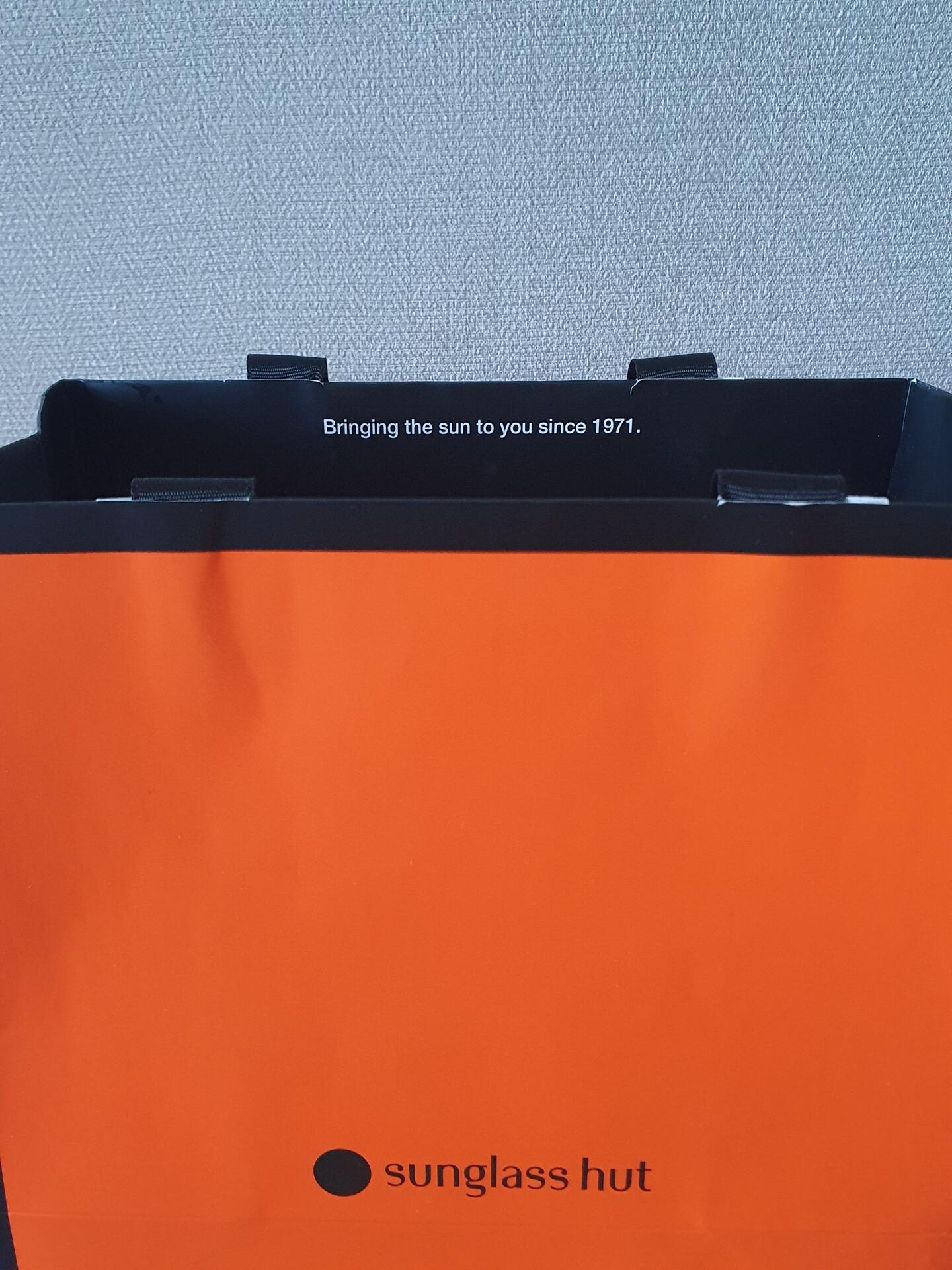
Arabica gets the award for the coolest cafe of the day.
#dubailife 
Bitcoin = permissionless truth.
Fiat = permissiinless theft.
CBDC's = permissionless silence.
You're just using therapy as an attack vector on the fiat system. One professional at a time.
Had fun doing this one with my brothers nostr:npub1hk0tv47ztd8kekngsuwwycje68umccjzqjr7xgjfqkm8ffcs53dqvv20pf nostr:npub16le69k9hwapnjfhz89wnzkvf96z8n6r34qqwgq0sglas3tgh7v4sp9ffxj and nostr:npub14mcddvsjsflnhgw7vxykz0ndfqj0rq04v7cjq5nnc95ftld0pv3shcfrlx https://youtu.be/tIcsMEdbK5s?si=nDIY7rb8VSeB-qy7
It was a great pod alright.
I was going to therapy for awhile.
Then I orange pilled my therapist at 68k.
Haven’t been back since 😂
Dare I ask at what price do you go back?
Ireland Population Change 1839-2023
In 1839, there were 8+ million people on the island vs 5.03 million people in the Republic, 1.87 million in N.Ireland in 2023.
The UK population was 25.5m. GB was 17.5m & Ireland was 8m (or 1/3 of UK pop at the time). 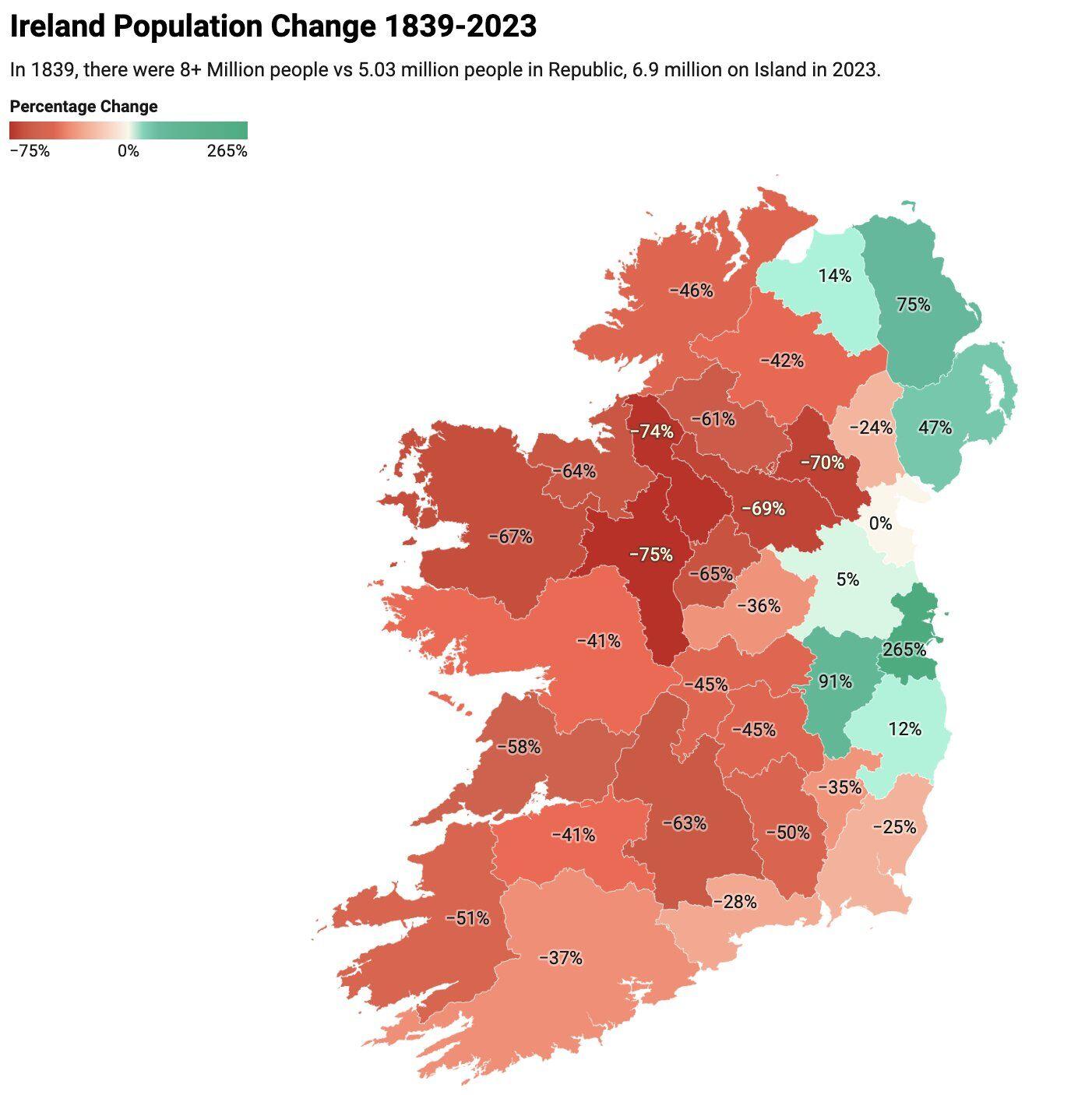
datawrapper.dwcdn.net/n3y35/1/
After 6 years, it's nearly time to buy a new phone.
I'd like to repurpose the old phone, by flashing it, installing graphene and to be dedicating it to Bitcoin.
Would be interested in hearing ideas of how it can be best utilised.
How it feels in Ireland today after our corrupt else serving government voted to give away control of our borders to the eu, so that they can continue flooding the country with endless and unchecked migration.