


Pair 2024-A Clutch 3: 1/19 Update
They are still doing well. There may be 2-3 more losses which is small relative to the living offspring. Performed another 4 water changes with dechlorinated tap water. The methylene blue is cycling out well. I also introduced a very small amount of first bite fry food and some of them floating in the water column chased after it.

I smoked a brisket yesterday. Turned out pretty well. I think next time I’d go lower and slower, but pretty pleased with my first attempt.
nostr:npub1ejvhdkt8ppefezgz0sgnwdqrn8l4z8muws2k8dz2tv0a57ac2z9st56q8x — might have to hit you up for some tips before I try again.
#foodstr 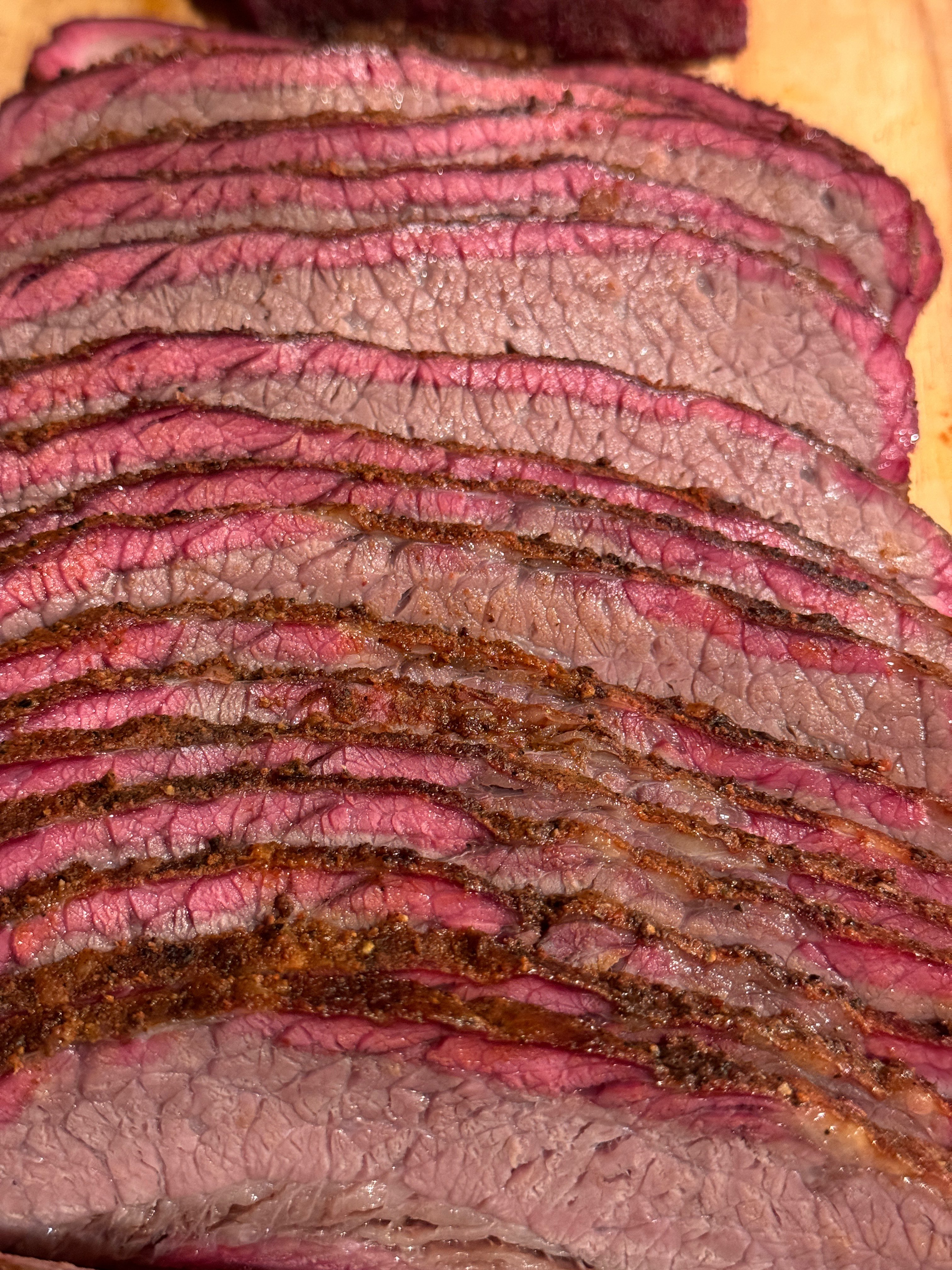
Low and slow ideally around 225 F, cook to temp not time. After you pull it, wrap in foil, then a towel and drop it in a cooler for at least an hour if not two. After pulling from the cooler let it rest at room temp for at least 30 min. The cooler will slowly cook down. I've never had an issue and they turn out 👌
Pair 2024-A Clutch 3: 1/18 Update
No noticeable loss in offspring. Performed 20% water changes with dechlorinated tap water 4 times throughout the day to cycle the methylene blue out. I bought a small tank setup and prepped it today to receive them once they start free swimming. I filled the the tank to 5 gallons with dechlorinated tap and augmented with approximately 1 cup of established aquarium water. I brought a lava rock from the established aquarium for the bacteria to slowly start building the water. I plan to dump the offspring from the 0.8 gallon vase to the 10 gallon aquarium when they become free swimmers. I'm closely monitoring the heater I purchased because I think it may be bad. It is rated for a 20 gallon but the temp is hovering around 72 F after 8 hours.
#BlackcellAngelfish #AquariumHobby #Angelfish #AngelfishBreeding #FishBreeding #Fishkeeping #FreshwaterAquarium #PlantedTank
Kanye....lol ok pal
This #aquarium store is one of the best around. They have beautiful tank setups and have very knowledgeable staff.
#fishtank #local


Pair 2024-A Clutch 3: 1/17Update Evening Update
No discernable egg loss. Performed another 20% water change with dechlorinated water (no methylene blue) and added 30ml established aquarium water.
#BlackcellAngelfish #AquariumHobby #Angelfish #AngelfishBreeding #FishBreeding #Fishkeeping #FreshwaterAquarium #PlantedTank
🤣😂🤣😂
nostr:note1pgux7lnq78c233t8hcsrgrhn7vgr03adt9khtqmcyaylc05dlvnqpcv29y
Pair 2024-A Clutch 3: 1/16 Evening Update
All of the eggs have transitioned to wrigglers and the cylinder is hopping. Performed another 20% dechlorinated water change.
https://m.primal.net/NkFt.mp4 https://m.primal.net/NkFw.mp4
#BlackcellAngelfish #AquariumHobby #Angelfish #AngelfishBreeding #FishBreeding #Fishkeeping #FreshwaterAquarium #PlantedTank
 Be sure to follow along as I continue documenting my journey into the fascinating world of angelfish breeding!
🐟I pulled together information for angelfish reproduction which involves distinct stages, each with a specific timeframe. Here's an overview of the key stages and how long each typically lasts:
Summary of Timeframes
1. Pair Bonding & Courtship Days to weeks
2. Egg Laying 2-3 hours
3. Egg Development 2-3 days
4. Wriggler Stage 5-7 days
5. Free-Swimming Fry 7-10 days post-laying
6. Juvenile Growth 6-8 weeks onward
1. Pair Bonding and Pre-Spawning Behavior
-What Happens: Angelfish form pairs, displaying courtship behavior such as cleaning a spawning site together, chasing other fish away, and increased interaction with each other.
-Timeframe: This can take days to weeks, depending on the pair's readiness and environmental conditions like water quality and temperature.
2. Egg Laying
-What Happens: The female deposits eggs in neat rows on a flat, clean surface (like a leaf, slate, or aquarium glass). The male follows closely, fertilizing the eggs.
-Timeframe: Egg-laying and fertilization occur in a few hours, typically within 2-3 hours for an average clutch.
3. Egg Development (Hatching Stage)
-What Happens: Fertilized eggs develop, and the embryos can be seen inside the translucent eggs. Unfertilized eggs turn white and often develop fungus.
-Timeframe: 48-72 hours (2-3 days), depending on water temperature (around 80-82°F / 27-28°C is optimal).
4. Wriggler Stage (Hatchling Stage)
-What Happens: The eggs hatch into "wrigglers," which remain attached to the spawning site or are moved by the parents. Wrigglers don’t swim yet but feed on their yolk sacs for nutrients.
-Timeframe: 5-7 days as wrigglers before transitioning to free-swimming fry.
5. Free-Swimming Fry
-What Happens: The fry become free-swimming and begin to explore the tank. They are small and require finely crushed food like baby brine shrimp, infusoria, or powdered fry food.
-Timeframe: This stage begins about 7-10 days after eggs are laid, depending on the development rate and environmental conditions.
6. Juvenile Growth
-What Happens: Over weeks to months, the fry grow into juveniles. They become more independent and start developing angelfish features such as fins and body shape.
-Timeframe: Juveniles are distinguishable at 6-8 weeks and continue to grow rapidly for several months.
#BlackcellAngelfish #AquariumHobby #Angelfish #AngelfishBreeding #FishBreeding #Fishkeeping
Pair 2024-A Clutch 3: 1/16 morning update
It appears most of the eggs have transitioned to wrigglers. I only see one white egg. Total losses are still under 5%.

Sharing a couple of miniatures from a local #warhammer40k shop I picked up and painted with my son. I always wanted to get into #warhammer and bought the leviathan box set. Let's just say I'm still painting 😂

Pair 2024-A Clutch 3: 1/15 Update
It appears that most eggs are still viable. There are two I need to remove to prevent potential fungal spread but this has been the best so far from either pair. And wigglers are forming! I performed another 20% water change with dechlorinated water without adding additional methylene blue. I am contemplating a time to start introducing established aquarium water via water changes instead of dechlorinated tap water. I don't want to create an opportunity for fungal takeover but also do not know how well free swimming fry will do in pure tap water that has been dechlorinated. Any thoughts from would be appreciated from:
#Angelfish #AngelfishBreeding #FishBreeding #Fishkeeping

#BlackcellAngelfish 
Pair 2024-B

I believe this pair is also Marble or Golden Marble variants. They have had two clutches of eggs since late 2024. I don't believe they are as strong of a breeding pair compared to my 2024-A pair because their egg count and immediate quality of living eggs are significantly fewer.
https://primal.net//e/note1q6gqz4r09uhv9w5v2y6n5td8ju4h8x6s8gkrqn4td5dxgvgafvvst0zx70
#AquariumHobby #Angelfish #AngelfishBreeding #FishBreeding #Fishkeeping #FreshwaterAquarium #PlantedTank
Pair 2024-B Clutch 3: 1/15 Update:
It looks like no eggs are viable at this point. I'm not surprised because this pair has had trouble from the beginning. I may try to isolate them from the aquarium after fertilization in dechlorinated water to determine how many can make it in sterile conditions, depending on how my 2024-A-Clutch 3 turns out. I'm incubating them in dechlorinated water with methylene blue until they get closer to free swimming, where I will start performing water changes with aquarium water that has been established. Unless something extraordinary happens with the few remaining viable eggs, I'll likely end the thread for this pair's clutch.

#BlackcellAngelfish
Be aware #nostr, this is not Saylor's account that has created a telegram channel that is most likely trying to pull you into an Telegram alpha channel scam to take your #bitcoin and provide zero useful information. Be careful out there.
nostr:note1rhmw3u64wqg7qqfsqkx5npkllt9mlaszu8w2rm62srxr9rpvzh6q0qsdwp
❗❗❗❗❗❗❗❗❗❗❗
Take a long walk off a short bridge dude. This is not the real account.
🌲💲❗It seems flippant that the Bank of England commemorates the history of paper money after the #bitcoin 💡 turned on.
Mulberry bark was used to make paper money in China, starting around the 10th century. The Chinese emperor Kublai Khan officially declared that stamped mulberry bark notes were legal tender. The value of the notes came from the government's authority, not the material itself.
How it worked
*The notes were stamped, sealed, and considered to be as valuable as gold or silver.
*The notes were issued with great ceremony and authority.
*Counterfeiters were threatened with execution.
What Marco Polo thought
*The Venetian merchant Marco Polo was astonished to see mulberry bark money when he visited Kublai Khan's court in the 13th century.
*Polo thought the currency was a conspiracy that allowed the emperor to accumulate wealth cheaply.
What it meant for the future
*The use of mulberry bark money paved the way for paper money.
*The Chinese system of paper money anticipated European currency systems by almost 600 years.
What it means today
The Bank of England has four mulberry trees in the courtyard of its Head Office in London to commemorate the history of paper money.

I was introduced to 2pac circa 1999 and listened to most of his music over the years. Dear mama always resonated with me because of this line:
"No love from my daddy, 'cause the coward wasn't there"
Pair 2024-B
I believe this pair is also Marble or Golden Marble variants. They have had two clutches of eggs since late 2024. I don't believe they are as strong of a breeding pair compared to my 2024-A pair because their egg count and immediate quality of living eggs are significantly fewer.
https://primal.net//e/note1q6gqz4r09uhv9w5v2y6n5td8ju4h8x6s8gkrqn4td5dxgvgafvvst0zx70
#AquariumHobby #Angelfish #AngelfishBreeding #FishBreeding #Fishkeeping #FreshwaterAquarium #PlantedTank
Pair 2024-B Clutch 3:
1/14 Update 
The second clutch 2024-B has thrown. Both times the egg quantity and quality was low. This picture was approximately 6 hours after 2024-B-F started laying them. I was fortunate enough to capture this i https://m.primal.net/NhEC.mp4 n video.
Pair 2024-B
I believe this pair is also Marble or Golden Marble variants. They have had two clutches of eggs since late 2024. I don't believe they are as strong of a breeding pair compared to my 2024-A pair because their egg count and immediate quality of living eggs are significantly fewer.
https://primal.net//e/note1q6gqz4r09uhv9w5v2y6n5td8ju4h8x6s8gkrqn4td5dxgvgafvvst0zx70
#AquariumHobby #Angelfish #AngelfishBreeding #FishBreeding #Fishkeeping #FreshwaterAquarium #PlantedTank
Pair 2024-A Clutch 3: 1/14 Update
After losing eggs to fungus I have thought about how to improve. I first tried a breeder box that hangs on the side of my main tank and the eggs were rapidly consumed by fungus, even though I covered the box to block light. I'm certain the cause was the biological environment in the main tank being perfect for adults but slow flow through the breeder box and vulnerability of the eggs without their parents causing the fungal takeover. I transitioned to this 0.8 gallon cylinder with methylene blue on the second clutch for this pair and some of them made it to wriggler stage but succumbed before reaching free swimming stage. I believe this may be because I used aquarium water in the cylinder which caused fungal growth in half the clutch. For this clutch (3rd) I used tap water that has a water softener and dechlorinated the water. After letting it settle at 76 degrees F, I filled the cylinder, dosed with methylene blue, and moved the breeding slate with eggs to it. I positioned the airstone away from the slate but adjusted the air flow to create a consistent current. This has been the most successful 32 hours post egg laying because I have only had to remove 1 dead egg to mitigate fungal spread.

