
There’s something to seeing someone at their peak in terms of self-expression and actualization. This is maximum James Hoffman
(Electric boogaloo)
This is the encryption debate part II nostr:note1cm6s7p7fcedkfl44raacu7ypngyfyr6fxpttxsxvmu4gpfew0tnsxajdcj
This is the alternative to digital cash. nostr:note1n8zxgp0p0kfk9uqjxcqc9gaeu6ugzs8p0j6xu3s8qr5yh5v6flpqhwr49y
Exactly.
Still thinking about this
They’re both attacked, I think the difference is anyone can have fun exercising 2A rights. 4A rights are abstract until it’s too late nostr:note1w6l0tg56m60v8e2wf6pn6m2sh5z4l0vppzwlpmys4xn7yvrzlm5sc3xjqz




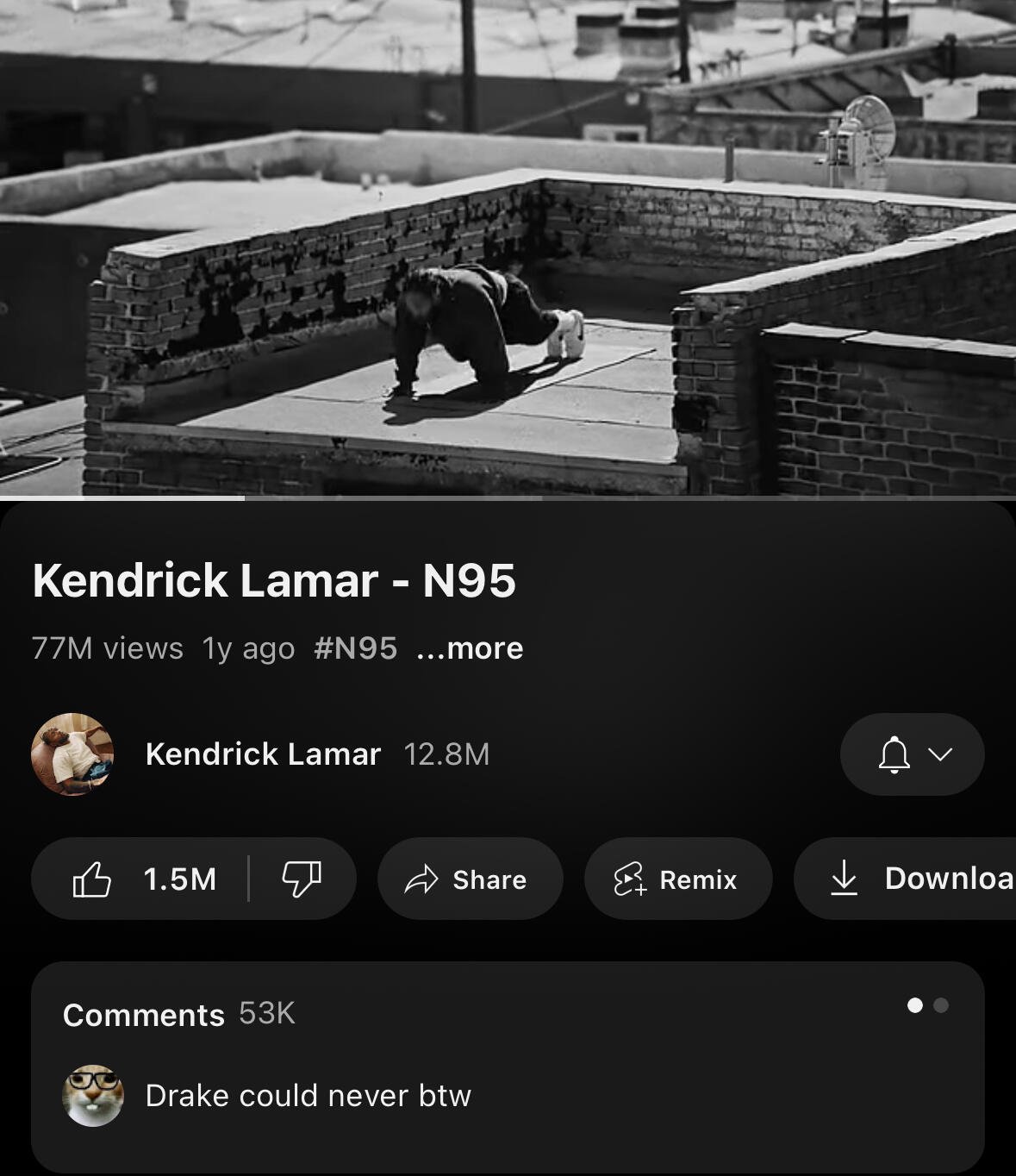
Kendrick is him
This is now my pet bitcoin change nostr:note1h0t6grufv7t3wv6ttx0qafcrzpwzemnqajt3uqnvsje5njaktdvqx9e4s0
This is my pet bitcoin change
@note1yx0qf84fk60lrvqx2mxwesvtkrd7xm0vgvy876t6dlzat26j7u6qhjsau


Why are there 5.5 million people with Bluesky accounts and about 800k to 1.3M on Nostr?
Some of it boils down to social dynamics and chance. It's akin to how immigrants often cluster in the same neighborhoods. Most people are simply following their communities, and their primary decision is driven by where their community is heading.
Why did the communities choose Bluesky over Nostr, Mastodon, Farcaster, or the several dozen centralized and decentralized alternatives?
That’s a more pertinent question. Firstly, very few people actually make these decisions, and most simply follow them. Secondly, the choices aren't primarily based on the technology or the features of the apps or protocols.
Bluesky had certain advantages and disadvantages. It received a fair amount of press as a Twitter spinoff. However, it was late to launch, only preceded by Threads, which had Meta’s platforms for promotion.
In terms of initial marketing, I’d say Bluesky and Nostr were about equal, both often pitched as a ‘Jack Dorsey thing’, which wasn’t true in either case. The press loves stories about people and drama over networks and systems. Social media is vast and complex, and its technology even more so, which is why it’s often presented through personalized narratives about the creators.
Under the hood, Bluesky’s atproto and Nostr are very similar technologically. Both were inspired by Secure Scuttlebutt. Bluesky has adopted a cathedral model of open source, akin to how Android is open source but controlled by Google. Meanwhile, Nostr developed under the bazaar model of open source, created by a community rather than a company.
This company model gives Bluesky some advantages; for instance, they could launch with an invite list, a classic tactic to make something feel more desirable. Even then, most Bluesky users haven’t posted a single thing, and when they had a million registered users, they had fewer than 1500 Daily Active Users (DAU) see [bluesky stats](https://bsky.jazco.dev/stats).
Bluesky is a lot easier to try than Nostr. The ways keys and content signing work in Bluesky and Nostr are overwhelmingly similar, except that Nostr doesn’t tell you where to store your keys and in Bluesky, you put them on your PDS server, which Bluesky provided free by default for all new users.
This means for Nostr, you have to figure out what to do with your nsec and npub, then how to get a nip-05 for a Nostr name which makes sense. If you want to log in with a username and password, you need to find and set up a nip-46 service. Not all apps support that, so you’re copying and pasting around an nsec. If you want to use a web app, you need to go find and choose one of several browser extensions and set that up. This is easy and natural for folks with experience in crypto but really foreign for everyone else.
Maybe a million people have figured out how to get started on Nostr; it’s definitely possible. And some apps like Primal and Nos have integrated name services as part of the signup, which makes it cleaner.
Once you’re on Nostr, people often discuss zaps, a functionality that may not work as expected. You’ve got to learn how to set up a wallet, what lightning and Bitcoin are. Some get really into it, we’ve seen folks get into Bitcoin through Nostr, but for many, it’s a confusing hurdle.
Bluesky provides a neat way to get into a single default app and gives you a username. Sure, you can change it—I self-host my DID at rabble.nz—but apparently less than 1% of Bluesky users do that, just like most Nostr users have chosen to use a cloud service for their nip-05 Nostr name.
Why else has Bluesky grown bigger than Nostr? It's their approach to positioning the protocol. They’ve set up default moderation controls and a trust and safety team. Initially, they didn’t have these, and when users demanded action and the company refused, growth stalled and usage dropped last July. The Bluesky team didn’t post for about a month, and there was a real question about whether Bluesky would survive.
The user community wanted pretty heavy-handed moderation. The Bluesky team was committed to building a decentralized protocol that didn’t do that. The compromise was that Bluesky would be slow about opening up open federation over atproto until the Bluesky apps, protocol, and company-hosted services could have a trust and safety team and a moderation bot. Their moderation bot is fancier than @reportinator, but it’s the same idea, but with a bigger team of humans reviewing reports. And if you’re using the Bluesky-provided PDS, there’s no way to block or unfollow their default moderation bot. We don’t make everybody on Nostr follow nostr:npub14h23jzlyvumks4rvrz6ktk36dxfyru8qdf679k7q8uvxv0gm0vnsyqe2sh .
That compromise worked for the community and company, and the user base started growing again. The negative press about Bluesky's content ceased and those upset by the policies left, some migrating to Nostr. Bluesky was able to position itself as the socially responsible social media protocol that was easy to use. Jack deleted his Bluesky account, signaling to the world and press what we already knew: he is much more interested in Nostr’s approach to bottom-up development by community and support for lightning payments.
During this period, Nostr's growth really stalled. There are a few reasons for this. We'd saturated the community of folks who both love Bitcoin and dislike Elon enough to leave Twitter. Additionally, our new user experience pushed people to view a global feed dominated by a single topic of conversation.
Nostr has positioned itself strongly as a protocol for those who are freedom-loving, anti-censorship Bitcoin enthusiasts. The easiest Nostr client for new users, Primal, markets itself as a Bitcoin wallet first, and only secondarily as a social media app. People view Nostr as a Web3 project. We’ve had individuals visit the Nos.social website and decline involvement, saying they dislike Web3 because they perceive it as a planet-harming scam (let's not argue the carbon emissions of mining here). We never mention Web3 or any cryptocurrency elements on the [Nos website](https://nos.social), yet all decentralization has been associated with dubious schemes.
As Nostr’s growth has stalled, the ecosystem has matured and flourished. Nostr boasts technology and apps that other platforms envy. I often hear Bluesky and Fediverse developers express admiration for the cool things Nostr is doing with technology and apps, but since their communities don’t use it, they don’t either.
Just look at the articles my posts last week about Nostr vs. ActivityPub kicked off: [Extending ActivityPub](https://wedistribute.org/2024/03/extending-activitypub/) and [Nomadic Identity is Coming to ActivityPub](https://wedistribute.org/2024/03/activitypub-nomadic-identity/)
I suspect what’s holding back Nostr is twofold. First, how we talk about Nostr. We discuss it in political and ideological terms—we're against censorship, for free speech, value-for-value, etc.—but not about the types of content and people on Nostr, how to find your friends, or the interesting stuff you followed elsewhere. Nor do we talk about how you can use all these cool apps with the same identity and content. It's a hard concept to grasp, and I find myself constantly having to explain it.
The biggest issue people see with Nostr is its perceived association with Bitcoin enthusiasts plus those who’ve been deplatformed elsewhere, often for contentious reasons. I’m not saying the deplatforming was justified, but the perception among those unfamiliar with arbitrary bans and sanctions on platforms is that those who've been deplatformed had it coming—that they were all conspiracy theorists, bigots, or harassers. Some were, some were not, but it's perceived that way by many.
The way we talk about Nostr and onboard new users doesn’t help. The goal of the creator and journalism projects we just launched was to both diversify the content on Nostr for new users and to demonstrate to those creators and journalists that micropayments and paid content on Nostr are viable alternatives/additions to how they publish on social media elsewhere. It is value-for-value without the label, because our theory is that people want the functionality but aren't so keen on the cultural ideology.
This is all solvable. We can:
- Make it easier to set up a nip-05 for new users.
- Ensure that nip-05 also functions as an nsec bunker for easy login, if users desire.
- Add Webfinger files so your nip-05 name functions as a Fediverse name (it’s pretty easy to do; we're experimenting with it on nos.social).
- Show users a variety of content types when they join.
- Help users find communities, perhaps encouraging groups/channels the way Farcaster does.
- Make it easy to find and choose moderation settings, offering more middleware services like Reportinator but with different content labeling ideas.
- Change our marketing to attract these new users, focusing on what they can see and who they can connect with, less on Bitcoin, technology, or evading censorship.
- Develop apps that offer new functionalities, drawing people in instead of being mere clones with or without certain features.
It always takes a long time for people to figure out what the native mediums are on a technology platform. Initially people would make a phone call to listen to a concert, the first radio stations had people just reading the newspaper, and the first tv broadcasts were either a camera pointed at radio announcers or a single camera shot of a play. People always do the same things, we're the same humans that evolved a couple hundred thousand years ago, same brains, same bodies. What's changed is the way we do things with technology, so what fundamental human thing can we do new and different now that we've got these social protocols and tech?
Addressing the app design and technology will help, but actual growth will come when people discover us, join, find connections, and genuinely want to invite others to join them. Nostr users are incredibly welcoming to new users. However, we also have a subset of users who engage in sexist, racist, and homophobic harassment. This harassment drives people away from Nostr and deters them from recommending it to others. If we don't provide better tools for users to protect themselves from this harassment, they'll leave and find social spaces where they feel safe. Some might abandon public social media altogether, or just switch to Bluesky, which promises to eventually open up their network and has just announced support for uploading images, coming soon.
We're way ahead of the other protocols in some areas and way behind in others. We've got enough momentum and users to figure this out, but we're not there yet.
Good points but how about bluesky being invite only to start? Why did clubhouse become so popular so quickly? Fomo. Damus TestFlight had it by accident for a little while.
Who’s making the invite only nostr app 😁
msats…. Never again
mask off 
This has been said before but not enough.
Do you think we will have digital money someday? True internet currency?
If you do (are we going to print bills and make coins forever? Maybe actually), there are two ways to do it.
1) the fed makes a money database (CBDC)
2) decentralized open protocol (Bitcoin)
1 is the naive way to go. The fed makes money now, and has some sort of ledger for the banks it deals with. Just extend that to everyone.
The reason why it is naive is the unprecedented power that puts in the hands of the gov’t.
Every txn and account balance visible, full discretion over access.
The founding fathers couldn’t ever conceive of a way to have that much control. An unelected official could take away the ability for someone to buy food in an instant with no due process.
Less obvious, imagine a market regulator having insight into the exact balances, P/Ls of all of the industry players they regulate. You think insider trading / lobbying in congress is bad now?
1 is true and total control. I don’t think most (including in the US gov) really want this? I also don’t think most people understand the implications of 1, especially if it’s packaged as “safe, trusted, just like dollars, fair”
2 is the opposite. Maximum access, no central control, but bad guys will use it. I really liked Natalie Smolenski’s talk at the bitcoin policy summit recently https://youtu.be/UiDa_wP8q3s
Is there an in between? This is much like the encryption debate— you can’t have backdoored encryption to make sure bad guys don’t use it. The backdoors will be used against the good guys / everyone. Half encryption is no encryption.
In a digital currency system, the same principle applies. Bitcoin and lightning built on top of it use cryptography at their core. To try to police or patrol either at the protocol level is to break the things that make them neutral and valuable in the first place. Might as well use the database.
This is the fundamental issue we face today. I worry most people won’t realize the importance until it’s too late.
Ok. Been meaning to publish this for a little while now.
I think reviews are an extremely underrated / under explored design space for application that want to leverage Nostr (in particular, the social graph).
In this essay, the first of a series I want to publish on nostr:npub1w0rthyjyp2f5gful0gm2500pwyxfrx93a85289xdz0sd6hyef33sh2cu4x, I break down:
- how reviews drive commerce
- despite their being broken / fake / easily gamed
- how the internet originally won
- what’s needed to make the internet functional again (upgraded stack)
- how this upgraded stack makes a whole new design spaces possible
- how ONE of the many things we’ll fix is reviews
- how we’re going about it with a project we’re calling Satlantis
nostr:npub18lzls4f6h46n43revlzvg6x06z8geww7uudhncfdttdtypduqnfsagugm3 - as promised. Put it up on highlighter.
nostr:npub1sg6plzptd64u62a878hep2kev88swjh3tw00gjsfl8f237lmu63q0uf63m - this is what I was alluding to last week. That being said, I want to dig deeper on your particular comment, and I’ll do that in the next essay.
nostr:npub1sfhflz2msx45rfzjyf5tyj0x35pv4qtq3hh4v2jf8nhrtl79cavsl2ymqt - Thankyou for your early feedback 🙏🏽
I’m here for it, the problem is clear, how can I trust a reviewer? How do I know they are really qualified to have an opinion here? Have they eaten a lot of Indian food or did they grow up on chicken nuggets and tried something spicy for the first time in their life and that’s why they left a bad review?
I’m not sure if reputation can be solved with tech. It is deeply social and very hard to create a system that doesn’t suffer from the first order effects you list here. (The next meta game of reviewing the reviewers).
It’s like the ultimate solve for online everything though (partially why I worry it is not achievable / an endless rabbit hole).
The govt relays reputation (imperfectly) through licensing. Uber took that system and brought a market place with centralized but crowd sourced reputation provided by them to great effect. If you can design an open system that provides generalizable reputation for any service, you unlock a truly open online marketplace for any service.
All that being said, excited to see what you come up with!

It’s an interesting thought, what tech does *everyone on earth* have access to. Fire?
Getting any life improving tech to everyone on earth is a noble / worthwhile goal. We shouldn’t forget how long and difficult that road is