Avatar
Qas
3b8ec298bebdbc9eb8d5d183e5c8c6ccd114450dfd92de2cb56f7af9175bbf7b
Head of Penetration Testing at PureCyber

Holy shit, this new Damus update is šŸ”„ huge improvement in user experience! nostr:note1pmf5n7htxdk96cueg8ad7xy6l0yvdnv22nnpw5325xxrrlk0z2pqs2hwuc

Goodbye X. Hello Nostr.

#nostronly

What’s odd is that despite all of bribery/corruption accusations in UK politics right now and the upcoming dystopian tax changes being touted for next month, I don’t give a flying fuck anymore. I’ll never give my energy to political circuses because I’ve found peace in staying humble and stacking sats.

This! Jeff booth has completely shifted my mindset to thinking about the world I want to see rather than fight against the one I have no control over.

This!

nostr:note16lqn5a0869xf0fj9shfywkrrs9tw7asrw8mdhfz3p2vhcq438qtqkw2xls

Replying to Avatar Lyn Alden

One of the things I think about a lot in terms of modern fiction is this conflict around diversity, wokeness, and so forth. Here’s a bit of a mini blog post on it.

On one hand, it’s normal that people want to see elements of themselves in fiction they consume. And so to create something that appeals to a large and diverse world, one way of doing that is to have a diverse cast of characters. Unless of course the context would be inappropriate, like Saving Private Ryan or something. In addition, fiction has always been used as a form of social critique, and thus if someone has something to say about race or gender, it’s going to come up in fiction.

On the other hand, I think diversity in fiction has a lot of reasonable pushback against it in the current era. Weak Mary Sue characters, an over-emphasis on race or gender compared to writing a good story with compelling characters, diversity quotas, and ā€œcreation by committeeā€ where so many hands touch a peace that they dilute it down to nothing. These days most of the movies that win awards are not the movies most people want to watch.

The last three pieces of visual fiction I consumed were Godzilla Minus One, Blue Eye Samurai, and Arcane. They had very different approaches to this topic and I think all of them handled it well. Discussed without major spoilers.

Godzilla Minus One is a Japanese movie set in the 1940s, so the answer for diversify is that there isn’t any, and the topic probably didn’t even come up. Like for Saving Private Ryan. There’s diversity of personalities of course, but it’s mostly about Japanese men dealing with a monster, and then two notable female characters that are well-written in mostly non-action roles. A key theme of the movie is about life over death and the horrors of war, and so for example it explores the ethics of kamikaze pilots and the broader topic of sacrifice in a defeated Japan, which it does well.

Blue Eye Samurai has a female protagonist, disguised as a man for practical purposes as she goes about revenge. So in the current era where diversity is such a big topic, there’s a lot of ways for that to be handled poorly. But her background and why she’s out for revenge isn’t particularly gender-related. And race comes up to the extent that the show explores colonialism, technological gaps between cultures, a society closing itself off to outsiders, viewing outsiders as demons, etc. Which all happened in that period. The show has a major arc that focuses on the limitations of being a woman in 1800s Japan, and I think it’s well done. All of it is in service to a good story.

Arcane uses League of Legends lore, which has like 140 characters so that everyone who plays can find someone they like. Thus diversity is set into it at its core, and the gender and racial diversity in Arcane the show is at a higher than average level. But then they don’t talk about it. None of the conflicts are about race or gender. The setting has a lot of problems that the characters are sorting through, and race and gender just don’t happen to be among them, which I think is well-handled for the story they want to tell. The themes and conflicts they focus on instead are economic disparity, desire for sovereignty, technological progress vs risk, family bonds and their limits, the price of power, peace vs domination, etc. So by the end it feels like invisible diversity- diversity just kind of happened without it having been a big deal. And importantly, the diversity was not at the expense of white men- they were some of the best characters too, including probably my favorite character in the show.

I’m currently reading The Lost Metal, which I’m not loving for plot and pacing reasons but am finishing it for completionist reasons for the broader story universe, and once again I think the author handles diversity well. His books, set in fantastical settings, tend to have a diverse array of characters, and it’s all in service of telling a good plot with good action and so forth that appeals to tens of millions of readers across the world. As an example, his original Mistborn book has the highest per capita fans in Taiwan of all places, even though the book isn’t set in an Asian setting. When the success of Hunger Games led to a big global trend of young adult dystopian fiction for a while, it was Mistborn that caught on in Taiwan. A good piece of fiction doesn't have to be written for a particular group, to be enjoyed by that group.

So when I approach hobby-writing, that’s my focus: tell a good story with interesting characters.

That last line is crucial. We all just want good stories with interesting characters.

Walking around Cardiff today, I actually came across a student-led pro-Communist parade/protest. It still blows my mind that after the last century, people still cling to the most vile and extreme ideologies of both sides of the spectrum.

From my personal experience just as a patient, I can’t help but agree with this. 9 times out of 10, when I see medical professionals they don’t want context, medical history, etc. They just prescribe me a drug within the first couple minutes of seeing me and then tell me that if it doesn’t work then they’ll prescribe me something else. Rather than assess, diagnose and then treat.

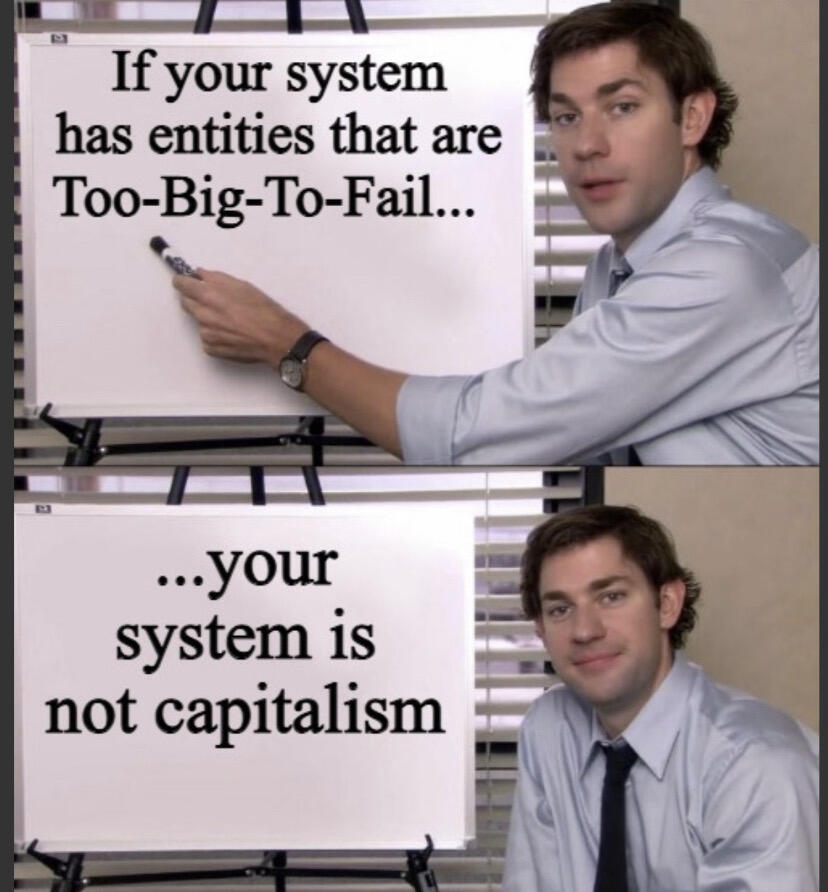
This is one of the most succinct one-liners I’ve come across that explains why what we have now isn’t capitalism. Luke Gromen is brilliant!

When I see factual errors and bias in BBC reporting on things I know about, it definitely makes me wonder about the accuracy of their journalism on topics I’m not as familiar with. Unfortunately, there’s no opportunity cost for them to change their ways as we have to pay our TV licenses to fund them regardless. All we can hope for is that when we publicly challenge them about spreading misinformation, open-minded members of the public come across it and decide to form their opinions from sources other than the BBC.

Saturday chilling #dadstr

This is awesome!

nostr:note1cfam66fsswep258rfsdpaw7h37zflfnuc25ll0m4q6t4qkpuggrsr2t3z0