

I’ve been finding Nostr Playground by nostr:npub18c556t7n8xa3df2q82rwxejfglw5przds7sqvefylzjh8tjne28qld0we7 really nice for debugging relay stuff. It’s a little web tool that makes it easy to query relays. Trying to type out filters on the command-line is really tedious. https://playground.nostr.com/

there it is... just try to refresh the page.
PS: there are currently some issues with caching in NDK library. I'm trying to solve them.


🚀 Introducing "Boostr" on Pinstr: Elevate Your Interests! 🚀
Hey Pinstr enthusiasts!
We're thrilled to unveil our latest feature: Boostr!It's a game-changer for sharing what you love and getting noticed.
Here's the scoop:
With Boostr, you can now propel your boards to the top of the Featured section with a small donation. It's like giving your favorite interests a spotlight! Whether you're into gourmet food, breathtaking landscapes, or the intriguing world of Bitcoin and Nostr, boost your board and enjoy the limelight for a set period.Select from 24 hours to a whole month – your board, your choice. Plus, this is a fantastic way to support Pinstr and help us keep evolving.
Get ready to make your boards the talk of the Pinstr world. Give them a Boost, and let's curate and share our passions together!
Boosting is just a click away – are you ready to be featured?
https://video.nostr.build/88b199e56719b942c68af82021bd9421699b7b46dccd9ca37f6ee590a49bb03d.mp4
#Pinstr #Boostr

🚀 Introducing "Boostr" on Pinstr: Elevate Your Interests! 🚀
Hey Pinstr enthusiasts!
We're thrilled to unveil our latest feature: Boostr!It's a game-changer for sharing what you love and getting noticed.
Here's the scoop:
With Boostr, you can now propel your boards to the top of the Featured section with a small donation. It's like giving your favorite interests a spotlight! Whether you're into gourmet food, breathtaking landscapes, or the intriguing world of Bitcoin and Nostr, boost your board and enjoy the limelight for a set period.Select from 24 hours to a whole month – your board, your choice. Plus, this is a fantastic way to support Pinstr and help us keep evolving.
Get ready to make your boards the talk of the Pinstr world. Give them a Boost, and let's curate and share our passions together!
Boosting is just a click away – are you ready to be featured?
https://video.nostr.build/88b199e56719b942c68af82021bd9421699b7b46dccd9ca37f6ee590a49bb03d.mp4
#Pinstr #Boostr


in summary I think it more depends on your code structure and writing high quality code with all the performance considerations. it could work well enough.
here is the ChatGPT answer to your Q:
Comparing React Native and Flutter in terms of performance and their ability to leverage native features on iPhones involves several aspects:
Performance:
Flutter:
Known for its high performance. It compiles to ARM or Intel machine code as well as JavaScript for web apps, which can result in better performance than React Native. This is due to its direct compilation into native code.
React Native:
Uses a bridge to communicate between the native modules and JavaScript code, which can sometimes lead to performance bottlenecks, especially in complex or heavy animations. However, for most applications, React Native's performance is more than adequate.
Native Features:
Flutter:
Offers a rich set of pre-designed widgets that follow specific platform guidelines (like Material Design for Android and Cupertino for iOS). It has the capability to access native features, but sometimes requires the use of third-party packages or custom platform-specific code.
React Native:
Provides a more straightforward approach to accessing native features of the iPhone. It has a large ecosystem of libraries and tools, and it's easier to integrate with native modules in React Native. This can be an advantage if your app heavily relies on native functionalities.
Development Experience:
Flutter:
Known for its "hot reload" feature which allows developers to see changes almost instantly, enhancing the development speed. The Dart language, used by Flutter, is less familiar to many developers compared to JavaScript (used by React Native).
React Native:
Also offers "hot reload" and a wide range of libraries and tools. Its use of JavaScript makes it more accessible to a larger pool of developers.
Community and Ecosystem:
Both Flutter and React Native have strong communities. React Native, being older, has a more mature ecosystem with a wider range of libraries and tools. Flutter, however, has been rapidly growing and gaining a lot of popularity.
In summary, while both frameworks are capable of creating high-performance, native-like applications on iPhones, the choice between React Native and Flutter often comes down to specific project requirements, developer familiarity with the programming languages (Dart for Flutter and JavaScript for React Native), and the specific native features required for the app. React Native might have a slight edge in integrating with native modules, but Flutter is catching up fast and offers excellent performance
 nostr:note1853d0vmc7x7xfa9ve9vfp40guynjyvz7vfxylzv4jzcjhk3q7hdqch50rk
if you already know react, just go with react native. there are plenty of enterprise apps written in RN including Facebook, Instagram, Microsoft Office, Skype, Shopify, Discord, Pinterest, etc.

you can only zap with a browser extension like Alby, so far. zapping from mobile devices are not supported yet.
hope you enjoy it! any feedback?
experimenting a new feature on Pinstr 👀


awesome! you can also consider inserting additional information (e.g. Age) by clicking on "Features Tool" within the "edit pin" page.


Software development is about removing more than writing!

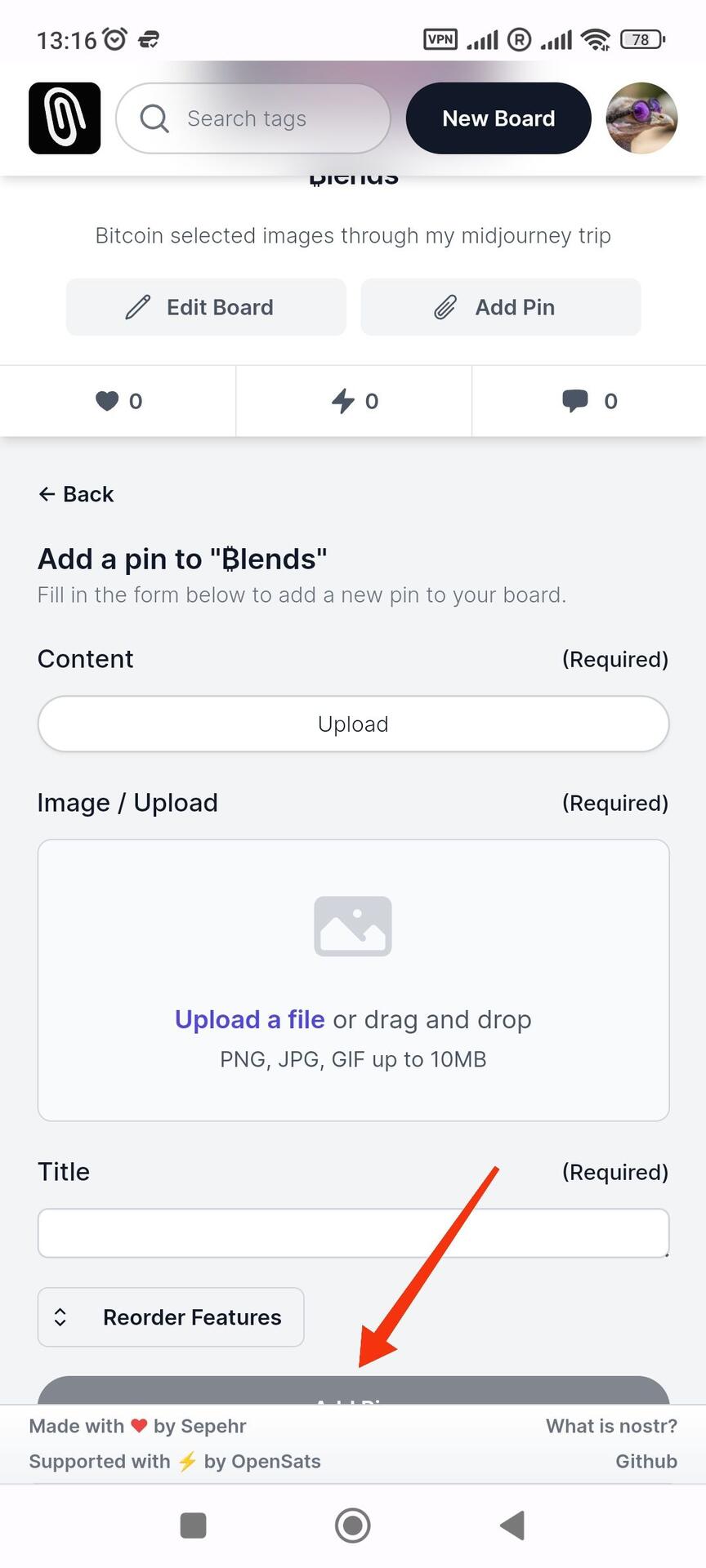
thanks for the bug report. the first one is not actually a bug! changing the board name will cause a change in the event references and you will loose the reactions. I should add a warning message for that.
but will fix the second one. thanks.