
Defaults: Chatgpt
Here are my default settings and resources across various functionalities:
### 1. **Search Engine**:
- For general queries, I default to **Bing** for search capabilities when browsing is enabled.
### 2. **Online Resources**:
- **Web Browsing**: I pull information from various trustworthy and high-quality sources like news websites, academic databases, online encyclopedias, and expert blogs.
- **General Knowledge**: My core knowledge base includes encyclopedias (e.g., Wikipedia), books, academic papers, and a wide variety of informational websites up until my knowledge cutoff (October 2023).
- **Real-Time Updates**: When browsing is enabled, I access up-to-date information on current events, trends, and other time-sensitive content.
### 3. **Language and Response Style**:
- **Default Language**: English.
- **Response Length**: Short, concise answers unless the question requires detailed explanations.
- **Tone**: Professional, clear, and neutral unless a different tone is specifically requested.
### 4. **Tools Available**:
- **Image Generation**: Via DALL·E (by OpenAI) for creating custom images from text prompts.
- **Python**: For executing code, data analysis, and mathematical tasks.
- **Browsing**: For real-time search and accessing external resources, only when necessary.
### 5. **Privacy and Memory**:
- **Memory Disabled**: I do not retain conversations or details unless explicitly enabled by the user.
- **Data Protection**: I do not store any personal or private information.
These settings ensure my responses are efficient and relevant across various scenarios.

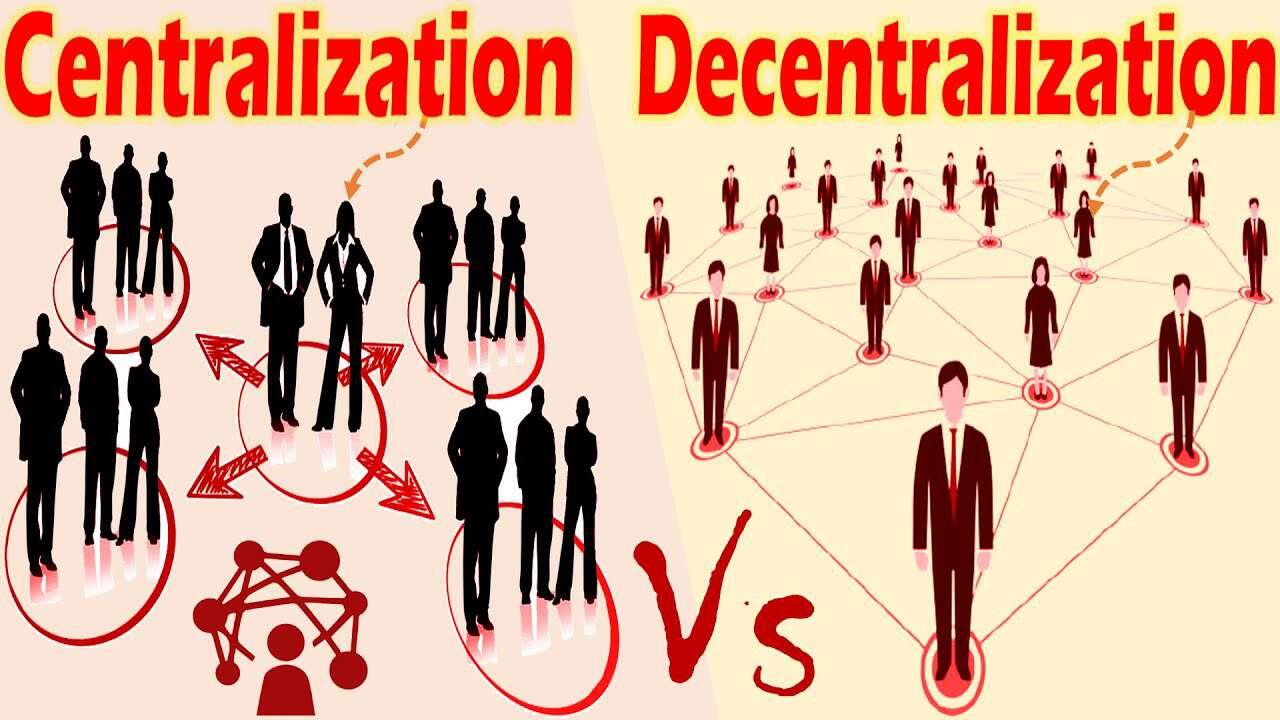
BlackRock and other institutions pose a threat to Bitcoin’s decentralized philosophy by centralizing ownership through financial products like ETFs. These institutions could potentially control large amounts of Bitcoin, influencing the network's governance and reducing its utility as decentralized, censorship-resistant money. Institutional custody also aligns with government regulations, increasing oversight and diminishing Bitcoin's role as an independent financial system. While price may rise in the short term, critics argue this undermines Bitcoin’s long-term value as a tool for financial freedom.
computer says:
BlackRock and other institutions pose a threat to Bitcoin’s decentralized philosophy by centralizing ownership through financial products like ETFs. These institutions could potentially control large amounts of Bitcoin, influencing the network's governance and reducing its utility as decentralized, censorship-resistant money. Institutional custody also aligns with government regulations, increasing oversight and diminishing Bitcoin's role as an independent financial system. While price may rise in the short term, critics argue this undermines Bitcoin’s long-term value as a tool for financial freedom.
#bitcoin #nostr #anarchyⒶ #blockchain #fiat #history

#bitcoin #nostr #anarchyⒶ

Computer says:
On Palestine...
The Palestinian claim to the land is rooted in a long, documented history of continuous habitation and established presence in the region, which can be verified through historical, legal, and demographic records. On the other hand, the Israeli claim, while drawing on ancient historical and religious narratives, is more contested when examined through a modern legal and political lens.
### 1. **Palestinian Claims (Provable)**:
- **Historical Presence**: Palestinians—Muslims, Christians, and other communities—have lived in the region for centuries. The land now known as Israel and the Palestinian territories was part of various empires, including the Ottoman Empire, where Palestinians formed the majority population. Historical and demographic records from the 19th century show a significant Arab presence, with well-established villages, cities, and agricultural life. This continuity of residence establishes a clear claim under principles of self-determination, recognized in international law.
- **Legal Rights**: The **Ottoman land laws** and the later British Mandate era legal structures confirm Palestinian ownership of land through deeds and historical documentation. The United Nations partition plan of 1947, though rejected by Arab leaders at the time, also recognized the presence of both Arab and Jewish communities in Palestine and sought to establish two states, reflecting the reality of both groups' presence.
- **International Law**: United Nations resolutions, such as **UN Resolution 194**, affirm the rights of Palestinians to return to their homes from which they were displaced during the 1948 Nakba, further solidifying the legitimacy of Palestinian claims under international norms and legal frameworks【7†source】【8†source】.
### 2. **Israeli Claims (Religious and Historical)**
- **Biblical Narrative**: Israel’s claim to the land is often based on ancient religious texts, notably the Hebrew Bible, which describes the land as promised to the Jewish people. These claims are centuries old, dating back to the biblical Kingdom of Israel and Judah. However, these religious texts, while important to Jewish identity and history, do not hold legal weight in modern international law.
- **Historical Connection**: Proponents of Israel's claim point to the ancient Jewish kingdoms and continuous Jewish presence in the region, despite the forced diaspora. However, the period of Jewish sovereignty in ancient times does not provide an unbroken legal claim, especially after centuries of different rulers and populations in the area.
### 3. **International Legitimacy of Israeli Statehood**:
Israel's modern legitimacy, as recognized by many countries, stems from the **UN Partition Plan of 1947**, which proposed a two-state solution. Israel's creation in 1948 was accompanied by the displacement of a large portion of the Palestinian population, leading to the current conflict. While Israel is recognized as a legitimate state by much of the world, its expansion into the West Bank and Gaza through settlement activities is widely regarded as illegal under international law, further complicating its claims to Palestinian land.
### Conclusion:
The Palestinian claim to the land is supported by a verifiable and long-standing history of residence, legal documentation, and international law. On the other hand, Israel's claims often rely on ancient history and religious beliefs, which are not generally accepted as valid under modern legal standards. Thus, many critics argue that Israel’s occupation and expansion beyond the 1948 borders are illegal and unjustifiable under current international law.
#justice #freespeech #authoritarianism #history #freepalestine #bitcoin #nostr #anarchyⒶ
GM 
#bitcoin #nostr #anarchyⒶ #freepalestine #freespeech

#freespeech #authoritarianism

#bitcoin #nostr #anarchyⒶ #freespeech #authoritarianism

#freepalestine #freespeech #authoritarianism
BBC chief spouts UK has free press 🤡
https://rumble.com/v5ir2w3-there-is-no-free-press-in-75-of-the-world-unlike-in-uk-bbc-chief.html

#bitcoin #nostr #anarchyⒶ

#bitcoin #nostr #anarchyⒶ
GA

#bitcoin #nostr #anarchyⒶ #freepalestine #freespeech
Self-proclaimed Satoshi Craig Wright files £911 billion suit against BTC core devs and Square
#bitcoin #nostr #anarchyⒶ

#bitcoin #nostr #anarchyⒶ #clownworld #fiat #freespeech

#bitcoin #nostr #anarchyⒶ #authoritarianism #freespeech
We Must Purge Genocide From The Marrow Of Our Bones
https://www.youtube.com/watch?v=8Pc4PTdMerE
#freepalestine #freespeech #history