
GM 
#bitcoin #nostr #anarchyⒶ #decentralisation #freedomtech
BRICS Advocates Bitcoin for Global Transactions
https://www.financial-news.co.uk/brics-advocates-bitcoin-for-global-transactions-at-2024-conference/
#bitcoin #nostr #anarchyⒶ #decentralisation #freedomtech

#freespeech #history #fiat #authoritarianism #bitcoin #nostr #anarchyⒶ

#bitcoin #nostr #anarchyⒶ #decentralisation #freedomtech #citadel
Did you know...
Rotting potatoes stink due to cadaverine—a compound also produced in decomposing human bodies.
#bitcoin #nostr #anarchyⒶ #decentralisation #freedomtech
Good Morning

#bitcoin #nostr #anarchyⒶ #decentralisation #freedomtech
The BRICS approach exemplifies a pragmatic pathway that is increasingly appealing to a growing segment of the world. For the West to maintain relevance and foster genuine global partnerships, learning from BRICS’ model of mutual respect, non-coercive influence, and financial autonomy would be wise and beneficial.
#brics #freespeech #hegenomy #macroeconomics #bitcoin #nostr #anarchyⒶ #decentralisation #freedomtech


Happy Diwali 🙏

A Trump administration could implement several policies to boost Bitcoin, including:
- Establishing a National Bitcoin Stockpile: Trump proposed that the U.S. government would keep all Bitcoin it currently holds and acquire more over time, potentially amassing up to one million Bitcoins to serve as a strategic reserve[1][4].
- Creating a Crypto Advisory Council: This council would focus on developing regulations favorable to the crypto industry, ensuring that policies are shaped by advocates rather than critics[1][2].
- Blocking Federal Reserve CBDC Initiatives: Trump opposes the creation of a central bank digital currency (CBDC), arguing it poses risks to financial freedom and could undermine Bitcoin's position[1][2].
These measures aim to enhance Bitcoin's legitimacy and value while attracting investment and support from the crypto community.
Citations:
[1] Election 2024: Where Trump And Harris Stand On Crypto | Bankrate https://www.bankrate.com/investing/where-trump-and-harris-stand-on-crypto/
[2] Trump's big cryptocurrency bet - CBS News https://www.cbsnews.com/news/trump-cryptocurrency-campaign-nashville/
[3] Donald Trump and the Strategic Bitcoin Reserve https://executiveacademy.at/en/news/detail/donald-trump-and-the-strategic-bitcoin-reserve-opportunities-risks-and-political-motives/
[4] Donald Trump's Plan to Hoard Billions in Bitcoin Has Economists Stumped https://www.wired.com/story/donald-trumps-plan-to-hoard-billions-in-bitcoin-has-economists-stumped/
[5] Bitcoin approaches a three-month high ahead of US election https://www.euronews.com/business/2024/10/22/bitcoin-approaches-a-three-month-high-ahead-of-us-election
[6] Will the US presidential election define the future of crypto? https://www.bbc.co.uk/news/articles/c0lwgn9p8z4o
[7] Trump's new crypto business could create more conflicts if he's elected https://apnews.com/article/trump-harris-elections-crypto-cryptocurrency-treasury-blockchain-29df24818d03e557c6c434533052b33c
[8] A Roadmap for President Trump's Crypto-Crackdown https://corpgov.law.harvard.edu/2019/08/06/a-roadmap-for-president-trumps-crypto-crackdown/
#freespeech #pause #reflect #history #blockchain #bitcoin #nostr #anarchyⒶ #decentralisation #freedomtech

Computer says:
The Democratic Party exhibits varying levels of authoritarianism, particularly evident during the 2016 primaries. Research indicates that authoritarian tendencies among Democrats influenced voting patterns, with high authoritarians favoring establishment candidates like Hillary Clinton over progressives like Bernie Sanders. This divide underscores a psychological inclination towards order and conformity among high authoritarians, complicating party unity and leadership dynamics. Additionally, critiques of the Biden administration's actions, such as perceived censorship and exclusion of political opponents, further fuel claims of authoritarianism within the party[1][2][4].
Citations:
[1] A Tale of Two Democrats: How Authoritarianism Divides the ... https://www.journals.uchicago.edu/doi/abs/10.1086/699338?journalCode=jop
[2] A Tale of Two Democrats: How Authoritarianism Divides the Democratic Party https://digitalcommons.kennesaw.edu/cgi/viewcontent.cgi?article=5581&context=facpubs
[3] How Authoritarianism Divides the Democratic Party - Political Science https://politicalscience.olemiss.edu/a-tale-of-two-democrats-how-authoritarianism-divides-the-democratic-party/
[4] Where Is Democrats’ Outrage at Biden’s Authoritarianism? https://www.theamericanconservative.com/where-is-democrats-outrage-at-bidens-authoritarianism/
[5] Full article: Mechanisms of democratic authoritarianism: de-centring ... https://www.tandfonline.com/doi/full/10.1080/13510347.2022.2062324
[6] Authoritarianism - Wikipedia https://en.wikipedia.org/wiki/Authoritarianism
[7] Both Left and Right Are Converging on Authoritarianism https://reason.com/2022/09/13/the-authoritarian-convergence/
[8] Democratic Party (United States) - Wikipedia https://en.wikipedia.org/wiki/Democratic_Party_(United_States)
Groucho Marx, his face shadowed by the dim light, leans toward Kamala Harris with a half-smile, his voice low.
"So, you’re steering the ship, huh? But tell me, where are we actually headed? Because from here, it looks like we’re just rearranging the deck chairs."
Kamala’s expression tightens slightly, but she holds his gaze.
"Groucho, we’re fighting for a better future. You know that change takes time."
Groucho lets out a bitter laugh, his voice heavy.
"Time? That’s a luxury for the ones at the top. But for the people at the bottom, time just means another day to get through—if they’re lucky. So tell me, who’s this future really for?"
#freespeech #history #authoritarianism #bitcoin #nostr #anarchyⒶ #decentralisation #freedomtech
Groucho Marx, eyeing Kamala Harris with his trademark smirk, leans in and says:
"So, you're the VP, huh? Tell me—are we any closer to the American Dream, or is that still on backorder?"
Kamala raises an eyebrow, unphased.
"Well, Groucho, these things take time. Change doesn’t happen overnight."
Groucho laughs, leaning back.
"Overnight? It’s been decades! At this rate, the only thing changing overnight is the price of rent! And tell me, are the people supposed to just keep dreaming, or do they actually get to wake up sometime?"
#freespeech #history #authoritarianism #bitcoin #nostr #anarchyⒶ

Groucho Marx, with a somber grin and a flick of his cigar ash, looks at Kamala Harris and says:
"So, you’re in the business of hope, huh? Funny, I thought hope was free. But these days, it costs an arm, a leg, and 20 years off your mortgage.”
Kamala, her expression unreadable, replies,
"Progress isn’t easy, Groucho. We’re trying to move forward."
Groucho chuckles darkly, his eyes sharp.
"Forward? I look around and see people running in circles. And every circle’s just a little tighter than the last."
#freespeech #history #pause #reflect #authoritarianism #bitcoin #nostr #anarchyⒶ
Decentralizing DNS (Domain Name System) is possible using an approach similar to Bitcoin's, where anyone can run a node and participate in the network. Decentralized DNS solutions aim to replace the traditional, centralized DNS infrastructure with a peer-to-peer network of nodes that can be managed by anyone, including individuals.
In a decentralized DNS model:
### 1. **Distributed Ledger Technology (DLT) and Blockchain Integration**
- Decentralized DNS can use blockchain or similar distributed ledger technologies to store domain information, removing the need for centralized DNS servers.
- Just like Bitcoin's ledger records transactions, a blockchain-based DNS can store domain records that are accessible to all nodes in the network. Each time a domain is registered, updated, or transferred, it would be added to this decentralized ledger in a secure and immutable manner.
### 2. **Decentralized Autonomous Nodes**
- Like Bitcoin, any individual or entity could run a DNS node in a decentralized DNS system. This structure prevents any single authority or small group from having exclusive control over domain registration, management, or distribution, making it censorship-resistant and robust against attacks.
- Each node would keep a copy of the DNS ledger (similar to Bitcoin’s transaction ledger), so domain data would be publicly accessible, distributed, and nearly impossible to manipulate without consensus from a majority of the network.
### 3. **Existing Decentralized DNS Projects**
- **Namecoin**: Namecoin was one of the earliest attempts to create a decentralized DNS. It is a blockchain forked from Bitcoin that can be used to register ".bit" domain names, bypassing traditional DNS entirely.
- **ENS (Ethereum Name Service)**: The ENS system on Ethereum allows users to register ".eth" domains, storing domain ownership and data on the Ethereum blockchain.
- **Handshake (HNS)**: This project aims to decentralize the entire root DNS infrastructure by using a blockchain that anyone can participate in to resolve domain names without relying on ICANN or other centralized authorities.
### 4. **Benefits of a Decentralized DNS Network**
- **Censorship Resistance**: No single authority could block or take down domains, as the records are spread across a decentralized network.
- **Security and Robustness**: Since DNS records are on a blockchain or similar decentralized ledger, they are harder to tamper with, and the network is less vulnerable to distributed denial-of-service (DDoS) attacks that target centralized DNS servers.
- **Ownership and Transparency**: Domain owners have full control over their domain records without the risk of a single registrar or DNS provider revoking their ownership.
### 5. **Challenges**
- **Adoption and Compatibility**: Most browsers and internet infrastructure are still based on traditional DNS. Getting widespread adoption would require new standards and browser support for decentralized DNS domains.
- **Scalability**: As with many blockchain-based solutions, decentralized DNS would need to address scalability concerns to handle billions of domain records without excessive latency or high transaction costs.
- **User Experience**: The current centralized DNS system is fast, familiar, and user-friendly, so a decentralized alternative must match this convenience for users to switch.
While decentralized DNS isn’t yet mainstream, it’s technologically feasible and could transform how we navigate the internet, especially in promoting freedom, privacy, and resilience against censorship.
#bitcoin #nostr #anarchyⒶ #decentralisation #freedomtech #blockchain #pause #reflect
On This Day in History...
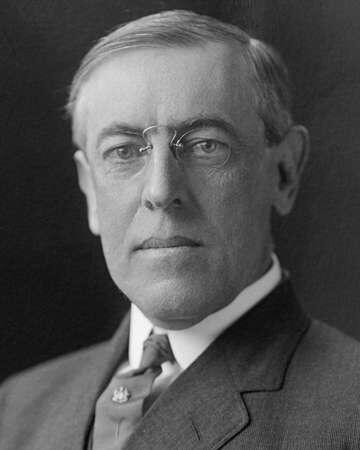
1913 In a speech in Mobile, Alabama, President Woodrow Wilson vows the US will "will never again seek one additional foot of territory by conquest"
#history #freespeech #pause #reflect #bitcoin #nostr #anarchyⒶ

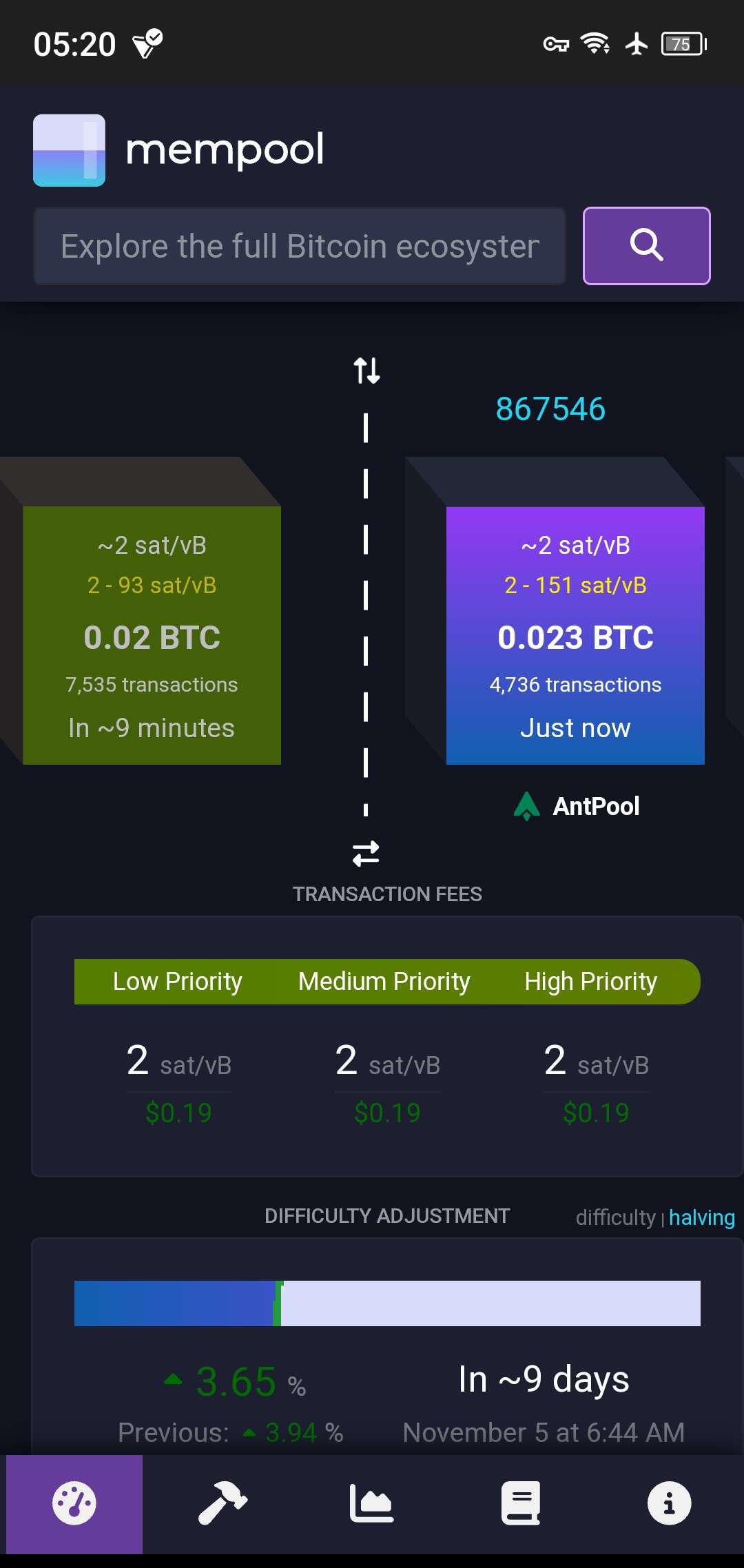
#bitcoin #nostr #anarchyⒶ #decentralisation #freedomtech #mempool #fees
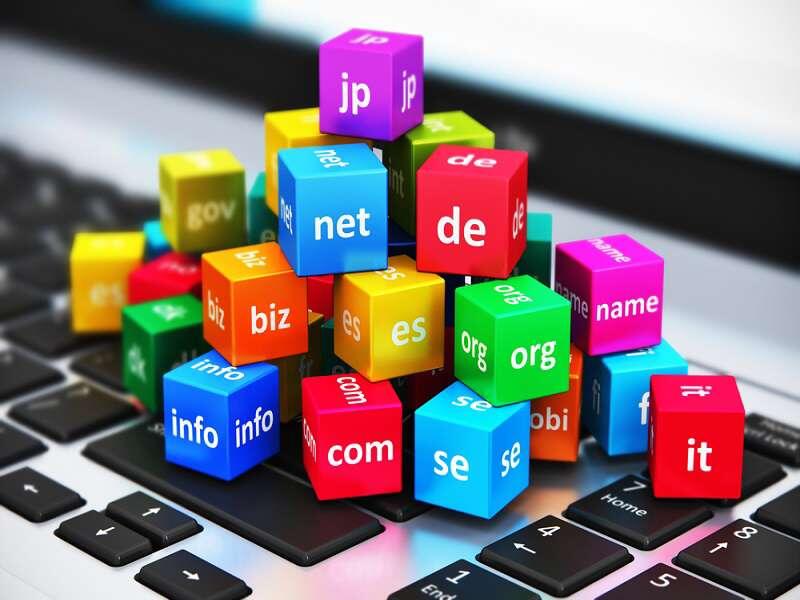
A blockchain-based Domain Name System (DNS) is an alternative to the traditional DNS, leveraging decentralized, distributed ledger technology to manage domain name registrations and ensure transparency, security, and resilience against censorship and central control. Here’s a synopsis of how it works and its benefits:
1. **Structure and Operation**: Blockchain DNS operates on a peer-to-peer network where each domain is a record on the blockchain, eliminating the need for centralized authorities like ICANN. Domains are registered and stored across distributed nodes, making them immutable and less vulnerable to hacking or manipulation. Records can be added or updated through consensus mechanisms, such as proof of stake or proof of work, which provide security and transparency【7†source】【8†source】.
2. **Transparency and Trust**: Blockchain DNS enhances transparency because all transactions (such as domain registrations) are public and verifiable on the blockchain. This open ledger approach reduces the possibility of fraud and gives domain owners greater control over their domains without relying on traditional domain registrars, who may impose restrictions or fees【6†source】.
3. **Decentralization and Resistance to Censorship**: By distributing domain information across numerous nodes globally, blockchain DNS makes it difficult for any single government or organization to censor or control domain access. This approach promotes free information flow and protects against government-mandated DNS censorship【9†source】.
4. **Challenges and Adoption**: While blockchain DNS offers security and resilience, challenges include scalability, interoperability with traditional DNS systems, and limited browser support. Some blockchain DNS providers, like ENS (Ethereum Name Service) and Unstoppable Domains, have developed early implementations, but mass adoption remains limited due to these hurdles.
Blockchain DNS represents a significant shift towards a decentralized internet infrastructure, though it will need widespread collaboration and technical advances to replace or coexist with the existing DNS system.
#bitcoin #nostr #anarchyⒶ #decentralisation #freedomtech #blockchain #dns
DNS on Blockchain: the next evolution of domain names?
https://blog.nameshield.com/blog/2020/04/08/dns-on-blockchain-the-next-evolution-of-domain-names/
#bitcoin #nostr #anarchyⒶ #decentralisation #freedomtech #blockchain #dns

Decentralizing ICANN's control over the Domain Name System (DNS) could be achieved through a model that distributes authority among multiple, independent organizations worldwide, as opposed to a single centralized entity. Here’s how decentralization might work:
1. **Multi-Entity Management**: Instead of ICANN alone governing the root zone file, a coalition of organizations representing diverse regions and stakeholders could be established to manage DNS on a collaborative basis. This structure would involve regional entities that align with international standards but operate independently, reducing the risk of centralized influence【7†source】【9†source】.
2. **Blockchain-Based DNS**: Blockchain technology presents a promising tool for decentralizing the DNS system. A decentralized blockchain DNS could distribute domain registration and management across nodes worldwide, eliminating the need for a central authority and enhancing data transparency and security. Each domain record would be stored in a tamper-resistant ledger, where anyone with appropriate access could verify domain information【6†source】.
3. **Decentralized Autonomous Organizations (DAOs)**: Using DAOs could further enhance decentralization by allowing domain stakeholders to vote on critical decisions regarding DNS management. DAOs use blockchain and smart contracts to automate governance, potentially enabling a transparent and consensus-driven approach to managing the global DNS.
Decentralizing DNS governance would make the internet less vulnerable to single points of failure and provide a more inclusive framework that represents the global internet community. However, challenges like technological readiness, security implications, and the coordination of multiple stakeholders remain to be addressed.
#bitcoin #nostr #anarchyⒶ #decentralisation #freedomtech
#bitcoin #nostr #anarchyⒶ