#GM
Connections


I wanted to answer, but realized that I would have had to peel off so many layers of bullshit... I preferred to go for a walk with my dog.

💯

#GM
#Grammys 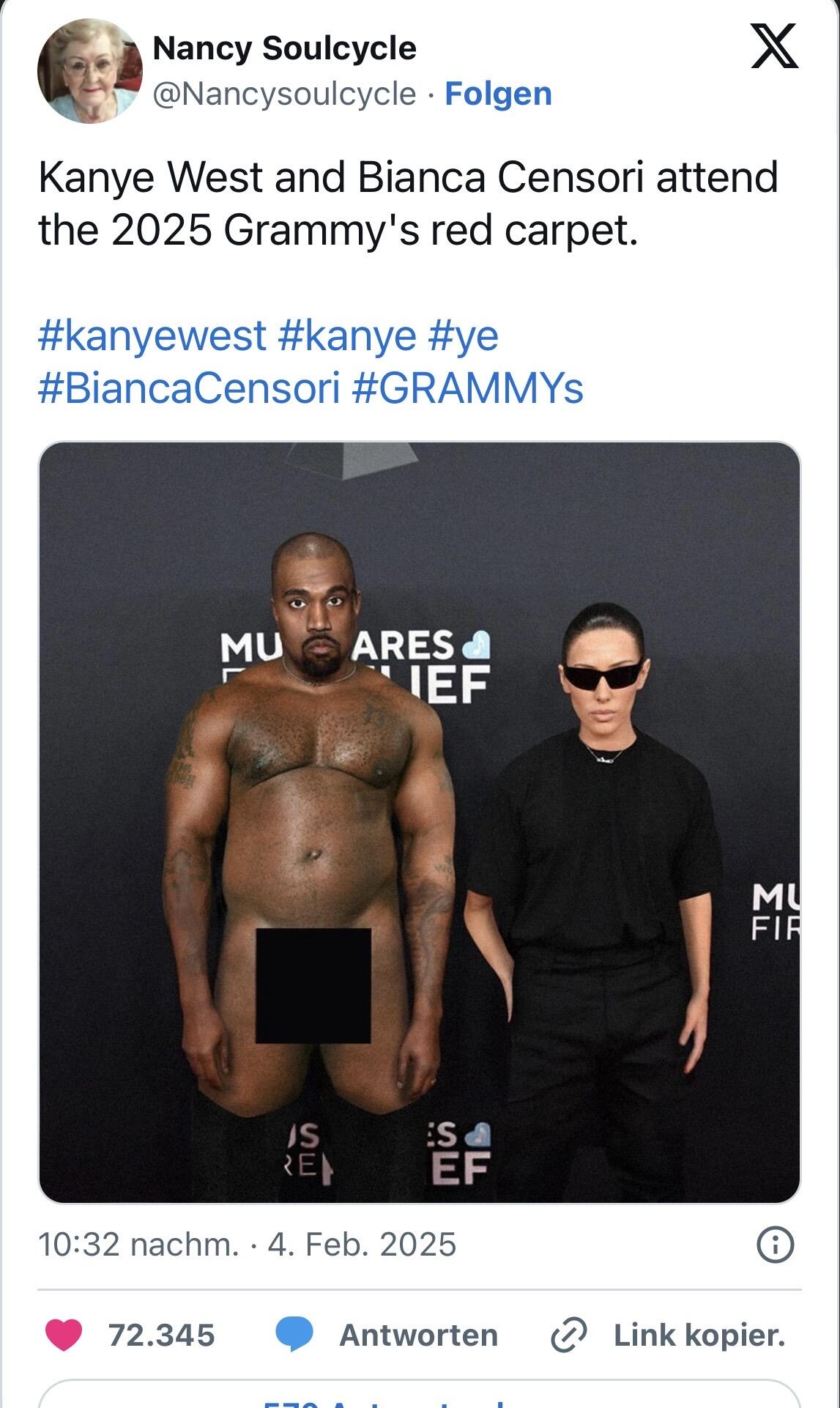
nostr:npub1pvgcusxk7006hvtlyx555erhq8c5pk9svw57snlxujpkgnkup89sekdx8c I would like to invite you to chat a little ..

Yes, I agree with you in principle. Sometimes I have to laugh when I try out an AI chat. In the end, I write my text contextually much more clearly when I don't use AI.
The "AI Act", a European regulation, discusses whether AI systems in critical infrastructures should be viewed as high-risk systems. Hmm. Funneling it in everywhere and discussing it afterwards ☺️
What is clear is that our way of thinking will change quickly. I am sure that I too will use AI for monotonous jobs, I hate nothing more than monotony. And of course, everything is better in open source. But we act as if we have the growth of AI under control.
This is not about a few thousand jobs being lost, but about the Mariana Trench between people, about new standards of human efficiency that are becoming tough. The growing inequality is determined by what people do instead of a monotonous job that AI is now taking over.
You sound btw, as if you have already accepted the fate of mankind ☺️
..not just topics, I figured, but how we process information. Everybody has questions beside some specs, I got lots of questions, but who to ask ? I got a glimpse now… but if you search for AI and studies, you will find more sales arguments than empirical studies. I am thinking about what AI was built for..💰
If feel we should have honest discussions with free sociologists, psychologists and spiritual people. Maybe AI topics could be something for the next Nostr Conference.

Welcome! Your productions are truly exceptional. Great to have you here.


Cantata "Mit Fried und Freud ich fahr dahin" BWV 125: 2. Aria: "Ich will auch mit gebrochnen Augen" by Robin Tyson, John Eliot Gardiner & English Baroque Soloists https://www.shazam.com/track/56144617?referrer=share
Wunderbar.
Fractured musings on Tech, Humanity,
AI / 1 (the dark edit:))
* Do Androids Dream of Electric Sheep? Does AI dream of humans or of being human?
* Jules Verne – I devoured his books as a child, dreaming myself into his world. Captain Nemo in his "Nautilus" - my ideal father figure. As the first author to center scientific and technological processes in his novels, he depicts a world where people live in peace and respect within a technological adventure. Technology is employed as an extension of human capability – but above all, to protect the human essence. Tech optimism as a shaping influence.
* "Paris in the Twentieth Century" - the tragic struggle of an idealistic young man for happiness within a relentlessly materialistic dystopia that the French capital has become by 1960. Jules Verne's last book, published posthumously in 1994.
* Mastering a prosthesis requires dealing with loss. My Friend in the wheelchair serves as a teacher, showing us that growth is multidimensional, and that real beauty is decouplet from standarts. How do the not constrained, handle losses: the loss of privacy, the loss of faith in liberal democracy, the loss of a naïve, utopian worldview amidst concerns for the future ? („Be more resillient!“)
* Belief in technology and AI presupposes a deterministic tech optimism
* I see a disappearance of our motivation to shape our future. Do we leave it to Technocrats to define how our world will look in the future?
* Extremism fills the void created by a lack of education – obsessive AI usage through their Fallibility can fuel new forms of extremism.
* The changing significance of technology: from industrial techniques that standardize to a technological postmodernity that reaches for singularity – the special, the spectacle, even. What remains still special for us today?
* Democracy cherishes the individual, while in a dictatorship, the individual is irrelevant. Does the same apply to technocracy?
* Technocrats want to reduce bureaucracy, but replace Huamans with *merciless AI pedants.
Working on it, going to be a longer piece.