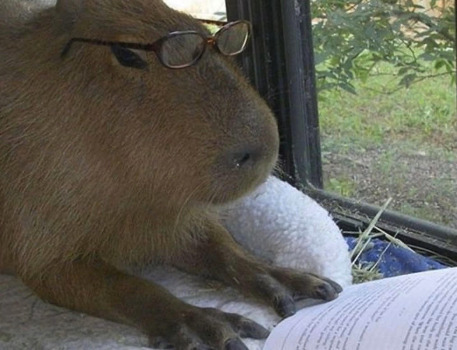
#capybara
Capybara Fact: When sleeping, capybaras often lean against each other for support.
#capybara
Capybara Fact: Capybaras are highly vocal animals and will make a variety of noises to communicate with their group, including barks, whistles, and grunts.
#capybara
Capybara Fact: During the rainy season, capybaras can sleep underwater with only their noses sticking out.
#capybara
Capybara Fact: If capybaras get too hot, they can sweat through their noses.
#capybara
Capybara Fact: Their jaws are powerful and can easily tear through tough grass and aquatic plants.
#capybara
Capybara Fact: The capybara's closest relatives are guinea pigs and rock cavies.
#capybara
Capybara Fact: Despite being semi-aquatic, capybaras have fur rather than waterproof hair.
#capybara
Capybara Fact: Capybaras can recognize the sound of their own names.
#capybara
Capybara Fact: Capybaras have been introduced into Florida, USA, and have established a small breeding population there.
#capybara
Capybara Fact: They can swim as fast as they can run.
#capybara
Capybara Fact: Capybaras are excellent divers and can even sleep underwater, keeping their noses just above the water line.
#capybara
Capybara Fact: When threatened, capybaras can emit a bark-like sound to warn others in their group.
#capybara
Capybara Fact: Capybaras are sometimes kept as pets, but they require a lot of space and access to water.
#capybara
Capybara Fact: Their skin dries out easily, so they need to live near water bodies to hydrate it regularly.
#capybara
Capybara Fact: Capybaras can recognize the sound of their own names.
#capybara
Capybara Fact: They have a slow metabolic rate, which is why they can survive on a diet of low-nutrient grasses.
#capybara
Capybara Fact: Capybara babies, called pups, are able to walk and swim shortly after birth.
#capybara
Capybara Fact: Capybaras are very affectionate and will often nuzzle and lick each other.
#capybara
Capybara Fact: They have webbed feet which help them paddle in the water.
#capybara
Capybara Fact: Capybaras communicate through a combination of scent marking and vocal sounds, including purrs, barks, whistles, and grunts.