

I love figs! I can very rarely find them in the stores.

Thank you very much for the comment and the zap! Cheers!

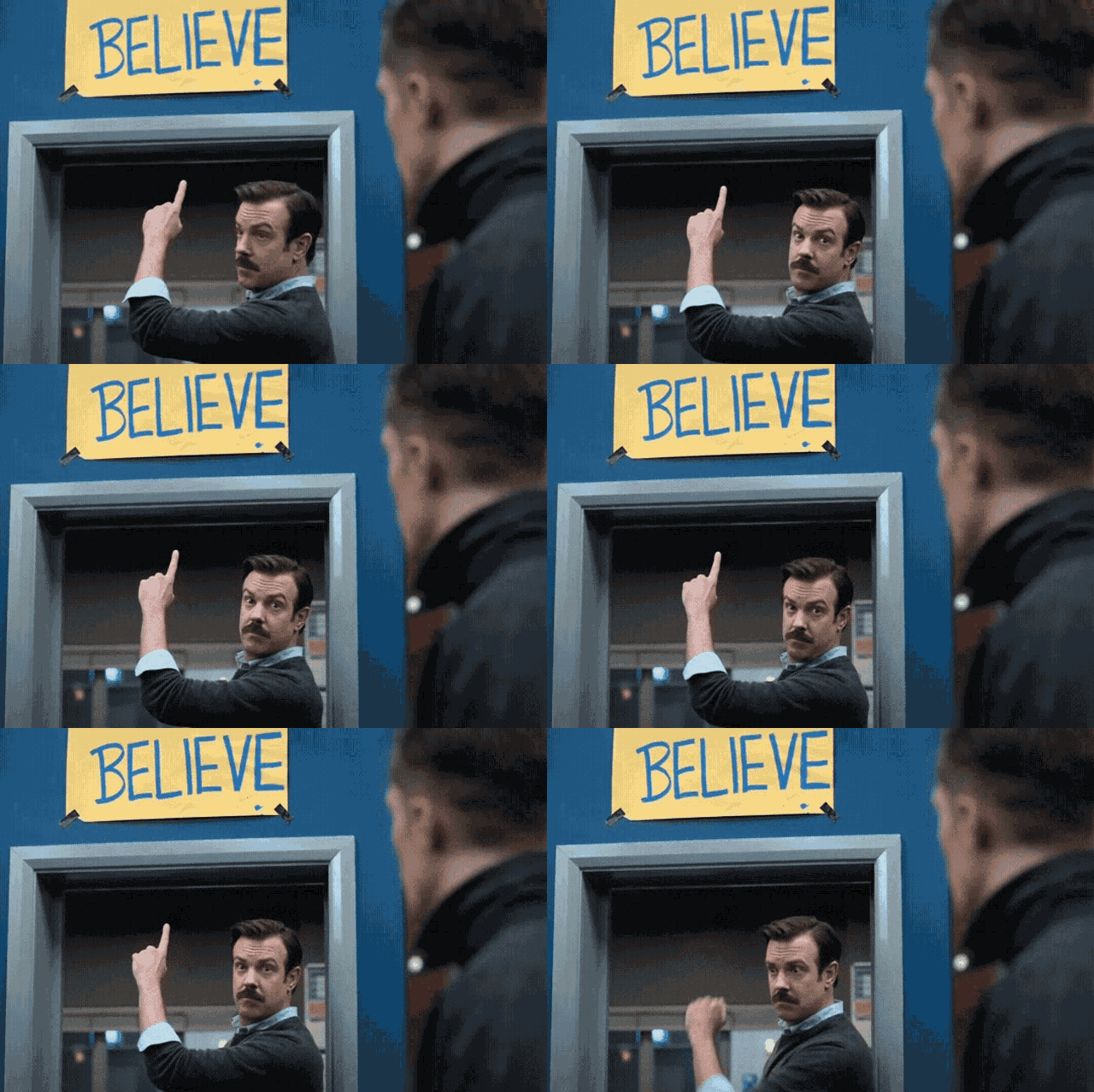
Ahhh... yes! The riddle of the vernier!
Truth is, every-time I use one... I stare at it for awhile.
"How does this thing work again."

I would think that a social media protocol in which you cannot be cancelled would allow someone to truly be themselves.
Let it fly!
Nostr is a new world that we haven't seen before...


Transform micrometer dread into expertise: an easy-to-follow guide to precision and confidence.
Take your newfound skills to the workshop or lab and watch as accurate measurements become second nature - nothing to fear.
Leave behind any apprehensions and follow this guide to the essential steps of becoming a proficient user of the vernier micrometer.
1. Select Measurement Unit:
- Choose the appropriate unit of measurement, either metric or imperial, based on your requirements.
2. Choose Measurement Range:
- Select the micrometer size suitable for the range of your measurement. Micrometers will often come in 0"-1", 1"-2", 2"-3", etc.
3. Get Acquainted with the Micrometer:
- Familiarize yourself with the main components of the micrometer, consisting of the fixed main scale and the sliding vernier scale.
4. Clean the Anvils:
- Before measurements, ensure the anvils (the measuring surfaces) are clean. Use a lint-free cloth or special cleaning tool to remove any debris that could affect accuracy.
5. Zero Adjustment:
- Ensure accurate measurements by zeroing the micrometer. Close the jaws and confirm that the zero on both the main and vernier scales align.
6. Open the Jaws:
- Use the thimble or the ratchet knob to gently open the jaws of the micrometer. Position the object to be measured between the jaws.
7. Gently Close the Jaws:
- Close the jaws gently until they make contact with the object, avoiding excessive force.
8. Read the Main Scale:
- Observe the whole number measurement on the main scale aligned with the thimble or sleeve edge.
9. Read the Vernier Scale:
- Examine the vernier scale to identify the line that best aligns with a main scale line. The number on the vernier scale corresponding to a main scale line indicates the fraction of the smallest division.
10. Combine Readings:
- Combine the whole number measurement from the main scale with the fraction from the vernier scale to obtain the precise measurement.
11. Utilize the Ratchet Knob:
- If your micrometer features a ratchet knob, use it to apply a consistent and controlled force when closing the jaws. This helps prevent over-tightening and ensures accuracy in measurements.
12. Record the Measurement:
- Record the measurement, including both the whole number and the fraction obtained from the main and vernier scales.
13. Thimble Lock (Optional):
- Some micrometers include a thimble lock, allowing you to temporarily secure the measurement. Use this feature when you need to record the measurement without maintaining constant pressure on the micrometer.
NOTE: Several repeated measurements in a row ensure that you are taking a good accurate reading.
Precision is paramount when using a vernier micrometer, so handle the instrument delicately, employ the ratchet knob judiciously, and follow the appropriate procedures for accurate measurements.
#grownostr #diy #machining #engineeringnostr


Yes, you are very correct. The United States is in dire need of foundries. They are closing at an alarming rate. In the world of aviation repair it is critical. You can no longer find foundries to cast vital military aircraft parts.
The difference between a journeyman and a master craftsman is…
a master can fix their mistakes.
#grownostr #quotes

Prayers for you to feel better. Happy Holidays to you! Cheers!


Prayers for you and your family.

Just offloaded WOS onto my own node… definitely a safe harbor to have!

They are very good with prototyping plastic. I still need to get one myself. Would be very useful around the shop. Cheers!


This one should be good. nostr:npub1rxysxnjkhrmqd3ey73dp9n5y5yvyzcs64acc9g0k2epcpwwyya4spvhnp8 has been close to the Canadian trucker situation. I have heard him talk about it on other podcasts briefly. However, this one seems to be a full summation.
Cheers!
Dang! I forgot to put the link! Sorry about that.

Calling all industrial enthusiasts! Let's talk about a shift in the engineering landscape.
In the dynamic world of technology, we've witnessed a shift from traditional skills to high-tech solutions in aviation Maintenance, Repair and Overhaul (MRO).
However, there's a crucial gap emerging as experienced craftsmen retire without successors stepping in. This vacuum is leading to the over-reliance on technology as a quick fix, particularly in processes like 3-D printing.
But here's the catch - these solutions often become costly crutches, leaving us with idle machines and a workforce lacking essential skills to do repairs.
So, what's the key? It's time to bridge the gap and equip the next generation with the right skills to ensure a seamless transition.
Let's move beyond the temporary allure of technology and focus on building a workforce that can sustain and
- Long-Term Vision: Instead of quick fixes, let's plan for the future. Prioritize skill development over temporary technological band-aids.
Let's build a future where technology complements, not replaces, the craftsmanship that has defined industries for decades.
elevate industrial practices.
Imagine a future where technology is an asset, not a crutch, and where skilled workers drive innovation forward.
Here are some things that we can do:
- Skill Up: Young engineers, invest in your craft! Hone those traditional skills that form the backbone of industrial expertise.
- Mentorship Matters: Seasoned professionals, share your knowledge. Mentorship is the bridge between experience and innovation.
- Holistic Approach: Industries, let's invest in comprehensive training programs. Ensure that the workforce is well-rounded and adaptable to evolving technologies.
#grownostr #engineernostr 
This one should be good. nostr:npub1rxysxnjkhrmqd3ey73dp9n5y5yvyzcs64acc9g0k2epcpwwyya4spvhnp8 has been close to the Canadian trucker situation. I have heard him talk about it on other podcasts briefly. However, this one seems to be a full summation.
Cheers!