
My 25 favourite musical formats, ranked:
1. Open reel tape
2. SACDs
3. Audio cassette tape (Type IV metal)
4. CDs
5. DAT
6. DCC
7. VHS (yes, audio-only exists!)
8. Audio cassette (Type II chrome)
9. FLAC / ALAC
10. Audio cassette (Type I ferric oxide)
11. Vinyl 45 RPM
12. Vinyl 33.3 RPM
13. Streaming, lossless
14. MP3
15. Streaming, lossy
16. Vinyl 78 RPM (shellac)
17. Wax cylinder
18. 8-track tape
19. HiPac / PlayTape
20. OGG
21. Phonograph postcard
22. Tefifon
23. Vinyl 16.7 RPM
24. WAV
25. slotMusic
My local thrift shop was selling this portable CD play for $5. That’s reason enough to buy it, but the features were so compelling—I *needed* it:
* line out port
* DC power
* AA rechargeable battery charging(!)
* 60 second anti-skip
* programmable tracklist
But my favourite feature? The transparent cover that allows me to watch the CD spin. I wish more CD players did this. 
If you want the best analog audio at the cheapest price, go with VHS tapes. Here’s the specs:
* Freq. response: 20Hz - 20kHz
* Wow & Flutter: 0.005%
* Dynamic range: 80dB
They’re super cheap even now, and rival professional reel-to-reel tape. New tapes cost $20 and deliver two solid hours of music.
But be sure to record on VCRs that say “HiFi” on them because they deliver stereo sound.
I just went deep down a rabbit hole—deep. Imagine stumbling upon an alternative musical history.
Yesterday, I discovered an American composer named Ernst Bacon. A little background on him: during his lifetime, he was a pretty big deal. He won a Pulitzer Prize and three Guggenheim fellowships. But he was also a bit of an odd duck.
Ernst came from this quasi-German tradition. His mother was an Austrian upper-middle-class woman, wealthy and cultured, while his father was a Midwesterner. His mother, though, was the one who gave him his musical education—she taught him everything. Ernst eventually went to Germany and Austria to immerse himself in the German Romantic classical tradition.
(Quick sidenote: I know some classical music purists out there might take issue with me using “classical” as a blanket term here. Technically, “classical” refers to a specific time period, but for most people, it’s shorthand for a broader Western tradition of non-popular music. That’s the sense I’m using here.)
Anyway, for much of his early life, Ernst was steeped in German Romanticism. He even wrote music in German and spoke it fluently. But Ernst lived through two world wars, and as you might imagine, Germany wasn’t exactly popular with Americans during those times. At a certain point, Ernst decided to pivot. He became a proud, patriotic American and wanted nothing to do with Europe anymore—not its languages, not its traditions. He was determined to create music that was as American as possible.
Here’s where it gets interesting. Unlike other great American composers, Ernst Bacon had zero interest in popular music. He didn’t care about Tin Pan Alley, the blues, or even jazz. He hated rock and roll—he thought it was an invitation to crime. Compare that to composers like Gershwin, who infused jazz and blues into his work (think Rhapsody in Blue), or Leonard Bernstein, who blended classical with show tunes (West Side Story). Even Frank Zappa, best known as a rock musician, wrote classical works that are increasingly respected today. Ernst Bacon wanted none of that.
Instead, his idea of an “American idiom” came from folk music—Appalachian ballads, African American spirituals, and New England songs. His biggest musical influences? Poet Carl Sandburg and Roland Hayes, an African American tenor famous for performing classical music and recording spirituals. Ernst also drew inspiration from American poetry. He composed about 50–60 songs based on Emily Dickinson’s poems and others inspired by Walt Whitman.
When you listen to his music—particularly his Emily Dickinson songs—it’s this strange fusion. It’s like American folk music colliding with German Romanticism. And though Ernst worked hard to distance himself from that German tradition, he couldn’t quite escape it. A duck will always be a duck, you know? He grew up in that world, so his music is still tinged with it.
It’s wild to listen to because it feels like an alternate reality—a version of American music where blues, jazz, and rock never took off. His work has this impressionistic quality, especially the piano parts. It’s like he’s dabbing with musical paintbrushes. But there’s no blue note, no raw aggression, no edge.
I’m not sure if I like his music. His Emily Dickinson songs are…fine, sung in an almost operatic style. But the piano feels oddly impressionistic. If you’re not American, I imagine hearing it would be even stranger—it doesn’t sound like what you’d expect American music to be.
Still, it’s fascinating in its own way. If you’re curious about an alternative history of American music, Ernst Bacon is worth exploring.
If you want to build the next startup unicorn, look at what’s currently popular and build it for pets:
1. AI for pets
2. Food delivery for pets
3. TikTok for pets
4. Blockchain for pets
5. Robotics for pets
Why does my cat not have a VR head yet?
Typically, there’s three douchey responses to the phrase “Oh my God”:
1. “Don’t take the Lord’s name in vain.”
2. “There is no God.”
3. ”Which God are you referring to?”
I knew a guy who’s asked, “Hey, why does no one hire exciting accountant?”
And that’s how he ended up in jail.
Let’s be honest with ourselves.
They’re not daschunds. They’ve always been wiener dogs.
I always panic when I see a car with a bumper sticker that says, “Jesus take the wheel.”
The strange thing about living in Richmond, BC, Canada—the most Asian city in North America—is you start to believe certain things are mainstream when they’re not:
“Of course, Mariya Takeuchi and Sammy Chieng are global superstars!”
I live in a community that’s 70% Asian—the highest proportion in North America. The music genres that are most popular around here are:
* classical
* jazz
* K-pop / J-pop / Cantopop / Mandopop
The CRTC is 10 years late on this—and it’s near impossible to enforce CanCon on the Internet.
So here’s my suggestion: Canada should build its own social media infrastructure.
Facebook, Twitch, and YouTube? All American. We ain’t investing in social.
Anita Kerr died very recently—in 2022, age 94.
Even if you’re unaware of her work, you know her work.
She arranged the background vocals on Roy Orbison’s “Only the Lonely,” Bobby Helm’s “Jingle Bell Rock,” and Brenda Lee’s “I’m Sorry”.
https://variety.com/2022/music/news/anita-kerr-dead-backup-chorale-singers-country-pop-1235399733/
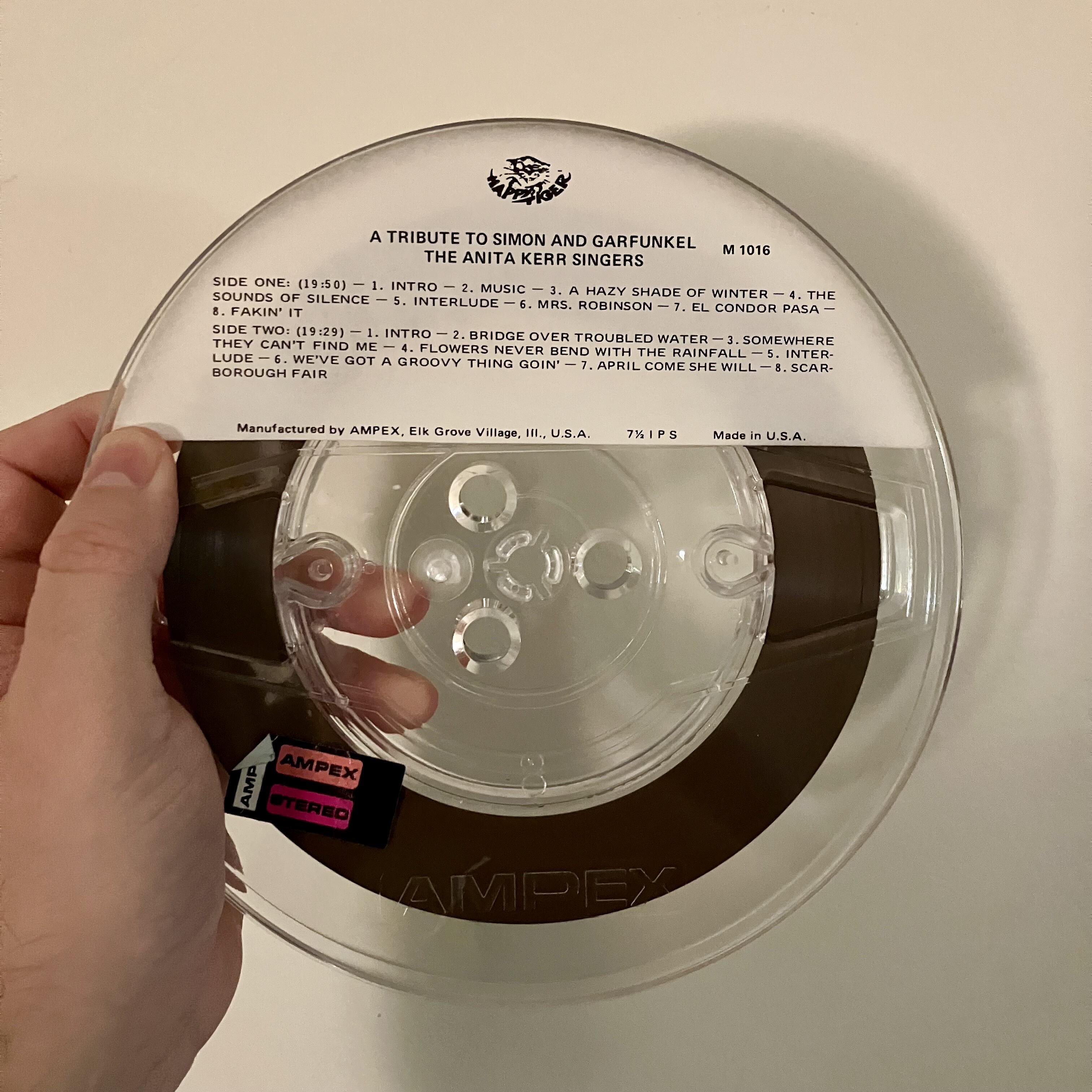
The Anita Kerr Singer - A Tribute to Simon & Garfunkel
I got this open reel tape for three reasons
* Anita Kerr was the architect of the Nashville Sound
* this was an attempt to go countercultural
* it runs as 7.5 IPS
The Nashville Sound gets a lot of hate nowadays. But in its defence, when you hear this music on an open reel tape, it’s impressive. The horns and strings really glow, and the snares have snap.
What’s eyebrow-raising is that, at several moments, this album veers into rock. Yeah, I’m serious. Things get rollicking.
It’s funny, with country music being all bro, people forget that women like Anita Kerr are what made Nashville what it is. 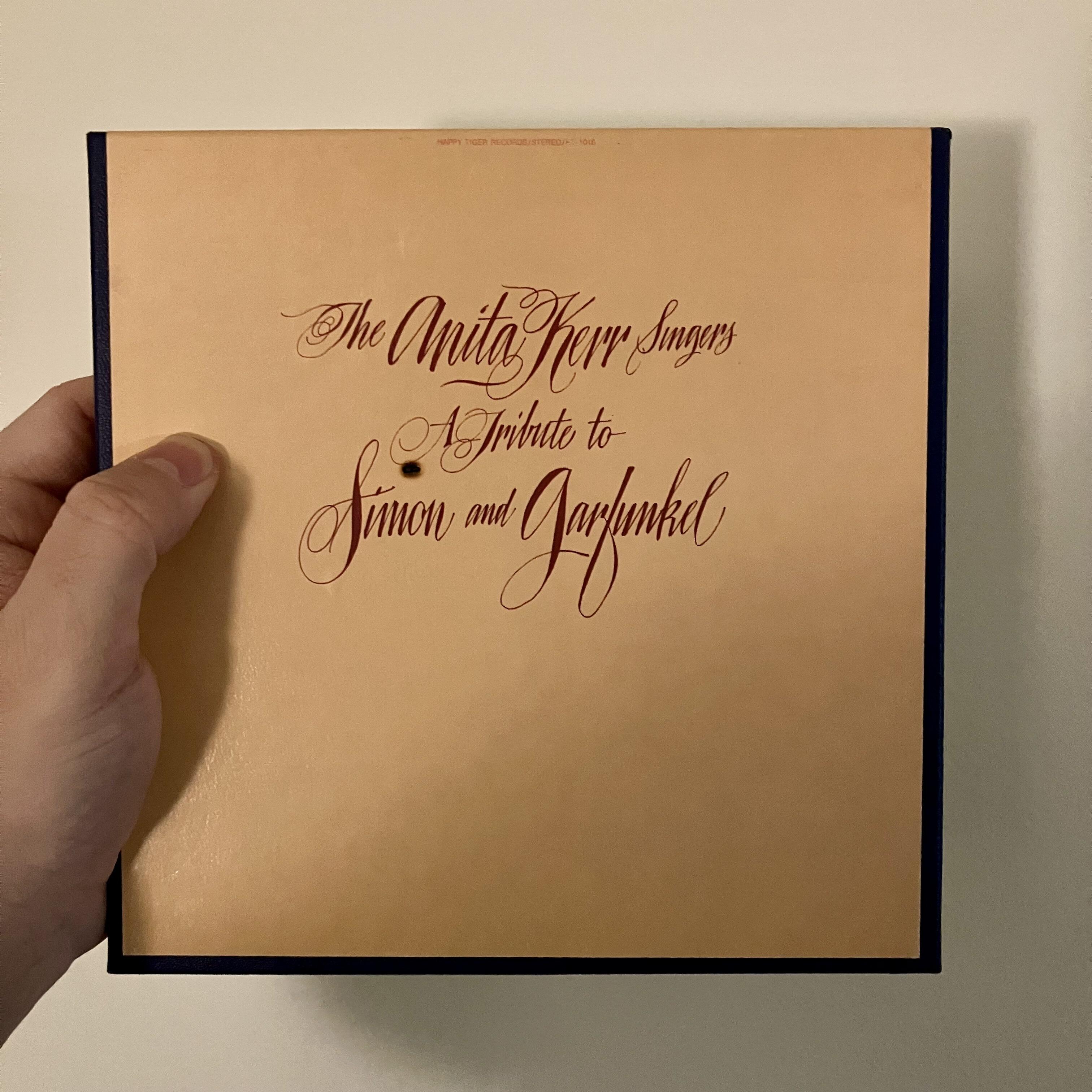
When I was 10-years-old, I remember going to church, seeing a woman in a red dress eating Twizzlers.
And I said out loud, “Hey, which man are you looking for?”
My mom instantly smacked me so hard, and apologized profusely to that woman.
One thing neurotypical people don’t understand about autistic folk is that—it’s not that we’re unaware of your intentions.
We often can read them loud and clear.
It’s that we’re confused about why you’re pretending your intentions are not loud and clear when they’re blatantly loud and clear.
“Crave” (2024) by Cindy Press, photograph
We all pretend that art is high concept. But let’s be real—it’s usually not. This piece is called “Crave,” and it features a woman with a flower in her mouth. We know the meaning.

When I was working in the corporate world, here’s how things actually got done:
Me: Hey Jim, want to join me and Bob for beers?
Jim: Sure!
Me: …speaking of which, are you on board with our next initiative, Jim?
Jim: Yeah, consider it greenlit.
My theory about why Fediverse content works on LinkedIn is that the Fediverse is actually a professional network (though few will admit this), but at the same time, the inverse.
LinkedIn is the equivalent of a corporate meeting. It’s technically work, but usually a waste of time.
The Fediverse is the equivalent of having beers after work which, as we all know, is often when actual work gets done.
Here’s the other weird thing about LinkedIn: you’d would think business-related stuff would gain the most attention.
But the topics people actually want to read about are:
* Fediverse
* video games
* art
Who’s talking to me about this stuff? Founders, company directors, and CXOs.