When you fuel up an SR-71, sitting on the ground in the hot sun, the fuel dribbles out on the tarmac. That’s not an apocryphal tale, it’s really true.
When you want to start the engines on an SR-71, you can’t use a standard airport start cart, you have to shackle each engine up to a pair of big V8 muscle car engines. Then, to get the fuel to ignite, you have to inject a special, toxic, high temperature hypergolic chemical mix similar to rocket propellant.
So you do all that, and you get the thing into the air, and you have to have a tanker waiting, just for you. You can’t take off with full tanks, and you can’t fly very far without them—or with them for that matter.
So you fill ’er up and accelerate to cruising speed. Only then do the tanks heat up enough to expand and seal up the leaks.
So you refuel—a few times—and you get to wherever you need to go—which is going to be deep inside the territory of somebody who wants you dead, because otherwise, why are you up there? And while you are flying around at bat-outa-hell speed, if you pull off your glove and touch the wind screen, you’ll burn your hand.
And if you flame-out for any reason, you only have three shots per engine at restarting, because it’s not like you can do it by clicking an igniter plug. You have to carry enough of that hypergolic restart mix to handle contingencies, but not enough to turn the aircraft into a bomb.
Flying the SR-71 was dangerous and fabulously expensive. So as soon as the military decided they could get by without it, they retired it.
That’s a shame too, because the SR-71 is the closest thing to a space plane ever built. 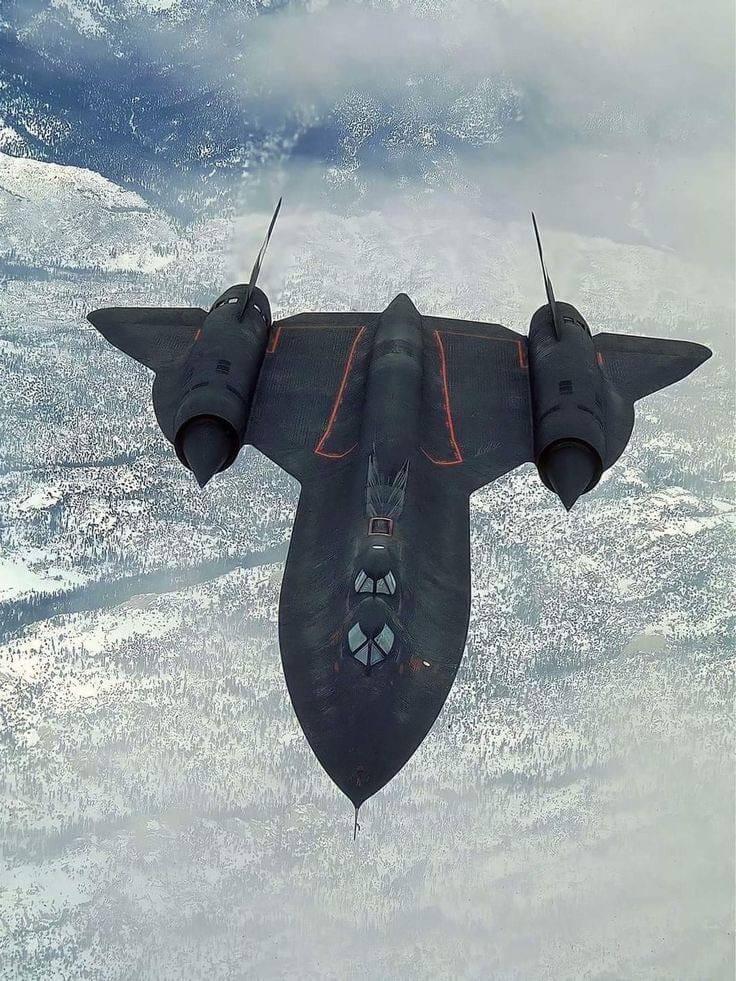
𝟭𝟴 𝗳𝗮𝗰𝘁𝘀 𝗮𝗯𝗼𝘂𝘁 𝗣𝗮𝗿𝗶𝘀:
1. The Paris Metro has several "ghost stations" that are no longer in use. One of the most famous is Arsenal, which was closed in 1939.
2. Gustave Eiffel's apartment at the top of the Eiffel Tower still exists. It's now a museum, showcasing how it looked when he lived there.
3. Montmartre, known for its artistic history, has a hidden vineyard called Clos Montmartre, which still produces wine.
4. The Palais Garnier Opera House has a hidden apartment designed for the building's architect, Charles Garnier.
5. The oldest house in Paris is located at 51 Rue de Montmorency and dates back to 1407. It belonged to the alchemist Nicolas Flamel.
6. The shortest street in Paris, Rue des Degrés, is just 5.75 meters long and consists solely of a staircase.
7. The Opera Garnier has an underground lake, originally a natural water source that became part of its infrastructure.
8. During the liberation of Paris in 1944, the secret password was "Tante Sally."
9. Rue des Morts in the 5th arrondissement was once a street where people with disfigured faces due to World War I injuries lived and received treatment.
10. La Campagne à Paris in the 20th arrondissement is a small, hidden village within the city, complete with quaint houses and gardens.
11. The Tour Jean-sans-Peur, a medieval tower built in the early 15th century, is tucked away in the 2nd arrondissement.
12. Candelaria, a speakeasy-style bar, is hidden behind a taco shop in Le Marais.
13. Le Procope, founded in 1686, is the oldest café in Paris and was frequented by Voltaire, Rousseau, and Benjamin Franklin.
14. The Canal Saint-Martin was partly covered in the mid-19th century, and today, parts of it run underground.
15. At the Arc de Triomphe, there's an elevator hidden within one of the pillars for those who can't or don't want to climb the stairs.
16. The Pont des Arts was once used as a toll bridge, where artists would set up their easels and paint the river views.
17. Place de la Concorde, now a famous square, was once the site of many public executions during the French Revolution.
18. The Bièvre River, once a prominent waterway in Paris, now flows entirely underground through the city. 
🐝Some interesting facts about bees 🐝
Here are 20 interesting facts about the importance of honey and bees:
1. Did you know that honey never spoils? Archaeologists have found pots of honey in ancient Egyptian tombs that are over 3,000 years old and still perfectly edible!
2. Did you know bees are essential for growing many of our foods? They pollinate about one-third of the food we eat, including fruits, vegetables, and nuts.
3. Did you know honey has natural healing properties? It can help soothe sore throats and even speed up the healing of wounds and burns due to its antibacterial qualities.
4. Did you know bees produce a tiny amount of honey in their lifetime? A single worker bee produces only about 1/12th of a teaspoon of honey in her entire life, but together they make a lot!
5. Did you know bees communicate through dancing? They perform a "waggle dance" to tell other bees where to find the best flowers.
6. Did you know honey can help your brain? It contains antioxidants that may support brain health and improve memory.
7. Did you know beeswax, made by bees, is used in many everyday products?** It's found in things like candles, lip balm, and even some types of food packaging.
8. Did you know honey can be a natural energy booster? It provides a quick source of energy because it's packed with natural sugars.
9. Did you know there are over 300 types of honey in the United States alone? The flavor, color, and aroma depend on the flowers that bees visit.
10. Did you know that beekeeping helps many communities around the world? It provides income, supports agriculture, and helps improve food security in many regions.
11. Did you know honey can be used as a natural preservative? Because of its antibacterial properties, honey has been used to preserve fruits and other foods for centuries.
12. Did you know that some bees can recognize human faces? Studies have shown that honeybees can remember and recognize human faces, much like they remember different flowers.
13. Did you know honey can improve your sleep? A spoonful of honey before bed can promote relaxation and better sleep by raising insulin slightly and allowing tryptophan to enter the brain.
14. Did you know bees are colorblind to red? Bees can see ultraviolet light, which humans can't, but they can't see the color red. Instead, they see it as black.
15. Did you know honey can help with seasonal allergies? Consuming local honey is believed by some to help build immunity to local pollen and reduce allergy symptoms.
16. Did you know that royal jelly, produced by worker bees, is fed to all bee larvae? However, only those destined to become queens are fed royal jelly throughout their development.
17. Did you know honey has different medicinal uses in various cultures? For example, in Ayurvedic medicine, honey is used to treat digestive issues, and in ancient Egypt, it was used to treat wounds.
18. Did you know bees have a built-in GPS? They use the position of the sun, the earth's magnetic field, and their own memories of landmarks to navigate and find their way back to the hive.
19. Did you know honeybees are the only insects that produce food eaten by humans? They are unique in their production of honey, which has been a staple in human diets for thousands of years.
20. Did you know that honey can vary greatly in taste and texture? The type of flowers the bees pollinate affects the flavor, color, and texture of the honey. Some honey can even be creamy or spicy!
Thank you, precious bees!
Text credit: Earth Unreal
Image credit: Rory Shapland 
The Thundering Herd by Wilhelm's Art - by Artist John V. Wilhelm (Cattle made from river rock, railroad spikes, railroad tracks, steel wire, and nuts) 
This stunning Art Nouveau entrance is part of the famous Lavirotte Building in Paris, designed by architect Jules Lavirotte and completed in 1901.
Located at 29 Avenue Rapp, it features intricate, organic designs and sculptures that showcase the opulent and imaginative style of the era.
The elaborate carvings and wrought-iron details create a visually captivating facade, making it one of the most photographed doors in the city...a cry 
This stunning Art Nouveau entrance is part of the famous Lavirotte Building in Paris, designed by architect Jules Lavirotte and completed in 1901.
Located at 29 Avenue Rapp, it features intricate, organic designs and sculptures that showcase the opulent and imaginative style of the era.
The elaborate carvings and wrought-iron details create a visually captivating facade, making it one of the most photographed doors in the city... 
Ireland park 
🌻 Black and Red Sunflower (Helianthus annuus) 🌻
A striking black and red sunflower, with bold and vibrant petals. Perfect for adding a dramatic and unique touch to any garden or floral arrangement.
Light: Full sun.
Water: Water regularly, allowing the soil to dry out between waterings.
Soil: Well-draining, fertile soil.
Temperature: 70-85°F (21-29°C).
Humidity: Moderate.
Fertilizer: Monthly with a balanced fertilizer.
Adds a splash of color and drama to any outdoor space! 🌻🔥
Hashtags: #houseplants #Plants #garden #leaf 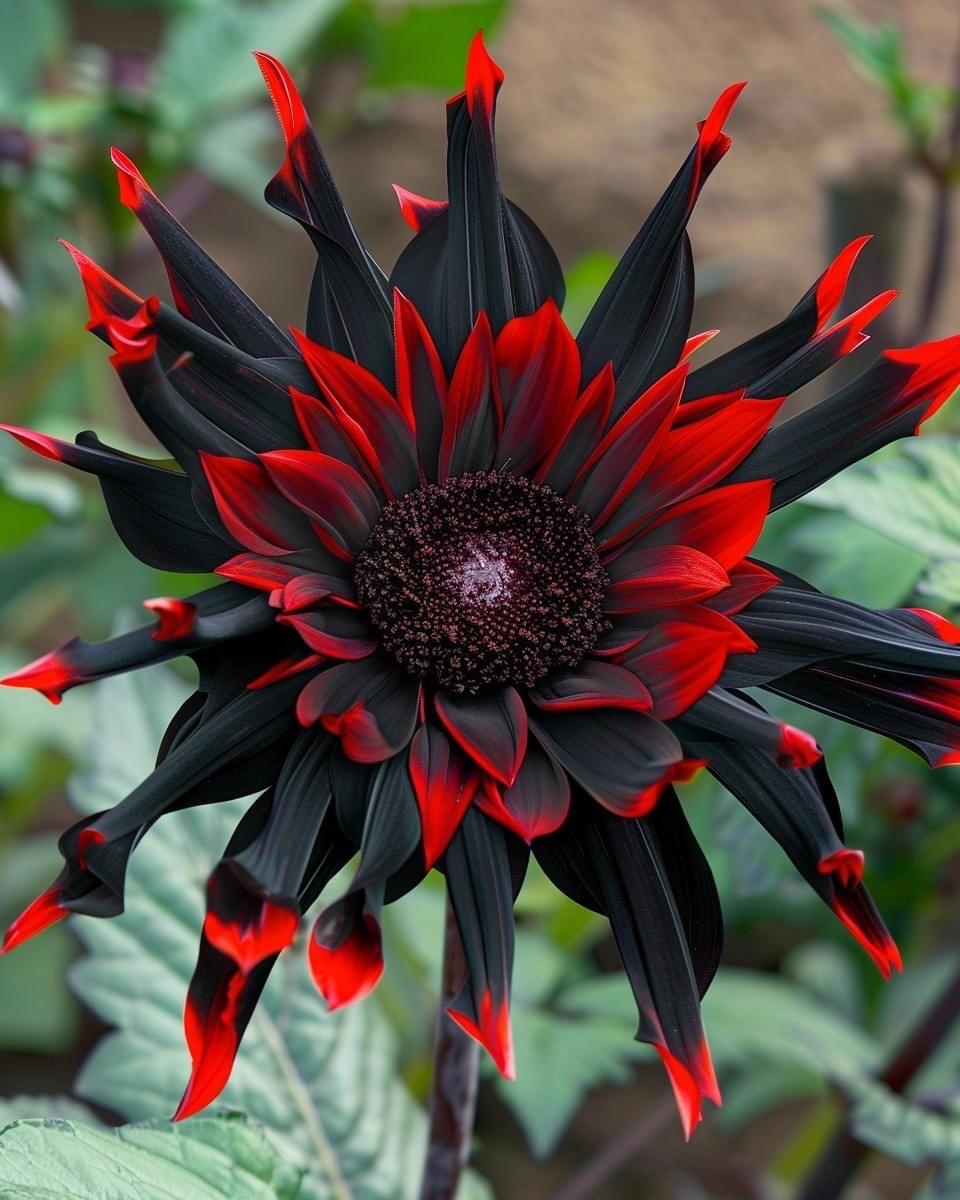
🐝🐝 
Why do jet aircraft make a strange halo when they pass the speed of sound?
Jet aircraft are amazing machines that can fly faster than the speed of sound, which is about 1,192 km/h (741 mph) at sea level and 20 °C (68 °F). When they do so, they sometimes create a strange halo around them, which looks like a white ring or cone. This phenomenon is called a vapor cone or a shock collar, and it is related to the sonic boom that the aircraft produces.
A sonic boom is a loud noise that occurs when an object travels through the air faster than the sound waves it creates. This causes the sound waves to pile up and form a shock wave, which is a sudden change in pressure and density. The shock wave travels in a cone shape behind the aircraft, with the aircraft at its tip. The angle of the cone depends on the speed of the aircraft, and the faster the aircraft, the narrower the cone.
The shock wave affects the air around the aircraft and lowers its pressure and temperature. This causes the moisture in the air to condense into tiny droplets, which form a visible cloud. The cloud appears as a halo around the aircraft, following the shape of the shock wave. The cloud disappears quickly, as the air returns to its normal pressure and temperature, and the droplets evaporate.
The vapor cone is not always visible, and it depends on the humidity and temperature of the air. The higher the humidity and the lower the temperature, the more likely the vapor cone will form. It also depends on the altitude and angle of the aircraft, and it is more likely to form when the aircraft is close to the ground and flying at a steep angle. The vapor cone is not harmful to the aircraft or the passengers, and it does not affect the performance or stability of the aircraft. It is just a visual effect that shows the power and speed of the jet aircraft. 
In his 1976 book The Twelfth Planet, Russian-American author Zecharia Sitchin claimed that the Anunnaki were actually a race of extraterrestrial beings from the undiscovered planet Nibiru, who came to Earth around 500,000 years ago in order to mine gold.
According to Sitchin, the Anunnaki genetically engineered homo erectus to create modern humans to work as their slaves. Sitchin claimed that the Anunnaki were forced to leave Earth when Antarctic glaciers melted, causing the Flood of Noah, which also destroyed the Anunnaki’s bases on Earth. These had to be rebuilt and the Nephilim, needing more humans to help in this massive effort, taught them agriculture.
Ronald H. Fritze writes that, according to Sitchin, “the Annunaki built the pyramids and all the other monumental structures from around the world that ancient astronaut theorists consider so impossible to build without highly advanced technologies.“Sitchin also claimed that the Anunnaki had left behind human-alien hybrids, some of whom may still be alive today, unaware of their alien ancestry. Sitchin expanded on this mythology in later works, including The Stairway to Heaven (1980) and The Wars of Gods and Men (1985). In The End of Days: Armageddon and the Prophecy of the Return (2007), Sitchin predicted that the Anunnaki would return to earth, possibly as soon as 2012, corresponding to the end of the Mesoamerican Long Count calendar. 
The Weight Of Thought is a sculpture by Thomas Lerooy, a Belgium based artist whose works stir emotions. 
This is a Flying fish up close. They can propel themselves out of water at speeds of more than 56 km/h. Once in the air, their rigid “wings” allow them to glide for up to 200 meters.
Flying fish, belonging to the family Exocoetidae, are remarkable marine creatures known for their unique ability to glide above the water's surface. These fish are equipped with unusually large pectoral fins that function like wings, allowing them to leap out of the water and glide for considerable distances to escape predators. They are primarily found in warm oceanic waters around the world, including the Atlantic, Pacific, and Indian Oceans. Typically, flying fish can glide up to 200 meters at a speed of about 60 kilometers per hour, using their tails to generate the necessary thrust by rapidly beating the water surface before takeoff.
In addition to their distinctive gliding capability, flying fish have adapted to a variety of oceanic environments, often seen in both coastal areas and the open sea. They feed on a diet of plankton and small marine organisms, making them an integral part of the ocean's food web. Their unique behavior not only aids in evasion from predators like dolphins and larger fish but also makes them a subject of interest for humans, leading to their depiction in folklore and their role in various culinary traditions across different cultures. Their fascinating ability to glide and their ecological importance highlight the incredible adaptability and diversity of marine life.
Join Group Facts And Knowledge 
The Grand Canyon Skywalk, located in Arizona, is a remarkable engineering feat and tourist attraction. This horseshoe-shaped glass walkway extends over the edge of the Grand Canyon's West Rim, offering visitors breathtaking views nearly 4,000 feet above the canyon floor. The transparent floor provides an exhilarating experience, allowing guests to marvel at the vastness and natural beauty of the Grand Canyon from a unique perspective.
Read More: https://wonderae.com/10-stunning-skywalks-and-glass-bridges-around-the-world-you-need-to-visit/ 
This very rare form of rainbow - sometimes called a fire rainbow - is caused by the angle of the sunlight hitting cirrus ice crystals in the atmosphere. The effect is fleeting, usually only lasting a few seconds before either disappearing or turning normal-cloud white.
This was spotted June 5 in a suburb of Atlanta, Georgia.
Some think fire rainbows are where the concept of dragons came from.
The fire rainbow is play of light weather phenomenon, a form of Circumhorizontal arc.❤ 


🗻🌊The deep seabed is defined as the region that is more than 200 meters deep, extending to the abyssal plains that range from 3,000 to 6,000 meters. Beyond these plains are ocean trenches, such as the famous Mariana Trench, which reaches an impressive depth of up to 11,000 meters. These abyssal and hadal areas host a diversity of life adapted to extreme conditions of pressure and darkness, and are crucial for understanding the geological and biological processes that occur in the deep ocean.
Follow Us On: Wonders You've Unseen and Unread
Credit: Nature Archive 
Breathtaking Sculpture By Jerzy Kędziora.
This fragmented sculpture is impressive without going above and beyond and setting it upon a tightrope - extraordinary.
It feels as if defying gravity that it should fall.
The artist has similar European sculptures, including this one in the Swiss Alps. 
12 pictures of the sun, each month, same place, same time.