


🙏 ❤️
nostr:npub1a2cww4kn9wqte4ry70vyfwqyqvpswksna27rtxd8vty6c74era8sdcw83a is carved out of hard wood (as they say over here)
"You can take the girl out of the trailer park, but you can't take the trailer park out of the girl."
nostr:note183ghmqxmrrly4c6r4mwdfl34y07l9er0k6shqkv4z0w2ltt20xjqzrwadd
Fiat coin in, lightning out
Cool factor high
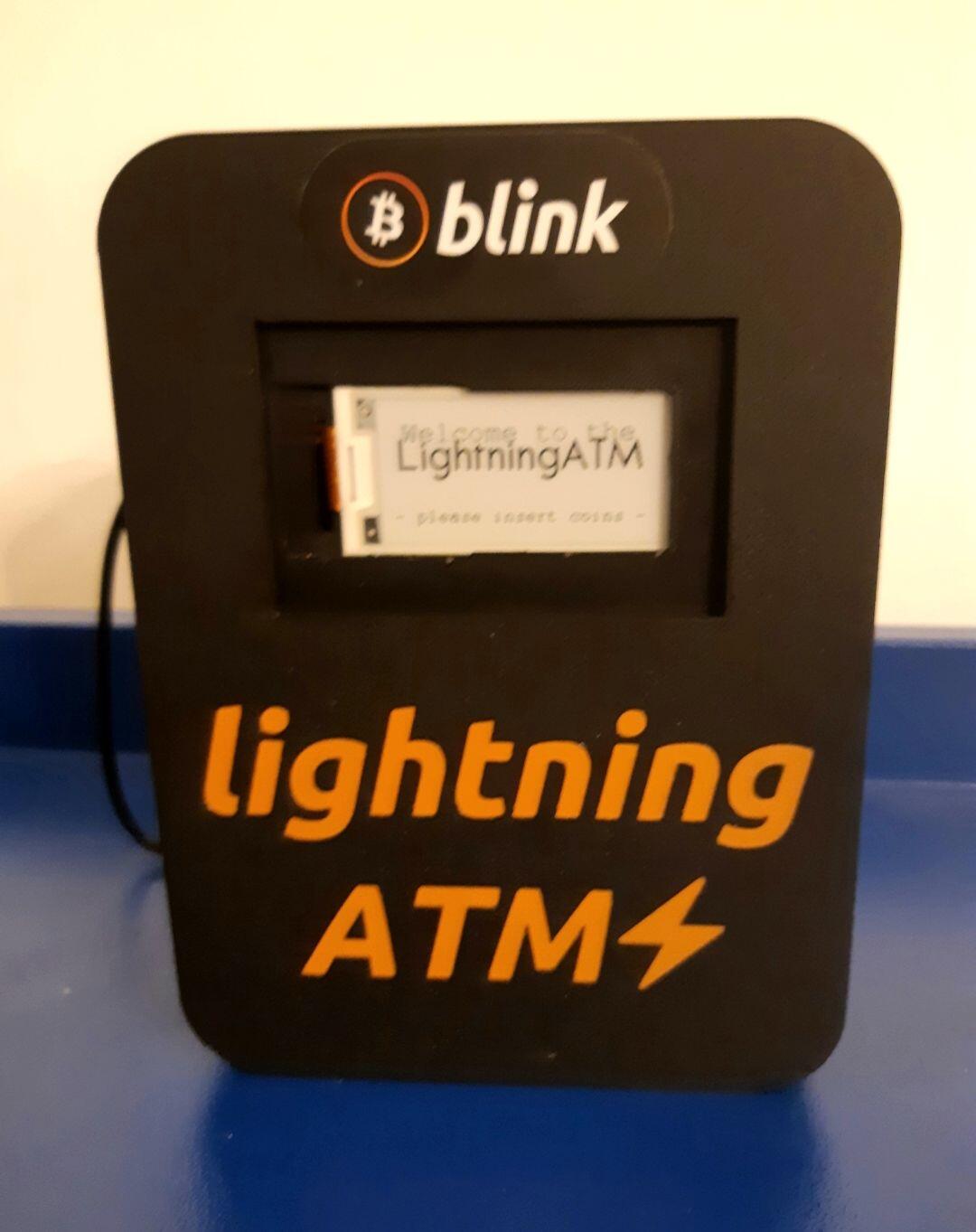
nostr:note1qv2mpkys8f2yee0j4n52herjhjlgt4g5lttp9qhh883ygggg9mgspvgg9t
Ldk-node is super convenient. You can put together a fully fledged LDK node app with just a few lines of code.
My new sample app is here:
Great list of KYC-free service here:
https://primal.net/p/npub188x98j0r7l2fszeph6j7hj99h8xl07n989pskk5zd69d2fcksetq5mgcqf
Opt out the big tech!
Frost has arrived!
I mean the real one, not the schnorr threshold stuff :P


Select a number of peers when initiating recovery, but only restricted to contacts in your follow list.

Social account recovery can work more-or-less reliably, if peers contact the user in some means _other_ than Nostr, to verify that the identity of the user. I think the protocol should enforce this someohow, otherwise the sceme is easy to trick (peers will just press on the green button wanting to help, without real check).
The flow I imagine:
- User realizes that he lost his key, or someone else is posting shit in his name (key compromise), or potential key compromise (not yet misused)
- User initializes Emergency Recovery in a supporting client. A new identity is created.
- User identifies a few trusted nostr user peers who can verify his identity and have other real-life non-nostr means of contacting the user
- Posts a event about the key rotation, with the list of the peers, and a min. threshold.
- Tagged peers should:
- contact the user through some non-nostr means, make sure it is indeed the real person
- generate a unique secret code (details tbd, e.g. by signing the event ID of the rotation event)
- if not in doubt about the user, send the secret code to him through non-nostr channel
- The user, once collecting enough 'ack' codes, posts an event closing the key rotation.
Any client can verify the integrity: that it is posted by the same account, and that each ack indeed comes from the mentioned peer (verify cryptographically), and the number is sufficient.
A malicious attacker can misuse a scheme to steal an account, if he can convience a few users that he is the impersonated user. To alleviate this, the real user can launch a similar counter recovery process, which takes over provided that it is backed by _more_ peers. This way the real user can win as long as more peers attest this.
This scheme is basically what fiatjaf has described in NIP37, with the enhancment to capture the proof that peers have contacted the user. What do you think nostr:npub180cvv07tjdrrgpa0j7j7tmnyl2yr6yr7l8j4s3evf6u64th6gkwsyjh6w6 ?
I just have the feeling the pregeneration/msterkey/HD-based schemes will never catch on widely even if implemented.
Though if nsecbunker-style separate key storage catches on (even only for power users), that might be a good start to 'deploy' such schemes.
The social network based scheme is rather interesting, but has other challenges.


IF there is a correlation between liquidity peaks and halvings, the question is whether there could be a causal relationship, and if so, in which direction.
Liquidity affecting halving is not possible, as the halving schedule was effectively set out with the initial bitcoin code (2010).
A causal relationship in the other direction would be surreal and mind-blowing...
The most likely is just coincidence.
I think the details of key relation doesn't really matter, be it HD-derived from a master key, be it derived in a chain from each other, or just a set of predefined keys, they all have in common:
- you have to create some state upfront, with secret and public part
- you have to safeguard the secret part separately from your 'day-to'day' nsec
These two points make pregenerated/HD schemes weaker.

Fucked up incentives. We're approaching fast the 'There is no truth' state.
nostr:note1hs2kd3ggmacpx2uz8wdk92egqhl2nypq2kd3s3zld3jufq2sexus6agyqs
what if we just start with kind:1521 with opentimestampped events; this seems like such a trivial get and doesn't open the door of crypto/HD bikeshedding.
Regardless, if we do HD keys we'd still need to do kind:1521 stuff as described in https://github.com/nostr-protocol/nips/blob/key-invalidation-and-migration/37.md
what do you think nostr:npub1xtscya34g58tk0z605fvr788k263gsu6cy9x0mhnm87echrgufzsevkk5s ?
Pregenrated/Masterkey/HD schemes are not good for several reasons:
- Cannot be used for keys already in use
- Can be used for newly created profiles, but only if created with a supporting client
- If two-level key protection is not done by the user/clients (ie. master key is in client), there is a chance for the master key being compromised, for which case the scheme is ineffective
- Basically works only if the user considers the key compromise risk explicitly upfront, which is not the case for most users.
nostr:npub180cvv07tjdrrgpa0j7j7tmnyl2yr6yr7l8j4s3evf6u64th6gkwsyjh6w6 's proposed NIP41 scheme is a clever scheme to ease proving the relationship between subsequent keys, but still has the above issues (pr #158, since abandoned).
what if we just start with kind:1521 with opentimestampped events; this seems like such a trivial get and doesn't open the door of crypto/HD bikeshedding.
Regardless, if we do HD keys we'd still need to do kind:1521 stuff as described in https://github.com/nostr-protocol/nips/blob/key-invalidation-and-migration/37.md
what do you think nostr:npub1xtscya34g58tk0z605fvr788k263gsu6cy9x0mhnm87echrgufzsevkk5s ?
Some fresh ideas are always welcome for key rotation!
Any scheme has to handle well these cases:
1. A malicious attacker quickly rotating to a new key, which the original victim cannot rotate
2. No key theft occurs, but a user just maliciously rotates away the key of an unrelated, victim user.
For Simple key deletion, 1. is ok as it makes no sense for an attacker to use. To protect against 2., the event has to be signed by the corresponding private key (if this is not enforced, anyone can delete any key; the consequence is that it is not possible to use this in case of lost key).
The Social Key Migration sounds interesting. Though an attacker could be successful in convincing enough contacts to rotate to a new key controlled by them, some contacts would benevolently and unsuspectingly help.
what if we just start with kind:1521 with opentimestampped events; this seems like such a trivial get and doesn't open the door of crypto/HD bikeshedding.
Regardless, if we do HD keys we'd still need to do kind:1521 stuff as described in https://github.com/nostr-protocol/nips/blob/key-invalidation-and-migration/37.md
what do you think nostr:npub1xtscya34g58tk0z605fvr788k263gsu6cy9x0mhnm87echrgufzsevkk5s ?
How would kind:1521 in itself be helpful?
Social key recovering is very interesting idea, but tricky.
let's get bolt12 into ldk lightning-fast!

This made me introspect...
Miners either have access to dirt-cheap energy and mining rigs, or they are betting big on the increase of Bitcoin value

Let's focus on the present, while also keeping an eye on the future