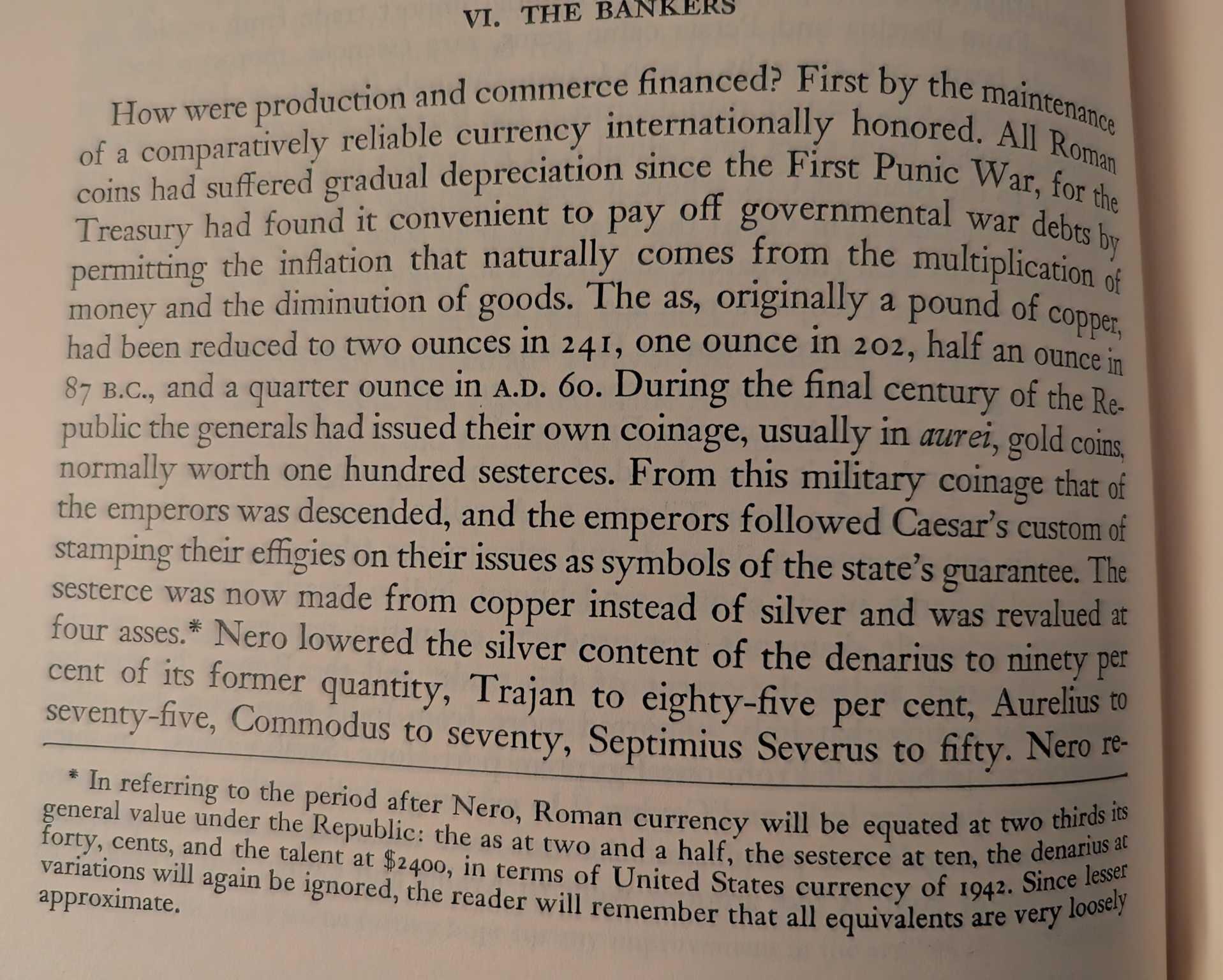
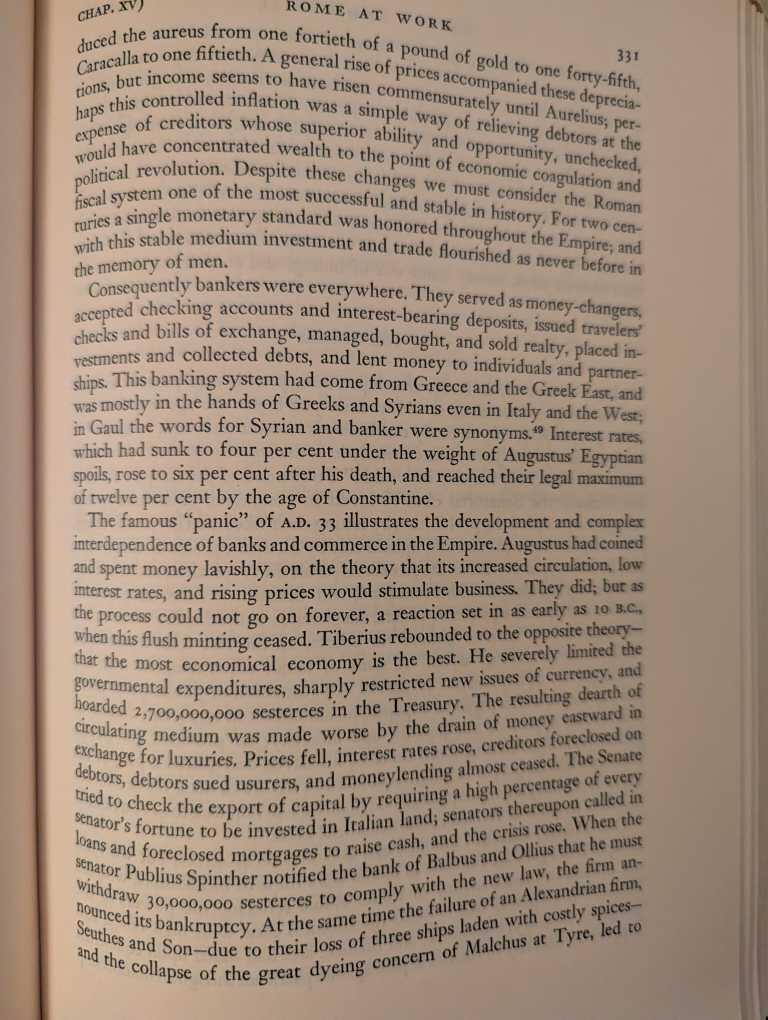
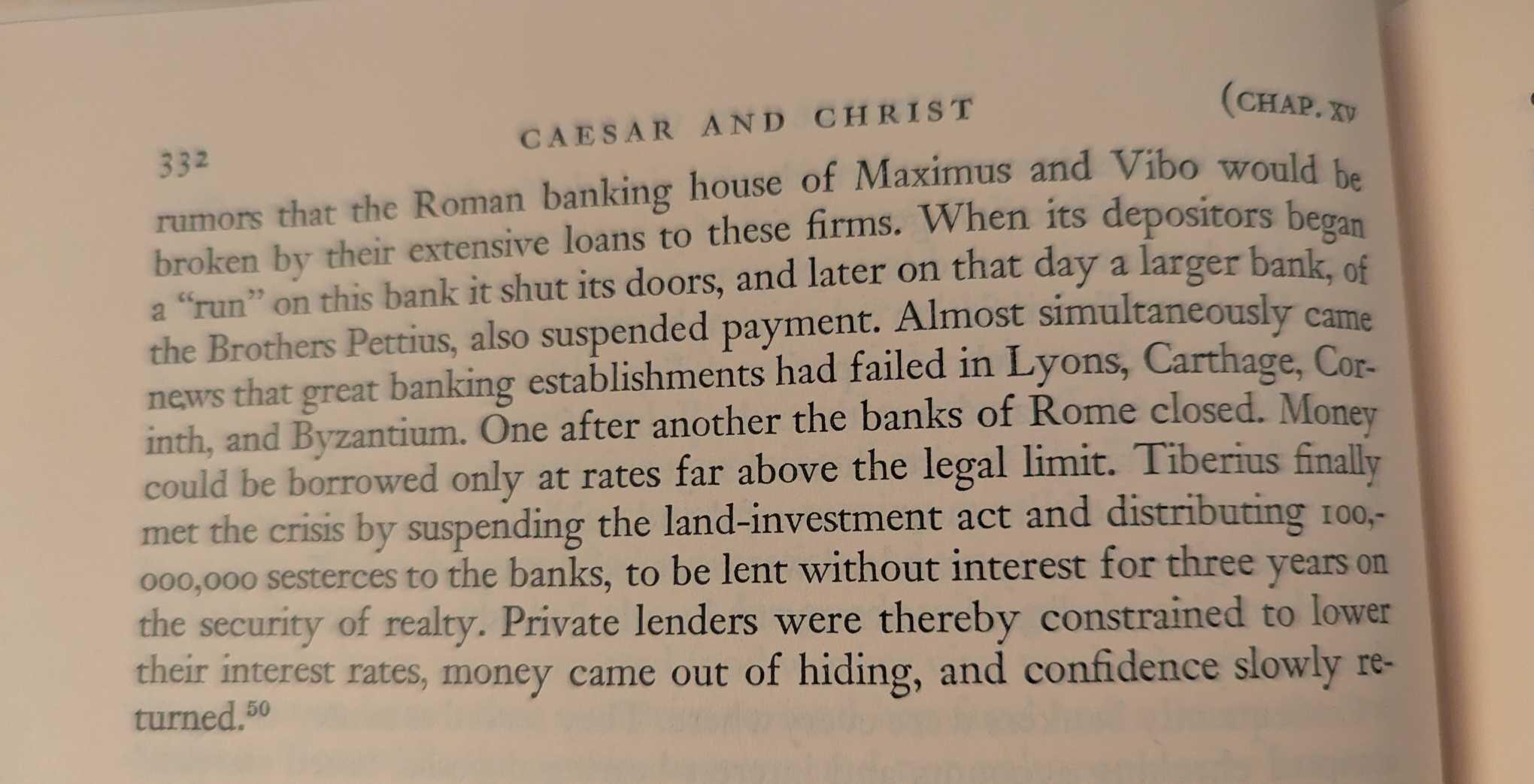
Nature determines success simply based on whether or not you die or live another day. That's it. Society has given us all these goalposts of what it means to be successful, it's not true.
Are you alive? That's success.
Are you healthy? That's success.
Do you help the people around you remain alive and get/stay healthy? That's success.
Are you content and have minimal stress? That's success.
GM. 🌄
Remember: YOU ARE ALIVE DURING THE GREATEST MONETARY SHIFT IN HISTORY.
Stay humble, but it's okay to be happy that we will not be dragged down by the FIAT system any longer!
We're not becoming financially free unfairly, we're not getting rich by hurting other people but by helping them instead.
There is no moral conflict HODLing Bitcoin until you don't need to work anymore, you're restraint and patience waiting to use the money you've loaned to the network is rewarded greatly and you should not feel guilty about enjoying the fruit of your preserved labor.
HODL and focus on other things. You make more money by sitting than you do standing, and with Bitcoin you're helping society transition by doing so.
☮️❤️₿
Even better. Bitcoin will enable the new modern family where either parent can work if they want to, or both can work half as much. Both parents working full time jobs will be a thing of the past. Small family businesses will become dominant again. Families will grow stronger and more deeply connected to each other. Government's and giant corporations will have to actually complete in the market and be productive on their own without the money printer there to prop them up. So much will improve, most people don't have any idea.


"OMG I regret not buying Bitcoin when it was only $1,000,000 and my friend was telling me to get in. Too late now that it's $10,000,000. 🥲"
- FIAT person in 2044.

REPOST FROM SOURCE: https://xcancel.com/jamesob/status/1860340932706730261
---
BITCOIN CORE'S LOSS OF FOCUS
The legacy technical leadership in bitcoin is becoming increasingly less effective.
--
Almost universally, Core and "graybeard" devs are not focusing on _the_ fundamental problem in bitcoin: preserving trustless UTXO ownership.
Instead they are distracted with valuable but secondary issues like mempool policy, Core code architecture, and minor IBD performance. These things are important in their own right, but they fundamentally don't matter if in times of trouble most users can't take possession of their own coins.
Core devs are exceptionally talented people. The brightest engineers. But the priorities of the project are out of whack.
The aggregate focus does not reflect the thing that makes bitcoin a unique asset: trustless custody.
--
Given the current limits of bitcoin, even upper-middle class Americans will not be able to self-custody, let alone the rest of the world.
If bitcoin doesn't figure out how to ensure that most users have a trustless way of owning and sometimes moving coins, it will become basically indistinguishable from a gold ETF. A row in some OFAC-compliant database. Another financial widget that is subject to the regulatory dictates of government.
In fact, if bitcoin does not scale UTXO ownership, gold will have the advantage that at least small amounts of it *can* be self-custodied and traded peer-to-peer. The same won't be able to be said for bitcoin. In a world where on-chain fees are in the thousands of dollars and there is not a workable, trustless layer two, most coins will be stuck with custodians.
Forget payments. I'm talking about savings. I'm talking about less than checking-account volume. 1-2 transactions a month.
If you think that most people should be able to DCA and withdrawal to self-custody once a month, maybe spend once every few years for big purchases, I've got news for you:
Given bitcoin's current limitations, only 18 million users can do that. A little over 5% of Americans.
--
Right now, the chain capacity is able to meet demand for self-custody because we are in a time of relative peace.
Most don't feel at risk keeping their bitcoin with a custodian. That can change very rapidly.
As bitcoin grows in value and challenges fiat currency, governments will increasingly want to control it. They won't ban it, which is now obvious, but almost certainly they will impose OFAC-like restrictions and possible wealth taxes.
When the regulatory hammer comes down, tens of millions will look to withdrawal their coins into self-custody. But they may not be able to.
--
Unfortunately this risk does not seem to be top of mind in the current Core culture.
One instance of a tone-deaf Core response to this kind of problem relates to CTV. As Jeremy Rubin has been pointing out for years, CTV would be the most efficient way to guarantee that people can withdrawal coins from institutions in times of chain-panic and congestion, allowing exit to happen during crises without fully "unrolling" transactions. I wrote about this at length in 2023, and why it seems there is no more efficient way to do this (https://delvingbitcoin.org/t/thoughts-on-scaling-and-consensus-changes-2023/32#design-for-exit-5).
And yet technical figureheads like nostr:npub185h9z5yxn8uc7retm0n6gkm88358lejzparxms5kmy9epr236k2qcswrdp and nostr:npub1j5mp526z5fkz9wkrk6mt5nzu43xndyrwkr8mnqngdqwytgcpc5vqcnsd5c downplay the value of CTV, claiming that it has no compelling uses.
CTV is one of the primitive building blocks that we need to figure out UTXO scaling solutions. (Not to mention its use in applications like vaults.)
Some Core devs might argue "well okay, maybe we need that functionality - but CTV isn't the right way to do it. We need to think harder!"
The problem is that time is running out. As nation-states begin to enter the technical ecosystem, soft forks that promote scaling and self-custody will be more difficult to deploy. Powerful actors will not want bitcoin to change - they're perfectly happy letting regulated custodians act as the L2.
As the market cap grows, the stakes of change go up, and it will be much harder to get economically relevant actors to run new consensus.
Because Core devs aren't paying close attention to the covenants conversation, they may not realize that CTV is upgradeable, simple, and well-tested. It's good enough.
This gap in understanding partially reveals that those devs prefer to work on more smaller self-contained puzzle problems that are more tractable. Maybe this is understandable given the fraught Core development process and historical drama of soft forks, but neither of those are an excuse for abandoning the core challenge of realizing bitcoin.
--
Segwit and Taproot were massive changes, and I can almost understand why so much drama was spent on them. They both basically reinvented how locking scripts are stored and executed in bitcoin.
But to make significant headway on finding a scaling solution for self-custody, it may only take a few opcodes - much more narrowly scoped bits of functionality. Changes that are much easier to test and reason about, and don't reinvent the engine of bitcoin.
--
As I continue campaigning for a renewed focus on scaling coin ownership, some may compare me to the "big blockers" of the 2017 scaling wars.
The big-blockers camp wanted to raise the blocksize for the sake of housing the world's P2P payments. They resisted the use of Lightning and other second layer solutions.
The reality is that they have been partially vindicated. Lightning has not solved our problems, and given the on-chain footprint that existing channel constructions require, it categorically cannot. Lightning certainly helps reduce on-chain payment volume once someone has opened a channel - but to do that for most people will require a layer 1 innovation.
I don't share the big blockers' objectives.
I don't think that trying to fit the world's P2P payments on the base chain is a reasonable target.
But the ability to resist near complete capture of UTXO custody by third-party financial institutions - *that* is intertwined with the core purpose of bitcoin.
In Satoshi's whitepaper, the first sentence claims
"A purely peer-to-peer version of electronic cash would allow online payments to be sent directly from one party to another without going through a financial institution."
If most users become unable to even take possession of their own coins a few times a year, we have failed on the objective.
--
I am not writing this out of any sense of antagonism. Yes, I am frustrated that after numerous attempts, Core devs are not engaging more productively with the few people trying to translate scaling strategies to the base layer.
But I'm hoping that by calling attention to this issue, we can get some of these great minds to refocus on bitcoin's critical mission, and to realize that ossification will come sooner than we thought.
The existing (and well-funded) power structures *want* stasis.
The recent show of rapid institutional affinity should make you suspicious that bitcoin in its current form isn't a threat to the fiat order.
The lack of "ivory tower" attendance in the recent OP_NEXT and the broader covenants discourse demonstrates that, like many of America's elite institutions, there has been mission drift in bitcoin's technical elite. I hope this changes.
--
The risk of merging many of the opcodes proposed during the last few years is limited.
OP_CAT, OP_CTV, lnhance, probably OP_CCV, some others; they're all fine. If sufficiently tested, great additions to bitcoin.
We can pretty easily mitigate what risk there is with comprehensive testing and analysis, provided the focus is there.
The upside is almost infinite: a reasonable attempt to continue the preservation of bitcoin's unique function - trustless self-custody that is practically available to most.
What's the rush? Low time preference, Bitcoin will be here for a very very long time and we'll fix anything that needs fixing in time. Patience.
Plus, the majority of people will likely never self custody and IMO that's okay. The important thing is Bitcoin offers the option to self custody or to choose companies that offer transparency to customers on the assets they hold, and as long as people have the ability to choose self custody then we can hold all custodians accountable.
Custodians are not the enemy, they are just another service that within large economies has demand and will always have demand. In a way anyone who helps other people with securing their assets is a custodian. You see people on here talk about orange pilling someone and being a backup for them if they lose access to there wallet. That's being an unpaid custodian. Anyone with access to funds that are not owned by them are custodians for those funds.
Society has been poisoned by FIAT currency and dishonest unaccountable banks, Bitcoin fixes both of those issues. They can't print more, and dishonest actors will eventually be pushed out by honest ones.
Just be patient, humanity will outshine our FIAT clouded expectations when we are all on a sound money once again.
Things will work out in the end.

Mind-blowing development. WOW! Thanks for sharing.
This is HUGE.
Imagine it becomes standard practice for home loan terms to require purchases of Bitcoin in addition to the home as additional collateral with a forced 4+ year holding period!
Game changer.
nostr:note1dy0a3k7prp8xtpj402l2y3c4akrhcxa4ukskxwm45hzs9hygvpvq3k7aya
Texting "Congrats to every Bitcoiner! Bitcoin is about to break $100k!" in a group chat where you're the only Bitcoiner.

I like freedom (Bitcoin) and I like truth (Nostr).



Many people will say that they shouldn't buy Bitcoin at $100k because it's "too expensive".
The supply of dollars will never stop increasing, and the supply of Bitcoin will never grow beyond the programmed maximum of 21 million while the mining network keeps exchanging ever more wasted energy for ever fewer coins over time. In a decade $100k Bitcoin is going to be looked at the way we look at $1k Bitcoin today.
#ITDOESNTMATTER
i use this as a reference point. actual costs vary by locale, infrastructure, power, cooling and labor
https://en.macromicro.me/charts/29435/bitcoin-production-total-cost
This was my source. 🍻
I spent $617 on a 65" Hisense 4K HDR TV on Apr 6th 2021 when Bitcoin was $59k.
Since the price for ₿ is basically 50% higher today, I lost about $308 worth of gains. I think that's not too bad for more than 2 years of owning a massive and awesome TV. 😎😂


$250k being the top this time is laughable indeed.
The top will be no less than 3x the average mining cost of one coin. But could be as much as 6x.
The average mining cost grows regularly and accelerates it's growth during bull markets as higher energy prices become more affordable for mining.
The current average mining cost is $84k. If RIGHT NOW was the peak of the bull run we'd be at $252k per coin MINIMUM.
In 2017 we got to just under 6x the average mining cost at the peak. Without nation state/corporate adoption and no ETFs.
In 2021 we reached just under 3x the mining cost right when China banned mining and reduced that average by over half mid bull run!
March 19th 2021 saw an average mining cost of $20k with a price of $59k. An open market price nearly 3 times the cost to mine.
The price dipped but the mining network continued to grow, hitting $32k with a price of $37k by May 21st.
That SAME DAY china announced it's mining ban:
https://www.galaxy.com/insights/research/examining-the-latest-china-bitcoin-ban/
We were already in a dip, and it turned into a crash.
By Aug 2nd 2021 the average mining cost had plummeted more than half to $15k, and wouldn't recover to above $32k until June 2023!
This is like having Bitcoin mining banned in September of 2017 with the price at $3.6k after reaching $4.7k a few weeks prior. Would've never hit $19k if that happened, and we woould've hit almost $200k in 2021 if it hadn't.
On the currency market we will hit between 3 - 6 times the average mining cost per coin at peak next year. I expect the average mining cost to double to $160k+ which would mean we hit $500k - $1,000K+ on the open market this bull run.
BUT IT IS NOT SUSTAINABLE AT THAT PRICE. The mining network average cost is an anchor on the price. The price needs to stay close to it's marginal cost of production to be sustainable. It detaches from reality during the FOMO mania and when this is realized due to reduced new investment it crashes, to below the average mining cost within a year.
You can increase your position and help the network stabilize and get closer to being a stable unit of account if you arbitrage this difference between the prices on the currency market and the energy market. Sell a little when it's 3x+ the average mining cost, sell a lot when it's 5x+.
Buy back in a year later when it's <1x the average mining cost.
Selling near the top helps to soften the bull peak, buying near the bottom helps to soften the bear bottom. Help Bitcoin become a more stable unit of account and you'll also help yourself grow your position.
This is not day trading and gambling. This is arbitrage between the currency markets and the energy markets.