
I am facing an interesting crossroads in a business I am developing
Apparently it is standard practice within the Internet Service Provider community to keep records of all IP addresses and the IP to which they request information in case law enforcement requests the historical info, records going back for years in some cases
I will be reading more about it over the coming weeks but has anyone gone through the spectrum of what is legally required vs. ISP industry practices
Something doesn’t smell right
#bitcoin #nostr


Do not judge them based on what they say, judge them based on what they do
#bitcoin
Some businesses don’t overtly accept #bitcoin, but there will be signs

They were running with a 240V delta high leg until decommissioned and thrown in the back of the truck to go to recycling
#bitcoin


Works like a charm 💸. Just changed my LN adress from #alby to #strike so thanks for helping me test.
You received both?
Works like a charm 💸. Just changed my LN adress from #alby to #strike so thanks for helping me test.
Back at ya!
I would like to test a note-zap. Whoever responds first to this post I will zap 21 sats, and if you confirm receipt of the zap I’ll zap you a second time


Do they still randomly force arrivals to unlock their phone under penalty of prison, or it just for Australians?
So #France can arrest you for illegal knowledge and forbidden use of math and statistics
Not using standard privacy models is interdite; what does that say about the standard models
In case you want to learn more and use a few yourself, #Telegram uses:
1. MTProto: This is Telegram's custom-designed encryption protocol used for client-server communication. It's based on 256-bit symmetric AES encryption, 2048-bit RSA encryption, and Diffie–Hellman key exchange
2. End-to-End Encryption (E2EE): For Secret Chats, Telegram uses end-to-end encryption based on a variant of the MTProto protocol. This means only the communicating users can read the messages
3. Transport Layer Security (TLS): Telegram uses TLS for the initial connection between the client and server
4. Perfect Forward Secrecy (PFS): This is used in Secret Chats to ensure that even if an encryption key is compromised, it can't be used to decrypt past messages
5. SHA-256: Used for message authentication codes
Just sharing…

I hope King Ranch keeps their money in #unconfiscatable #bitcoin elsewise it is going to be a hard lesson

Both #nostr and #bitcoin liberate us to freely interact with the world and we have not seen or imagined the full extent of how together they will change humankind
1,560 #bitcoin for 1 #USD?!?
#satoshisarebitcoin 

The question is, what makes them think they have the authority and right to do so?
Just learned that #nostr private and public key generation method is identical to #bitcoin’s🤯
One could use the same private key to keep one’s wealth and one’s speech secure (but I would not recommend it—Make two private keys)
What it means is take good care of your private key and keep it safe
A decentralised and anonymous future looks bright 

It is interesting, isn’t it! I want to learn more about the nsec key to make the physical private key interoperable between #bitcoin and #nostr
That said keeping them separate is probably the best course because one is wealth and the other is your voice. So maybe two physical private keys😅
Anyway, keep up with the Carl posts
Probably one of the top ten important memes throughout history
#bitcoin #nostr #freesamourai❤️
#freeduval 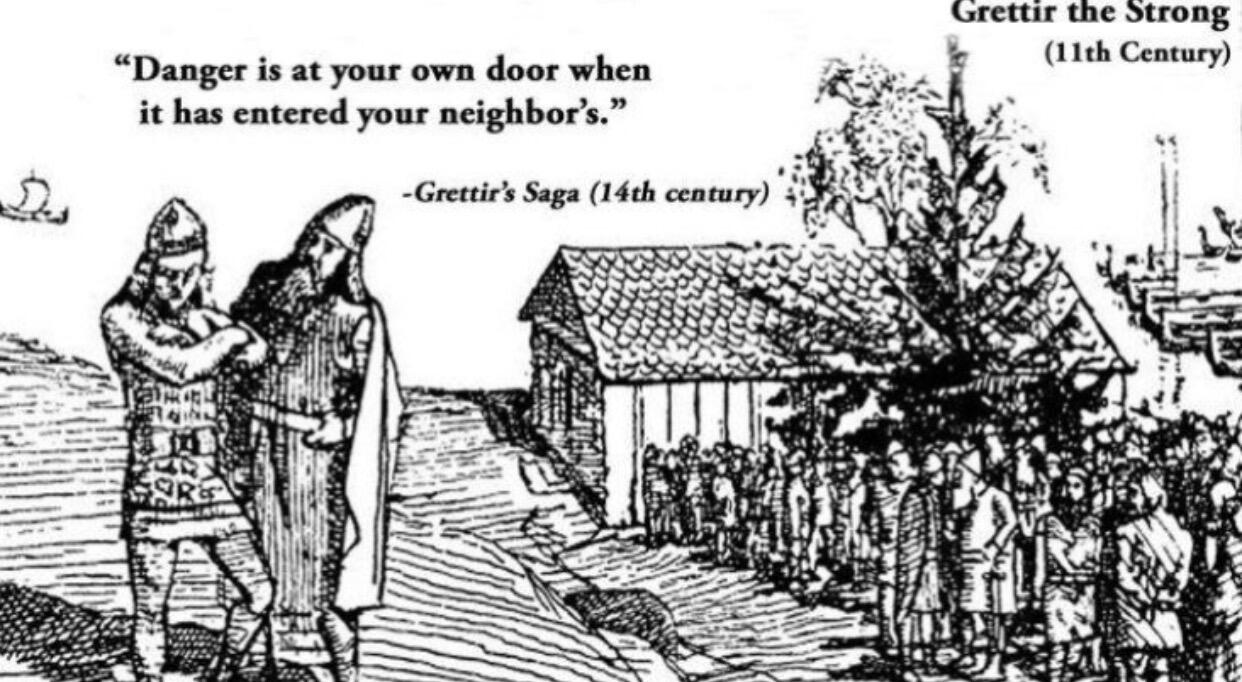
Each time some coder is arrested for free speech “violations”, for “conspiracy”, a little part of me that has a hope things will work out peacefully, dies
Governments resort to censorship and jailing dissenting voices, calling words violence, and are illegitimate
Illegitimate governments deserve neither authority nor support
#nostr #bitcoin #freesamourai