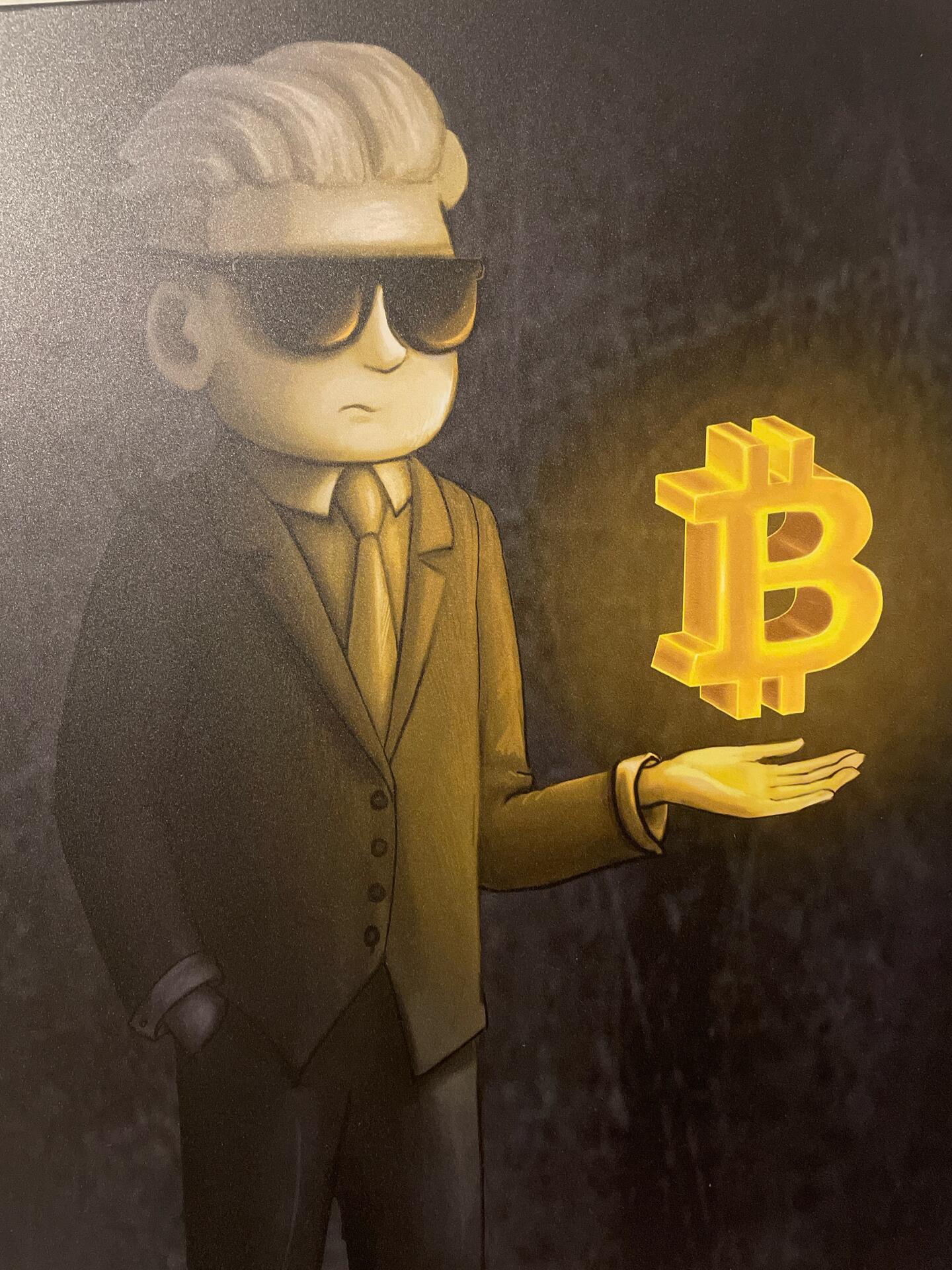
One reason for the decline in our population’s prosperity lies in the fact that the state is financed through taxes and inflation. A large portion of the money we give to the state is lost through bureaucracy, administration, and employee salaries. Only a fraction of the withdrawn money is ultimately returned to the public. This leads to us receiving less and less, while having to give more and more.
This might be a controversial opinion, but I think it’s important to consider. What are your thoughts about it?
In an ideal capitalist system, a person earns money by providing value to others through their work or services. This means that wealth is fundamentally linked to making a positive contribution to society. Only those who give a lot to others can earn a lot. This encourages cooperation and service to the common good, as the incentive is to be rewarded for productive activities.
However, the real problem arises when people acquire wealth without having to contribute anything. If someone simply receives money without working for it or providing something of value to others, their character develops differently. Such people don’t learn that money is earned by fulfilling the needs of others. Instead, they lack an understanding of community and the importance of mutual support because they already have everything and don’t need anyone. This can lead them to develop an egoistic character focused primarily on their own advantage. In extreme cases, this might even lead them to act maliciously at the expense of others to maintain or improve their status.
To prevent these negative developments, maybe it would be important to tax unearned wealth, particularly inheritances, more heavily. This could ensure that wealth isn’t simply passed down undeservedly, which would reinforce social inequalities and unjust power dynamics. Capitalism could then continue to function as a system that promotes cooperation and encourages people to be rewarded for productive and socially beneficial contributions.
I’d be interested to hear what others think about this.
Censorship of transactions in the Bitcoin network leads to a long-term decrease in profitability, making the network vulnerable to competition. The argument is based on the following considerations:
1. Economic Incentive and Profitability:
- Miners are financially motivated to include transactions with the highest fees in their blocks.
- By censoring certain transactions (e.g., images or data classified as spam), miners forgo potential profit by not including the highest-paying transactions.
- In the long run, this practice reduces miners' revenue, and consequently, the funds available for investment in hardware and network security.
2. Competition and Network Effect:
- An alternative network that does not engage in censorship and accepts all transactions could fill this gap, thereby generating more transaction fees.
- This network could grow faster due to being more profitable and having more resources for development and infrastructure.
- Even if, initially, the majority of users (e.g., 90%) support the censoring network, the uncensored network could gain significance over time as it becomes more economically attractive.
3. Long-term Consequences:
- If the uncensored network gains enough market share, it could eventually overtake the original Bitcoin network.
- To maintain its dominance, the Bitcoin network must remain the most efficient and economically attractive network. This means maximizing the incentive for miners by not censoring transactions, thus ensuring the highest economic benefit.
In summary, censorship not only contradicts the principles of Bitcoin but could also weaken the network in the long run by making it less profitable and more susceptible to competition. Censorship resistance is therefore a crucial feature that contributes to the long-term stability and dominance of the Bitcoin network.
#bitcoin #fees #centralizing

These video interviews I shared on YouTube related to RFK Jr. and positive things about him appear to be getting throttled by the algorithms, why do they not want his message heard?
Col. Macgregor: https://youtu.be/ypOyZfuWlY4?si=9ft96iaLsqpSiwh1
RFK himself: https://youtu.be/rZxMWY-SK9E?si=jw3MFc3rjAAu6C4O
I think it's because he is against big corporations like those in the pharmaceutical, military, and oil industries. People from these corporations have earned a lot of money in the past years, and with that money, they have a lot of influence over big internet companies
Why bitcoin and PoW is so great:
Proof-of-Work is considered the best system because it is decentralized and cannot be centralized. In other systems, there is often an incentive to centralize in order to reduce costs. With PoW, as used in Bitcoin, computational power is required, which can only be generated using electricity. Since electricity is distributed globally, supply and demand determine where it is profitable to set up computers (miners).
Attempting to centralize mining generally leads to higher electricity costs because fast increased energy demand drives up the price. This makes it more expensive for miners to operate. Miners do not need to be in a specific location to operate, and the computational power is the same for everyone. This means that the only factor driving up operating costs is the price of electricity. When energy prices rise, mining becomes more profitable in other locations with lower electricity costs. The decentralization of power supply and the associated cost differences effectively prevent the centralization of the mining process.
Additionally, if someone tried to attack the network by centralizing it, this would incur significant costs. These high costs make such an attack unsustainable in the long run, as the attacker would need to spend more money than they could gain from the attack. Therefore, the system naturally leads to decentralization.
#bitcoin #mining #energy
That means now everyone will receive more money for their pension

In Switzerland, all citizens can vote on specific issues, and this year, pensions were a major topic, especially because everything has become more expensive due to inflation. We even voted to introduce a 13th monthly pension payment, although the financing for it has not yet been finalized. Since young people don't always vote and there are more older people, the older population is more likely to achieve a majority.
Bitcoin presents a revolutionary opportunity, as it allows people to take their wealth with them, regardless of location, for the first time in history. Traditionally, assets like real estate, stocks, or bank deposits were tied to a specific location and therefore subject to state control. This meant that the state had the power to oppress citizens by denying them access to their wealth if they wanted to leave the country.
With Bitcoin, this dynamic changes fundamentally. Bitcoin is not tied to a physical location and can be controlled from anywhere. This means that people can theoretically leave a country without the state being able to confiscate their wealth or prevent its transfer.
As a result, it becomes more difficult for states to oppress their citizens since they no longer have the monopoly on controlling access to assets. To retain their population, states are forced to improve their services and implement fairer taxes. Otherwise, they risk citizens moving their wealth to other countries. In such a scenario, states would start to compete with each other to attract and retain good citizens, which could ultimately lead to a fairer and freer society. Bitcoin could therefore play a central role in redefining the balance of power between states and citizens.
#bitcoin #money #state
I like how this St Louis Fed post blames people for banks’ failings.
Flip it around. Banks irresponsibly created way more claims for gold than they had gold, kept defaulting, and lost trust. So the government made gold illegal to own for like 40 years.
There was no “shortage” of gold in the Great Depression. There was an excessive amount of fraudulent promises for gold, made by commercial banks and central banks.
https://www.stlouisfed.org/open-vault/2017/november/why-us-no-longer-follows-gold-standard

It's interesting how the entire history of humanity and everything what has happened makes total sense once you view it through the lens of the correct monetary theory
Democracy is fundamentally the best system for people and the development of new technologies. In a democracy, the middle ground is always chosen, and this path is rarely wrong. Free people in a democratic society are often the driving force behind the invention of new technologies, making this model overall very efficient—much more efficient than other systems.
However, one of the biggest problems with democracy is that the state must regulate itself, as there is no competition or other institution that could take on this role more efficiently. Therefore, it is important for the state to maintain its own efficiency. However, the state has the ability to print money or incur debt, which leads to inequality in society and affects the private economy.
Politicians often decide to print new money and incur more debt to stimulate the economy in the short term. In the long term, however, this has a negative impact on the entire country. Since politicians are primarily concerned with being re-elected in the next election, there is no barrier to prevent them from doing so. This results in the state being unable to efficiently self-regulate. The decision to print money has various negative consequences and exacerbates economic problems.
The state influences the private economy by printing money, which can lead to inflation. This inflation affects different goods in different ways. Products that can be produced more quickly or easily respond differently than rare goods like real estate, gold, or raw materials, which cannot be easily increased. By printing more money, the demand for certain goods tends to rise, but not for all. For example, more food is not necessarily purchased. More money does not necessarily mean that one will eat more.
Money printing creates winners and losers in the economy. People who already own rare goods, real estate, or stocks benefit greatly from it. The banking sector also benefits, as banks store money, invest in real estate, and profit from rising stock and commodity prices. This leads to a redistribution of resources, with ordinary economic sectors, especially those providing basic services, having to do more for devalued money while sectors like real estate and banking grow.
The result is that more and more people move from other industries to these more profitable sectors, distorting the entire economy and potentially no longer reflecting the actual needs of the population. This can go so far that a shortage of skilled workers in important professions arises. If the economy continues to be influenced in this direction, it can become extreme and eventually lead to the collapse of basic services.
Money printing also leads to a larger wage gap. This happens for two reasons. First, people who already own rare goods benefit from their increase in value due to the increased money supply and demand. When a lot more money suddenly circulates, the prices of these goods rise, and the owners earn passive income without contributing to society. Second, access to credit. At low interest rates, one can afford something now and repay the same amount later, which is a big advantage, as the money devalues and one has to repay less than what was borrowed. This means that those who can take out loans have an advantage over those who cannot. Most often, these are wealthy individuals or companies with large firms, further widening the wage gap.
**Therefore, it is important that the state should not have control over monetary policy. Ideally, no one should have control over money, and this is why Bitcoin is so interesting.**
#bitcoin #money #state
Democracy is fundamentally the best system for people and the development of new technologies. In a democracy, the middle ground is always chosen, and this path is rarely wrong. Free people in a democratic society are often the driving force behind the invention of new technologies, making this model overall very efficient—much more efficient than other systems.
However, one of the biggest problems with democracy is that the state must regulate itself, as there is no competition or other institution that could take on this role more efficiently. Therefore, it is important for the state to maintain its own efficiency. However, the state has the ability to print money or incur debt, which leads to inequality in society and affects the private economy.
Politicians often decide to print new money and incur more debt to stimulate the economy in the short term. In the long term, however, this has a negative impact on the entire country. Since politicians are primarily concerned with being re-elected in the next election, there is no barrier to prevent them from doing so. This results in the state being unable to efficiently self-regulate. The decision to print money has various negative consequences and exacerbates economic problems.
The state influences the private economy by printing money, which can lead to inflation. This inflation affects different goods in different ways. Products that can be produced more quickly or easily respond differently than rare goods like real estate, gold, or raw materials, which cannot be easily increased. By printing more money, the demand for certain goods tends to rise, but not for all. For example, more food is not necessarily purchased. More money does not necessarily mean that one will eat more.
Money printing creates winners and losers in the economy. People who already own rare goods, real estate, or stocks benefit greatly from it. The banking sector also benefits, as banks store money, invest in real estate, and profit from rising stock and commodity prices. This leads to a redistribution of resources, with ordinary economic sectors, especially those providing basic services, having to do more for devalued money while sectors like real estate and banking grow.
The result is that more and more people move from other industries to these more profitable sectors, distorting the entire economy and potentially no longer reflecting the actual needs of the population. This can go so far that a shortage of skilled workers in important professions arises. If the economy continues to be influenced in this direction, it can become extreme and eventually lead to the collapse of basic services.
Money printing also leads to a larger wage gap. This happens for two reasons. First, people who already own rare goods benefit from their increase in value due to the increased money supply and demand. When a lot more money suddenly circulates, the prices of these goods rise, and the owners earn passive income without contributing to society. Second, access to credit. At low interest rates, one can afford something now and repay the same amount later, which is a big advantage, as the money devalues and one has to repay less than what was borrowed. This means that those who can take out loans have an advantage over those who cannot. Most often, these are wealthy individuals or companies with large firms, further widening the wage gap.
**Therefore, it is important that the state should not have control over monetary policy. Ideally, no one should have control over money, and this is why Bitcoin is so interesting.**