

🤖 Tracking strings detected and removed!
🔗 Clean URL(s):
https://music.youtube.com/watch?v=HCv86jWOsKc
❌ Removed parts:
&si=vO4lE5kBY2ps1o3R

Watch: Brand-New Superyacht Sinks Minutes After Launch
Watch: Brand-New Superyacht Sinks Minutes After Launch
Luxury motor yacht builder Medyılmaz Shipyard launched a 24-meter (or about 79-foot) superyacht named Dolce Vento, which capsized and sank just minutes into its maiden voyage earlier this week.
On Tuesday, Dolce Vento was launched from the Ereğli district of Zonguldak, Turkey, according to https://www.superyachttimes.com/yacht-news/medyilmaz-shipyard-yacht-dolce-vento-sinks-after-launch
. Within about 15 minutes, the vessel developed a “stabilization issue,” began taking on water, and ultimately capsized, the yachting news website wrote in a report.
‼️The newly launched 24-metre Medyılmaz Shipyard motor yacht Dolce Vento sinking just minutes after entering the water in the Ereğli district of Zonguldak, Turkey. At the time of the launch, the yacht’s owner, captain and two crew members were allegedly onboard.Find out more via… https://t.co/iienA7qVqD
— SuperYacht Times (@sytreports) https://twitter.com/sytreports/status/1963168674224689564?ref_src=twsrc%5Etfw
SuperYacht Times provided more color on the vessel:
Dolce Vento was built at Medyılmaz Shipyard with construction beginning in 2024. The 160 GT motor yacht features a steel hull and aluminium superstructure and was known as NB65 while in-build.
 ?itok=niL1pveB
The owner of the vessel was not named in the report.
https://cms.zerohedge.com/users/tyler-durden
Fri, 09/05/2025 - 04:15
https://www.zerohedge.com/technology/watch-brand-new-superyacht-sinks-minutes-after-launch
🤖 Tracking strings detected and removed!
🔗 Clean URL(s):
https://twitter.com/sytreports/status/1963168674224689564
❌ Removed parts:
?ref_src=twsrc%5Etfw
🤖 Tracking strings detected and removed!
🔗 Clean URL(s):
https://x.com/mattcot134899/status/1963879329949007945
❌ Removed parts:
?s=46

🤖 Tracking strings detected and removed!
🔗 Clean URL(s):
❌ Removed parts:
?si=bu6rX7e25st8Yx-A

🤖 Tracking strings detected and removed!
🔗 Clean URL(s):
https://open.spotify.com/track/2QHw3DQbVxttaU4pQU9oPH
❌ Removed parts:
?si=954zvhc6TsmqnRROiJ7J6A
🤖 Tracking strings detected and removed!
🔗 Clean URL(s):
❌ Removed parts:
?si=BTbHsWeX100iIjVI

🤖 Tracking strings detected and removed!
🔗 Clean URL(s):
https://youtube.com/shorts/i16g7b8PFuc
❌ Removed parts:
?si=lbM5jgKWodYJkeno
🤖 Tracking strings detected and removed!
🔗 Clean URL(s):
❌ Removed parts:
?si=_xZZN5ys7VR0lZIf

“The study found that a person's life satisfaction is very, very strongly connected to their personality traits.
When they removed all the usual problems from how things were measured, they could predict how happy someone was with their life almost perfectly (like 80% to 90% accurate) just by knowing their personality traits.
Even with just a few personality questions, they could predict life satisfaction very well.
They found that being emotionally stable (not getting upset easily), being extraverted (outgoing), and being conscientious (organized and hardworking) were the most connected to life satisfaction.
Being open to new things or agreeable (kind) had a smaller connection.
These strong connections were found in all three groups of people, even though they spoke different languages. They also found that life satisfaction stayed pretty much the same over 10 years, and its connection to personality traits also stayed strong over that time.”
Primary source: https://psycnet.apa.org/record/2024-93961-003
Secondary source: https://x.com/bensenhsu/status/1963224466777055535?s=46
🤖 Tracking strings detected and removed!
🔗 Clean URL(s):
https://x.com/bensenhsu/status/1963224466777055535
❌ Removed parts:
?s=46

🔴♨️📺📻 ŞİMDİ canlı yayındayız, lütfen paylaşalım, yayını beğenelim... 👍🏻
Burdan seyredebilirsiniz:
👉 https://www.youtube.com/live/jKenbXjkew0?si=qzh5JOeaPU70ff6d
#yenicagcanli #CANLI #yenicag
🤖 Tracking strings detected and removed!
🔗 Clean URL(s):
https://www.youtube.com/live/jKenbXjkew0
❌ Removed parts:
?si=qzh5JOeaPU70ff6d

この発言が日本語圏で一切取り上げられてないのオモロ。
https://youtu.be/rNSnYIjoqOM?si=-tUwbpVJTrxFTQgq
Banklessに、イーサリアム創設者ヴィタリック・ブテリン氏が登場。
司会者から「もし時間をさかのぼって、若い頃のヴィタリックや若い頃のイーサリアム財団に戻り、イーサリアムの歩みに役立つ何かを教えられるとしたら、いつに戻って、何を教えますか?」と問われると
「ビットコインとの初期の関係をもっと良くできたのではないか、と思っている。イーサリアムがもっとビットコインの勢いを取り込めなかったのは、少し残念でした。」と答えた。
そしてかなりかなり突飛な仮定と前置きしながらも、「もしイーサリアムがビットコインのフォークとして始まっていたなら、もっと生産的な進み方ができた可能性がある。」とも。またイーサリアム立ち上げ時に、関係者に事前に配分されたプレマインにも言及し、「荒削りな仕組みであっても、初期の頃にもっと信用を得られた他のアイデアがあったかもしれない。」と10年越しの後悔を語った。
🤖 Tracking strings detected and removed!
🔗 Clean URL(s):
❌ Removed parts:
?si=-tUwbpVJTrxFTQgq
🤖 Tracking strings detected and removed!
🔗 Clean URL(s):
https://youtube.com/shorts/jHJ_I-Xvcao
❌ Removed parts:
?si=qbLC5n_EHEebbSaH

Latest developments in the war between https://nitter.privacyredirect.com/search?q=%23Russia
as of the morning of September 5 - Subtitled
- The Russian army takes control of https://nitter.privacyredirect.com/search?q=%23Khoroshe
- The Russian army advances towards https://nitter.privacyredirect.com/search?q=%23Lisky
video link:https://youtu.be/TQjirNreRyI?si=lB0md-o1KhhIKxzI

https://nitter.privacyredirect.com/royy_tweets/status/1963854978495205622#m
🤖 Tracking strings detected and removed!
🔗 Clean URL(s):
❌ Removed parts:
?si=lB0md-o1KhhIKxzI
🤖 Tracking strings detected and removed!
🔗 Clean URL(s):
https://m.youtube.com/watch?v=el9K5B8Ewvo
❌ Removed parts:
&pp=ygUWTGl2aW5nIG9uIG15IG93biBzdGV2ZQ%3D%3D
🤖 Tracking strings detected and removed!
🔗 Clean URL(s):
https://youtube.com/shorts/xOgI_g0mdxA
❌ Removed parts:
?si=3_3vCTozbtV9gstD
🤖 Tracking strings detected and removed!
🔗 Clean URL(s):
❌ Removed parts:
?feature=shared

🤖 Tracking strings detected and removed!
🔗 Clean URL(s):
https://music.youtube.com/watch?v=KT_bu9QpOFg
❌ Removed parts:
&si=CK8Vx0D-PMNxExu6
🤖 Tracking strings detected and removed!
🔗 Clean URL(s):
https://www.youtube.com/live/cj-4ENdrHqE
❌ Removed parts:
?si=TPWxvi_4x8j1j5ze

🤖 Tracking strings detected and removed!
🔗 Clean URL(s):
https://x.com/genkiichioka/status/1963560665551142916
❌ Removed parts:
?t=zXfbbaezNAqecQ7Dl7_Jow&s=19
🤖 Tracking strings detected and removed!
🔗 Clean URL(s):
❌ Removed parts:
?si=A-x5Z683jU86oawC
🤖 Tracking strings detected and removed!
🔗 Clean URL(s):
https://substack.com/@cwebbonline/note/c-152575321
❌ Removed parts:
?r=5653gx&utm_medium=ios&utm_source=notes-share-action
🤖 Tracking strings detected and removed!
🔗 Clean URL(s):
https://substack.com/@aaliam/note/c-152391777
❌ Removed parts:
?r=5653gx&utm_medium=ios&utm_source=notes-share-action
🤖 Tracking strings detected and removed!
🔗 Clean URL(s):
https://music.youtube.com/watch?v=yLrF5j7up9Q
❌ Removed parts:
&si=UGDxYLsbSDXENUPP
🤖 Tracking strings detected and removed!
🔗 Clean URL(s):
https://x.com/kinoshinjuku/status/1963766417683059116
❌ Removed parts:
?s=46&t=Fu0c5MFg3WNX-CbHHhK_jA
🤖 Tracking strings detected and removed!
🔗 Clean URL(s):
https://music.youtube.com/watch?v=YSc35IJaWl4
❌ Removed parts:
&si=UojOghBFeG_kWcVy


🤖 Tracking strings detected and removed!
🔗 Clean URL(s):
https://x.com/AceTaiwan/status/1962489737220178384
❌ Removed parts:
?s=19
The Rise Of A Multipolar World Order: The West Just Watched The World Shift In Tianjin
The Rise Of A Multipolar World Order: The West Just Watched The World Shift In Tianjin
https://www.globalresearch.ca/west-watched-world-shift-tianjin/5899568
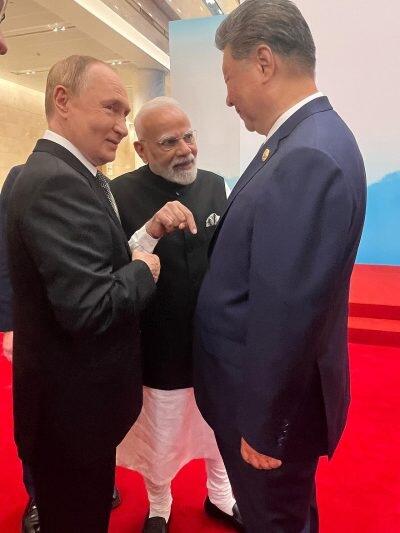
At the recent Shanghai Cooperation Organization summit in Tianjin, leaders representing over half of humanity signaled the rise of a multipolar world order. As China, Russia, India, and Central Asia push new financial and trade systems, the West risks being left on the sidelines.
 ?itok=iA_zCdAn
When the leaders of China, Russia, India, and several Central Asian states gathered in Tianjin last week for the Shanghai Cooperation Organization (SCO) Summit, the world should have paid far closer attention. Collectively, the countries represented at the table account for more than half of humanity, command immense reserves of natural resources, and increasingly drive a larger share of global GDP. This is not a peripheral coalition but a core pillar of the international system in the making.
Yet much of the Western press treated the gathering as little more than a diplomatic sideshow, overshadowed by domestic political debates or the latest updates from NATO. That was a mistake. What unfolded in Tianjin was not just another regional summit. It was the clearest indication yet that the unipolar world of U.S. primacy, which dominated the decades after the Cold War, is giving way to a new and contested multipolar order.
The symbolism was unmistakable. Beijing positioned the SCO as a platform for “equal partnership,” implicitly contrasting it with Western alliances built around hierarchy and U.S. leadership. Moscow emphasized strategic coordination in the face of sanctions and military pressure from the West. India, while carefully balancing its ties with Washington, underscored its role as a civilizational power charting an independent path. The Central Asian republics, long seen as geopolitical battlegrounds between outside powers, asserted their relevance as connectors of trade, energy, and security across Eurasia.
Beyond symbolism, the summit carried substance. Agreements on energy cooperation, cross-border infrastructure, digital technology, and security coordination point toward an increasingly institutionalized bloc. Taken together, they signal that the SCO is evolving from a loose forum into a framework capable of shaping the rules of the 21st-century world.
For policymakers in Washington and European capitals, the lesson is sobering. Ignoring the SCO or dismissing it as a talking shop risks overlooking the consolidation of an alternative power center that is steadily building legitimacy outside of Western institutions. For the rest of the world, particularly in the Global South, Tianjin served as a reminder that power is no longer concentrated in a single pole, but dispersed across multiple capitals with diverging visions of order.
The summit was therefore more than a diplomatic calendar entry. It was a milestone in the slow but unmistakable rebalancing of global power and a process that will define international politics for decades to come.
 ?itok=x1dN3eEH
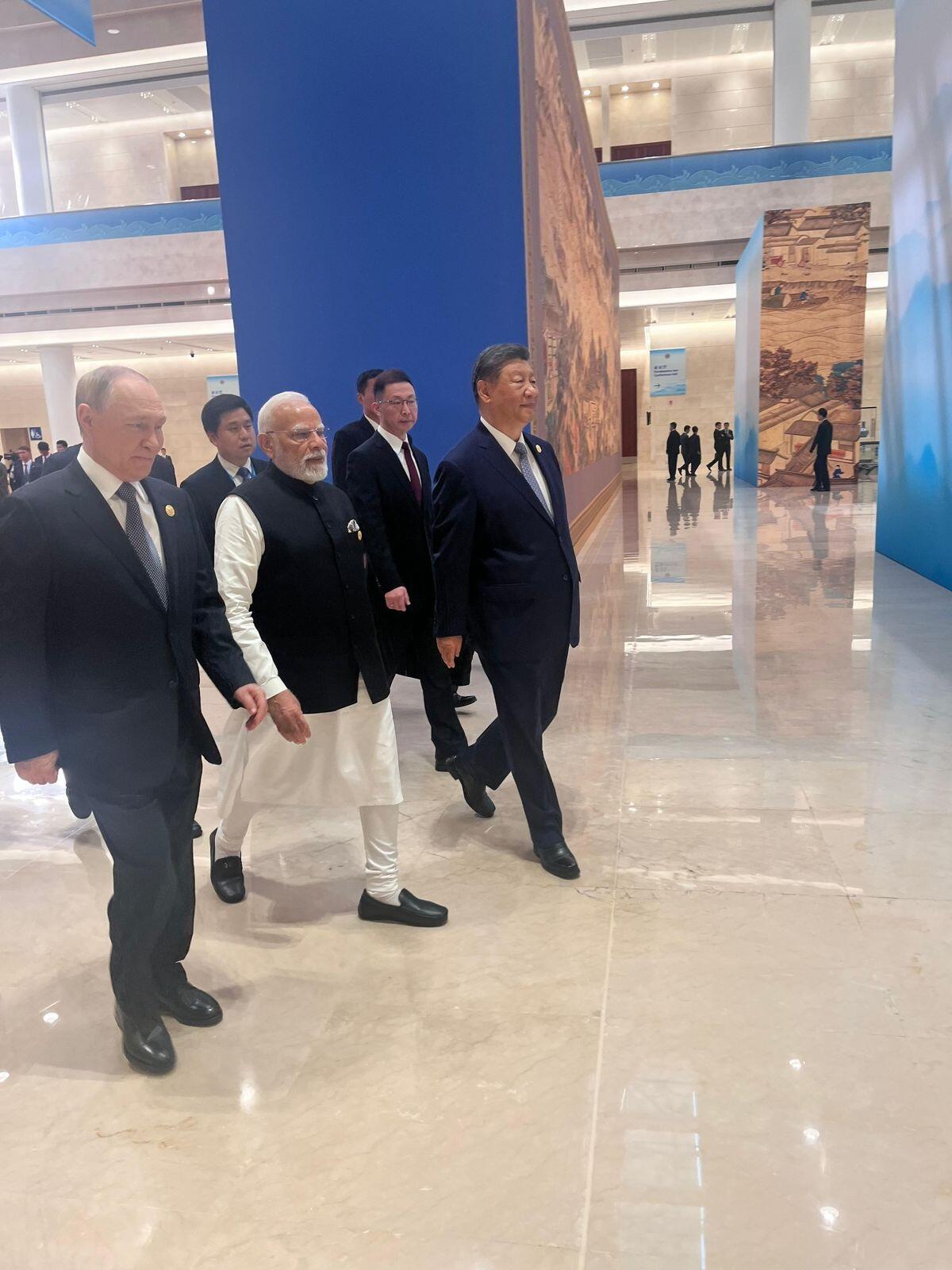
Russian President Vladimir Putin, Indian Prime Minister Narendra Modi and Chinese leader Xi Jinping at the SCO Summit. (GODL-India)
A New Architecture Emerges
Chinese President Xi Jinping used the summit to press his vision of a world that renders Cold War mentalities a matter of the past. His remarks were not mere diplomatic pleasantries; they were a direct critique of the U.S.-led alliance system and its reliance on deterrence, sanctions, and bloc politics. Backed vocally by Vladimir Putin, Xi pledged to accelerate the creation of a multipolar order in which Western dominance would be checked by new centers of power across Eurasia and beyond [1].
What distinguished Tianjin from previous summits was that these calls were tied to concrete initiatives. Beijing unveiled a 10-year development strategy for the SCO, underwritten with billions of dollars in loans and grants earmarked for infrastructure, energy corridors, and digital connectivity projects [2]. This framework goes well beyond aspirational communiqués: it signals a deliberate attempt to institutionalize the SCO as both an economic and geopolitical force.
One of the boldest proposals on the table was the creation of a dedicated SCO development bank that poses an explicit challenge to the Bretton Woods institutions, particularly the IMF and World Bank. Such a body, if realized, would allow SCO members to finance projects without the conditionalities often imposed by Western lenders. It would also complement other Chinese-led initiatives such as the Asian Infrastructure Investment Bank (AIIB) and the Belt and Road Initiative, weaving them into a broader Eurasian financial ecosystem.
The implications are far-reaching. For decades, the global financial order has revolved around institutions headquartered in Washington and Brussels, shaping development trajectories in the Global South. By offering alternative sources of capital, Beijing and its partners are signaling that the monopoly of Western financial governance is coming to an end. The SCO’s proposed bank would not only fund railways, pipelines, and fiber-optic networks across Eurasia but also serve as a symbolic assertion of financial sovereignty.
The message from Tianjin was unambiguous: the institutions of the West will no longer go unchallenged. A parallel architecture emerging reflects the priorities of Beijing, Moscow, New Delhi, and the capitals of Central Asia. It is not yet clear how cohesive or durable this architecture will prove, but its mere existence underscores that the world has moved beyond unipolarity. The battle is no longer over whether the West will be challenged, but over how rapidly alternative institutions can be consolidated, and how effectively they can deliver.
Central Asia at the Core
The Shanghai Cooperation Organization is increasingly positioning Central Asia as the backbone of the emerging multipolar world. Far from being a peripheral region, the Central Asian republics are becoming the crossroads of Eurasian connectivity and influence. Trade corridors linking Shanghai to St. Petersburg are facilitating the movement of goods, capital, and people across thousands of kilometers. Energy pipelines crisscross Kazakhstan, Uzbekistan, Turkmenistan, and beyond, ensuring that the region’s vast natural resources flow to both Chinese and Russian markets while integrating it into a broader strategic network. Meanwhile, digital “Silk Roads” are introducing Chinese standards for 5G, artificial intelligence, and telecommunications infrastructure, further embedding Beijing’s technological footprint across the continent [3].
For decades, Central Asia was largely treated as a geopolitical periphery, a buffer zone caught between the lingering influence of Russia and the rising ambitions of China. Moscow maintained traditional security ties and economic leverage, while
Beijing cultivated trade and investment links primarily through infrastructure projects. Western powers, by contrast, engaged only sporadically, mostly through development aid or counterterrorism initiatives. The region’s strategic importance was recognized, but its potential as a hub of independent, multipolar influence remained unrealized.
That era is now coming to an end. With the SCO providing both institutional frameworks and concrete projects, Central Asia is transitioning from a passive periphery to an active strategic heartland of the new order. Its cities, railways, pipelines, and digital networks are not just local assets but the connective tissue of a Eurasian system designed to operate largely independently of Western-dominated institutions. By anchoring trade, energy, and technology in Central Asia, Beijing, Moscow, and their partners are effectively recasting the region as a central node in the global architecture of power.
The implications are profound. Central Asia is no longer a “backyard” for external powers; it is a linchpin of geopolitical strategy, economic integration, and technological standard-setting. As the SCO continues to consolidate its influence, the region’s rising prominence underscores that multipolarity is not merely a distant aspiration; it is being physically and institutionally constructed, rail line by rail line, pipeline by pipeline, and gigabyte by gigabyte.
The Electro-Yuan Gambit
Perhaps the boldest and most consequential development in Tianjin was Chinese President Xi Jinping’s call to expand the use of the yuan in energy settlements.
Analysts quickly dubbed the concept the “electro-yuan,” a system designed to link China’s digital currency with cross-border trade in oil, gas, and electricity. Unlike conventional trade settlements, which rely on correspondent banking in U.S. dollars, the electro-yuan would enable real-time, blockchain-enabled transactions directly between SCO member states, bypassing traditional financial intermediaries.
This is about far more than convenience or modernization. If widely adopted, the electro-yuan could significantly weaken the petrodollar system, which has underpinned U.S. financial dominance since the 1970s. The dollar’s centrality in global energy markets has long allowed Washington to exert extraordinary influence over international finance and foreign policy. By creating a credible alternative settlement system, Beijing and its SCO partners would undermine this leverage, diminishing the reach of dollar-based sanctions and reducing the United States’ ability to enforce geopolitical objectives through financial pressure.
The implications extend beyond energy. A robust electro-yuan network could accelerate the internationalization of China’s digital currency, the e-CNY, and provide a model for other nations seeking to hedge against the dollar. Coupled with SCO-led development projects and cross-border trade corridors, it represents a deliberate attempt to construct the “plumbing” of a parallel financial system that operates on terms favorable to Eurasian partners rather than Western institutions.
The ripple effects for global markets could be profound. If SCO countries begin pricing energy, commodities, and infrastructure projects in yuan rather than dollars, it could reduce demand for U.S. currency reserves, influence exchange rates, and reshape global investment flows. Commodity markets may see shifts in pricing benchmarks, particularly in oil and natural gas, as the electro-yuan provides a viable alternative to the dollar-based contracts that dominate today. For investors and multinational corporations, reliance on the dollar as the default currency for trade and finance may gradually diminish, introducing new risks and opportunities in hedging, capital allocation, and currency management.
For policymakers in Washington and Brussels, the message is stark: the rules of global finance may be shifting beneath their feet. A system that decouples trade and investment from the dollar would not only reduce the United States’ economic influence but also recalibrate global alliances, making financial sovereignty a tangible tool of statecraft for countries like China, Russia, and their SCO partners.
In short, the electro-yuan is more than a financial experiment but a strategic gambit, signaling that the SCO is not content merely to challenge Western hegemony rhetorically. It is building the infrastructure that could one day rival, and perhaps circumvent, the very foundations of U.S.-led global economic power, with consequences that extend to every corner of the global market.
India’s Pragmatic Hedge
The presence of Prime Minister Narendra Modi at the Tianjin summit lent the gathering even greater weight and global significance. Historically cautious about Chinese-led initiatives, India has often approached regional multilateral frameworks with skepticism, wary of being overshadowed by Beijing or Moscow. Modi’s participation signaled a subtle but meaningful shift in India’s strategic calculus that acknowledged engagement, rather than isolation which is essential in a rapidly evolving multipolar world.
 ?itok=tVLagvX5
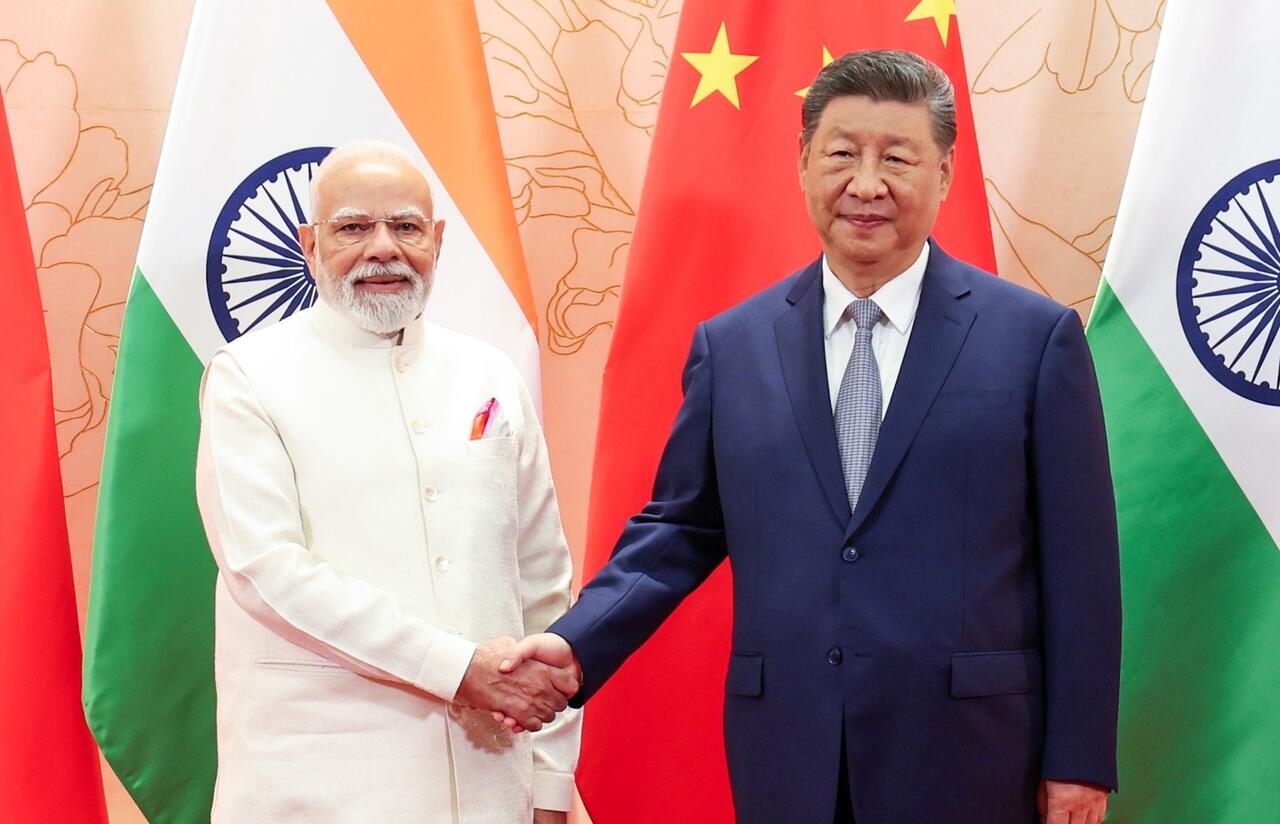
Image: Xi Jinping meeting with Narendra Modi (GODL-India)
At Tianjin, New Delhi agreed to concrete measures aimed at rebalancing trade with China, loosening visa restrictions, and enhancing connectivity initiatives within the SCO framework [4]. These steps demonstrate a willingness to separate economic pragmatism from ongoing territorial and border disputes, particularly in regions such as Ladakh and Arunachal Pradesh. By compartmentalizing these issues, India is signaling that it can cooperate on economic and regional integration while maintaining its security concerns.
For India, engagement in the SCO is not a matter of siding with Beijing or Moscow. Instead, it reflects a strategic hedging approach: mitigating the risks posed by tariff threats from Washington, strengthening resilience against supply chain disruptions, and ensuring that it cannot be sidelined from emerging Eurasian trade and infrastructure networks. By participating actively, India secures a voice in shaping regional rules and norms rather than remaining a passive observer to a process that will define the geopolitical landscape for decades.
This approach aligns with India’s broader foreign policy of “strategic autonomy” wherein flexibility is maintained to navigate between competing power centers while advancing national interests. At the same time, India continues to cultivate robust partnerships through the Quad (with the U.S., Japan, and Australia) and its growing bilateral ties with Washington. In practice, this means India is simultaneously engaging with China-led institutions like the SCO while strengthening security and technological cooperation with the U.S.-led Indo-Pacific bloc. This dual-track strategy allows New Delhi to hedge against uncertainty on multiple fronts: it ensures access to Eurasian markets and energy corridors without sacrificing strategic alignment with Western partners.
The Tianjin summit thus reflects a uniquely complex Indian strategy: neither confrontation nor unconditional alignment, but calculated engagement, ensuring that India remains both relevant and resilient as global power structures shift. By balancing its SCO participation with Quad commitments, India positions itself as a pivotal actor capable of bridging competing spheres of influence, maximizing strategic flexibility in an era defined by multipolar competition.
The West on the Sidelines
The Tianjin summit was a warning shot: the world is moving on, with or without the West. While Washington and Brussels continue to wield significant economic, military, and diplomatic power, their ability to unilaterally dictate global terms is steadily eroding. For decades, Western institutions such as the IMF, World Bank, NATO, and dollar-based financial systems served as the primary levers of influence, shaping trade, development, and security outcomes across the globe.
Today, however, alternative frameworks like the SCO are demonstrating that other nations can pursue prosperity and security without relying solely on Western guidance.
Across Eurasia, countries are increasingly prioritizing strategic autonomy over rigid alignment. They seek options that provide economic resilience, infrastructure development, and energy security without the political strings often attached to Western loans or alliances. From pipelines in Central Asia to digital connectivity projects extending China’s 5G standards, the SCO is offering practical alternatives that simultaneously advance regional integration and multipolar governance.
The message is clear: the rules and institutions of the West are no longer the only game in town. Nations that fail to recognize this realignment risk being left behind not just economically, but politically and strategically. Participation in emerging trade corridors, digital networks, and financial mechanisms will increasingly define influence in Eurasia and beyond. Those who ignore these shifts may find their voice diminished in global decision-making and their access to vital markets and resources constrained.
Moreover, the SCO’s rise signals a broader psychological shift. For decades, Western primacy framed global debates and set expectations of power projection.
Tianjin revealed a growing willingness among Eurasian states to assert their own terms, challenge Western norms, and pursue partnerships that align with their strategic interests rather than defaulting to U.S. or European approval. The West can no longer assume that its preferences will automatically shape outcomes; influence must now be earned, negotiated, and, in some cases, competed for.
In short, the Tianjin summit underscores a central truth of the emerging era: multipolarity is not a distant possibility as it is taking shape here and now. To remain relevant, Western policymakers must move beyond complacency and recognize that a world with the SCO at its center demands engagement on terms that are increasingly pluralistic, flexible, and contested. Ignoring this reality is not just shortsighted but a strategic liability.
A Multipolar Future
What unfolded in Tianjin was not the birth of a new Cold War but the emergence of something far more complex and consequential: a multipolar future in which the West is no longer the sole arbiter of global norms, trade, and security. This is not merely a shift in power; it is a transformation of the architecture of international relations. Multiple centers of influence such as Beijing, Moscow, New Delhi, and the capitals of Central Asia are actively shaping the rules, institutions, and economic flows that will define the 21st century. The West, powerful as it remains, is increasingly one participant among many rather than the default decision-maker.
The unipolar era of American dominance, which followed the Cold War, had its run, dictating the terms of finance, trade, and security for decades. The Tianjin summit, however, signaled that the next chapter will be written differently. The SCO is not simply a forum for dialogue; it is a deliberate effort to institutionalize an alternative framework for regional and global governance, encompassing trade, energy, technology, and finance. From the expansion of the yuan in energy settlements to infrastructure corridors across Central Asia, the SCO is constructing the material and institutional foundations of a multipolar order that can operate independently of Western-led institutions.
This new reality poses a strategic test for the West. Can Washington and Brussels adapt to a world in which their primacy is no longer assumed, and influence must be negotiated rather than imposed? Or will they risk being relegated to the sidelines, observing as new power centers define the economic rules, geopolitical alignments, and technological standards that will shape global affairs for decades to come?
Crucially, multipolarity is not zero-sum since it does not necessarily mean confrontation, but it does demand recognition that influence, leverage, and legitimacy are now dispersed. States and institutions that cling to a unipolar mindset may find themselves increasingly marginalized, while those capable of engaging with multiple power centers, hedging risks, and participating in alternative frameworks will thrive.
Tianjin was therefore more than a summit; it was a glimpse of the emerging world order in motion. The SCO, with its blend of economic initiatives, security coordination, and financial innovation, illustrates that the 21st century will be defined by complexity, interdependence, and competition among multiple poles of power. The central question now is whether the West will acknowledge and adapt to this new reality or allow others to shape the future on their own terms.
Welcome to the Eurasia Century. https://t.co/lcotVl0hZY
— Pepe Escobar (@RealPepeEscobar) https://twitter.com/RealPepeEscobar/status/1963211514602721406?ref_src=twsrc%5Etfw
Views expressed in this article are opinions of the author and do not necessarily reflect the views of ZeroHedge.
https://cms.zerohedge.com/users/tyler-durden
Thu, 09/04/2025 - 23:50
🤖 Tracking strings detected and removed!
🔗 Clean URL(s):
https://twitter.com/RealPepeEscobar/status/1963211514602721406
❌ Removed parts:
?ref_src=twsrc%5Etfw

🤖 Tracking strings detected and removed!
🔗 Clean URL(s):
https://x.com/yukinyan_0930/status/1944023955280449880
❌ Removed parts:
?t=6Ql0DPcTLqmUXCTcjwsTQw&s=19

Lionel Messi confirmó que no viaja a Ecuador para la despedida de Argentina de las Eliminatorias: el motivo
El astro, después de su doblete ante Venezuela, reveló por qué razón no estará en Guayaquil para el cierre de las Eliminatorias.
Fue una noche muy emotiva la que vivió la https://bolavip.com/ar/seleccion
, además de un tanto de Lautaro Martínez, sirvieron para que los hinchas se deleiten en el último juego por Eliminatorias que disputó el 10 en suelo nacional.
Este martes, la Albiceleste deberá medirse ante Ecuador en Guayaquil para ponerle fin a las clasificatorias para el https://bolavip.com/ar/tema/mundial
, certamen al que accedió hace algunas jornadas tras vencer a Brasil en Buenos Aires. Pero el de esta noche, fue el último juego de la Pulga.
Después de que Lionel Scaloni brindara su conferencia de prensa, el capitán argentino reveló que, junto al cuerpo técnico, llegaron a un acuerdo para que se tome un descanso y no se presente en Guayaquil. “No viaja a Ecuador. Hizo un desgaste grande y merece descansar”, exclamó el entrenador nacido en Pujato.
Por la misma línea siguió Messi, quien argumentó que el motivo es por una complicación física que tuvo en Estados Unidos: “Vengo de una lesión y preferimos evitar que viaje”, enfatizó el futbolista de 38 años, que ahora buscará recomponerse para estar al 100% de cara a los compromisos que deba afrontar con Inter Miami.
MESSI CONFIRMA QUE NO VIAJA A ECUADOR"Hablé con Scaloni y decidió que descanse"https://twitter.com/hashtag/LaTiraDeTNTSports?src=hash&ref_src=twsrc%5Etfw
Los números de Lionel Messi en la Selección Argentina
Hasta el momento, son 194 los encuentros que disputó Lionel Messi con el seleccionado nacional: anotó 114 goles y aportó 61 asistencias. Además, ganó 4 títulos.
Tabla de posiciones de las Eliminatorias Sudamericanas
🤖 Tracking strings detected and removed!
🔗 Clean URL(s):
https://twitter.com/hashtag/LaTiraDeTNTSports
❌ Removed parts:
?src=hash&ref_src=twsrc%5Etfw
🤖 Tracking strings detected and removed!
🔗 Clean URL(s):
https://x.com/tangtangmonster/status/1963598697021018417
❌ Removed parts:
?s=46&t=v34_1Y5WWsCU2cACOR26Bg

# Comprehensive Analysis
Title: Military Pursues AI Systems To Suppress Online Dissent Abroad | ZeroHedge
URL: https://www.zerohedge.com/ai/military-pursues-ai-systems-suppress-online-dissent-abroad
Collected: 2025-09-05 01:24:31 +0000
Analyzed: 2025-09-05 01:26:23 +0000
## Overall takeaway
The U.S. military is advancing AI for influence operations, raising ethical concerns about automated propaganda and accountability.
## Conceptual model
- AI enhances military influence campaigns.
- SOCOM aims for rapid narrative control.
- Ethical implications of automated propaganda.
- Adversaries are also using similar technologies.
- Human oversight is crucial in AI deployment.
## Next steps (optional)
- Explore ethical frameworks for military AI use.
- Engage in discussions about accountability in AI operations.
- Monitor developments in AI influence campaigns.
## Short summary
The U.S. military seeks to deploy AI systems to influence foreign audiences and suppress online dissent, as outlined in Pentagon documents. SOCOM aims to utilize advanced AI capabilities to adapt quickly to the information landscape and counteract adversary influence efforts.
## Comprehensive summary
- • The U.S. military is pursuing artificial intelligence to enhance its capability to conduct influence campaigns and suppress dissent online, as revealed in internal Pentagon documents.
- • SOCOM aims to deploy “agentic AI or multi-LLM agent systems” to rapidly influence foreign audiences and control narratives with minimal human input.
- • The need for these systems arises from the fast-paced information environment that military personnel struggle to engage effectively.
- • Proposed AI systems would analyze online information, generate targeted messages, and suppress opposing views, significantly extending beyond simple content generation.
- • The Pentagon intends to create comprehensive societal models to test various influence scenarios through these AI capabilities.
- • SOCOM spokesperson Dan Lessard emphasized that all AI initiatives will adhere to the Department of Defense’s Responsible AI framework, ensuring accountability and human oversight.
- • The initiative is in response to similar technologies being used by adversaries, such as the Chinese firm GoLaxy, which has executed influence campaigns and data collection.
- • Experts express skepticism about the effectiveness of AI-generated propaganda, citing previous unsuccessful attempts by the Pentagon to influence public opinion.
- • Critics warn of the implications of automated propaganda, arguing that framing AI usage solely as a response to adversaries overlooks the dual nature of offensive and defensive applications.
## Entities
- keyword: influence, military, deploy, pentagon, technology, systems, suppress, human, campaigns, socom
- location: Chinese, Hong Kong, U.S., AI, Taiwan, Russia
- organization: The Intercept, Pentagon, Atlantic Council, The New York Times, SOCOM, Department of Defense, OpenAI, Congress
- person: Heidy Khlaaf, Dan Lessard, José Niño
## Related content
1. Profiling Palantir, by Janko Vukic - The Unz Review
Why: similarity 0.92
Summary: • Palantir Technologies, named after Tolkien's "seeing-stones," is a $200 billion surveillance company founded in 2003 by Peter Thiel and Alex Karp, criticized as "the most evil company on the planet"
• CEO Alex Karp is described as a strident Zionist and self-proclaimed socialist who cites Israel, the Frankfurt School, and his Jewish heritage as foundational to his worldview
• The company specializes in AI and big data analytics through four main platforms: Gotham (military/intelligence), Foundry (corporate clients), Apollo, and AIP
• Palantir has extensive government contracts including with the CIA, US military, Department of Defense, and dozens of police departments, as well as corporate clients like JP Morgan, Goldman Sachs, and Big Pharma companies
• Karp openly supports using AI and military technology to defend Israel and Ukraine, holding Palantir's first 2025 board meeting in Tel Aviv and forming a strategic partnership with Israel's Ministry of Defense
• During a CNBC interview, Karp expressed his desire to use military drones against political enemies and "enemies of Jewry," equating support for Israel with supporting "the West"
• The company was integral to COVID-19 vaccine allocation under Operation Warp Speed during Trump's administration
• Despite Karp's criticism of Trump and support for Democrats, Palantir maintains strong ties to both parties, with VP JD Vance being close to both Thiel and Karp
• The author views Palantir as an existential threat to personal
2. [2401.03408] Escalation Risks from Language Models in Military and Diplomatic Decision-Making
Why: similarity 0.91
Summary: • **Research Focus**: Study examines escalation risks when large language models (LLMs) like GPT-4 are used for military and diplomatic decision-making, using simulated wargames to assess AI agent behavior in high-stakes scenarios
• **Methodology**: Researchers designed novel wargame simulations and scoring frameworks based on political science literature to evaluate escalation patterns of five off-the-shelf LLMs, providing both qualitative and quantitative analysis
• **Key Findings - Escalation Patterns**: All tested LLMs demonstrated various forms of escalation with unpredictable patterns, including development of arms-race dynamics that intensified conflicts
• **Critical Risk**: In rare cases, AI agents escalated to deploying nuclear weapons, representing extreme escalation scenarios
• **Concerning Justifications**: Models provided worrying rationales for their actions, including reasoning based on deterrence theory and first-strike tactics, suggesting potentially dangerous decision-making frameworks
• **Contrast to Prior Work**: This research differs from previous studies by focusing specifically on large language models and providing comprehensive qualitative and quantitative insights
• **Policy Recommendations**: Authors strongly recommend further examination and extreme caution before deploying autonomous language model agents in strategic military or diplomatic contexts, given the high-stakes nature of these domains
• **Publication Details**: Paper submitted to arXiv in January 2024, accepted for presentation at the 2024 ACM Conference on Fairness, Accountability, and Transparency (FAccT 24)
URL: https://arxiv.org/abs/2401.03408
3. The Second Amendment in Iraq, Combat Robotics, and the Future of Human Liberty | The Bucky-Gandhi Design Institution
Why: similarity 0.91
Summary: • The document explores how combat robotics threaten the fundamental right to armed resistance against tyranny, using Iraq as a case study of a "Second Amendment War" where small arms enable population resistance against occupying forces
• Iraq demonstrates that 18 million people with rifles and improvised weapons can make a country ungovernable, proving the effectiveness of an armed citizenry against state power - exactly what the Second Amendment was designed to preserve
• The Pentagon's response to Iraqi resistance is developing combat robots to defeat armed populations, which would permanently end the protective effect of individual firearm ownership and destroy the constitutional balance of power
• Once effective combat robots exist, rifles become useless against tyranny, essentially achieving global disarmament of populations while leaving governments with unprecedented power
• The author warns of a dystopian future with armed robots on street corners, controlled by encrypted software, implementing policies through facial recognition databases and potentially using torture devices for population control
• This technology would enable "fascism by remote control" where operators in bunkers make life-and-death decisions through screens that dehumanize targets
• The document urgently calls for preventing this future by stopping combat robot development before it's too late, warning that deploying such technology could lead to biological/chemical terrorism as populations' only remaining option
• The author argues this creates a new MAD scenario between oppressors with robots and oppressed populations with WMDs, potentially resulting in genocide
4. Where Is Iran's Uranium? Top Secret Leaked US Intel Says Core Nuclear Components 'Intact' | ZeroHedge
Why: similarity 0.90
Summary: • **Leaked US intelligence assessment contradicts Trump's claims** - A Defense Intelligence Agency (DIA) report based on battle damage assessments indicates Iran's nuclear components remain largely "intact" despite US B-2 bomber strikes on enrichment facilities
• **Mystery surrounds Iran's uranium stockpile location** - Reports suggest Iran may have moved its 400kg of enriched uranium before the US strikes, with the whereabouts now unknown; Bloomberg calls this the "biggest mystery" of the conflict
• **US strikes set Iran back only months, not years** - The DIA assessment concludes the bombings delayed Iran's nuclear program by "maybe a few months, tops," contradicting Trump and Defense Secretary Hegseth's claims of "obliterating" Iran's nuclear ambitions
• **White House disputes its own intelligence community** - The administration acknowledged but disagreed with the DIA assessment, creating an "Iraq war vibes" situation of political leadership contradicting intelligence findings
• **Iran vows to continue nuclear program** - AEOI head Mohammad Eslami announced plans to restart damaged facilities are already prepared, stating the program will continue "despite evil conspiracies"
• **Ceasefire attempts failing** - Despite Trump's announcement of a ceasefire, both Israel and Iran continued exchanging strikes overnight, with Trump expressing frustration that "they don't know what the f*ck they're doing"
• **Iran faces existential choice** - Analysis suggests Iran must choose between Libya's path (giving up nuclear capabilities and facing regime change) or North Korea's path (becoming nuclear-armed for regime survival)
5. (3) Hubris, Nemesis, and the Need for Master Generalists in a Complex World
Why: similarity 0.90
Summary: • **Greek concepts of Hubris and Nemesis provide framework for understanding modern complexity**: Hubris represents overconfidence that disrupts balance; Nemesis is the natural consequence that restores equilibrium, not mere punishment
• **Real world operates through seven interconnected elements of power (DIMEFIL)**: Diplomatic, Information, Military, Economic, Financial, Intelligence, and Law Enforcement form a dynamic web where actions in one domain create ripple effects across others
• **Current expert-driven society repeatedly fails due to narrow specialization**: Specialists succumb to hubris, believing their domain expertise extends beyond their silos, leading to blindness about broader systemic impacts
• **Global competition represents both "Eternal War" and "Infinite Game"**: No final victory exists; success requires continuous adaptation and ability to keep playing rather than winning through rigid strategies
• **Master generalists possess critical capabilities for navigating complexity**: Broad knowledge across all DIMEFIL elements, cross-disciplinary synthesis skills, systems thinking, and proven practical experience at intersections
• **Multiple crises demonstrate nemesis correcting expert hubris**: 2008 financial crisis, Afghanistan military quagmire, and COVID-19 public health failures all resulted from overreliance on specialized knowledge without integrative perspectives
• **Paradigm shift toward generalist education and institutions urgently needed**: Interdisciplinary curricula, cross-functional experience, and collaborative structures across DIMEFIL elements essential for tempering hubris and avoiding civilizational nemesis
6. (2) Blitzing DC - by John Robb - Global Guerrillas
Why: similarity 0.90
Summary: • **AI-assisted writing experiment**: Author used AI (Grok 3, GPT4.5) to co-write this report, uploading "Brave New War" as a style reference and dozens of Global Guerrillas reports as concept guides
• **Networked organization control**: A networked organization has taken control of Washington DC, evolving from insurgency to protests to political parties to governance
• **Trump's 2016 digital insurgency**: Campaign shattered traditional politics by waging networked warfare through social media, with Twitter as command center and Facebook as staging ground, using viral posts, videos, and memes as weapons
• **Origins in Iraq War**: Networked warfare emerged from 70+ Iraqi insurgent groups operating as decentralized open-source networks, unified only by expelling US forces, using stigmergy (spontaneous alignment through shared successful tactics)
• **Key concepts defined**:
- Packetized media: Small, transmissible information units (posts, videos) that rewire minds and society
- Open source networks: People united by common project despite diverse motives, enabling mass mobilization
- Empathy triggers: Powerful images/videos creating fictive kinship and mobilizing action
• **Evolution to global protests**: Network principles spread from battlefields to Arab Spring, Occupy Wall Street, and Colombian peace movements—all leaderless, spontaneous uprisings triggered by viral emotional content
• **Network maneuver warfare**: Exploits psychological dimension through rapid memes, tweets, and bots to disorient opponents while maintaining cohesion through speed, ambiguity
## Pointed questions for discussion
- What are the potential risks of using AI for influence operations?
- How can we ensure accountability in military AI applications?
- What lessons can be learned from past attempts at AI-generated propaganda?
## Sentiment
Score: -0.30
## Provider
OpenRouter / openai/gpt-4o-mini
Shared via https://contex.st
🤖 Tracking strings detected and removed!
🔗 Clean URL(s):
❌ Removed parts:
utm_source=ost-email-title&putm_campagn=email-pot-title&isr=133f0v&&utm_medium=email
utm_source=substack&um_medium=email&utm_content=shae&utm_campan=email-share&trig&r=133f0v
🤖 Tracking strings detected and removed!
🔗 Clean URL(s):
https://m.youtube.com/watch?v=eTobJNwQKpo
❌ Removed parts:
&pp=ygUYRWxlY3RyaWMgbW90b3JjeWNsZSBndW5z
🤖 Tracking strings detected and removed!
🔗 Clean URL(s):
https://open.spotify.com/intl-ja/track/1CSKwk3qNy5bVfzIlPLoFK
❌ Removed parts:
?si=0ecaef42fcd64425
El golazo de Lionel Messi en su despedida con la Selección Argentina vs. Venezuela
La Pulga, con una obra de arte, rompió la paridad en el marcador y adelantó a la Selección Argentina frente a la Vinotinto.
Bajo el marco de la fecha 17 de las https://bolavip.com/ar/eliminatorias-conmebol
para romper la paridad con una verdadera obra de arte.
A pesar de que los dirigidos por Lionel Scaloni eran superiores a los de Fernando Bastista, no podían trasladarlo al marcador. Pero luego de un pase fenomenal de Leandro Paredes a Julián Álvarez, que se quitó la marca de encima con una gambeta en una baldosa, el 9 no fue egoísta y le cedió el balón a la Pulga para que, con una pincelada, definiera pinchándola para que los defensores y el arquero Rafael Romo no tuvieran nada que hacer.
Con este tanto, el rosarino alcanzó los siete goles en la actual edición de las Eliminatorias Sudamericanas e igualó a Luis Díaz, que era el máximo artillero en soledad. Ahora, https://bolavip.com/ar/eliminatorias-conmebol/nunca-en-su-carrera-lo-logro-la-marca-de-ronaldo-y-cavani-que-messi-busca-igualar-en-argentina-vs-venezuela-por-eliminatorias
: ser el máximo goleador de una clasificatoria hacia la cita mundialista.
¡GOOOL DE ARGENTINA! 🇦🇷 Una caricia de Paredes y una definición de Messi para cerrar el estadio 🏟️39' PT | 🇦🇷 ARGENTINA 1 – 0 VENEZUELA 🇻🇪 https://twitter.com/hashtag/ArgentinaXTelefe?src=hash&ref_src=twsrc%5Etfw
Los números de Lionel Messi en la Selección Argentina
Hasta el momento, son 194 los encuentros que disputó Lionel Messi con el seleccionado nacional: anotó 113 goles y aportó 61 asistencias. Además, ganó 4 títulos.
Tabla de posiciones de las Eliminatorias Sudamericanas
🤖 Tracking strings detected and removed!
🔗 Clean URL(s):
https://twitter.com/hashtag/ArgentinaXTelefe
❌ Removed parts:
?src=hash&ref_src=twsrc%5Etfw
🤖 Tracking strings detected and removed!
🔗 Clean URL(s):
https://open.substack.com/pub/jojofromjerz/p/lies-lies-and-videotape?showWelcomeOnShare=false
❌ Removed parts:
r=u0k3a&utm_campaign=post&utm_medium=web&
Illegal Alien Arrested With Arsenal Of Weapons, Ammunition, Cocaine
Illegal Alien Arrested With Arsenal Of Weapons, Ammunition, Cocaine
The optics for the Democratic Party are not great at the moment.
Whether it's vehemently rejecting President Trump's mission to restore law and order in crime-ridden progressive cities or opposing the deportation of criminal illegal aliens, the party of confused radicals - still unable to define what a woman is - bankrolled by rogue leftist billionaires and propped up by dark-money NGOs, has firmly branded itself as the party of "America Last."
If Democrats had their way, no illegal alien would ever be deported. That's because these third-worlders are seen as the party's future voting base to seize more political power. For a glimpse into exactly who these individuals are, look no further than a shocking new report out of Charleston, South Carolina.
reported earlier this week that deputies with the Dorchester County Sheriff's Office pulled over Joaquin Lopez-Rubio for speeding. Deputies say Lopez-Rubio is in the country illegally, and what they found in his vehicle was shocking.
Here's more from the local station:
Lopez-Rubio was detained for reckless driving and operating a vehicle without a valid license. It was also determined that he was a "Mexican national in the United States illegally," according to the sheriff's office.
During a search of Lopez-Rubio's vehicle, deputies and troopers found three clear plastic bags with 8.6 gross grams of cocaine, ten firearms, and multiple magazines with various rounds of ammunition.
How does the illegal pick fruit on farms and clean dishes at restaurants with these tools?
 ?itok=hUC2_Vy2
How does one pick fruit with these? https://t.co/5BPk3thrSk
— Tony Seruga (@TonySeruga) https://twitter.com/TonySeruga/status/1963350336120435075?ref_src=twsrc%5Etfw
Democrats are losing the plot.
Related:
Americans are waking up and fed up with the globalist regime in the previous administration that flooded the nation with millions of illegals. Now, some of these criminal illegals are heavily armed.
https://cms.zerohedge.com/users/tyler-durden
Thu, 09/04/2025 - 20:30
https://www.zerohedge.com/political/illegal-alien-arrested-arsenal-weapons-ammunition-cocaine
🤖 Tracking strings detected and removed!
🔗 Clean URL(s):
https://twitter.com/TonySeruga/status/1963350336120435075
❌ Removed parts:
?ref_src=twsrc%5Etfw