
Most of the papers last week were about AI or blockchain. 🥱
There was one about L1 and L2 technologies in bitcoin. For those interested, it's here: https://arxiv.org/abs/2409.19622

4 hosts, 21 OSDs, a bit over 100TB total raw capacity.
OSDs are a mix of big expensive SSDs and "HDDs with an SSD as a DB device" (and thus it also serves as a WAL device). There are no HDDs without an SSD in front of them.
Workload is about 40 VMs which vary greatly in disk activity. DNS, basic web services are super lightweight, but heavier hitters like the InfluxDB server, GitLab, and Mastodon.
4 of the first 25 papers on https://arxiv.org/list/cs.CR/recent are about DNS right now.
It's interesting to see such an old, critical technology to get so much attention. Usually academics are trying to chase the buzzword of the day.
To be fair, one of them does have "Large Language Models" in the title, so there's still some of that "write about what's popular, not what's important" thing going on too.
Yesterday was a rough day for me as a #sysadmin, but #ceph still maintained its perfect record of no data loss, even though I don't 💯 understand all the inner workings.
At this point, I'd say it is battle tested. I've had concurrent drive failures, and this latest issue where it couldn't find the DB device fors of 17 of the 21 drives!
I'm not sure I'd go with ceph again if I had to start over. It allows live migrating running VMs to anither host, which is a huge win for avoiding downtime and saving disk writes for migrating an entire hard drive (as opposed to just migrating the confents of memory). But having standalone disks would be way more performent in terms of both I/O and memory usage.
If I could get equal disk I/O performance, I'd choose ceph for any #SelfHosting. Maybe not for a #homelab, where nobody relies on any of the services, but certainly if you're using it in your daily life.
I still have a #bounty out of 300K sats for anyone who can get me 100MB/s random read inside a VM and 100 IOPS for the rados write benchmark.
What I actually want is for VMs to run at least as well as if they were on a standalone consumer grade hard drive, but I'm trying to provide concrete metrics so there's an objective metric of whether it goes "fast enough".

I went through the free LoRa/LoRaWAN training from Semtech a couple years ago and it was very good at explaining how it works to non-experts.
IIRC, you might have to look up videos on thinks like OOK or preambles to understand those parts, but that's easy once you know what to look for and have the context of how it is used.
Dear people who want to #decentralize everythingband are a fan of #LoRa, #meshtastic and #OpenSource,
I'm writing to you today to inquire where you stand on the fact that it's all based on a propritary radio, created by a single company. If they were to discontinue this line, it'd mean no new hardware.
It may sound unlikely to discontinue a product that people love, but this recently happened with GoTenna. You can still use existing hardware, but no new gear, no support, no growing your network, no bringing other people in.
Has anyone successfully used an SDR to interface with LoRa? That would eliminate the single point of failure.
This also applies to things like #reticulum and #NomadNet which also rely on LoRa.

If people let you decide what makes them a free thinking human instead of deciding it themselves, they're not a free thinking human.

Show me how awesome it is. 😀

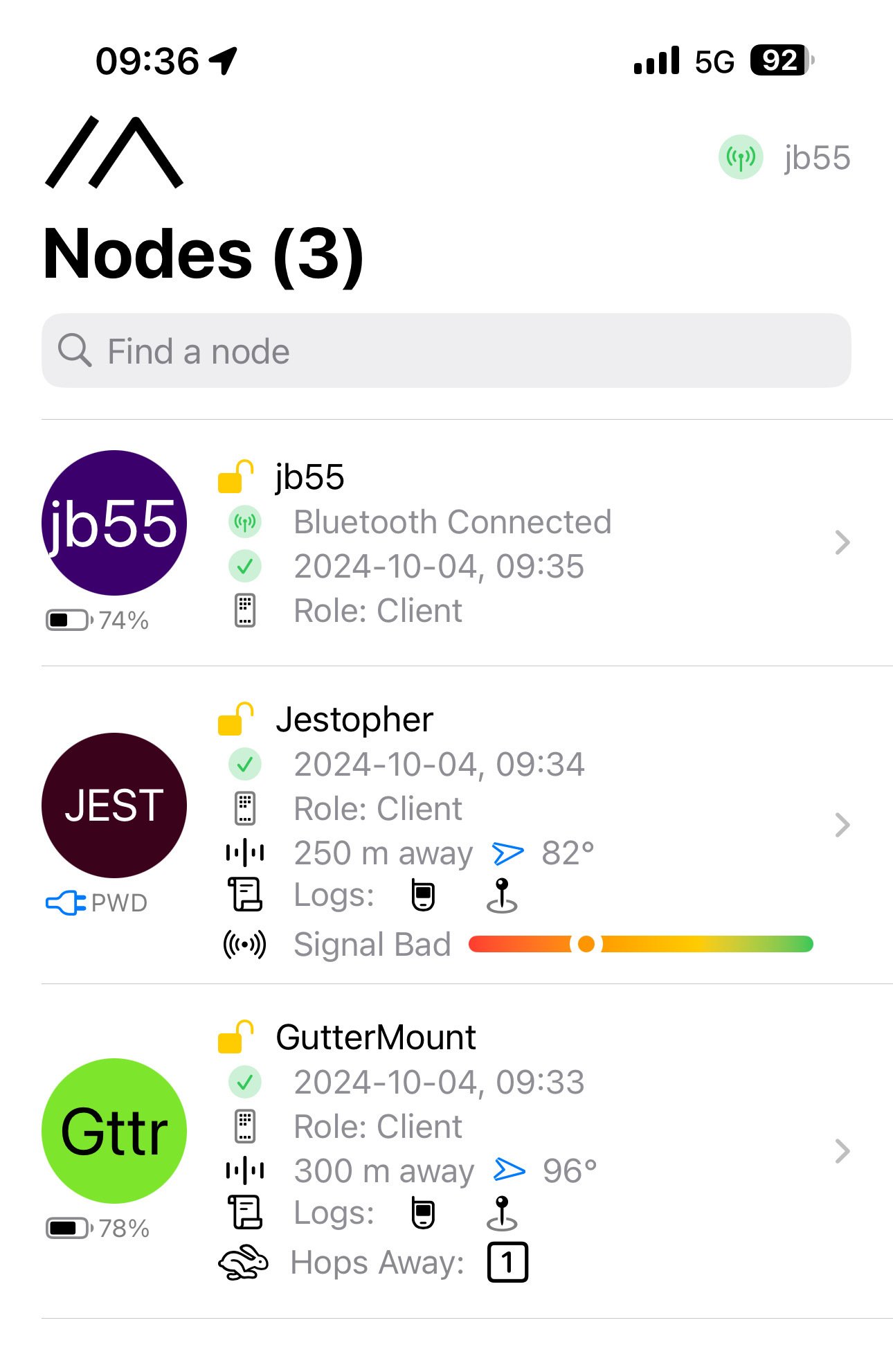
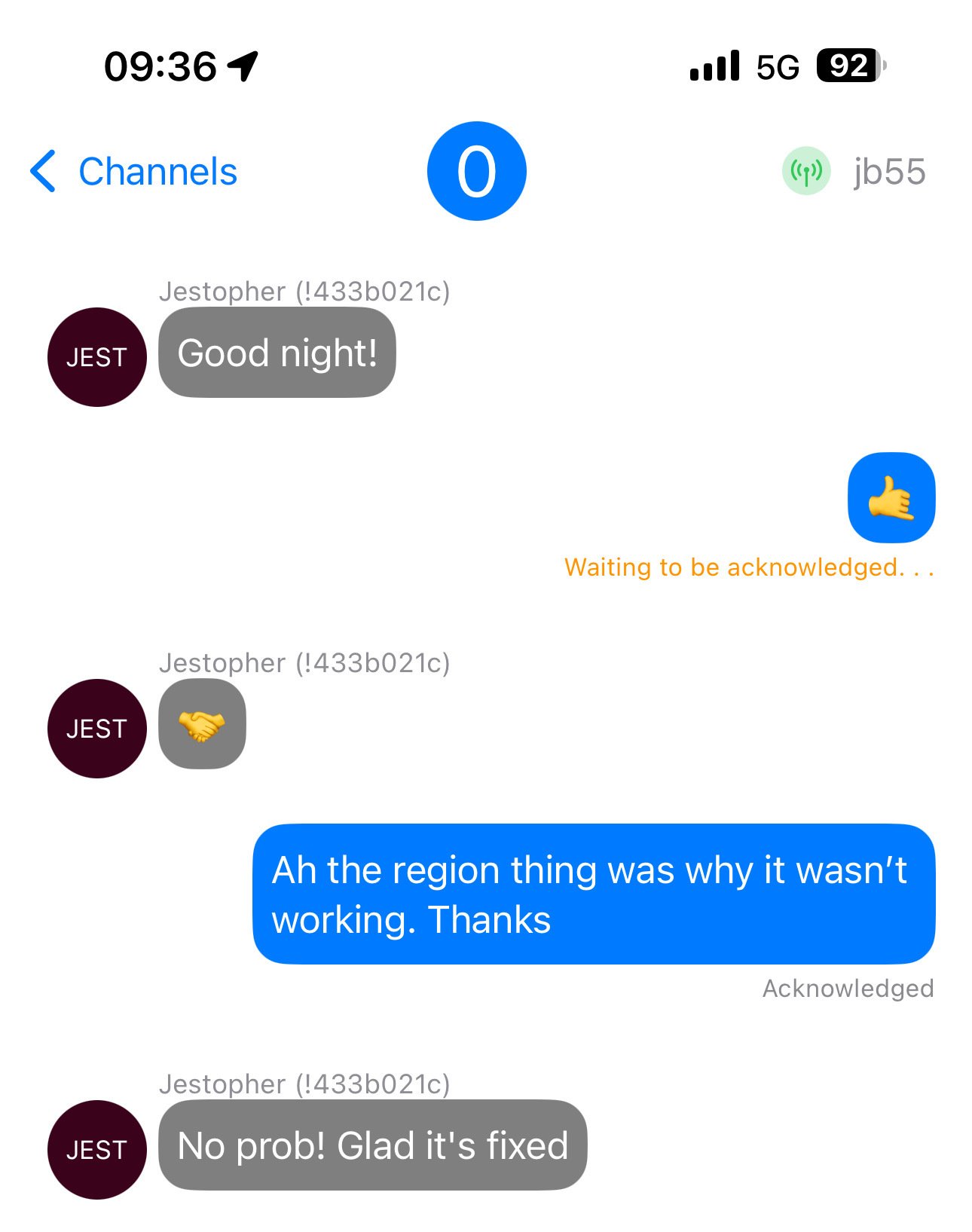 nostr:note199z9vr3mvke7aez8qw45lt2sx9hw0jce4fzfucxltggudrqxfx3spgtjma
It's so easy to drink the meshnet Kool-Aid®. It's just that good.
If you accept posts like this as truth, you are not a free thinking human.

Compiler error
Debugging
tracking down
Did you notice the oddball here, or do you need to take another look?
In the end, all the #3DPrinted cases came out acceptably well. It was fun to make these incredibly small tweaks all day yesterday to get the model and printer settings tuned up to be the best quality possible.

#manufactuing #signet devices is #fun
I've been playing around with a new case design and I ran into some #3DPrinting settings that had some counterintuitive results.
Higher quality (smaller layer height) produced worse results.

The top #Signet in each picture was the one with the highest quality settings, but the keyring is rougher, and the USB-A hole isn't tall enough. The exact same model turned out fine with the lowest quality settings. While the layers are visible on the unit at the bottom of the photos, they're nice & smooth.


2 sats per vbyte? I didn't think I'd see rates that low again
Oh wow, the 24 hour membership drive for the Open Source Hardware Association goes for 24 hours straight! Hardcore. Tune in here: https://www.youtube.com/watch?v=L6jIMzSJioc
Another empty #bitcoin block. :-) https://mempool.space/block/000000000000000000002d06a5825f1e2478682049ef9df7fcc0c5019516b6c1

Yes, I sell encrypted hardware password managers. 100% Open Source. Significant discount for paying in bitcoin.


Does your book comment on the story of Lot and his daughters?