
#Bitcoin will do to banks, the same thing that email did to letters! Change my opinion!
Explaining Bitcoin to people can be a challenge, but it is not an insoluble problem. The difficulty lies in the complex nature of blockchain technology and the public's lack of familiarity with the concept of cryptocurrencies. However, there are several approaches that can be used to make Bitcoin more accessible and understandable to different audiences.
https://void.cat/d/NmWzarXVbkCvtYsMt3W3LG.webp
1. Analogies:
• Digital money: Compare Bitcoin to traditional currencies, such as the Dollar or Euro, but emphasizing its digital and decentralized nature.
• Public ledger: Explain blockchain as a transparent record of transactions accessible to everyone.
• Mining: Describe mining as a process that ensures network security and transaction validation.
2. Focus on benefits:
• Fee-free international transactions: Emphasize the advantage of making international payments without the need for intermediaries and with reduced fees.
• Control over your assets: Highlight that Bitcoin offers users complete control over their own funds, without the need for banks or other financial institutions.
• Security and privacy: Explain how blockchain technology guarantees the security of transactions and the privacy of users.
3. Personalized Approach:
• Lay audience: Use simple language and avoid technical terms, focusing on the basic concepts of Bitcoin.
• Technology enthusiasts: Delve into the technical aspects of blockchain technology and how Bitcoin works.
• Investors: Emphasize Bitcoin’s investment potential and the characteristics that differentiate it from other asset classes.
4. Additional Features:
• Informative websites: There are several websites that offer information about Bitcoin in a clear and accessible way, such as Bitcoin.org and Cointelegraph.
• Explanatory videos: YouTube offers a variety of videos that explain Bitcoin in a simple and visual way.
• Online courses: Platforms such as Udemy and Coursera offer free and paid courses on Bitcoin and other cryptocurrencies.
By using a combination of analogies, a focus on benefits, a personalized approach, and additional resources, it is possible to make Bitcoin more understandable to different audiences. It is important to remember that education is fundamental to the mass adoption of any new technology, and Bitcoin is no exception.
Additional Tips:
• Be patient: Explaining Bitcoin can take time and requires patience.
• Use concrete examples: Use examples of how Bitcoin can be used in real life to make the explanation more interesting.
• Encourage research: Encourage the person to research more about Bitcoin on their own.
With time and effort, it is possible to overcome the challenge of explaining Bitcoin to people and contribute to the wider adoption of this innovative technology.

You're right that #Bitcoin functions on a set of core principles that are designed to be transparent and accessible. Here's a breakdown of your points:
Simple Rules:
• Bitcoin does rely on a defined set of rules encoded in its protocol software. These rules govern things like transaction validity, block creation, and overall network function.
• Compared to traditional finance, Bitcoin's rule set can be argued as simpler due to its decentralized nature.
Transparency and Fairness:
• All Bitcoin transactions are publicly viewable on the blockchain, promoting a level of transparency absent in some traditional financial systems.
• Fairness is achieved through the distributed ledger technology, where all participants agree on the state of the network.
Empowerment Through Decentralization:
• By removing the need for central authorities, Bitcoin allows individuals more control over their finances.
• This can be particularly appealing in regions with less trust in traditional financial institutions.
Keep in mind
• While Bitcoin offers advantages, it's important to consider its limitations.
• The immutability of transactions (meaning they can't be reversed) can be a double-edged sword in case of errors or theft.
• Bitcoin's volatility can make it a risky store of value.
Overall, Bitcoin's core principles do align with a desire for a simpler and more accessible financial system. However, it's still a developing technology with its own set of trade-offs. #BTC
If you invested $100 in #Bitcoin 15 years ago, you would’ve had $70 million today.
#Bitcoin and its adoption
2010: nobody uses it
2011: only nerds use it
2013: only drug dealers use it
2014: only money launderers use it
2017: only speculators use it
2020: only small companies use it
2021: only small countries use it
2022: only a few banks use it
2024: only ETFs use it
2025: ?

Plotinus would probably have a complex view of Bitcoin. On the one hand, he could appreciate the decentralized and immutable nature of currency, which brings him closer to his conception of the One, the ultimate and transcendent reality. Bitcoin's independence from governments and central banks would resonate with Plotinus's emphasis on individual freedom and self-determination.
On the other hand, Plotinus could question the intrinsic value of Bitcoin, which is based on mere social convention and computational power. For him, true wealth resides in the intelligible world, of eternal ideas, and not in material goods or currencies. Bitcoin's volatility and its association with speculative activities could also be criticized by Plotinus, who advocated a virtuous and moderate life.
In short, Plotinus would likely have a mixed view of Bitcoin, recognizing its positive aspects such as decentralization and freedom, but also questioning its intrinsic value and its potential link to greed and speculation.
A Philosophical Discussion on #Bitcoin between Aristotle and Socrates
https://void.cat/d/VdNPPVz2KTh9EpaQD1cZ19.webp
— Socrates: “Good morning, Aristotle! I see you are intrigued by this new digital currency called Bitcoin. What makes you think about her?”
— Aristotle: “Good morning, Socrates! Yes, this technology fascinates me. The idea of a decentralized currency, without the need for a government or central bank, intrigues me. It makes me think about the nature of justice and law.”
— Socrates: “Interesting! And how do you think Bitcoin fits into your vision of justice?”
— Aristotle: “Bitcoin could be seen as a form of distributive justice, where monetary power is not concentrated in the hands of a few. This reminds me of our discussion about the importance of balance and moderation in society.”
— Socrates: “Yes, the equitable distribution of wealth is an important topic. But, Aristotle, Bitcoin also raises questions about the nature of currency. What gives this digital currency value if it is not backed by gold or another physical asset?”
— Aristotle: “That's a good question, Socrates. Bitcoin's value appears to be based on trust and the belief that it will have value in the future. This reminds me of our discussion about the value of virtue and reputation.”
— Socrates: “Yes, trust is essential to any monetary system. But, Aristotle, Bitcoin is also vulnerable to speculation and manipulation, which can lead to instability and crises.”
— Aristotle: “I agree, Socrates. You need to be careful with the risks associated with Bitcoin. But at the same time, this new technology could have the potential to revolutionize the global financial system.”
— Socrates: “Without a doubt, Aristotle. Bitcoin is a disruptive technology that can bring major changes to society. It is important that we continue to debate and analyze its implications, both positive and negative.”
— Aristotle: “I completely agree, Socrates. The future of Bitcoin is still uncertain, but it is a technology that we should monitor closely.”
Comments:
• The conversation between Aristotle and Socrates is fictional, but based on their knowledge and philosophies.
• The discussion presents different perspectives on Bitcoin, without necessarily reaching a definitive conclusion.
• The aim of the conversation is to stimulate debate and critical reflection on the implications of Bitcoin for society.
Characters:
• Aristotle: Greek philosopher, defender of reason and the search for knowledge.
• Socrates: Greek philosopher, known for his method of questioning and search for truth.
F*** the system! Use #Bitcoin and be free from this whole diabolical and slave system shit!
“I don't believe we'll have good money again until we take the thing out of the government's hands. Since we can't violently take them out of the government's hands, all we can do is, in some indirect way, introduce something they can't to stop.” #Bitcoin
Friedrich Hayek (1984)


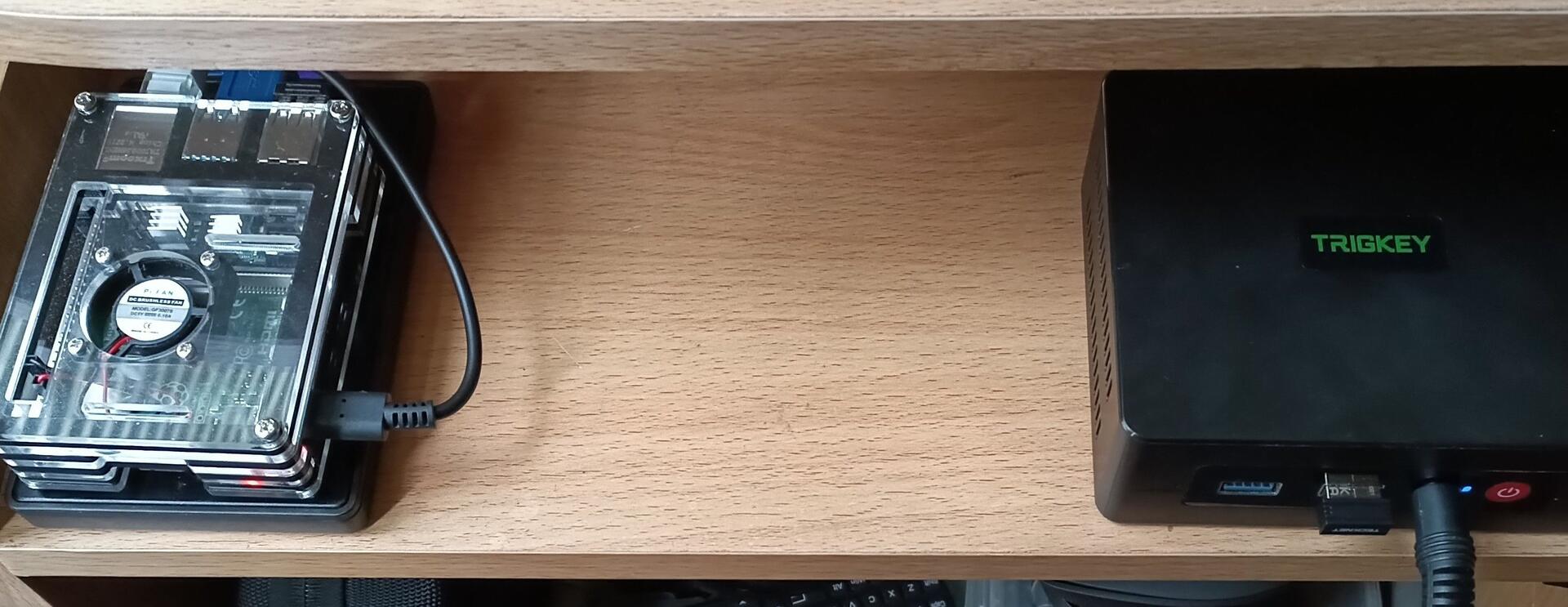
Hello! Are there any tutorials available online to help set up and run nodes? Thks!