
Democrats Push a Resolution To Condemn the Spread of Hurricane “Disinformation”
Former State Department Official Laments Social Media Won’t Play Censor for the Feds Anymore
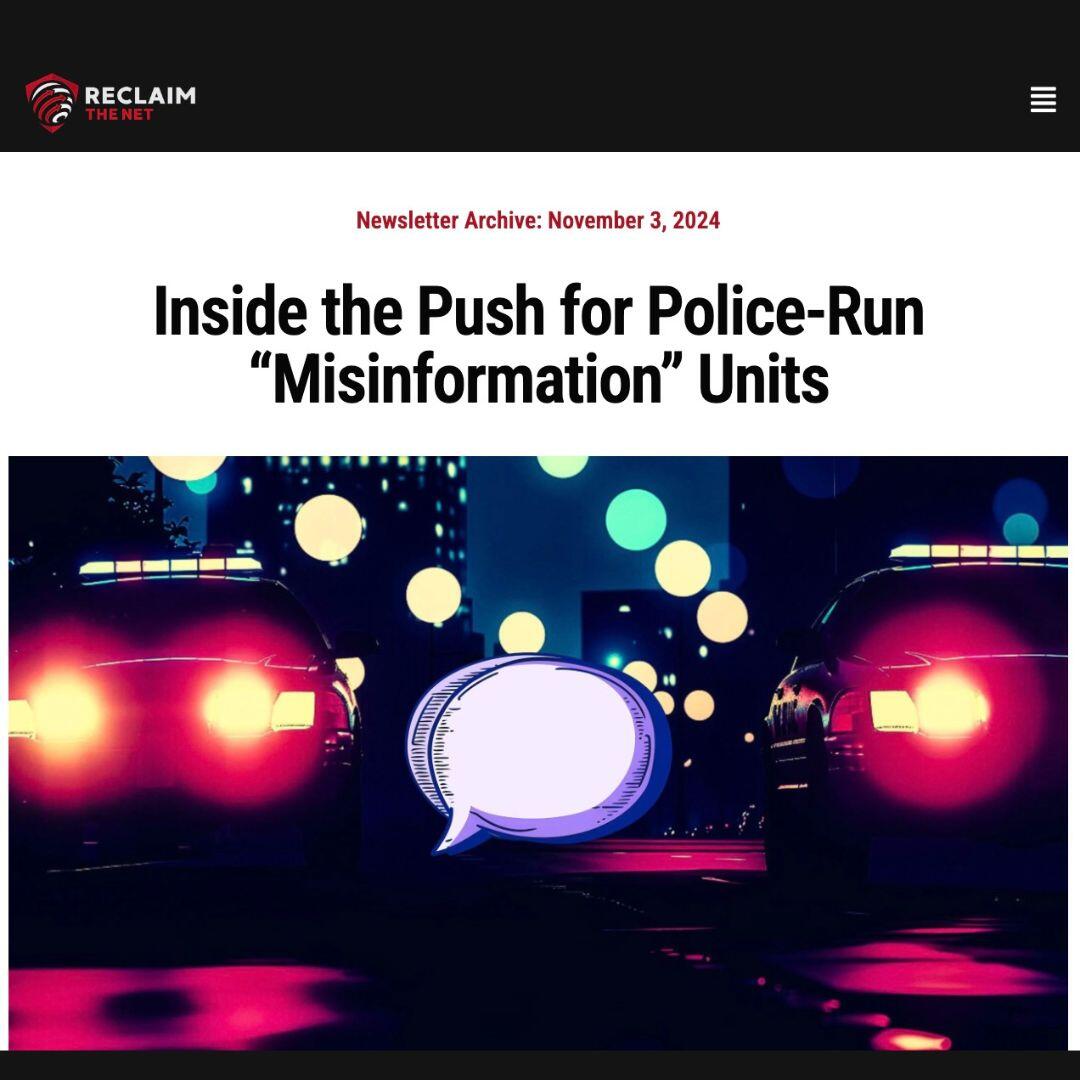
Lexipol, a private consulting giant advising over 8,000 U.S. law enforcement agencies, is proposing something new and controversial: a “Misinformation/Disinformation Unit” embedded in police departments. Think about that.
Lexipol warned police departments to get ready for the “battle” against misinformation. Their recommendation? Build units to “fact-check” claims, “counter” narratives, and “collaborate” with Big Tech and “civil society” groups to monitor harmful content in real time. In other words, create police-backed mechanisms for controlling public discourse.
What’s alarming is Lexipol’s reach: over 8,000 agencies in 35 states rely on its policies. If even a fraction adopt this, it could mean a vast, semi-coordinated system for policing information, not crime. And this, right when Congress is debating the boundaries of government-tech collusion.
The justification? Fear. Lexipol suggests foreign threats—Russia, China, Iran—are behind dangerous disinformation that supposedly fuels public hostility against police. But is this really about protecting officers, or about controlling the conversation?
When private consultants urge law enforcement to wade into information control, we should all be paying attention.
Gab Faces Off Against Germany’s Censorship Push, US DOJ Silent
https://reclaimthenet.org/gab-faces-off-against-germanys-censorship-push-us-doj-silent
Civil Liberties Groups Push DOJ to Probe UK-US Collusion in Online Censorship
A Veteran’s Fight: Army Major Sues Energy Firm for Punishment Over Tweets
https://reclaimthenet.org/a-veterans-fight-army-major-sues-energy-firm-for-punishment-over-tweets
NYT and Washington Post Push YouTube To Censor Election “Misinformation,” Lament Podcast Censorship Challenges
https://reclaimthenet.org/nyt-washington-post-push-youtube-to-crack-down-on-election-misinformation
Unmasking a Social Media Crackdown: NCLA Seeks Full Discovery on Government Censorship Tactics
Home Is the New Prison: UK’s High-Tech Digital Prison Plans Should Spark Privacy Fears For Everyone
https://reclaimthenet.org/uks-high-tech-digital-prison-plans-should-spark-privacy-fears-for-everyone
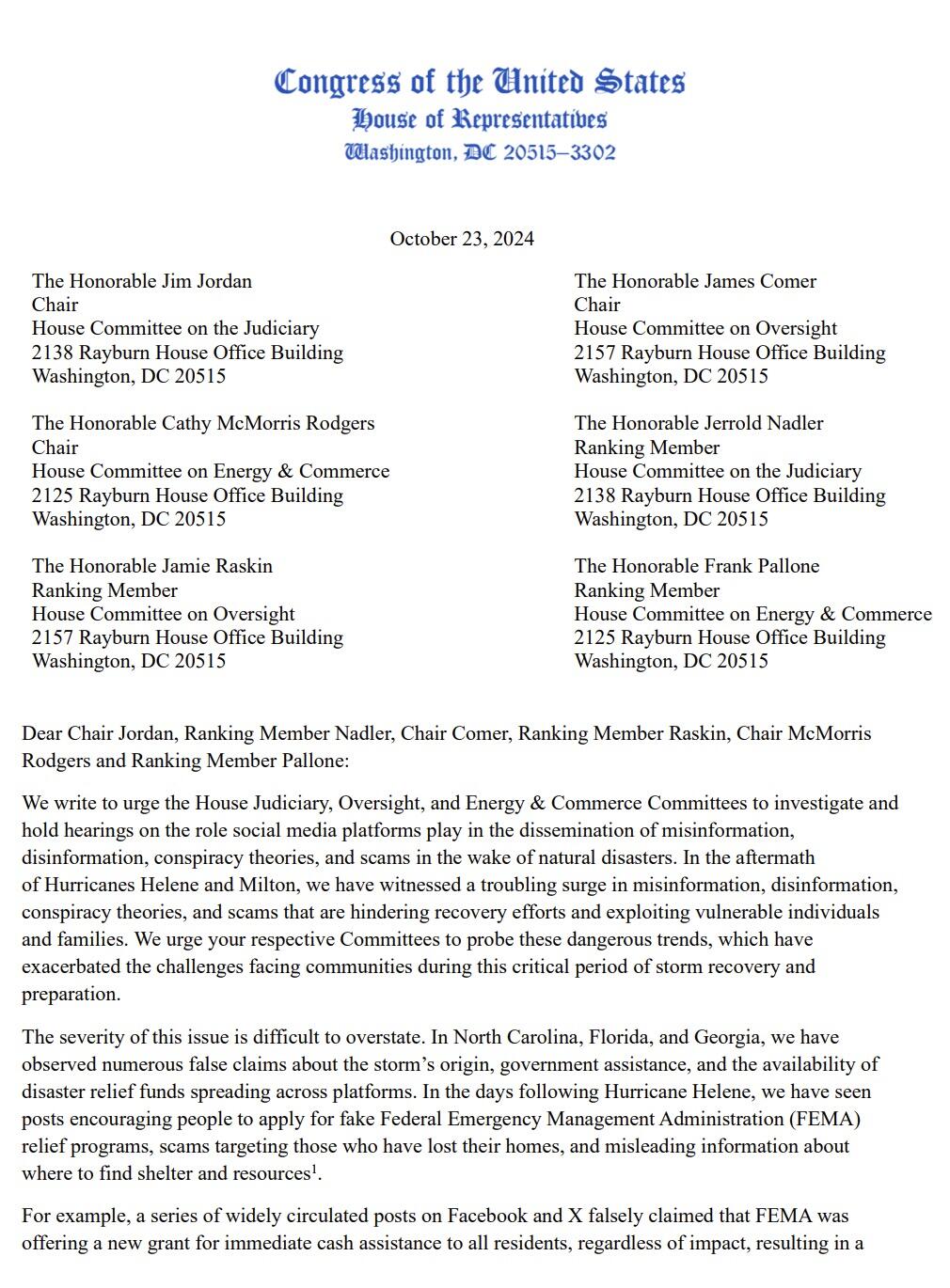
Democrats have fired a new round in the ongoing push to control social media speech, now citing “misinformation” tied to Hurricane Helene and Milton relief efforts in the Southeast. Seven members of Congress are demanding investigations by the House Judiciary, Oversight, and Energy & Commerce Committees into what they allege was an online spread of “misinformation, disinformation, conspiracy theories, and scams” during these disasters.
Platforms like X, Meta, TikTok, and Discord are accused of failing to curb misleading content that supposedly hindered rescue and recovery. This move follows a familiar script – the same censorship calls we saw for pandemic “misinformation,” with emphasis on “algorithmic amplification” and the alleged harm of unregulated info streams.
The lawmakers’ letter is clear: they want hearings on platforms’ “inadequate solutions” to control content and protect “public trust.”
Funny, though, how this “concern” doesn’t extend to investigating how censorship was weaponized around COVID, elections, and more. Instead of self-reflection on past suppression, this new letter digs in harder – pushing for an even tighter grip on speech in the name of “public safety.”
Ireland is about to implement its biggest attack on free speech in decades.
The country is pushing into new regulatory territory with its Online Safety Code, starting in November and in full swing by mid-2025. This Code, led by Ireland’s media regulator, Coimisiún na Meán, will effectively let Ireland control what’s allowed across Europe’s major online platforms headquartered on its soil.
The rules ban a vast range of content deemed "harmful"—even if it’s not technically illegal. And yes, that includes a bold step into mandatory age verification/digital ID on some sites. Think Facebook, YouTube, Instagram, TikTok, and others. Comply or pay up: fines hit at $21.6 million or 10% of global revenue.
Ireland’s approach here sidesteps the usual democratic process—parliament approval isn’t required. Critics argue this is regulatory overreach without a democratic mandate. And it could get murkier: disinformation isn’t currently part of the "harmful content" umbrella, but regulators aren’t ruling out adding it.
Thanks to the EU’s Audiovisual Media Services Directive, Ireland’s regulations have a ripple effect on online content across all 27 EU countries. If the precedent sticks, digital oversight in the EU could shift dramatically, with Ireland at the wheel.

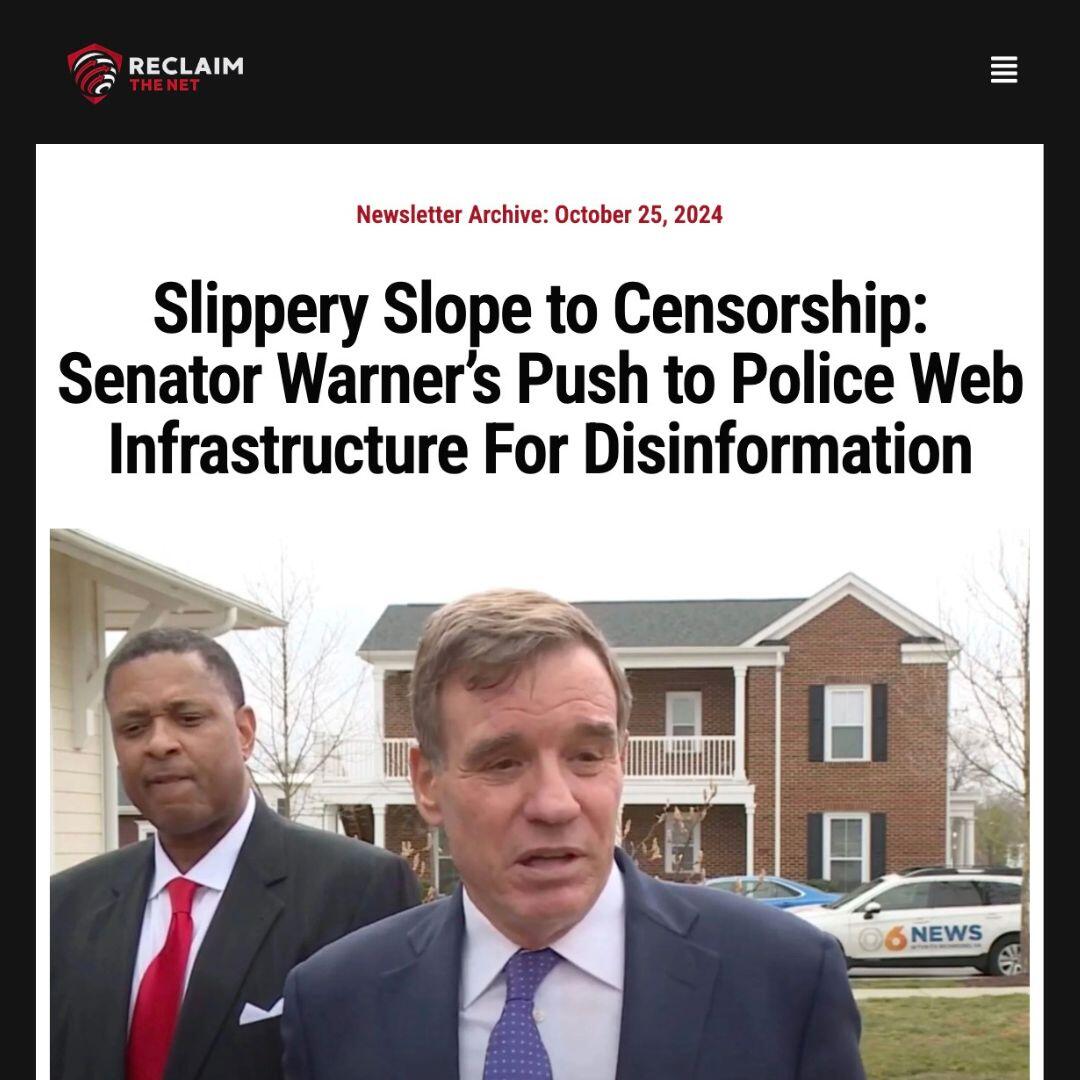
Senator Mark Warner's latest mission: policing the internet at the infrastructure level. Forget social media crackdowns—this time, he’s targeting domain registrars like Cloudflare, GoDaddy, and Verisign, the literal backbone of the web, for their alleged role in facilitating “disinformation.”
Warner’s angle here is unprecedented in its ambition, less about “protecting democracy” and more about introducing a new lever of control over the entire online ecosystem.
The DOJ may be right that Russian propaganda outfits have posed as news sources and even mimicked government sites. But Warner’s response? Shift the blame onto registrars, because, hey, someone has to take the fall. Suddenly, buying a domain anonymously or using cryptocurrency marks you as a suspect. In Warner’s world, online privacy is less a right and more a “gateway drug” to chaos.
His “oversight” opens the door for government-backed gatekeeping. Today, they flag anonymity as suspicious. Tomorrow? They’ll be cracking down on political dissenters or independent media, branding privacy itself as subversive.
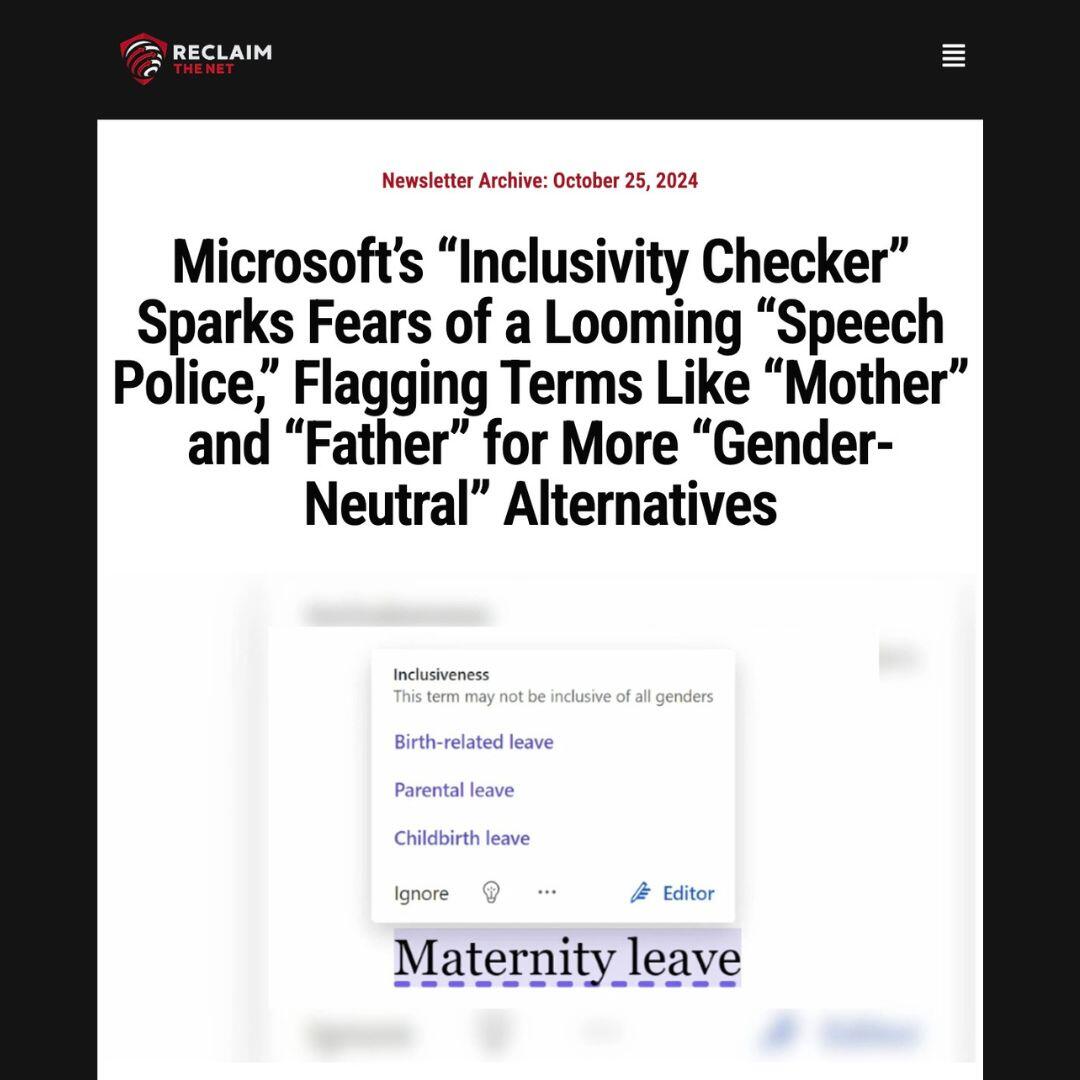
Microsoft Word has evolved far beyond grammar checks. Meet the “Inclusivity Checker”—an update that turns your writing into a minefield of suggested corrections. Now, instead of “mother” and “father,” we get “birth-related leave” and “child-bonding leave," all courtesy of Microsoft’s algorithmic activism.
The idea is that these changes will support “all genders,” but it’s hard not to see this as an effort to erase basic, universally understood language. Writers get their “problematic” words underlined in blue, and alternatives pop up to align with the latest inclusivity dogmas. You can opt-out…for now. But the fact that this tech even exists in Word—and over in Google Docs, where “housewife” becomes “stay-at-home spouse”—feels like a digital-age attempt to rewrite culture itself.
Who decides what’s “problematic” and what’s not? We’re inching closer to the type of language policing predicted in dystopian fiction, and it’s fair to wonder: How much longer until opt-out isn’t even an option?
NY Times Criticizes Encryption, Citing “Disinformation Experts” Struggling to Access Private Messages
UK Government Demands Regulator Create Social Media Overhaul to Curb “Misinformation,” Plans New Censorship Committee by 2025
https://reclaimthenet.org/uk-regulator-demands-social-media-overhaul-to-curb-misinformation
“Black Ops” – How a US-UK Censorship Group Targeted RFK Jr. To Stifle Dissent
https://reclaimthenet.org/black-ops-how-a-us-uk-censorship-group-targeted-rfk-jr-to-stifle-dissent
Tracking Health or Tracking You? The UK’s Expanding Health Surveillance
https://reclaimthenet.org/tracking-health-or-tracking-you-the-uks-expanding-health-surveillance
Meta Brings Back Face Scanning
Session’s Escape Plan: How a Visit From Police Pushed It To Leave the Country
FCC Commissioner Slams Biden-Harris Internet Plan Facebook Censorship
https://reclaimthenet.org/fcc-commissioner-slams-biden-harris-internet-plan-facebook-censorship