
Veio e foi embora e eu nunca vi essa opção.
"Professor: If You Read To Your Kids, You’re ‘Unfairly Disadvantaging’ Others"
Professor of Philosophy: “I don’t think parents reading their children bedtime stories should constantly have in their minds the way that they are unfairly disadvantaging other people’s children, but I think they should have that thought occasionally,”
But he reveals himself, it's only a perverse anticapitalist mindset: “we could prevent elite private schooling without any real hit to elite family relationships.”
I truly understand a professor who don't have to care about the real world saying such nonsense. I'm a professor myself, I know what I'm talking about.
But I can't swallow people doubting themselves because of pompous titles. This is how the reporter finishes her article.
"In general, I tend to believe that focusing on improving things for the less fortunate is a better way to advance our society than purposely making things worse for those who have more, but what do I know? After all, it’s not like I’m a philosopher or anything."
Come on, you see something is wrong and you doubt yourself instead of questioning it? This is just an anecdote that shows why traditional media is so doomed.

Adding such a closing message would be a hard fork consensus change?

We just launched a program for people interested in contributing to open source Bitcoin projects as a way of living, maybe you'll be interested: https://vinteum.org/bdl/

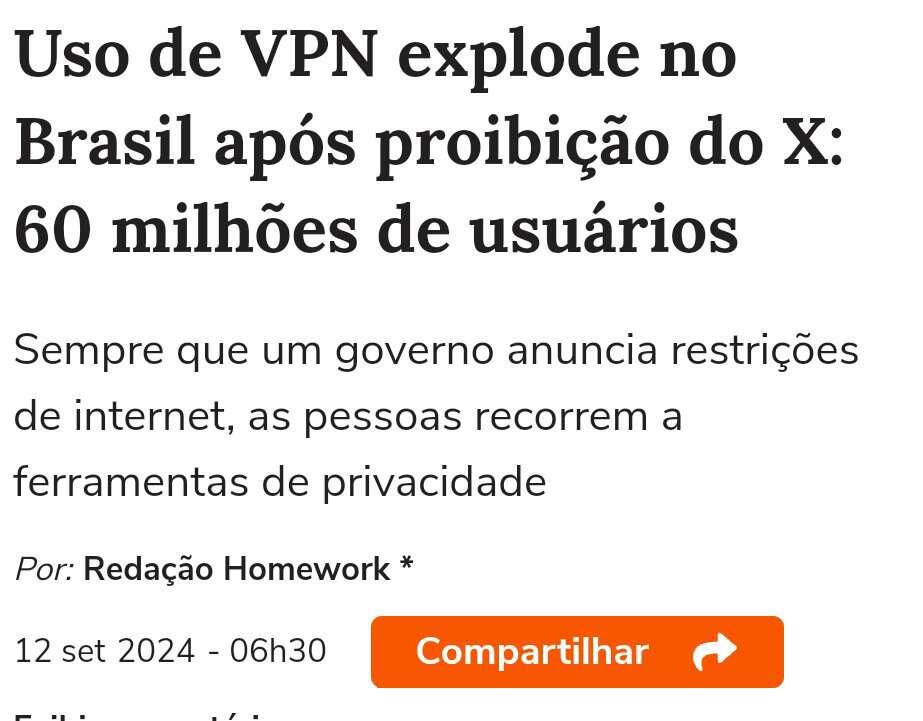
Será que esse número está correto? Isso aí dá quase 30% da população brasileira.
Se for isso mesmo, qualquer coisa que o governo quiser censurar só vai ter efeito enquanto as empresas que controlam os backends consentirem.
E do jeito que vai, eu só vejo um caminho: todas as empresas de tecnologia operando fora do Brasil.
Bitcoin is a debit card?
That's how a dear colleague is trying to argue against my position that Bitcoin can become money someday.
A debit card is just a messaging system, a kind of voucher that is redeemable for the underlying currency, which is Reais or Dollars, or any modern fiat.
There existed this kind of stuff during the gold standard (not electronic, but in actual paper and in balance sheets) and it is estimated that it was more prevalent than barter and gold itself, coins being reserved for transactions with strangers, and bank notes for distant fairs and for large transactions.
I highly disagree that Bitcoin is a debit card, but I'm curious about the rationale behind this position. Bitcoin is a messaging system in its core, just like a debit or credit card system, indeed. But it is not debit from someone else like in a debit (or credit) card system, it is the asset itself and the underlying "physical" phenomenon associated with this asset is being able to send new messages in this system.
Yes, it looks like fiat in the sense it's not redeemable for an underlying commodity, but it is intrinsically different from fiat for it is an entitlement for sending messages in a real system that (some) people decided (in the market) to value.
Lawrence White, in Better Money, argues that the difference in nature between fiat and Bitcoin is government coercion. I understand there's more to it.
You may argue that Bitcoin is not money since it is not widely accepted as a medium of exchange. I'll agree with that. But for something to become money, it has to not be money before (like gold, silver, and fiat). Also, there's no accepted theory for how something becomes money.
So, we may be witnessing the monetization of this thing (or not, who knows?). I'm betting in the monetization of this thing for more than economic reasons. I may be wrong, time will tell.
---
You can see the discussion on LinkedIn: https://www.linkedin.com/posts/edilmedeiros_new-paper-coming-out-soon-this-time-an-activity-7239438107782074368-4Noi
Hoje teve live no Bitcoinheiros em que falamos mais sobre o Bitcoin Dev Launchpad: https://www.youtube.com/watch?v=kgOnckZ7-Ok

Vejo que tu link ou uma carteira lightning também 👏
A UX de todos os apps é meio complicada, mas parei no nostr:npub12vkcxr0luzwp8e673v29eqjhrr7p9vqq8asav85swaepclllj09sylpugg que parece ser o mais bem acabado.
Fico na dúvida se essa arquitetura descentralizada onde os relays não se falam algum dia vai permitir criar uma experiência mais transparente e unificada, tipo um X ou Instagram.

Can We Rediscover Better Money?
Coming soon.



Hoje a nostr:npub13s0kzccx2g7pnwwt5mjuwttl3m74t9qxyr6q7f9978e98tyjrw3qvx5g70 lança o programa de capacitação para devs brasileiros em projetos open source de Bitcoin que estamos construindo juntos.
Muito feliz de ver esse projeto avançando e ansioso para contribuir ainda mais com o ecossistema Bitcoin no Brasil.
nostr:note159srdh9lywdyjuvlu6gm9mgh56fef4wdt89zxvyxl8nnr94fln3sglq4sh

Welcome and enjoy the ride.

Mais provável que vão empurrar com pequenas reformas por anos a fio, com algumas mudanças maiores a cada 15 anos mais ou menos. Vai ser um processo longo e gradual de carestia.
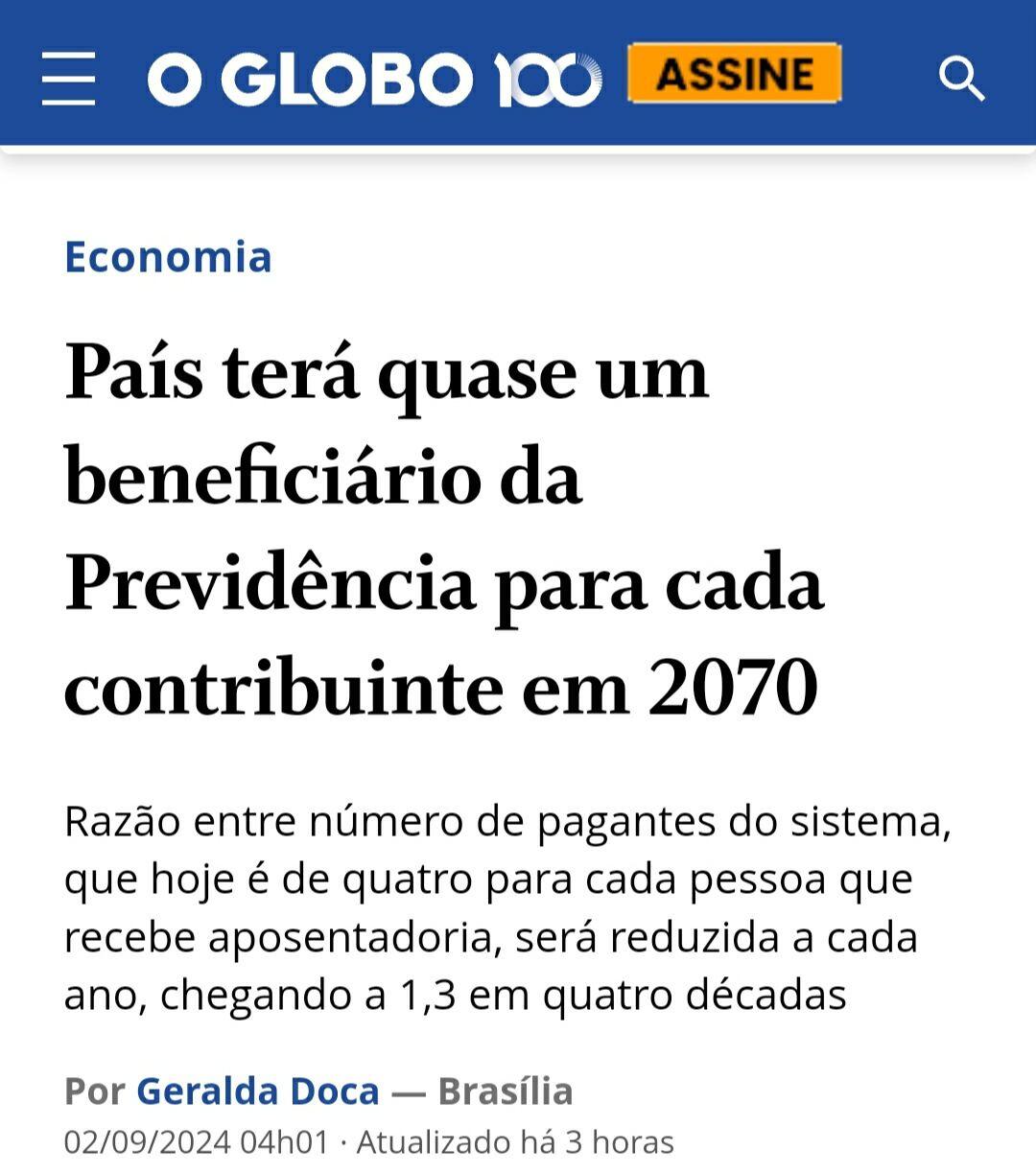
Eu com 40 anos poupando que nem louco e um monte de gente me perguntando se aposentadoria de servidor público não é boa… Meus colegas realmente não entenderam que não vai ter aposentadoria pra ninguém da nossa geração.

What a shame, doesn't? I leave for a walk twice a week without my cell phone, exactly to be able to appreciate the surroundings.

I recently finished reading Better Money: Gold, Fiat, or Bitcoin?, by Lawrence White. While I’m preparing a proper academic review, maybe someone will appreciate some of the book’s main points.
- Strong historical material explaining different implementations of money.
- Quite basic supply-and-demand methodology for comparing gold, fiat, and Bitcoin. Yet, the common ground makes for a conscientious analysis, especially for pointing that Bitcoin’s purchasing power volatility is inherent to the system from an economic perspective.
Take aways:
1. “A gold standard has the advantage that the global stock supply curve for monetary gold is non-vertical in the short run and nearly horizontal in the long run, providing responses in the quantity that stabilize the purchasing power of gold, but the disadvantage that the supply curve can occasionally shift.”
2. “A fiat standard has the potential advantage that its supply can be deliberately managed to stabilize the price level both in the short run and in the long run, but the disadvantage that has seldom been managed that way in practice, due to the incentives that accompany government control over the quantity of money.”
3. “A Bitcoin standard has the advantage that the Bitcoin supply curve does not shift, but the disadvantage that the supply curve is vertical in both the short run and the long run, implying unstable purchasing power in the face of money demand variations.”
White is skeptical about a Bitcoin standard because of purchasing power volatility. He argues that people preferred stable monies over time and that the costs associated are high.
“My prediction is that BTC is unlikely to become a commonly used medium of exchange for the same reason, namely that its purchasing-power risk and transaction costs make it unattractive to use as a medium of exchange.”
My main critique: fiat money was created by governments (White explains the mechanics of this movement) and they have a higher cost over society in the form of inflation (as he argues with historical evidence). It was done because of political reasons, not economical. I would not overlook people coming to accept higher purchasing power volatility of an eventual Bitcoin standard if governments stay in the last century’s track of increasingly assault over the institution of private property.
Does it worth reading?
Definitely, it will expand your knowledge about monetary systems and understand some fair critiques about Bitcoin.