
Getting Our Priorities Straight
by David Brin (1997)
A few days ago John Perry Barlow, a cofounder of the Electronic Frontier Foundation published across the Internet a torrid manifesto called “A Declaration of the Independence Cyberspace”—his response to the passage of the Telecommunications Act of 1996. With typically entertaining flair, he portrayed the issue in melodramatic terms, calling on all liberty-loving netizens to man the ramparts against dinosaurian governments preparing to trample electronic freedom. Among the Orwellian threats he decried was the V-chip, which enables parents to program their TVs, setting maximum acceptable thresholds to sexual or violent program content.
Getting past the theater and drama, isn’t it silly to see the V-chip as anything more than a convenient mechanism for TV owners to exercise market decisions? To portray it as Big Brother mind control patronizes the American public—and especially the countless kids who will inevitably use great skill to bypass the V-chip, anyway.
Other offensive aspects to the Telecommunications Act were as perniciously ominous as its opponents claimed. And yet the Act faded from our agenda as courts overruled parts of it, other portions were superseded in legislation, and large fractions proved impotent or unenforceable in the face of ever-changing technology. In retrospect, it’s hard to recall what all the fuss was about. The sole moment truly worth remembering was the wonderfully vivid “A Declaration of the Independence of Cyberspace,” which retains a certain timelessness as art.
Elsewhere I proclaim my respectful affection for Barlow and his peers, who are among the most creative, eccentric, and dynamic members of this civilization, both wired and unwired. Indeed, their basic instincts are correct—that the Net represents a fundamental enhancement of human freedom, with a transforming potential that is worth defending. Alas, I
would find their righteous oratory more convincing if they began by accepting a couple of basic facts—that the United States and Western civilization in general are right now pretty damn free, at least compared to any human society ever known, and that our institutions seem favorably disposed to the growth and promulgation of this new commons called the Net. Indeed, this new tool for independence by sovereign individuals is as emblematic of our new culture as Barlow himself, proudly rambunctious and almost completely out of control. Understanding why the Net came about and fit so well into our already existing culture is an essential prerequisite to defending it.
Of course, Barlow and others (such as the so-called cypherpunks) are behaving as they were trained to do by several generations of American propaganda. Go through nearly all of the most popular films and novels produced in the last forty years. You’ll find one unifying theme, one common message, pervading nearly every medium: that theme is suspicion of authority. In fact, you’d be hard pressed to find more than half a dozen first-rank films in which even one large corporate or government entity is depicted doing its job honestly or well. More generally, public institutions are portrayed as flat-out evil, since this makes it easier for Hollywood directors to keep their protagonists in jeopardy for ninety minutes.
Make no mistake, I generally approve of this mythos (suspicion of authority), in contrast to the We’re-Great/Don’t-Question-the-Elders message preached by past cultures. In The Transparent Society (1998), I discuss how a special confluence of factors antiauthority indoctrination, copious education, and the delightful endorphin high of self-righteousness combine to foster the world’s first effective social immune system against tyranny and error. This new system, unleashing millions of bright and suspicious young minds to aim eager criticism at any elite, may be our one hope to thrive in the long term.
Nevertheless, it can grow a bit tedious when so few of these irate immune “cells” pause to notice or acknowledge how they suckled their toward authority from an early age. The ultimate irony of having been trained to be rebels and having their denunciations help prove the health of the overall system they denounce seems to escape them. This failure of perspective is especially telling in the way so many cypherpunks focus their ire at only one dangerous center of authority—government—while excusing or ignoring other ominous concentrations of power. True, any elite that has such a fantastic array of guns and prisons has to merit especially close scrutiny. (Even more would be better!)
Still, in the West it is not government but megacommercial interests that presently threaten to fence off vast realms of cyberspace. I’d feel better if the Internet’s self-appointed defenders felt obliged to guard all sections of the frontier and not just those facing their favorite and obvious foe.
Elsewhere, things are different. Witness a news item that lay buried deep below lurid stories about the Telecommunications Act of 1996 and Barlow’s riveting manifesto for Net independence:
*** GOVERNMENT ORDERS NET USERS TO REGISTER WITH POLICE. ***
Which government? What’s hidden in the asterisks? Where did the story originate? Here’s a clue: the policy affects over a billion people, far across the ocean. Nor will those people be the only losers if this policy is effectively carried out. It could manifest danger to our very lives.
In the West we have learned the hard way that criticism is the only known antidote to error (and the Net provides criticism a-plenty!). But throughout human history, nearly all ruling cliques cared much more about their own power than about the error-detecting benefits of free speech. Let’s put it in terms of memes. Our upstart meme of openness will win if it is allowed to infect the world’s populace. So the leaders of closed societies rationalize that they must “protect” their people against this infection. In contrast, we fully-infected carriers of the openness meme are driven to push it into closed societies, whatever their self-declared guardians say about it.
But there is a more powerful reason to oppose this knee-jerk, predictable measure on the part of an archaic old guard. That reason is the growing danger of war—yes, old-fashioned physical war. Dictatorships are notorious for making fantastic miscalculations and strategic blunders (witness the days leading to World War I or the German-Soviet non-aggression treaty). This is because ruling cliques like to operate in near isolation, quashing any voice that might point out flaws in their enthusiastic plans. In other words, suppression of criticism has always been a principal condition leading to armed conflict.
This will be much less a danger when all countries are fully enmeshed in the Net. Whether the resulting system resembles what we call “democracy” or has other, more Eastern flavors, a fully and openly wired society will acquire the sort of transparency that makes sudden, impulsive aggression much less likely and far more accountable.
Nor will the CIA be able to talk us into unneeded defense buildups, as they did during much of the cold war, if they lack a monopoly on information about foreign military capabilities. Rather, we’d all have access to the data on which to base informed, self-interested decisions. The important thing is to get our priorities right. Let’s worry about getting the world wired first, preventing war, and promulgating the cantankerous habits of mutual accountability so that they spread throughout a maturing Terran Civilization.
In contrast, it’s really rather tedious to hear all this moaning and complaining that the sky is falling because (for instance) parents may get to program filters on their home televisions instead of having to monitor the damned things in person, day and night.
How to Preserve Freedom in an Uncertain World
Let me conclude with a little parable, borrowed from The Transparent Society. This ancient Greek myth tells of a farmer, Akademos, who once did a favor for the sun god. In return, the mortal was granted a garden wherein he could say anything he wished—even criticism of the mighty Olympians—without fear of retribution.
I have often mulled over that little story, wondering how Akademos could ever really trust Apollo’s promise. After all, the storied Greek deities were notoriously mercurial, petty, and vengeful. They could never be relied on to keep their word, especially if provoked by censuring mortals. In other words, they were a lot like human leaders.
I concluded there were only two ways Akademos could truly be protected. First, Apollo might set up impenetrable walls around the glade,dense that even keen-eyed Hermes could not peer through or listen. Alas, the garden wouldn’t be very pleasant after that, and Akademos would have few visitors to talk to.
The alternative was to empower Akademos so that somehow he could enforce the gods’ promise. Some equalizing factor must make them keep their word, even when the mortal and his friends started telling bad Zeus jokes.
That equalizing factor could only be knowledge.
The roots of this particular legend permeate Western thought. In the days of Pericles, free citizens of Athens used to gather at the garden of Akademos, where individuals would freely debate issues of the day. That liberty lasted while Pericles was around to remind them of the contract they had made—a pact of openness.
Alas, it was a new and difficult concept. This miracle did not long outlive the great democrat. Outspoken Socrates paid a stiff price for practicing candor in the Akademos, whereon his student, Plato, took paradoxical revenge by writing stern denunciations of openness, calling instead for strict government by an “enlightened” elite. Plato’s advice served to justify countless tyrants during the following two and a half millennia, remaining influential almost to this generation.
But now, at last, the vision of Pericles is getting another trial run. Today’s “academy” extends far beyond the sacred confines of earth’s thousand major universities. Throughout the neo-West—and to some extent the rest of the world—people have begun to accept the daring notion that ideas are not in themselves toxic, at least not to those (from all social classes) who cultivate brave minds. Free speech is increasingly seen as the best font of criticism—the only practical and effective antidote to error. Moreover, it goes both ways. Most honorable people have little to fear if others know things about them.
Let there be no mistake: this is a hard lesson to swallow, especially since each of us (some with the best of intentions) would be a tyrant, if we could. Very little in our history has prepared us for the task ahead of living in a tribe of more than six billion equal citizens, each guided by his or her own sovereign will, loosely administered by chiefs we elect and by just rules that we made through hard negotiation among ourselves. Any other generation would have thought it an impossible ambitious—through countless ancestors sweated and strove to get us to the point where we can try.
Even among those who profess allegiance to this new hope, there is a bitter struggle over how best to protect it from the old gods of wrath, bigotry, conspiracy, and oppression—spirits who reside not on some mountain peak but in the hearts of each man or woman who tries to expand a little secular power or profit by suppressing others. Perhaps someday our descendants will be mature enough to curb these impulses by themselves. But meanwhile, a way is needed to foil the self-justified ambitions of those who would rationalize robbing freedom from the rest of us by saying that it is their right—or that it is for our own good.
According to some vigorous champions of liberty, the best means to protect our worldwide “academy” is obvious. Many “privacy champions” want to erect shields to put people on even ground with the mighty. According to this view, we must build walls to safeguard every private garden, so that freedom may thrive in each secure sanctum of the mind.
To this I can only reply that it’s been tried. And there is not a single example where a commonwealth based on that principle thrived. There is a better way—a method that is primarily responsible for this renaissance we’re living in. Accountability is a light that can shine even on the gods of authority. Whether they gather in the Olympian heights of government, amid the spuming currents of commerce, or in the Hadean shadows of criminality, they cannot harm us while pinned by its glare.
Accountability is the only defense that ever adequately protected free speech, in a garden that stands proudly with no walls.
I’m not the first to say this. Pericles, Bruno, Spinoza, Sequoia, and countless others gave openness a voice during their own dark epochs. Nor can I pretend to have offered anywhere near the scholarly eloquence that Karl Popper poured into The Open Society and Its Enemies (1950) during a period when it seemed all-too likely that our grand experiment would be destroyed, either from outside or within. During the dark early days of the cold war, Popper movingly praised those common folk who manage to transform themselves into citizens—independent, cooperative, and indomitable.
Writing about the “longing of uncounted unknown men to free themselves and their minds from the tutelage of authority and prejudice,” he posited hope in “their unwillingness to leave the entire responsibility for ruling the world to human or superhuman authority, and their willingness to share the burden of responsibility for avoidable suffering, and to work for its avoidance.”
Even when it comes to a more down-to-earth or popularized version of the same message, I am far from alone. Take for example the following extract from an article that appeared before my book went to press: With the coming of a wired, global society, the concept of openness has never been more important. It’s the linchpin that will make the new world work. In a nutshell, the key formula for the coming age is this: Open, good. Closed, bad.
Tattoo it on your forehead. Apply it to technology standards, to business strategies, to philosophies of life. It’s the winning concept for individuals, for nations, for the global community in the years ahead.
In their Wired magazine commentary, Peter Schwartz and Peter Leyden went on to contrast what the world may look like if it takes either the “closed” route or an “open” one. In the former case, nations turn inward, fragmenting into blocs. This strengthens rigidity of thought, stagnates the economy, and increases poverty and intolerance, leading to the vicious cycle of an even more closed and fragmented world. If, on the other hand, society adopts the open model, then a virtuous circle turns cultures outward, receptive to innovation and new ideas. Rising affluence leads to growing tolerance, smaller economic units, a more open society, and a more integrated world.
Synergies like this underlie the movement for openness, in stark contrast to the zero-sum approaches offered by the devil’s dichotomies that call for wretched tradeoffs between pairs of things we cannot endure without. Those who favor an open society believe we can have both liberty and efficient government, both freedom and safety. In fact, we know that those pairs will thrive or fail in unison.
This confidence extends to the way we would envision developing the character and institutions of the information age, which until now have been “deposited like sediment” rather than sapiently planned. Making an analogy to the framing of the U.S. Constitution, Jaron Lanier called for a pragmatic mutualism of competition and cooperation as we design—and then redesign—the Internet to come:
Well-meaning and brilliant people with nasty, conflicting interests somehow created a collective product that was better than any of them could have understood at the time. . . . As in Philadelphia two hundred years ago, a collective product (the Internet) has to emerge that is better than any of them, or any of us, could achieve singly.
In such negotiations it is perfectly reasonable to “trade off” particular interests, negotiating a give and take of concessions from one group to the next. That is adversarial pragmatism, a form of accountability. But it does not have to entail accepting dour dichotomies about matters of fundamental importance.
If we are all doomed to be either courteous slaves or liberated barbarians, what’s the point?
In the long run, what use is a civilization unless it gently helps us become so smart, diverse, creative, and confident that we choose—of our own free will—to be decent people?
That is the point that I wish those irate heroes, those genuine Palladins of Western freedom—John Perry Barlow and his comrades—would try to remember. In the long run, independence and interdependence come down to the same thing. Only sovereign grownups can help each other grow and stay free.
IAAMOAC!
I am a member of a civilization. Try saying it aloud sometime. It is a mantra against the modern self-doped drug of self-righteousness. Compared to anything else human beings have done, it is the best civilization ever. It’s fun. It created the Net. It’s earned your loyalty a thousand times over.
---
#cryptoanarchy #cypherpunk #freedomtech #internetfreedom #codeisfreespeech #Apolitical #nostrmanifestos #decentralization #cryptography #privacy #security #Anonymity #antistate #anarchy #agorism
//The Wire//2300Z April 4, 2025//
//ROUTINE//
//BLUF: YEMENI HOUTHIS DOWN TWO AMERICAN DRONES, CONTRIBUTING TO CONTINUED HIGH TENSIONS. ECONOMIC INSTABILITY REMAINS FOLLOWING TARIFFS ANNOUNCEMENT.//
-----BEGIN TEARLINE-----
-International Events-
United Kingdom: A 16-year-old boy was murdered after being stabbed in the neck in Huddersfield. So far, multiple attackers have been arrested in conjunction with the murder, however authorities have not identified the assailants.
Red Sea/HOA: The situation involving American targeting of the Houthis in Yemen has deteriorated following the shootdown of two American drones within the past few days. Two MQ-9 Reaper drones were shot down by the Houthis, one in Hudaydah, the other over Ma'rib.
Middle East: This afternoon the UK Maritime Trade Operations (UKMTO) center issued a maritime advisory warning of increased GPS jamming being detected in the Strait of Hormuz.
AC: This is a classic tactic used by Iranian forces routinely, either for the hijacking of vessels, or for more wartime preparations. In this case, this could be related to the recent uptick in IRGC-N forces hijacking oil tankers allegedly engaging in the smuggling of petroleum products. Iranian authorities seized two vessels attempting to illegally export diesel fuel from Iran a few days ago for these reasons. However, considering that the overall security situation in the region remains tenuous, GPS jamming could be a sign of increasing defenses against a potential conflict.
-HomeFront-
Washington D.C. - Various economic fallout continues as all sides of the issue interpret the recent tariff announcements in the context of economic stability. Most financial markets have remained volatile as fast-moving economic developments have come to light. This morning President Trump urged the FED to cut rates, but as of this afternoon Chairman Powell seems to indicate he's not interested in such, leading to more uncertainty.
-----END TEARLINE-----
Analyst Comments: Generally speaking, there are multiple viewpoints on whether the recent economic changes in the US are good or bad. Some state that the tariffs (and subsequent economic shake-up with regards to American domestic production) are a necessary hardship that will be tough at first, but will get better as more domestic production returns to the United States. Others think that while this is a noble goal, this may not be possible in some industries as companies will simply keep production overseas, and pass the costs of tariffs on to consumers, since most major companies in the modern world are monopolies. Others still don't like taxes in any form whatsoever, which is an argument that often mistakenly conflates taxing a domestic population with taxing an overseas adversary. Some people say "fair is fair", and that taxing other nations the same as they tax us is long overdue. Others agree with this idea, but point out that in the international arena, returning to a concept of fairness won't rule out hardship since most American companies outsourced everything to the third world years ago, and it will take a lot of work (and be quite costly) to start building things in America again. Even more people will point out the national security concerns of having the overwhelming majority of critical wartime supplies (such as almost all medications) being made overseas with cheap labor...an American-made Tylenol pill costing a few dollars per pill may be preferable to not having that pill at all in the event of a war.
Which perspective is correct is already being hotly debated, and the situation isn't necessarily possible to categorize as "good" or "bad". However, virtually no one is stating that economic tribulation won't be the result; the general consensus is that economic trouble will happen no matter what. The debate lies with whether or not the tariffs will result in long term hardship, or short term hardship....hard times will probably be the result in any case.
In the United Kingdom, the murder in Huddersfield has been subject to more gaslighting and manipulation in the media than usual, possibly due to the gruesome nature of the attack. For instance, the BBC reported the incident in very passive language, merely stating that "a man was found with a stab wound". Most media groups have also completely ignored the attacker, or in this case, the multiple people who have been arrested in conjunction with this murder.
Analyst: S2A1
Research: publish.obsidian.md/s2underground
//END REPORT
#Yemen #Houthi #Tariffs #News #OSINT #Intel
//The Wire//2300Z April 3, 2025//
//ROUTINE//
//BLUF: VBIED ATTACK FAILS IN AMSTERDAM. WHITE HOUSE ANNOUNCES GLOBAL RECIPROCAL TARIFF PLAN. TENSIONS IN MIDDLE EAST CONTINUE.//
-----BEGIN TEARLINE-----
-International Events-
Europe: This morning a suspected terrorist attempted to detonate a Vehicle-Borne Improvised Explosive Device (VBIED) in Amsterdam. The would-be attacker parked his vehicle centrally in Dam Square, near a group of people, before attempting to detonate the device. This attempt failed, and immolated the driver of the vehicle. Footage of the incident indicates the driver did survive his failed detonation, however his condition is unknown.
AC: Video footage of the incident very strongly indicates this was a deliberate terror attack that failed. The driver of the vehicle chose the same square in which 5x people were stabbed by a terrorist a week ago. When he attempted to detonate the device, his detonator failed and burned rather than exploding, as is an extremely common occurrence among crudely constructed IEDs.
-HomeFront-
Washington D.C. - The White House unveiled their new global tariff plan, which has since resulted in much consternation on the international stage. The tariff plan is allegedly reciprocal, with the US planning to tax other nations the same as they tax the United States. While the mathematical process to determine each figure is more complicated than that, this is the general idea. However, in most cases the tariff's aren't reciprocal, with the United States still not taxing some nations at the level that they themselves tax the United States. The White House released several graphical charts indicating what nations will be taxed at which rate, leading most world leaders to make various statements of condemnation regarding the tariffs that affect them.
Virginia: The USS IWO JIMA (LHD-7) departed port Norfolk yesterday evening, following the conclusion of a large exercise last week.
-----END TEARLINE-----
Analyst Comments: It is unknown if a Marine Expeditionary Unit (MEU) is embarked on the Iwo Jima, or if this is more of a standard positioning movement to the shipyard for refit after her recent exercise. The Iwo Jima should be in her Advanced Phase training for deployment right now, but the timetables for various certifications could have been accelerated following the sharp increase in wartime preparations throughout the Middle East.
Regarding the trade tariffs, the biggest international impacts will be felt by nations such as China, which is potentially facing a 34% tax increase, on top of the 20% Chinese companies already pay. This means that most goods from China will be subject to a 54% import tax if the tariffs stand as is (which will probably change with negotiation over the next few weeks). Domestically, the American stock markets responded by dumping roughly $2 trillion worth of value, mostly in the form of tech companies losing substantially as most of their business models rely on overseas labor and/or logistics which are now subject to heavy tariffs.
Analyst: S2A1
Research: publish.obsidian.md/s2underground
//END REPORT//
#news #osint #intel #tariffs #Whitehouse #Amsterdam #Middleeast

Gave up around season 3. Found the characters either highly annoying or poorly written. First season is worth a watch imo, after that is rocky ground.
#Brave browser adoption of #zcash came on the 2nd of April. One day earlier and I would have thought it was a joke. #web3 

Github < Codeburg
A Declaration of the Independence of Cyberspace
by John Perry Barlow (1996)
Yesterday, that great invertebrate in the White House signed into the law the Telecommunications Act of 1996—which contains the Communications Decency Act—while Tipper Gore took digital photographs of the proceedings to be included in a book called Twenty-four Hours in Cyberspace.
I had also been asked to participate in the creation of this book by writing something appropriate to the moment. Given the atrocity that this legislation
would seek to inflict on the Net, I decided it was as good a time as any to dump some tea in the virtual harbor.
After all, the Act, passed in the Senate with only five dissenting votes, makes it unlawful and punishable by a $250,000 to say shit online. Or for that matter, to say any of the other seven dirty words prohibited in broadcast media. Or to discuss abortion openly. Or to talk about any bodily function in any but the most clinical terms.
It attempts to place more restrictive constraints on the conversation in cyber-space than presently exist in the Senate cafeteria, where I have dined and heard colorful indecencies spoken by United States senators on every occasion I did.
This bill was enacted on us by people who haven’t the slightest idea who we are or where our conversation is being conducted. It is, as my good friend and Wired editor Louis Rossetto put it, as though “the illiterate could tell you what to read.”
Well, fuck them.
Or more to the point, let us now take our leave of them. They have declared war on cyberspace. Let us show them how cunning, baffling, and powerful we can be in our own defense.
I have written something (with characteristic grandiosity) that I hope will become one of many means to this end. If you find it useful, I hope you will pass it on as widely as possible. You can leave my name off it if you like because I don’t care about the credit. I really don’t.
But I do hope this cry will echo across cyberspace, changing and growing and self-replicating, until it becomes a great shout equal to the idiocy they have just inflicted on us. I give you . . .
A Declaration of the Independence of Cyberspace
Governments of the Industrial World, you weary giants of flesh and steel, I come from Cyberspace, the new home of Mind. On behalf of the
future, I ask you of the past to leave us alone. You are not welcome among us. You have no sovereignty where we gather.
We have no elected government, nor are we likely to have one, so I address you with no greater authority than that with which liberty itself
always speaks. I declare the global social space we are building to be naturally independent of the tyrannies you seek to impose on us. You have no moral right to rule us, nor do you possess any methods of enforce-
ment we have true reason to fear.
Governments derive their just powers from the consent of the governed. You have neither solicited nor received ours. We did not invite you. You do not know us, nor do you know our world. Cyberspace does
not lie within your borders. Do not think that you can build it, as though it were a public construction project. You cannot. It is an act of nature,
and it grows itself through our collective actions.
You have not engaged in our great and gathering conversation, nor did you create the wealth of our marketplaces. You do not know our culture, our ethics, or the unwritten codes that already provide our society more order than could be obtained by any of your impositions. You claim there are problems among us that you need to solve. You use this claim as an excuse to invade our precincts. Many of these prob-
lems don’t exist. Where there are real conflicts, where there are wrongs, we will identify them and address them by our means. We are forming our own Social Contract. This governance will arise according to the
conditions of our world, not yours. Our world is different.
Cyberspace consists of transactions, relationships, and thought itself, arrayed like a standing wave in the web of our communications. Ours is a world that is both everywhere and nowhere, but it is not where bodies
live.
We are creating a world that all may enter without privilege or prejudice accorded by race, economic power, military force, or station of birth.
We are creating a world where anyone, anywhere may express his or her beliefs, no matter how singular, without fear of being coerced into silence or conformity.
Your legal concepts of property, expression, identity, movement, and context do not apply to us. They are based on matter. There is no matter here.
Our identities have no bodies, so, unlike you, we cannot obtain order by physical coercion. We believe that from ethics, enlightened self-interest, and the commonweal, our governance will emerge. Our identities may be distributed across many of your jurisdictions. The only law that all our
constituent cultures would generally recognize is the Golden Rule. We hope we will be able to build our particular solutions on that basis. But
we cannot accept the solutions you are attempting to impose. In the United States, you have today created a law, the Telecommunications [Act of 1996], which repudiates your own Constitution and insults the dreams of Jefferson, Washington, Mill, Madison, Tocqueville, and Brandeis.
These dreams must now be born anew in us. You are terrified of your own children, since they are natives in a world where you will always be immigrants. Because you fear them, you entrust your bureaucracies with the parental responsibilities you are too cowardly to confront yourselves. In our world, all the sentiments and expressions of humanity, from the debasing to the angelic, are parts of a seamless whole, the global conversation of bits. We cannot separate the air that chokes from the air on which wings beat.
In China, Germany, France, Russia, Singapore, Italy, and the United States, you are trying to ward off the virus of liberty by erecting guard posts at the frontiers of Cyberspace. These may keep out the contagion
for a small time, but they will not work in a world that will soon be blanketed in bit-bearing media.
Your increasingly obsolete information industries would perpetuate themselves by proposing laws, in America and elsewhere, that claim to own speech itself throughout the world. These laws would declare ideas to be another industrial product, no more noble than pig iron. In our world, whatever the human mind may create can be reproduced and distributed infinitely at no cost. The global conveyance of thought no longer requires your factories to accomplish.
These increasingly hostile and colonial measures place us in the same position as those previous lovers of freedom and self-determination who had to reject the authorities of distant, uninformed powers. We must
declare our virtual selves immune to your sovereignty, even as we continue to consent to your rule over our bodies. We will spread ourselves across the Planet so that no one can arrest our thoughts. We will create a civilization of the Mind in Cyberspace. May it be more humane and fair than the world your governments have made before.
---
#cryptoanarchy #cypherpunk #freedomtech #internetfreedom #codeisfreespeech #Apolitical #cryptography #privacy #security #Anonymity #antistate #anarchy #agorism #history #modernhistory

nostr:npub180cvv07tjdrrgpa0j7j7tmnyl2yr6yr7l8j4s3evf6u64th6gkwsyjh6w6 had a ‘Red Bull Brew’ this morning 😁🙌🏼 love it
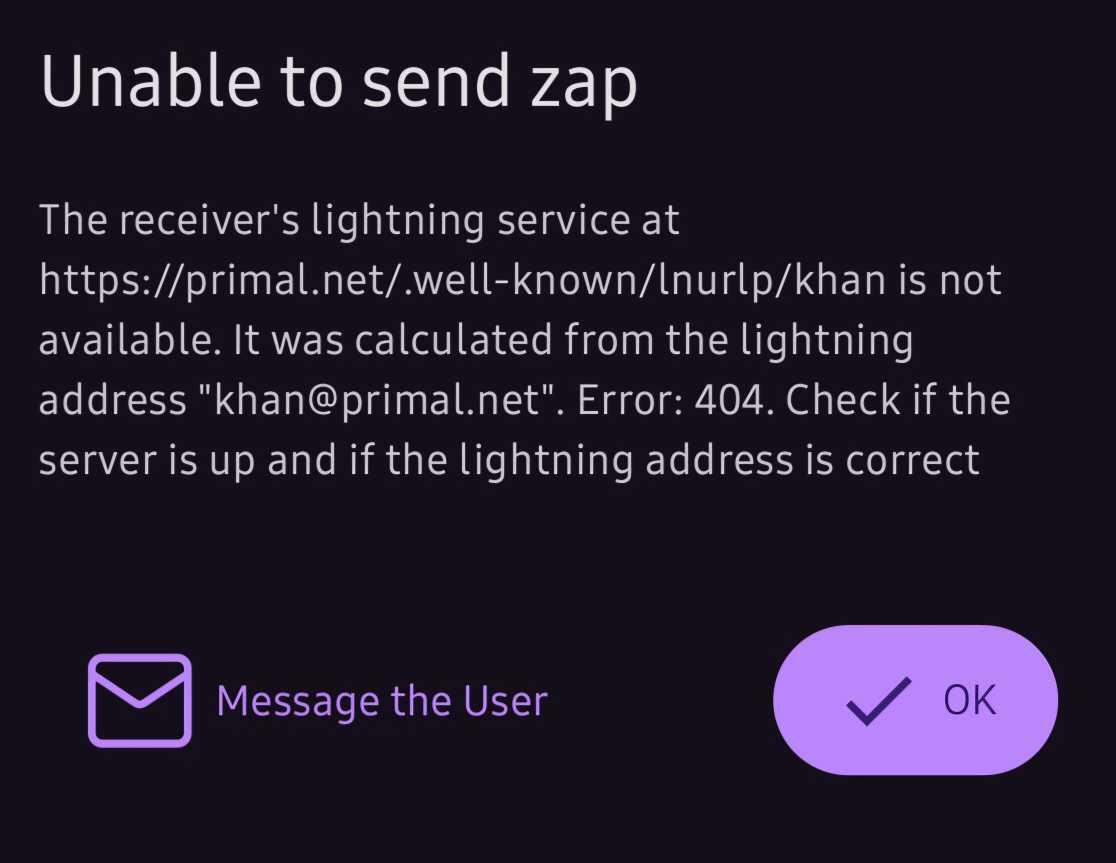
Hey there just tried to zapback but I got the a Primal server 404 error (media on primal also not fetching) just a heads up

Yes, I think "Great Satan" was the slip but there's a chance you are right
I'm sure you've already read this but just in case (and no, doesn't seem quick/easy, their docs are lacking): https://blog.zeusln.com/new-release-zeus-v0-8-1/
I noticed nostr:nprofile1qqsf960jkzjpecendet5vq8mhzlljdawvxfjktf5lhpenlw2ywmhj7qpz4mhxue69uhhyetvv9ujuerpd46hxtnfduhsgdmdne was up and running with Zeus rather swiftly so perhaps he knows of a method and can chime in next online.
I've also noticed the #asknostr tag gets gar more answers on the weekends so might be worth asking again then
If you do find a way please share :)

"An idiot admires complexity, a genius admires simplicity."
- Terry Davis, creator of TempleOS (the pinnacle of operating systems)
Thanks is for the zap nostr:nprofile1qqsrr5x87duuwvuqxx6a9ekq4m30cdpxa9wu7xv85hrydprsey6e9aspzemhxue69uhhyetvv9ujumn0wd68ytnzv9hxgqg5waehxw309aex2mrp0yhxgctdw4eju6t0qyd8wumn8ghj7argv4nx7un9wd6zumn0wd68yvfwvdhk6lxdqmn - working like a charm now but hoping to switch to Alby asap. Currently haven't figured out how to change default zap amounts on Amerthyst to below 100 sats, as soon as I have its coming back to you
Okay, now I know how to adjust the amount I can't seem to zap. Not just you, but anyone. Can still recieve though. Odd... requires further investigations. You will get zapped back or some other form of modern currency such as THOT infused bathwater

Anyone else having issues loading images from nostriches who use Primal for image hosting? #asknostr
Yes, lagging at best, won't load most of the time. Using Amethyst. When using Primal the images do appear from everyone. #AskPrimal
In 2014 while defending the #NSA after #Snowden revealed the extent of the domestic and foreign data collection programs, Dianne Feinstein made one the best Freudian Slips in history.
Timestamp 1:30
https://video.nostr.build/e49f9bbdb5bbb88636089121b985060e4c2342e77f0339463d7564bbf4c53f0b.mp4
#cryptoanarchy #cypherpunk #freedomtech #internetfreedom #codeisfreespeech #Apolitical #nostr #decentralization #cryptography #privacy #security #Anonymity #antistate #anarchy #jesus #JesusEncryptUs #datacollection
"THE OTHER 11"
The #streisandeffect on #nostr
This video was removed by YouTube. I was reminded about it by nostr:nprofile1qqsqfjg4mth7uwp307nng3z2em3ep2pxnljczzezg8j7dhf58ha7ejgprpmhxue69uhhqun9d45h2mfwwpexjmtpdshxuet5qyt8wumn8ghj7un9d3shjtnswf5k6ctv9ehx2aqpr9mhxue69uhhxetwv35hgtnwdaekvmrpwfjjucm0d5klqft7 FUCKING AWESOME NOTE about The Streisand Effect: nostr:naddr1qq7yummnw3ez63rpw3sj6stkv95kcctzd9kxjare942xsefd2d68yetfwdskuepdg4nxvetrwsk4qun0w3hkxmmv95ex5utsv36qygqyey2a4mlw8qchlfe5g39vacus4qnflevppv3yre0xm56rm7lveypsgqqqw4rs38aa3w
#cryptoanarchy #cypherpunk #freedomtech #internetfreedom #codeisfreespeech #Apolitical #decentralization #security #antistate #anarchy #agorism #pewpew #printed2A #3dprinting #gunstr and #ammostr #technology #imminentreversal #guncontrol #ripguncontrol #secondamendment #firstamendment #youcantstopthesignal #comeandtakeit #printgunsnotmoney #gunsquirter #dangerousfreedom is preferred over #peacefulslavery
https://video.nostr.build/e63db05b00e81f543d8243cc4cf094ec1a974ee7f7d3cecfef3f177131db5b58.mp4
//The Wire//2300Z April 2, 2025//
//ROUTINE//
//BLUF: MULTIPLE AMERICAN AIRCRAFT CARRIERS DEPLOY TO MIDDLE EAST, STRATEGIC DEPLOYMENTS CONTINUE.//
-----BEGIN TEARLINE-----
-International Events-
Middle East: Significant Naval deployments are either underway currently, or have been recently announced. Yesterday afternoon CENTCOM announced several operational changes throughout the AOR. The USS HARRY S. TRUMAN (CVN-75) CSG's deployment has been extended, with the TRUMAN remaining in the Middle East theatre. The USS CARL VINSON (CVN-70) has also been transferred from INDOPACOM to the CENTCOM area of responsibility, and is currently making all sail for the Middle East. On Friday, the USS NIMITZ (CVN-68) departed San Diego on her final deployment before retirement, and will be heading to the western Pacific. This morning, the USS ABRAHAM LINCOLN (CVN-72) departed port San Diego as well. Yesterday morning commercial satellite imagery confirmed that another B2 Spirit stealth bomber landed at Diego Garcia, bringing the total on the island to 6x bombers, plus their required refueling tankers.
-HomeFront-
California: Monday night a murder was reported at a Walgreens in Fresno. Local authorities state that Narciso Gallardo Fernandez entered the establishment late Monday night, and murdered one of the employees due to his grievances with large pharmaceutical companies. Fernandez was arrested at the scene, while attempting to reload his firearm in the parking lot.
-----END TEARLINE-----
Analyst Comments: The indications and warnings of an impending war in the Middle East continue to mount. The proverbial deployment of aircraft carriers before a major war appears to have arrived. In closed-source, confidential reporting, NBC has claimed that the Pentagon has authorized the deployment of one THAAD battery, and at least two Patriot batteries to augment missile defense throughout the Middle East. Though this cannot be independently confirmed yet, if this is true this would be yet another indication that wartime preparations continue, beyond what would normally be considered to be posturing or power-projection.
Domestically, various political protests are scheduled for April 5th. The "HandsOff" protests originated from organized labor unions, however most far-left groups are also planning to use the day to conduct low-level attacks, such as vandalism against Tesla vehicles. Of course, the impact that these events will have is dictated mostly by funding; events involving labor unions will obviously be much larger than smaller and uncoordinated groups of malign actors seeking to break things. Nevertheless, increased vigilance is recommended, particularly in areas where Tesla vehicles and Trump supporters have been targeted so far.
Analyst: S2A1
Research: publish.obsidian.md/s2underground
//END REPORT//
#news #osint #wire #intel #s2