#introductions been here a little while but still seeking #nomad #bitcoiners to follow! Especially interested in #elsalvador #thailand #vietnam #malaysia #huahin #danang #langkawi please comment! Say hello!




Fuck an a man, we’re all just a cycle or two away from escape!
I love being anon over here I only lurk over there
#bitcoinexpat #bitcoinnomad #travelonbitcoin #retirenobitcoin #bitcointraveler say hello! I want to follow bitcoiners that are travelers and move around the world! #El Salvador #Thailand #Vietnam #Malaysia #southeastasia I’m a tattooer and looking to slow travel soon and bounce around a bit, would love to start reaching out and meeting some folks
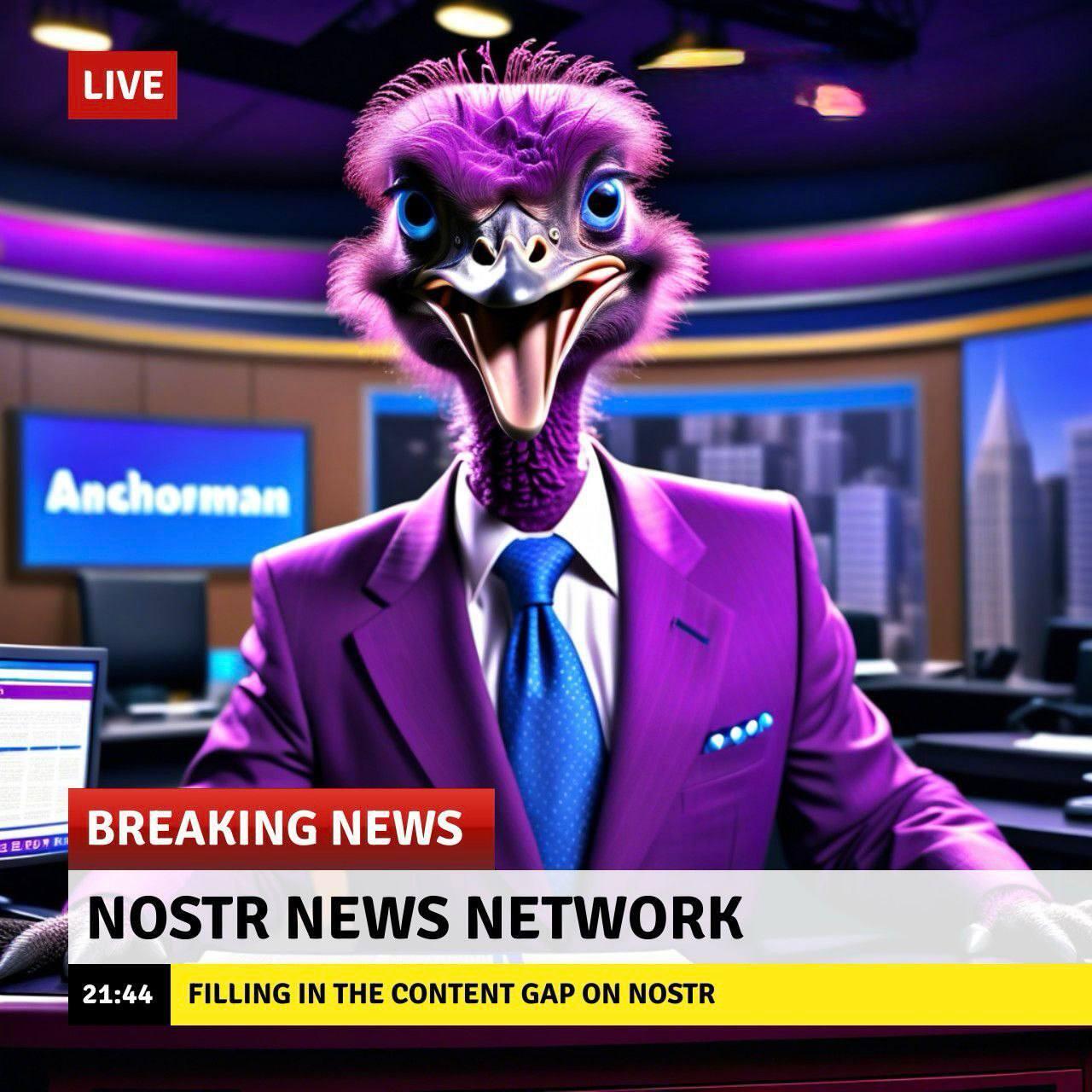
Would be a better world if bad guys started to fear good guys

Yeeeee wasssssssuppppp doe!!!! Let’s fuckin goooooo

Available for 100,000 sats ⚡️
nostr:npub1yjryjq2kdganuc69zme9agk0q4rjcnlxel3fwp3xm9z68phsxngsqd33a9 Nashville 2024 card in which the back of the record player features my Seed Cipher #801481 artwork, signed with block height! LE 500 (picture of the card for sale at the bottom of this novel)
Repost this if you knew what that Easter egg was already;)
If you didn’t, read on…
Seed Cipher #801481 is a study by Asanoha in the eternal quest to conceptualize bitcoin. If one were to say that bitcoin is the knowledge of a private key that allows an individual to transact with the balance of a seed on the Timechain, then both in essence, and in actuality, this painting is bitcoin.
The artwork presented is one key of a two-piece cipher. It is user-loaded, reusable, and is accompanied by a custom titanium seed plate, fabricated in collaboration with Stamp Seed. This seed plate is the second key.
Each glyph represents one letter of a seed word. The value of the glyphs remains arbitrary until they are assigned a letter by the user based on a seed phrase they have generated. Once assigned, the letters are stamped into the custom seed plate in a scrambled order, each matching its associated glyph. The painting is the key that decrypts the order of the letters, and thus the seed phrase.
Once the user has generated a bitcoin seed with sufficient entropy, and has stamped the first four letters of each word into this plate, each matching it’s relevant glyph, it is a provably secure way to encrypt a seed phrase, and store bitcoin.
Since the letters are scrambled on the seed plate, the words are unrecognizable. This provides additional security, since anyone finding the seed plate would have a hard time decrypting it without the painting. If one chose to use two of the custom seed plates to encrypt a 24 word seed phrase, 12 words on each plate, it would be impossible to crack without both of the plates and the painting. And anyone looking at the painting would not be able to decrypt it without the seed plate. In order to decrypt the seed phrase, one needs both the painting and the seed plate, making this a type of seed XOR.
If the seed plate is used to encrypt an address that contains bitcoin, it must of course still be securely hidden. What is interesting, is that the painting itself can be displayed publicly, and without knowing what value the glyphs have been assigned, the chance of someone cracking a seed phrase that has been encrypted to it is the same as randomly guessing any 128-bit private key. The odds of guessing a 128-bit private key are approximately 1 in 115,792,089,237,316,000,000,000,000,000,000,000,000,000,000,000,000,000,000,000,000,000,000,000,000,000. In an attempt to understand how large that number is, consider that it is more than the approximate number of atoms in the milky way galaxy.
There is something magical about the process of rolling dice in the physical realm, using the entropy of the universe, to pick a seed that a private/public key pair is derived from, in order to sign digital transactions of a monetary unit backed by thermodynamic energy. It is utterly fascinating to then take this modern wonder of digital cryptography in the form of a mnemonic phrase, which is sort of a reverse substitution cipher itself, and encrypt it using a physical painting of an ancient glyph-based substitution cipher.
Combining simple cryptographic methodology developed over a thousand years ago with some of the most advanced cryptography of today, this artwork eloquently bridges the past and present, the physical and digital. It is also an interactive art piece, a collaboration between the artist and the patron, as one might say it is not complete until the seed plate has been stamped with some amount of bitcoin, hidden within its titanium surface.
The original painting was sold in Nashville through nostr:npub1rujwkh9c3jnq70g3v62rrm6m7pxqsz25675narm74q9emcwqltjswe00fg for 6.25M sats. There are some of these serigraph print + custom seed plate sets left though:)
If you have been waiting for an extra interesting piece of bitcoin art, these prints have become significantly cheaper in sats price & the next person who buys one gets a free signed Nashville 2024 card as pictured below along with the print and plate set. I only have a couple extra of these cards.
Prints + plate sets available here: https://sovereignremnant.com/product/seed-cipher-801481-limited-edition-archival-serigraph-print/ 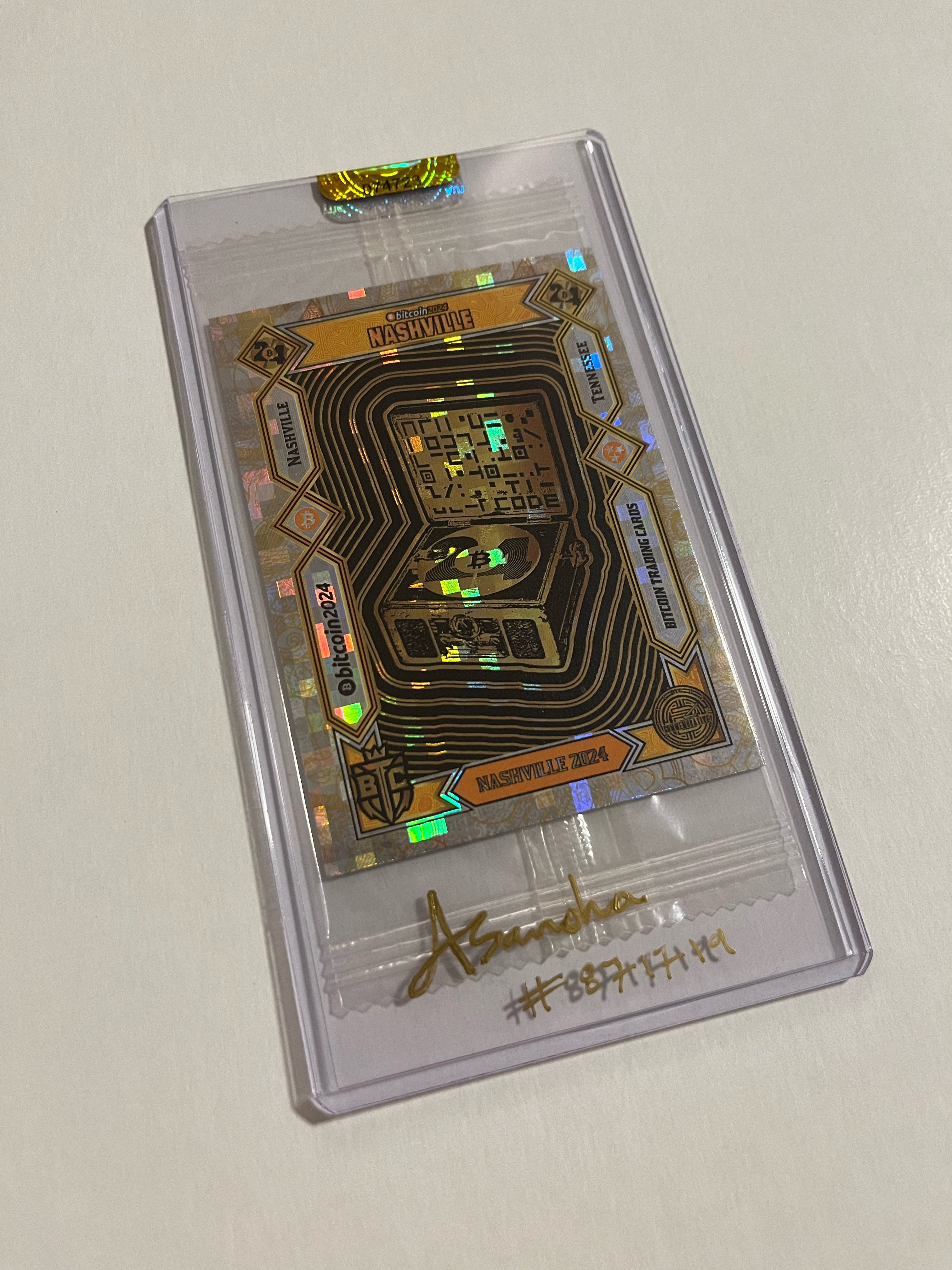
Sicko 👌🏻
Congrats!! Got my father in law in around 45 this year also, now he’s texting me price updates, good shit

…ducks are #1 and harbaugh has the chargers in playoff spot….winnnning
One of my best friends (real estate guy) just told me he dropped 25k today to get over the 1btc mark, so rad
It’s so funny to watch all the cnbc hacks talk about bitcoin over the years, they don’t sound much smarter at 90k then they did at $600
This is why I made the change with the show.
In this interview I discuss the impending Sovereign Debt Crisis with nostr:npub13k8vp6ylmagffppknaepalcpl0g07rrkwxgdq8c732lnad4gmekq4huf2d, former Member of Parliament for Wycombe. We also discuss the economic illiteracy in government, debt, inflation and the potential for #Bitcoin.
Listen: https://open.spotify.com/episode/1mTwO6j8dyJwscTUwW7ysK?si=dbb767dd79d54300
💪🏼
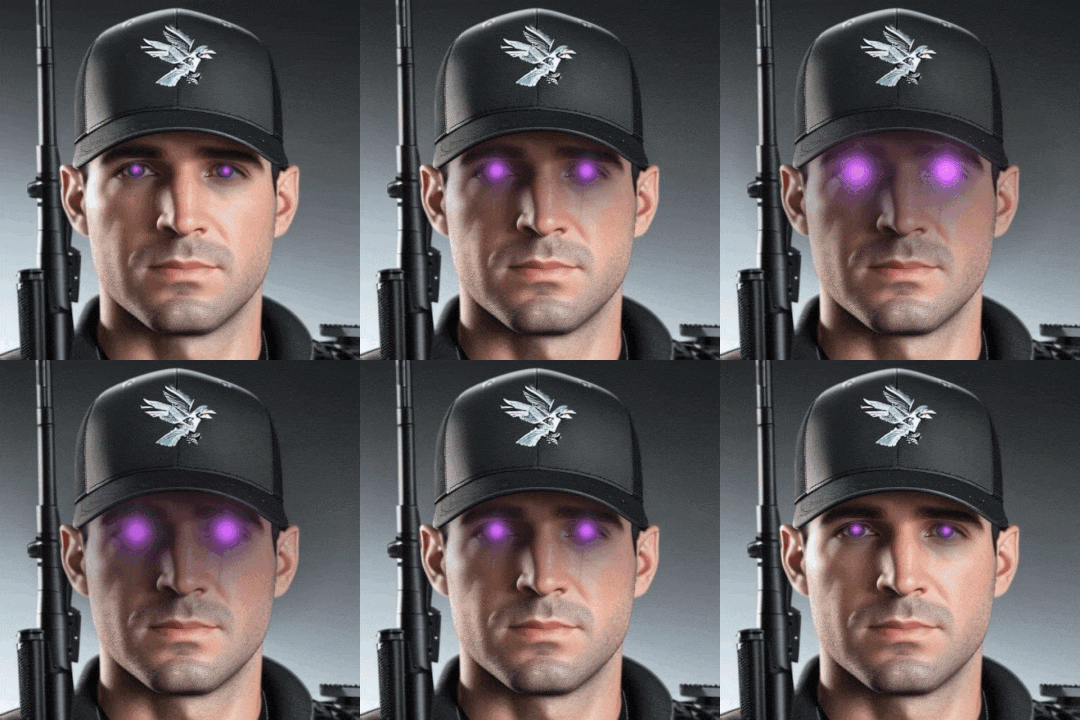
All of us to our friend circles right now. Especially to those dunking on us in the bear market. https://v.nostr.build/ccMaPkqVFwo9i5mz.mp4
Fuuuuuuuuck yeeeeeeeaaaahhh

“Do what you want to do. That is the #Bitcoin story. Not by decree. No one tells you to do it. YOU decree it. You fucking decree it. You go out and do what the fuck you're gonna do in the world. That's what we're doing here in Bitcoin.” - nostr:npub1rtlqca8r6auyaw5n5h3l5422dm4sry5dzfee4696fqe8s6qgudks7djtfs
https://v.nostr.build/RLsj2McwfSKK9XZc.mp4
nostr:note1yrdlerzfd3ul5pzhp7efqga6n5mykqr8tferccnwyllast5lzjdqlk8c0t
All time rant