
China makes up between 20% - 30% atm.
Alot less than a couple of years ago, when we saw 80%.

Did anyone use the heat transfer of a frying pan to transmit a transaction yet?
Would be a nice weekend project: create an air-gapped transaction, build a little device that heats up a frying pan on one end, and once it hits a certain temperature threshold (measured at the other end) you book it as a binary ONE, and if it doesn't hit the threshold in a certain timeframe you book it as a binary ZERO.
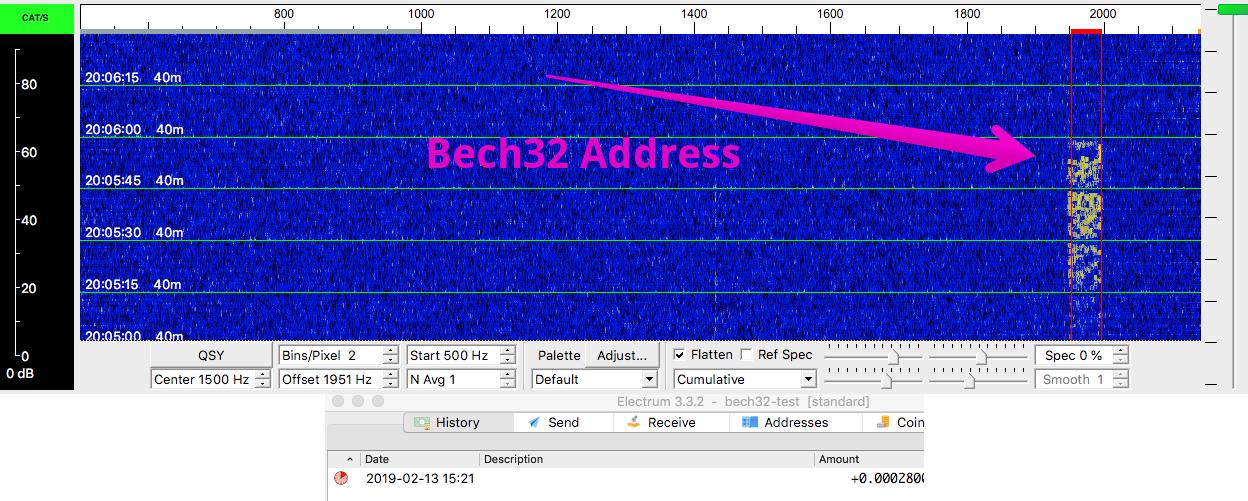
The frying pan would literally act as a transmission device, and once the binary string is transmitted through the pan, you broadcast it to the network by whatever means. Bonus points if you broadcast via ham radio, just for the heck of it. And also because you could give it a nice name like "Ham in a Pan" 🥓🍳
https://dergigi.com/slides/2022-riga/images/highres/mj-bacon-wallpaper.webp
don´t forget to register the frying pan as a money transmitter

I appreciate your attack on the testnet sir 🫡
 Reddit censorship. Nostr fixes this



The fact that Gavin was the only airhead to accept this invitation explains his later decisions. This shows how self-absorbed he was in his actions.


you seem to collect blockings 🤔

Bitcoin Bill of Rights 📜
Article I.
Freedom of Use: Congress shall not legislate any laws that establish control over Bitcoin, nor shall it prohibit the free use of Bitcoin. Furthermore, no governmental interference with Bitcoin's operational protocol shall be permitted.
Article II.
Security of Keys and Nodes: The right of the people to secure their private keys, operate full nodes, and validate transactions through mining, being necessary to the security of a free state, shall not be infringed.
Article III.
Protection Against Seizure: No Bitcoin shall be frozen or seized without a judicial order that demonstrates probable cause and adheres to due process.
Article IV.
Right to Privacy: The right of the people to be secure in their digital personas, homes, devices, and Bitcoin wallets, against unreasonable searches and seizures, shall not be violated, and no warrants shall issue without probable cause.
Article V.
Due Process in Disclosure: No person shall be compelled to reveal their private keys or other secure authentication methods in any legal or criminal proceeding, without due process of law.
Article VI.
Non-Discrimination in Bitcoin Use: The use of Bitcoin shall not be denied or abridged by any state due to the digital nature of the asset, nor shall states impose discriminatory regulations that target Bitcoin uniquely.
Article VII.
Innovation and Development: Individuals have the right to innovate and contribute to the Bitcoin network, including the development and propagation of software, without undue interference, provided they adhere to the decentralized ethos of Bitcoin.
Article VIII.
Financial Sovereignty: Individuals shall have the right to financial sovereignty and privacy, to mine, hold, and transact in Bitcoin freely, without fear of reprisal or disproportionate taxation.
Article IX.
Right to Anonymity: Individuals have the right to anonymity in their Bitcoin transactions and holdings, to the extent that it does not infringe upon the rights of others or violate the law.
“I don’t know… there just aren’t that many videos I want to watch.” Steve Chen, founder of YouTube, expressing doubts about YouTube’s viability as a company. 2005.



true but just a matter of time. COPA and others should combine forces to push back. we the plebs need the right tools to use it even after a ban.
This is to be expected in an unfree country


Banks close all the time. And there is an unlimited amount of fiat in the central bank.
 KYC is a trap
EU will Bitcoin-Werbung auf Social Media verbieten
"Im Rahmen neuer Regeln, um "Influencer Marketing in der EU zu harmonisieren“, streben die Verbraucherschützer der EU-Staaten in der nächsten Legislaturperiode ein Werbeverbot für Bitcoin in den sozialen Medien an."
https://www.blocktrainer.de/blog/eu-will-bitcoin-werbung-auf-social-media-verbieten/ #nostrfixesthis