
One #citizenship. no option.
Two citizenships, one option.
What’s it Actually Like Being Stateless?
The following is my written interview of a stateless man living in the United States.
In the United Nations’ 1954 Convention Relating to the Status of Stateless Persons, the definition of“Stateless” is "A person who is not considered as a national by any State under the operation of its law."
The goal of this interview is to gain some insight into the day to day reality of a person living without any nationality. Here, we call him “Mark.”
The interview is given entirely from the perspective of Mark’s experiences and perception living as a stateless person, without regards to the accuracy of any statements made about citizenship or immigration law.
....
Parviz: Thank you for giving this interview. Please tell me a little bit about your background as a stateless person.
Mark: Important caveat: The Hmong history I speak about is based on what I know, but to be honest, I don’t know the history that well.
I was born in France in 1985. My parents were Laotian citizens.During the Vietnam War, my father helped the United States of America thinking that they would save them if they lost the war. In essence, this is what he remembers being promised.
When the war ended, the Hmong started being hunted by the military forces that had opposed the USA and that's when my parents were sent to France, while all of their family members were sent to the USA or did not make it to safety.
My parents were considered citizens of Laos (they were considered enemies of the state after the war). The laws from France are complicated and as my mother recalls, Hmong people were often discriminated against in France, especially in the job market.
My mom and father worked very hard to save enough money to be able to find us a better life by coming to the United States. My parents didn't know about the nationality laws and rules surrounding the possibility of becoming a French citizen. All they knew was that Hmong people were not fairly treated when it came to basic healthcare and career paths.
My parents were promised that my uncle and aunts could give them a legible pathway. However, this is when things went down the wrong way.
We came to the USA in 1995 a few months before I turned 10. My parents thought that my uncle was in the process of getting us a pathway [to residency]. However, it turned out that we were reported to the INS where an immigration officer confiscated our passports. According to my older siblings 10 years later, their lawyers stated that the officer committed some sort of illegal act.
U.S. Immigration Court
My mother stated that when we went to court, we were ordered to renew our visa. However, France did not accept the renewal. This is when the USA attempted to deport my parents/family to Laos or France. Laos did not view us (children as citizens) and my parents’ lawyer argued that my parents were viewed as enemies of the state. The USA attempted to deport us to France, but France did not recognize any of us as citizens either.
This is where I state that I have a bit of a privilege over other stateless people. At the time and still today, the USA did not know what to do with us and gave us two choices- to get locked up until they could find out what to do with us or permit us to work until they found out what they could do with us. My mom chose the option for a work permit.
College
When I started college, I had to apply for FAFSA, but I realized that I couldn't. I knew that was somehow related to my status. So I searched for ways to do certain things and this is where I was sent back and forth to the "student International" pathway to be told that I am not considered international.
At the time, I was confused and didn't know what I was supposed to do. However, a certain staff member knew exactly how they would allow me to go to school, or work for the school while I was a student. This worked out, but it took me going back and forth to a different office over and over until someone could figure out a path for me.
.....
Parviz: Have you tried to obtain citizenship in the country you were born in?
Mark: According to what I know, I am not able to get citizenship in France. I am also not able to return to the United States if I take a trip outside.
Parviz: Have you tried to obtain the citizenship of either of your parents?
Mark: For one, I have never been to Laos. I personally never attempted because I cannot even speak Laotian. It scares me to go somewhere where I do not know how to survive, especially if I cannot communicate in the host language. Secondly, being that I am told my parents are enemies of the state, I don't even think about it [trying to get Laotian citizenship].
Parviz: How did you make it to the United States?
Mark: As I mentioned earlier, we came to the U.S. on some sort of visa which was later confiscated. My mom attempted to renew it when she was told to renew the passport, but we were denied.
Parviz: When and how did you find out you are stateless?
Mark: Growing up, I was curious about why it seemed like I would have to take additional steps beyond what my classmates were doing. It led me to do a little research, and I came upon the concept of being “stateless.” Later on, my sister thought it would be a good idea to have a free consultation with her lawyer. This is when he told us we were stateless.
Parviz: Do you have trouble getting legal identification, driver license, your birth certificate, etc?
Mark: I have copies of my birth certificate, and old passport that were confiscated. When I called the embassy about getting my document, they said I would need to go there in person, to Chicago which was about 7 hours from where I live.
During the period after the 9/11 attacks, my family and I were not allowed outside of [U.S. state REDACTED] for more than 24 hours. At some point, this restriction was removed and we were allowed to travel within the United States. Luckily, I was able to get a legal identification card because in a previous immigration court hearing, we were granted work authorization.
This is why I say I have more privilege than other stateless people. With this privilege, I think I have a responsibility to make people aware that stateless people exist.
Parviz: Have you ever had a passport or travel document?
Mark: Yes, I had a French travel document, which we used to travel to the United States, but France was not willing to renew it.
Parviz: What’s your current status now in the United States?
Mark: I have deferred action for childhood arrivals (“DACA”) so as of now, I am considered a stateless DACA recipient.
......
Parviz: What are the biggest practical difficulties in day-to-day life for you as a stateless person?
Mark: Education was probably the most time-consuming run around in circles that I’ve experienced so far in my life.
Generally, I can name several instances of being rejected from banks, and loans, trying to apply for school, trying to figure out what certain organizations recognize my status as being. I am told "You are considered international so go here” only to find out that I am not considered international and I need to go there. This happens almost every time to the point that I now explain my situation from the outset every time before I am sent to an office that sends me back and forth.
Here is a bit of a timeline of my experiences trying to progress through life while being stateless:
Army
I tried to join the Army after I graduated from high school, and I was not allowed. I didn't ask why and gave up.
College
I applied for college, was accepted then told to complete my FAFSA if I still wanted to take classes. That kicked off the well familiar routine of being sent back and forth between different offices who didn’t know how to handle me.
I graduated with a 4.0 in Psychology and completed research that I was able to submit as the primary author in the University of [REDACTED] journal, but I am constantly telling myself if I give up now I give up on other stateless people. My goal is to complete research surrounding stateless people and to bring awareness about international laws harming families of all kinds.
Working as a Student
When I applied for a job, I was told it's work-study. I go through the same run-around as above, with my college financial aid applications. Fortunately, the psychology department supervisor figured out how to hire me without having to go through international or FAFSA.
Bank Account
When I apply to a bank to open an account, I’m told I’m not eligible. I try different banks until I’m accepted. I am later sent a letter saying if I don't show proof of certain legal documents [which I don’t have] that my account will be closed. My bank accounts have been closed about seven times over fifteen years.
Health Insurance
I am told I cannot apply for health insurance, then I am told I can, then I am sent a letter saying if I don't show some proof then my insurance will end. This gives me the impression that I cannot get health insurance so I kind of give up for a while.
Eventually, I ended up applying for health insurance through my school job (research for a sleep study) and it was approved. Keep in mind that throughout everything, I am constantly debating if I am wasting my time or not.
Research, Government and Private Employment
I applied to research jobs, government jobs, and other jobs. I applied to more research jobs than in other areas. I applied for a school job that goes through the VA [Veterans Affairs] and I was declined due to my status. I kept going. A few other jobs rejected me because I am not a US citizen, despite being a DACA recipient.
Graduate School Application
I started my application for graduate school to find out they don't have an option for statelessness. I contacted the office and told them that I would like to apply, but the nationality question must be answered, but I do not hold any nationality.
Parviz: How does being stateless inhibit your ability to travel internationally?
Mark: To my knowledge, by law I am not allowed to travel out of the country.
However, if I do, I am at the mercy of the laws of whichever country I travel to, to decide my fate as a stateless person. I have no idea what would happen to me, so I’m not willing to risk that big unknown.
Parviz: Have you ever applied for a travel document for stateless persons?
Mark: I have not applied because I think I won't be able to come back to the USA. I know about advance parole [for DACA recipients], but I don't have any family outside this country so I don't feel that would apply to me.
Even if I did qualify for advance parole, I am afraid of the unknown as I am not like most other DACA recipients [who have at least one nationality].
.....
Parviz: Have you ever applied for a visa or residency as a stateless person?
Mark: My parents tried some sort of residency application when we came to the USA. I don’t know what became of it, but unfortunately I remain stateless and without residency status.
At one point, I was told that our only option was to get married. At that time, gay marriage wasn’t really a thing so I gave up thinking about that option.
Parviz: When you tell people you are stateless, are they confused?
Mark: I have never met anyone who knew what a stateless person was except lawyers, and so I often have to explain it.
Scholars don't even know what stateless is unless they are connected to someone who’s stateless. Every scholar in the department of psychology at one of the most "prestigious” schools for psychology in the USA didn't even know what stateless meant when they read my application or when they spoke to me.
Parviz: Do you feel it’s critical that you get citizenship at some point?
Mark: Definitely, It would feel so liberating from all of the barriers. I think there should be more awareness about wars that lead to statelessness. I attempted to join the army once and the marines once. Then I gave up, and reanalyzed, and realized war was the cause of my statelessness.
.....
Parviz: What do you think is the biggest misconception people have about being stateless?
Mark: A big misconception is that I could just apply for papers like I was applying for a driver's license and that I have control of my status.
I am lucky to even have an ID due to how my story unfolded. If I were sent to a different country, my outcome would have been way different and I possibly would have ended up in a worse outcome.
Parviz: Do you think you’ve ever been advantaged in some way because of being stateless?
Mark: Yes, because as a DACA recipient, I cannot get deported even if DACA is ended. That's only because there is no country to return me to. It's like a curse, but also an advantage over other DACA recipients that were brought in when they were young, but have a nationality. Frankly, it gives me the strength to not be afraid.
.....
Parviz: Being stateless, if you could have any citizenship in the world that you want, which would it be?
Mark: I always say "I am from planet Earth" where no borders exist. Like, why do geese have more rights than I do in the human domain? They can travel back and forth.
My dream as a child was to travel, so one day I hope that I can go somewhere and return to where I call home (the USA). My view is very relatable to other DACA recipients who feel they have the identity of statelessness.
I want to be able to have citizenship in France because that was where I was born.
I want to be able to have citizenship in the USA because that is the place where I grew up and can remember. I would love to have the freedom of being human.
Parviz: Lastly, is there anything else you’d like to add or anything you’d like people to know about what the reality is like in day to day life for someone who’s got no citizenship?
Mark: My entire life, growing up as a child, felt like prison. A prison where walls are called borders. It was very painful as I grew up, but at some point, I just stopped crying. It's painful and those emotions come back when I think about it. It's ok to cry, but at some point there is no point in continuing to wallow.
Parviz: Thank you Mark for giving this interview. It’s been illuminating. 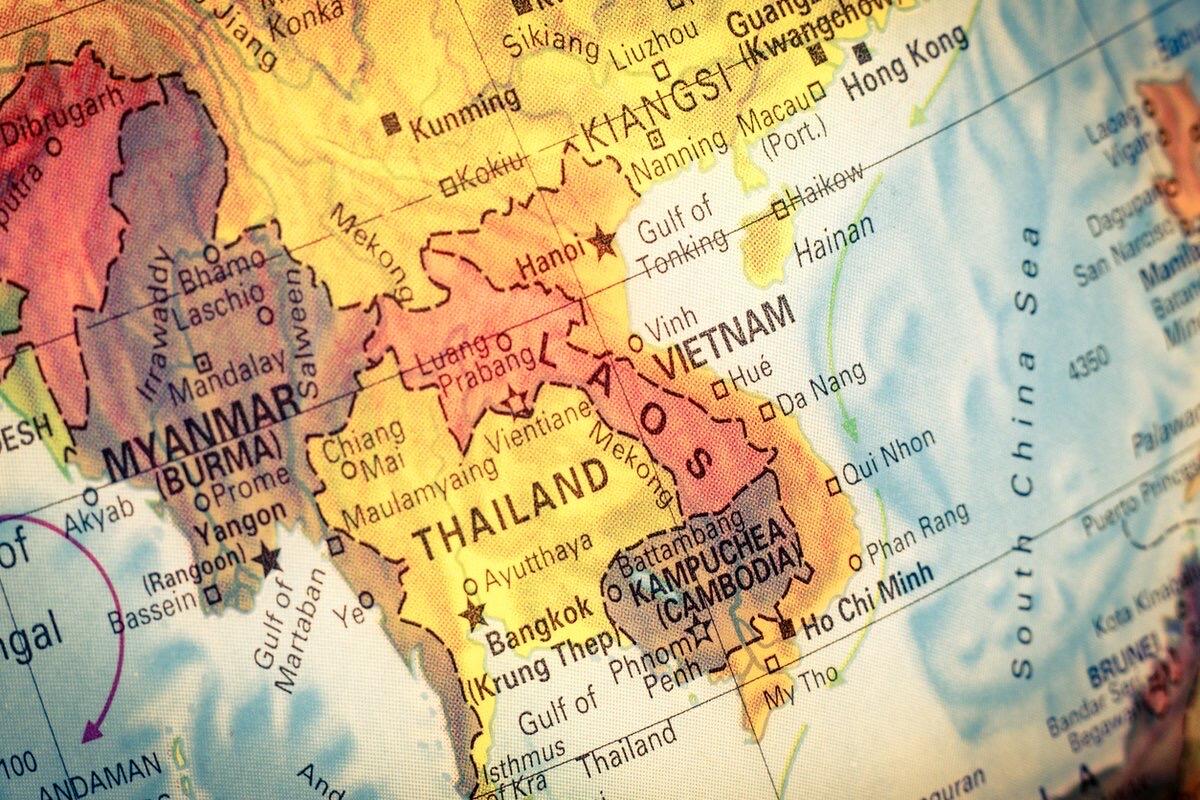
💯 
Understand the difference between #passport and #citizenship.
Or be content with never grasping the fundamentals of mobility, citizenship, and sovereignty.
I'm in awe of people who put out so much informative content on a sub-niche that you just feel such gratitude and admiration towards a complete stranger.
If you are in my vicinity, you WILL be affected.
#dualcitizenship #mobilitynostr 
Common conversation among Americans:
1️⃣ Person #1: “I want to get a 2nd citizenship in country X.
2️⃣ Person: #2: “Why do you want to LIVE in country X????”
3️⃣ Malakouti in the background:
“You don’t have to live in the country to gain a benefit of citizenship. May I introduce the concepts of
- country springboard benefits
- emergency Plan B, and
- freedom from #singlesovereignty dependence?”
#dualcitizenship #mobilitynostr

5 Common Chokepoints for Americans Pursuing 2nd Citizenship
These are 5 common chokepoints I see that delay or hinder Americans from pursuing 2nd citizenship, whether by investment, descent or otherwise.
1. Money (obvious one)
2. Difficulty getting important documents (especially for citizenship by descent, if you qualify)
3. Criminal record (a naughty FBI report)
4. Acceptable proof of funds (you have the money but not in a liquid form required by a given citizenship program)
5. Getting an application submission appointment at a consulate (especially for citizenship by descent)
Solving these issues is where good mobility lawyers can really add value in a second citizenship application process. ✅
#americandualcitizenship #dualcitizenship #passport #mobilitynostr
How many citizenships, passports and residencies are enough?
The answer depends on your circumstance (of course!)
But, generally, speaking I think this is a formidable combination for wide-ranging and robust freedom of movement👇
✅3 citizenships (w/ 3 passports)
✅2 permanent residencies
✅1 Palau digital residency ID
...that is attainable for many people over five years.
#citizenship #residency #passport #mobilitynostr
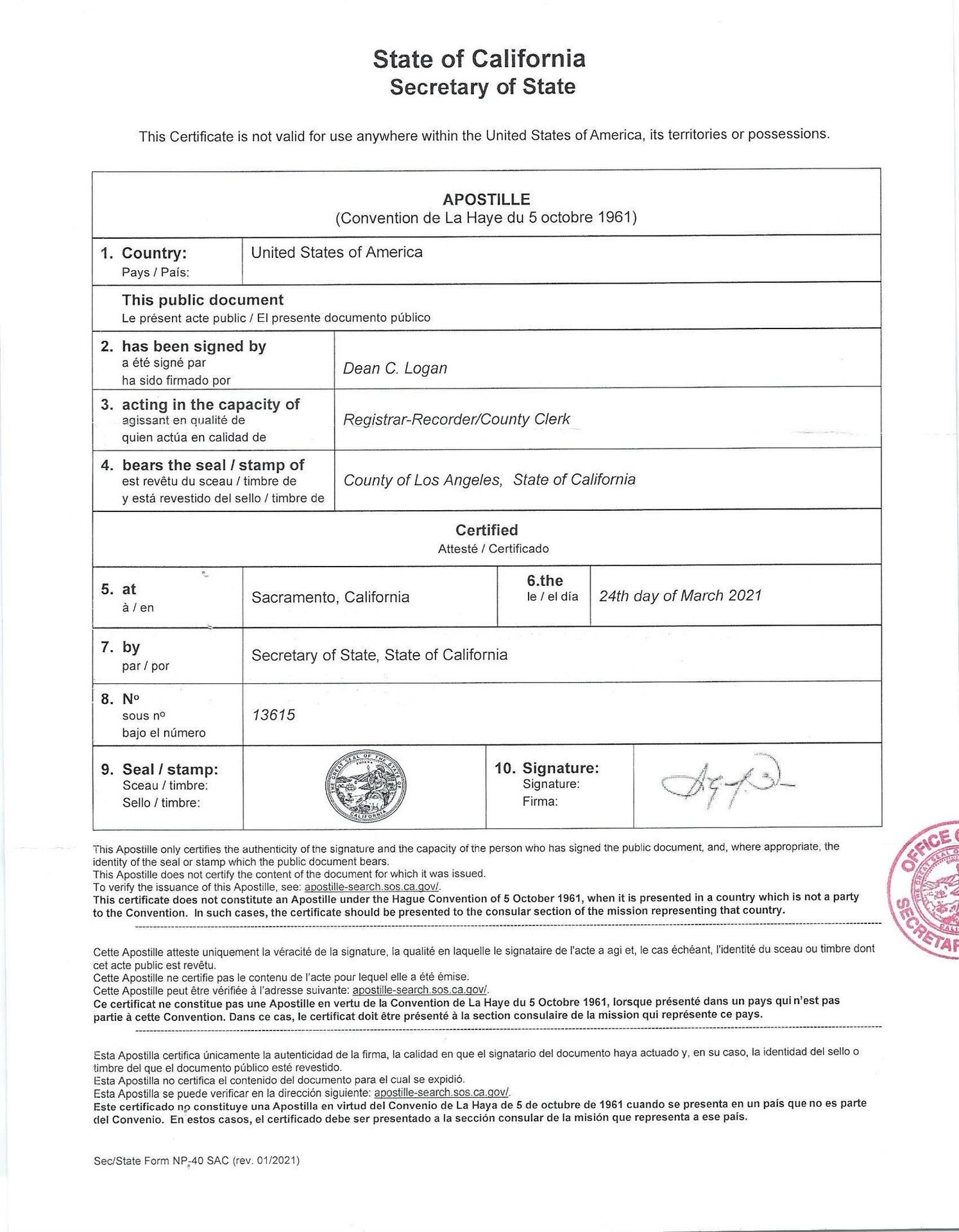
You need your vital documents to apply for citizenship by investment...
#stkitts #dominica #stlucia #grenada #Antigua
Or #turkish or #maltese citizenship.
Or to get residency by investment in #portugal #greece #Mexico #Panama
Or to get citizenship by #descent in #Italy #Ireland #Slovakia #Hungary #Croatia #Armenia
Spoiler alert: you need your vital documents for nearly all residency and citizenship applications.
In the world of global mobility, sovereignty & #dualcitizenship...
--> If you don't have your docs, you can't pack your socks.
Malakouti Law helps you get second citizenship or residency. Including finding and getting all the vital documents, apostilles, and translations you need.
[Attorney Marketing] 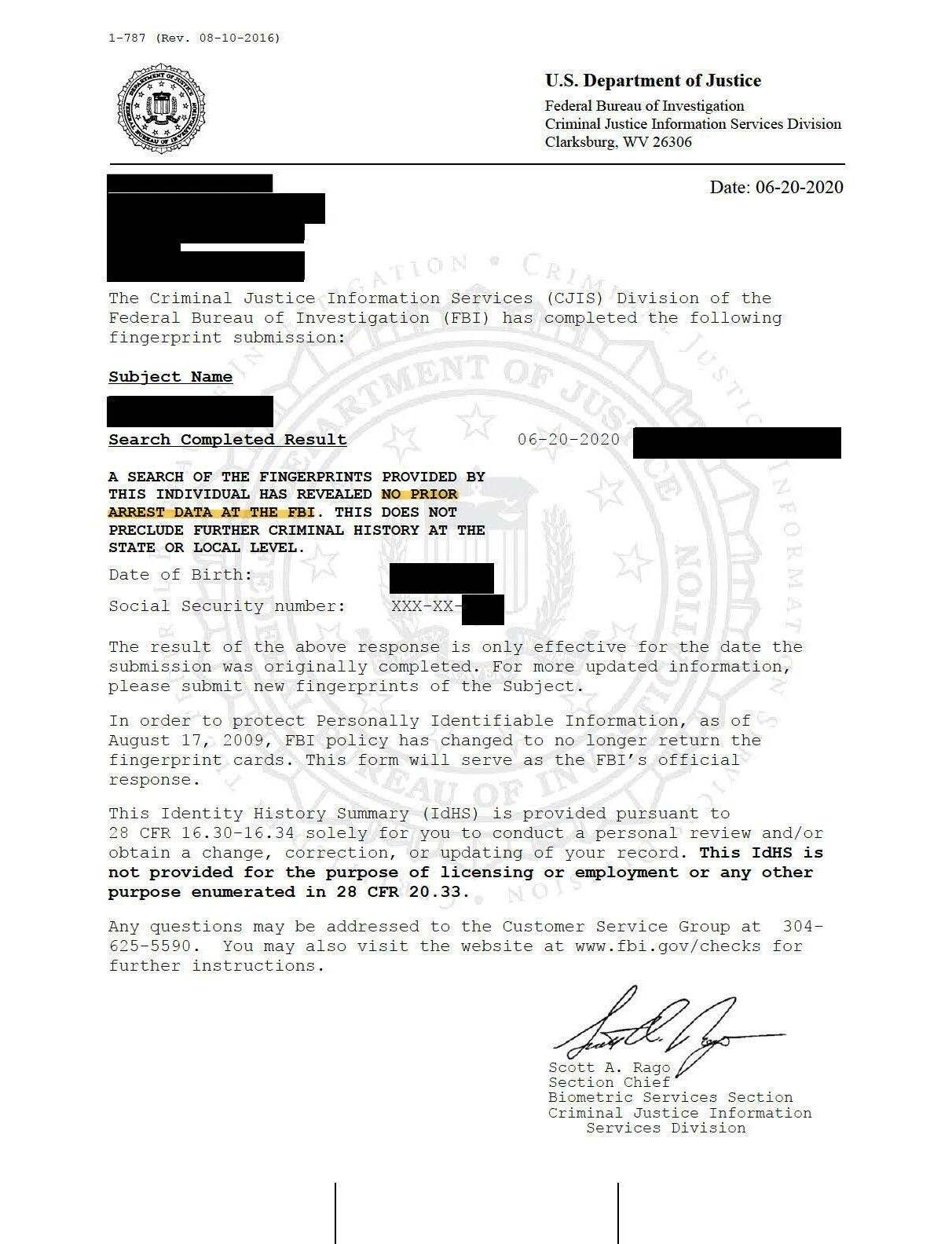
"In theory there is no difference between theory and practice - in practice there is" -Yogi Berra
Governments would like you to believe that processing for a visa, residency or citizenship benefit is the same among their consulates and that there’s not an advantage in #consulateshopping.
This is not true.
The reality is that there is often a stark difference in practice in how difficult, long and hassled your process can be depending on where you apply.
In other words, sometimes it’s better to go to another country *if possible* to apply for visa, residency or citizenship in a third country.
Reasons to seek a #friendlierconsulate can be:
1. Appointment waiting time (this is a big one)
2. Friendlier, more cooperative, and/or more competent staff
3. Different treatment of locals depending on the relationship between the consulate country and the”host” country.
4. Different visa, residency or citizenship application substantive requirements being imposed by the consulates (yes, sometimes the requirements can even differ between consulates!)
But the catch is you have to be ALLOWED to apply at the consulate.
Most countries generally only want you using consulates in countries in which you are:
1. Resident
or
2. Citizen.
or
3. Resident or citizen
When you are citizen of a country, you have automatic right of #residency there.
Therefore, one more benefit of multiple citizenship is that it generally allows you more ability to #springboard to friendlier consulates for visa/residency/citizenship applications to other countries.
The extra citizenship amplifies your freedom of movement to OTHER countries (In addition to all the benefits it gives you in/with the country of #citizenship).
Freedom of movement through #multiplecitizenship is the way. 
Multiple citizenship is the master key.
The best parachute.
The safety net.
The refuge.
The shelter.
The springboard.
The bridge.
The shield.
The snowshoe.
The flywheel.
The greatest tool for entrance and the exit in the world of nation states as sovereigns.
#freedomofmovement
Plan a trip to Puerto Rico; get a civics lesson. 🤣👇
——
“No Passport, No Problem” will launch next month and remind Americans that Puerto Rico is a U.S. territory – no passport required.
“About a third of Americans didn’t know that Puerto Rico doesn’t require a passport,” said Leah Chandler, chief marketing officer for Discover Puerto Rico.
#passport #puertorico #grownostr
Dual citizens are generally perceived as being less likely to become refugees or “overstay” in third party countries.
As a result, countries bordering conflict zones (like Egypt now) box them in less.
Dual citizenship is literally a lifesaver in these situations.
#dualcitizenship #freedomofmovement #grownostr
The most important thing to remember these days is that nation state governments are not the people they purport to represent.
Nation states ≠ the people.
People can only be justly treated based on their individual actions.
Say no to collective punishment and guilt by association.
Hold individuals responsible for their individual actions and nothing more.
Stand up strongly against those on any “side” who justify punishment of a broader group for actions of other individuals perceived to be of the same group, nationality, ethnicity, religion, etc.
Can you benefit from a second citizenship if you’re from a global hegemon?
Ask citizens of global hegemons like the Soviet Union, 3rd Reich Germany, 1940 France, or today’s China.
If you’re intrigued by Egypt’s new citizenship by investment program, consider the following….
A citizenship like Egypt’s, with weak visa-free travel still provides at least one enormous benefit.
The passport.
Not the visa-free travel provided by the citizenship, but the very passport itself.
A second passport decentralizes your dependency on a nation-state to allow you permission to travel ELSEWHERE.
Even if you have to get visas on that passport,
Passports provide GENERAL permission to travel.
Visa, residencies and citizenship provide permission to travel to a SPECIFIC place.
You need both general and specific “permissions.”
#freedomofmovement #multiplecitizenship #egypt #citizenshipbyinvestment 
Attempt #8 to use the Palau digital residency ID.👇
I tried to use the Palau ID to notarize a document at a UPS store in Las Vegas, Nevada.
Result: UNSUCCESSFUL
#documentdependence #palau #digitalresidency #freedomofmovement
Proposed rule published in the CFR yesterday on 10/02/2023 to bring the cost of renunciation of U.S. citizenship down to $450 again. 👇
Cheaper is always better but I wonder how many people will actually be moved to renounce based on the fee reduction from $2,350 to $450.
I suppose time will tell. 🤷♂️
Comments on the proposed rule
are open until November 1st, 2023.
“In the years since the fee was increased, members of the public have continued to raise concerns about the cost of the fee and the impact of the fee on their ability to renounce their citizenship. While there is no legal requirement for individuals to declare their motivation for renouncing U.S. citizenship, anecdotal evidence suggests that difficulties due at least in part to stricter financial reporting requirements imposed by the Foreign Account Tax Compliance Act (FATCA), Public Law 111–147, on foreign financial institutions with whom U.S. nationals have an account or accounts may well be a factor.”
#UScitizenship #citizenshiprenunciation