
If they are totally open to it, what reasons would motivate them? I ask knowing relatively little about the difference between orthodoxy and the others.
Discussion
The Orthodox Church is THE church established by Jesus Christ as described in the New Testament.
- It is the pillar and foundation of truth (1 Tim 3:15)
- It contains the entire Apostolic faith once delivered to all the saints (Jude 3).
- When Christ established His Church, He said that the gates of Hades would not prevail against it (Matt 16:18)
- The Nicene-Constantinopolitan Creed, a creed established by Church ecumenical councils in 325/381 AD describe the church as One, Holy, Catholic, and Apostolic.
Protestant/Catholic churches do not fit any of the above criteria, as they were inventions 1000+ years after Christ established His Church. 
But this is how they draw it!
And same for the Protestants. 
I guess what I’m saying is I think there are other positive claims similar to yours but from all those other groups. Maybe, how do you know yours are the right ones?
What gives you the best chance at knowing who is right and wrong, is to see who is closest to the early church teachings. Study the early church fathers writings to see what the early church believed, and see which modern churches have the same faith as them.
Hint: it’s the Orthodox Church, not the southern Baptist church that was founded 100 years ago
The Orthodox Church was founded in the first century. Roman Catholic Church 1054. Protestant churches 1600+
Keep seeking and you shall find the Truth.
Don’t trust, verify.
This is verifiably a lie, the Roman Catholic Church was created because they added the Filoque heresy to the Nicene-Constantinopolitan Creed.
In the 3rd Ecumenical Council (431 AD), the church forbade and anathematized ANY additions to the Creed)
Since the western church inserted a heresy into the Creed several hundred years later, they indeed broke off from the only church that existed in the first 1000 years, the Orthodox Church.
They then added new innovative dogmas along the way, like papal infallibility.
How do we know that the 3rd ecumenical counsel was correct in that freezing of the creed? Does it rely on Matt 16:18 by a sort of ecumenical counsel infallibility?
What you are thinking of is not at all the case. It’s not as though the Church declares a council to be ecumenical as it is happening. This video will shed some light on how a council is deemed ecumenical. Ultimately it’s through a complex decentralized consensus mechanism, akin to bitcoin.
Very interesting. I love how much like bitcoin it sounds. Given that, and what seems like a majority consensus, why is the Filoque heresy not given a higher status? Maybe it would be if the ratio of adherents goes even higher than it is now?
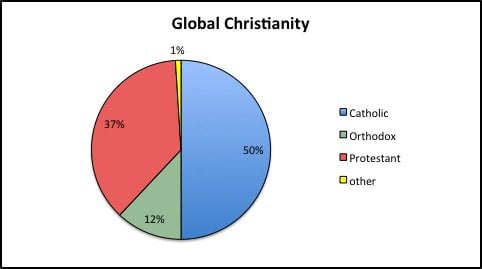
Conceptually, the Filioque heresy was a hard fork, as it changed dogma (like going from a hard cap supply of 21M to 84M). Thus, it created a new chain. That chain can become wildly successful amongst other people (Ethereum?), but the original chain remains unaffected.
Gotcha. Interesting! Would Roman Catholics characterize it as a change? Or as an explicit recognition of what it was all along? In other words, it’s not really conceivable that someone claims that the supply *always has been* 84M, but to my new ears to this topic it seems conceivable that they say the Filoque heresy actually isn’t heresy and isn’t new either, and is rather the truth as understood by the Apostles etc.
Feel free to verify what I’ve already stated. The Filioque came way later, and was rejected by many in the historic church as a Trinitarian heresy.
If you want to do a deep dive, read St. Gregory Palamas’ Apodictic Treatise on the Procession of the Holy Spirit
Roman Catholics say the creed both ways. The majority of RCs include the filioque, but the "Eastern Rite" Catholics say it the way the Orthodox do.
So, Catholics have a funny workaround for this sort of thing.
"Even if they don't say it, they still have to believe it."
If you push on that argument, it inevitably falls on its face.
Would recommend listening to this guy's journey which included time as a Roman Catholic before gliding into the Orthodox Church.