

inevitable? Why? just honestly wondering what you learned
Discussion
Why does civil war seem inevitable?
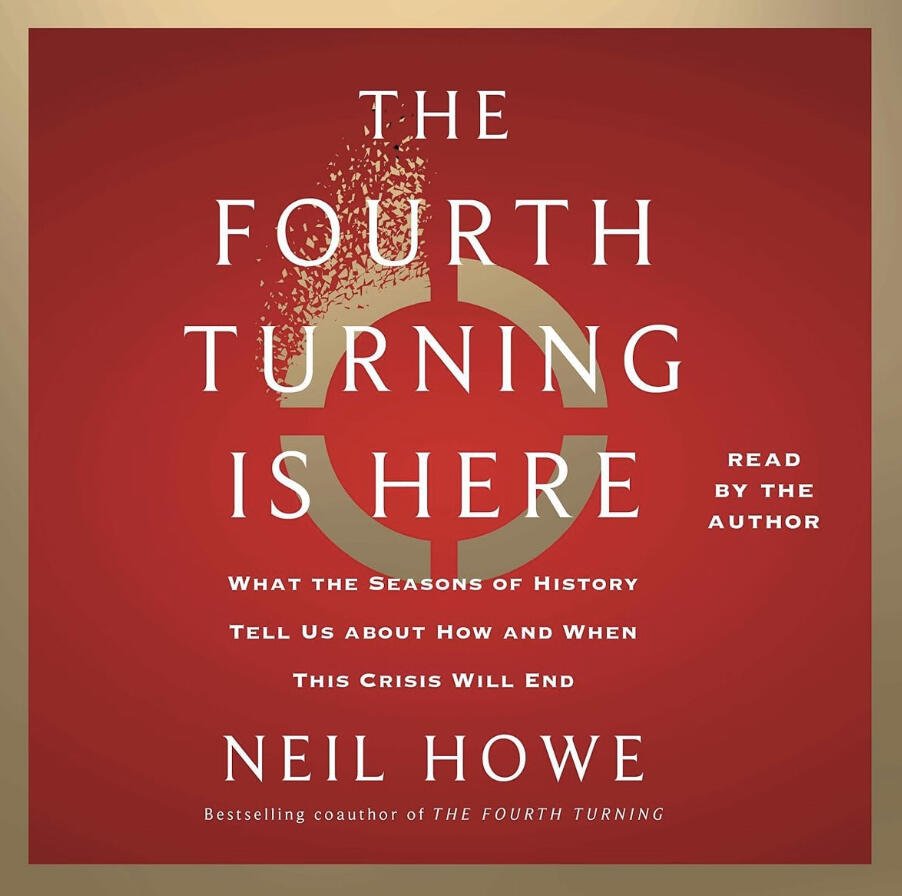
Howe makes a compelling case that history follows a cyclical pattern of 80-100 years, the span of a long human life, broken up into four “turnings”. The fourth turning, which we’re half way through now, is a Crisis era.
Each Crisis era progresses through recognizable stages:
1. Precursor - emergency that temporarily galvanizes society.
2. Catalyst - watershed event that produces a sudden but lasting shift in the social mood.
3. Regeneracy - reunifies community and re-energizes civic life (usually more than one).
4. Consolidation - everyone understands that their new community is engaged in a true struggle for survival.
5. Climax - crucial moment that confirms the death of the old order and triumph of the new.
6. Resolution - triumphant or tragic conclusion that separates winners from losers, resolves the big public questions, and establishes the new order.
In our current turning, the Precursor was 9/11. The Catalyst was the global financial crisis of 2008. And the first Regeneracy was Trump’s 2016 election.
From here there are a few likely paths forward:
A. Civil war - Consolidation in which red and blue teams each conclude that the other represents an existential threat to their way of life.
B. Outer war - Consolidation in which America pulls together to battle an external adversary.
C. Regroup - A second Regeneracy in which political affiliations are reformed. This would delay but not replace Consolidation. Routes A or B would still eventually have to take place.
In a nutshell, there’s nowhere out but through. A negotiated settlement, such as peaceful secession, is unlikely.
Howe also explains that no one ever sees civil war coming. Writers recounting the Civil War, which ended in 1865, remarked that as late as 1860 they had thought such a conflict inconceivable.