

Normally if Alice was to spend from multiple UTXOs, she'd sign each with a signature.

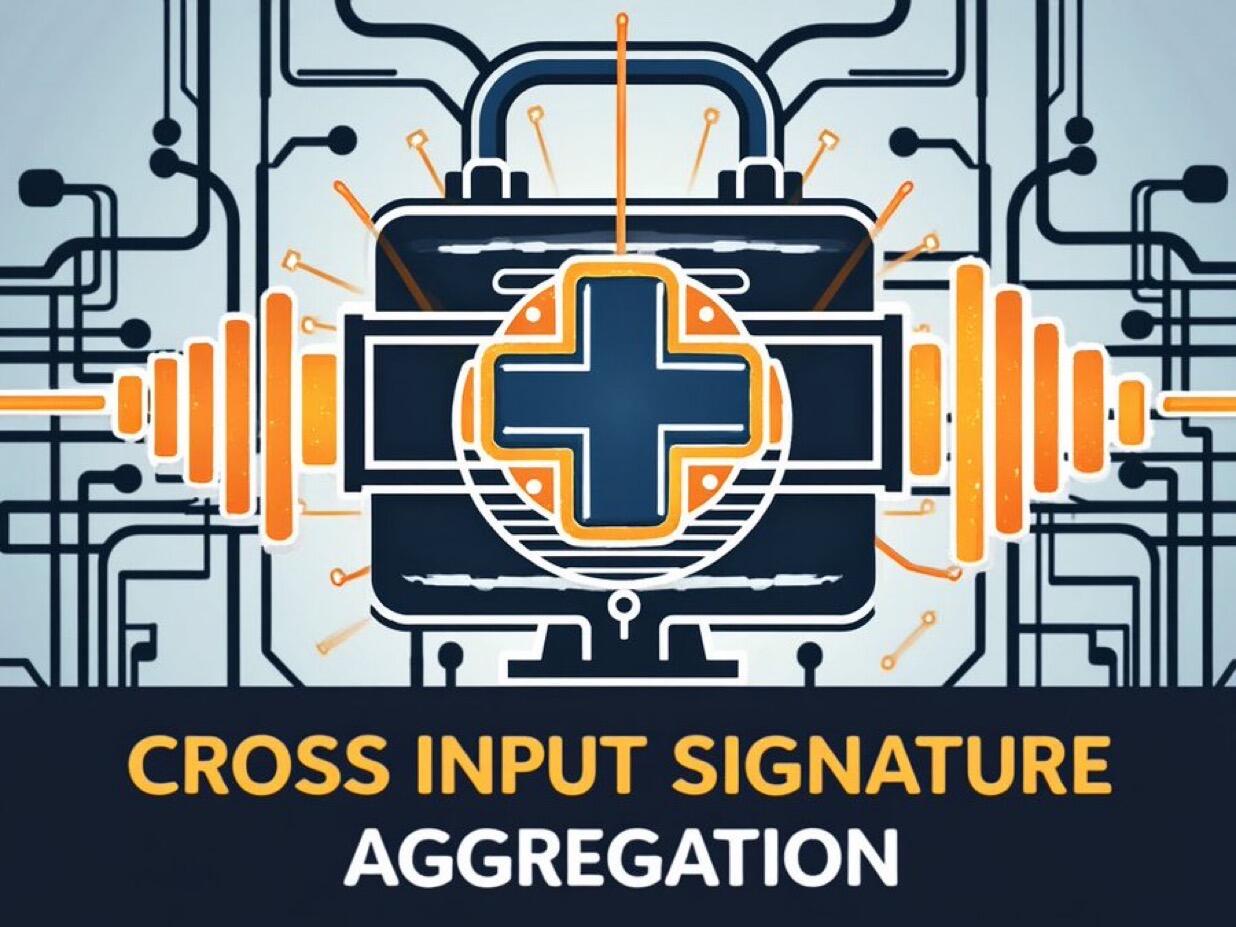
With CISA, these signatures could be aggregated into a single, compact signature reducing transaction size and enabling higher throughput by utilising well understood properties of Schnorr sig.

Afaik this aggregation uses a concept similar to MuSig, where multiple public keys are combined into one.

Alice would then sign with a private key corresponding to this aggregate public key.

What would this akshually enable?

• Privacy: More efficient CoinJoins.

By reducing the signature size, CISA could make privacy-enhancing transactions like CoinJoins cheaper encouraging use and privacy as standard.

• Cost: Lower transaction fees due to smaller tx sizes.
Reply to this note

Please Login to reply.

Discussion

If adopted, CISA could very well pave the way for more complex transaction types on Bitcoin, enhancing scalability and privacy without compromising security or adding wild stuff from the get go.

For Bitcoin that’d mean transactions are not just more private but also efficient.

https://youtu.be/HvI7NPI_Pk0

Go learn some CISA here:

cisaresearch.org

cisaresearch.org/half-agg.html

Half-aggregation: a process that reduces size of combined Schnorr signatures in Bitcoin transactions by approximately half.

Unlike full aggregation, which combines all signatures into a single, half-aggregation balances between efficiency and practical implementation trade-offs

Key benefits provided:

• Space and Fee Savings: Reduces transaction size by around 20.6% in bytes and 7.6% in weight units, optimizing transaction costs

• Non-Interactive: No need for signers to be online simultaneously. Aggregation can be done by any network participant

Could CISA end up screwing with Atomic Swaps, DLCs in regards to Adoptor signatures in a block-wide aggregation or even lead to issues handling block reorgs? What do you think? 🤔