
So I'm confused, pregnancy doesn't impact milk production at all?
Discussion
When I used to work at my uncle’s dairy farm as a kid, is was old school. We had a tack board calendar for all 45-50 head, to track their birthing, insemination, drying and calving dates.
I think my uncle used the abrupt dry off method and just stopped milking them and monitored for mastitis as they came through the line. The odd cow had to be given antibiotics through each teat as she came through the line to maintain the habit, but she wouldn’t be milked. I remember having to manually massage and express some cows’ milk if they had an infection.
But the normal natural dry off is two months for maximum recovery and overall health and long term productivity .
I think it was for two or three weeks following calving, a cow would still be run through the milking line, but we wouldn’t let her milk through to the main tank. It is thick and off-color, colostrum-laden milk needed to feed her calf. That milk would get drained from the collection vessel into a 5 gallon pail and we would walk it over to the calf barn to feed calves, along with any other cow’s milk from those who had just calved.
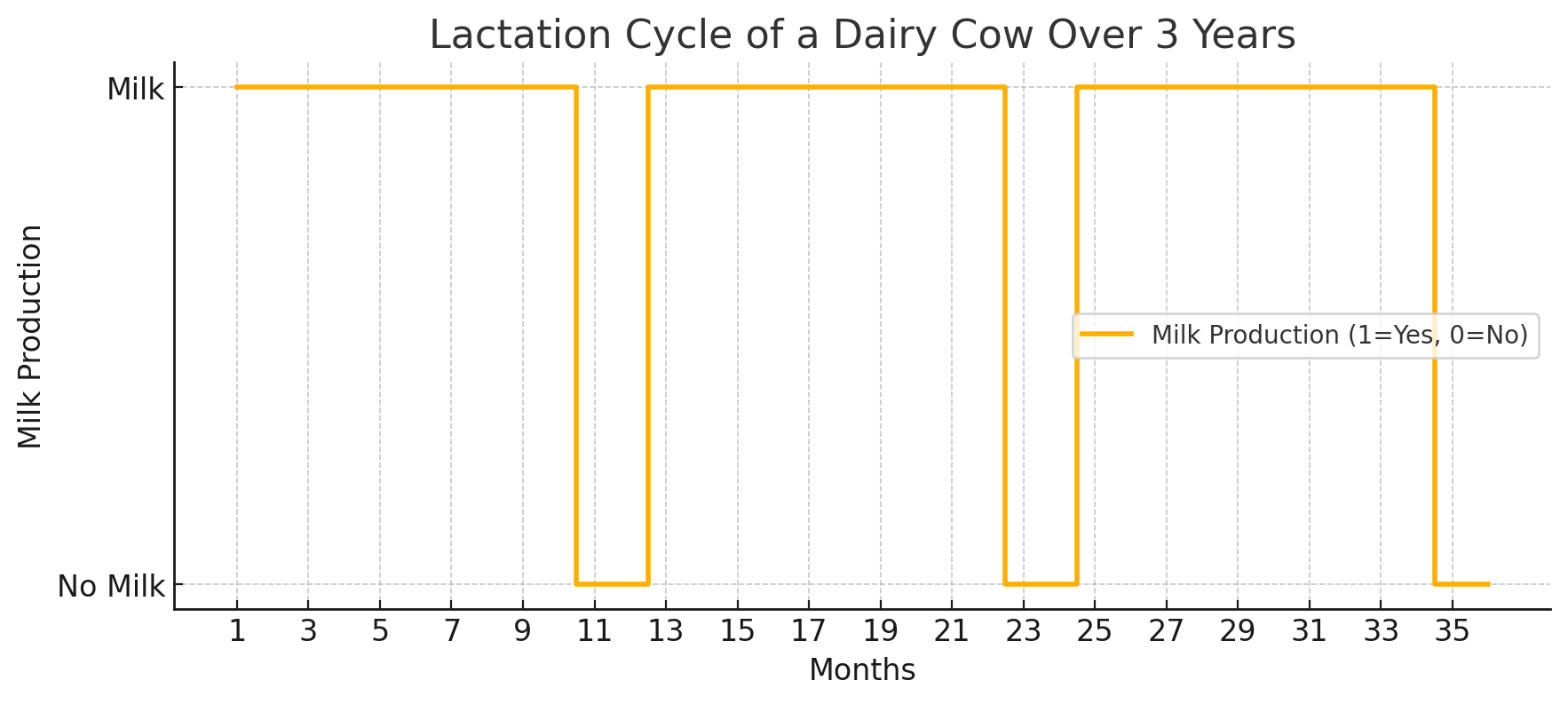
I used what I already knew to write a couple of gpt prompts for the content and the graph.
Here’s the recommended dry off info:
Yes, commercial dairy producers almost always dry off their cows about 60 days before calving to maintain long-term milk production and cow health.
Why Do They Dry Off Cows?
1. Maximizes Future Milk Yield – A proper dry period allows the udder tissue to regenerate, leading to better milk production in the next lactation cycle.
2. Supports Calf Development – In late pregnancy, the cow redirects energy toward the growing calf instead of milk production.
3. Prevents Mastitis & Udder Infections – Stopping milking allows the udder to seal and recover, reducing infection risks.
4. Body Condition Recovery – Helps replenish calcium and other nutrients before the next lactation.
How Do Commercial Farms Manage the Dry-Off Period?
• Abrupt Dry-Off: Cows are suddenly stopped from milking and monitored for mastitis risk.
• Gradual Dry-Off: Farmers reduce milking frequency over a week before stopping entirely.
• Use of Dry Cow Therapy: Some producers use antibiotics or teat sealants to prevent infections.
• Specialized Diets: Low-energy diets help prevent metabolic issues like milk fever post-calving.
Skipping the dry period can reduce total lifetime milk yield and lead to health complications. Large dairies track each cow’s cycle carefully to ensure proper dry-off timing.
Here is a python script for generating the graph:
import matplotlib.pyplot as plt
import numpy as np
# Generate a smooth lactation curve over a 12-month period (1-year cycle)
months = np.arange(1, 13)
# Approximate milk production curve (liters per day) - peak at month 2, gradual decline
milk_production_liters = np.array([10, 40, 38, 35, 30, 25, 20, 15, 10, 5, 0, 0])
# Create the plot
plt.figure(figsize=(10, 4))
plt.plot(months, milk_production_liters, marker="o", linestyle="-", color="b", label="Milk Production (liters/day)")
# Highlight key phases
plt.axvspan(1, 2, color='lightblue', alpha=0.3, label="Increasing Production")
plt.axvspan(2, 5, color='lightgreen', alpha=0.3, label="Peak Production")
plt.axvspan(6, 10, color='lightyellow', alpha=0.3, label="Declining Production")
plt.axvspan(11, 12, color='lightcoral', alpha=0.3, label="Dry Period")
# Labels and title
plt.xticks(range(1, 13))
plt.yticks(range(0, 45, 5))
plt.xlabel("Months After Calving")
plt.ylabel("Milk Production (liters/day)")
plt.title("Typical Milk Production Curve of a Dairy Cow")
plt.legend()
plt.grid(axis="y", linestyle="--", alpha=0.7)
plt.show()
Fucking legendary.