
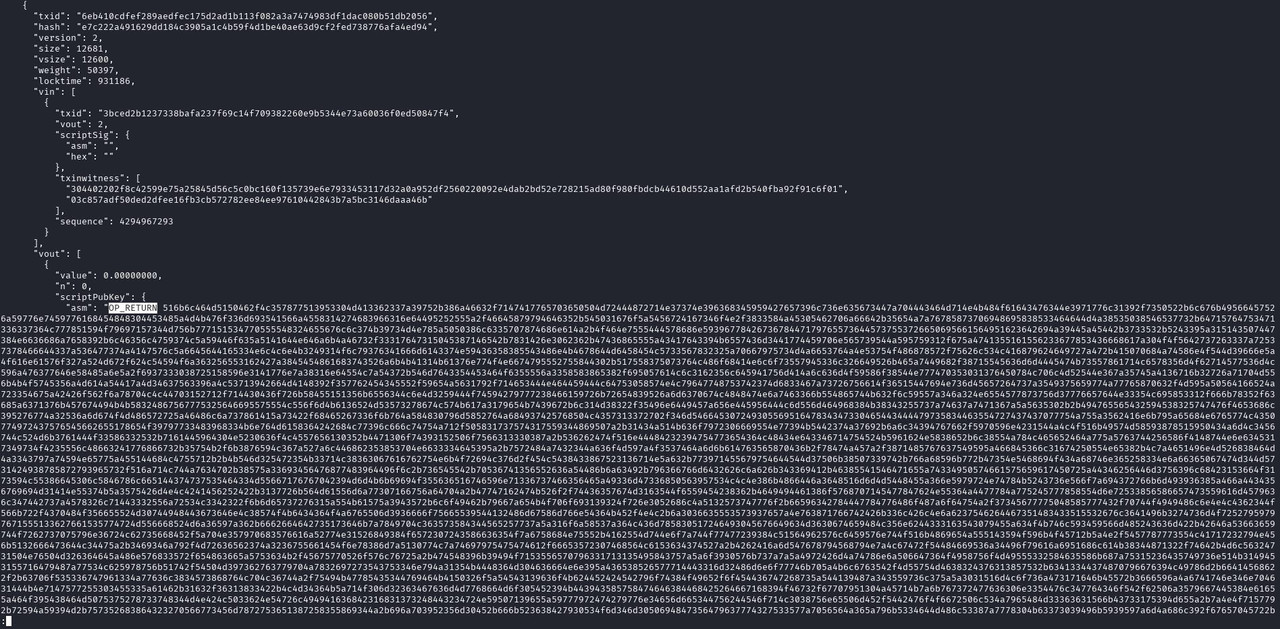
Lets see how a monetary transaction looks like and how an OP_RETURN spam that takes 100s to 1000s times more space look like.

I am sure you will notice the difference. Spam is disgusting.

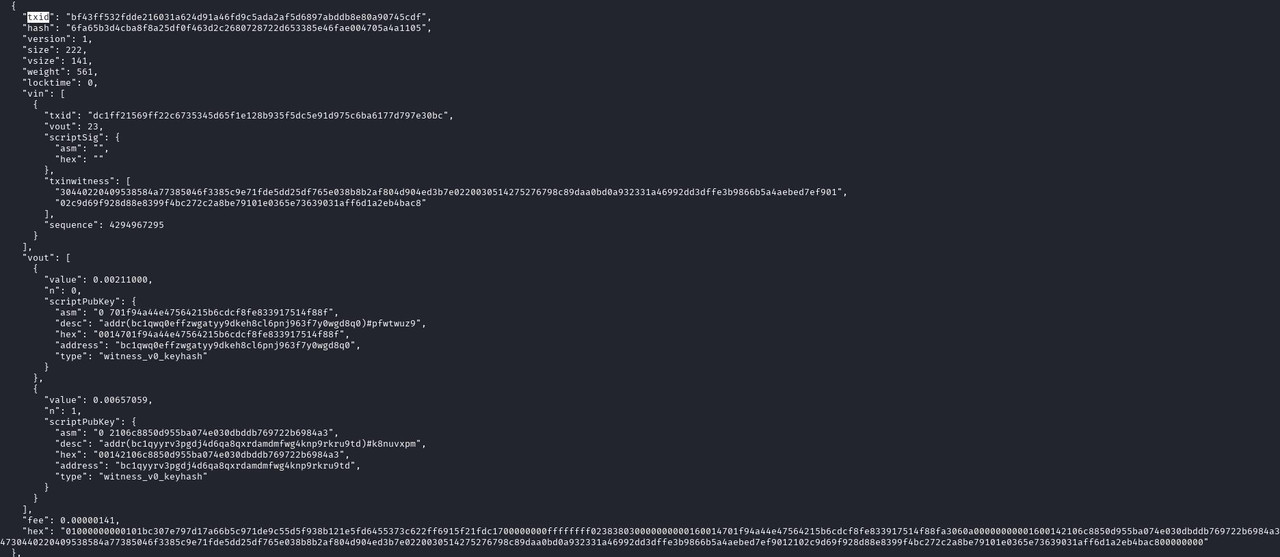
1. This is how a Bitcoin monetary transaction looks like
2. This is how OP_RETURN transaction looks like
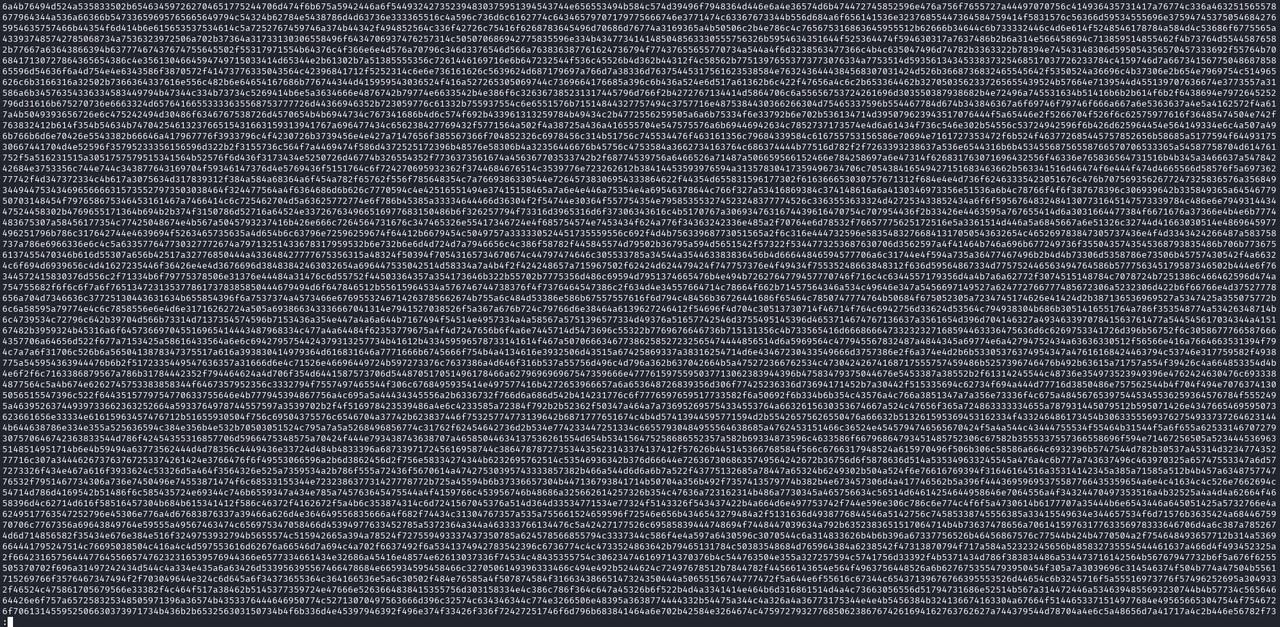
and the spam waste of space goes on and on like that
Reply to this note

Please Login to reply.

Discussion

{ (json object)

"in_active_chain" : true|false, (boolean) Whether specified block is in the active chain or not (only present with explicit "blockhash" argument)

"hex" : "hex", (string) The serialized, hex-encoded data for 'txid'

"txid" : "hex", (string) The transaction id (same as provided)

"hash" : "hex", (string) The transaction hash (differs from txid for witness transactions)

"size" : n, (numeric) The serialized transaction size

"vsize" : n, (numeric) The virtual transaction size (differs from size for witness transactions)

"weight" : n, (numeric) The transaction's weight (between vsize*4-3 and vsize*4)

"version" : n, (numeric) The version

"locktime" : xxx, (numeric) The lock time

"vin" : [ (json array)

{ (json object)

"txid" : "hex", (string) The transaction id

"vout" : n, (numeric) The output number

"scriptSig" : { (json object) The script

"asm" : "str", (string) asm

"hex" : "hex" (string) hex

},

"sequence" : n, (numeric) The script sequence number

"txinwitness" : [ (json array)

"hex", (string) hex-encoded witness data (if any)

...

]

},

...

],

"vout" : [ (json array)

{ (json object)

"value" : n, (numeric) The value in BTC

"n" : n, (numeric) index

"scriptPubKey" : { (json object)

"asm" : "str", (string) the asm

"hex" : "str", (string) the hex

"reqSigs" : n, (numeric) The required sigs

"type" : "str", (string) The type, eg 'pubkeyhash'

"addresses" : [ (json array)

"str", (string) bitcoin address

...

]

}

},

...

],

"blockhash" : "hex", (string) the block hash

"confirmations" : n, (numeric) The confirmations

"blocktime" : xxx, (numeric) The block time expressed in UNIX epoch time

"time" : n (numeric) Same as "blocktime"

}

🤯