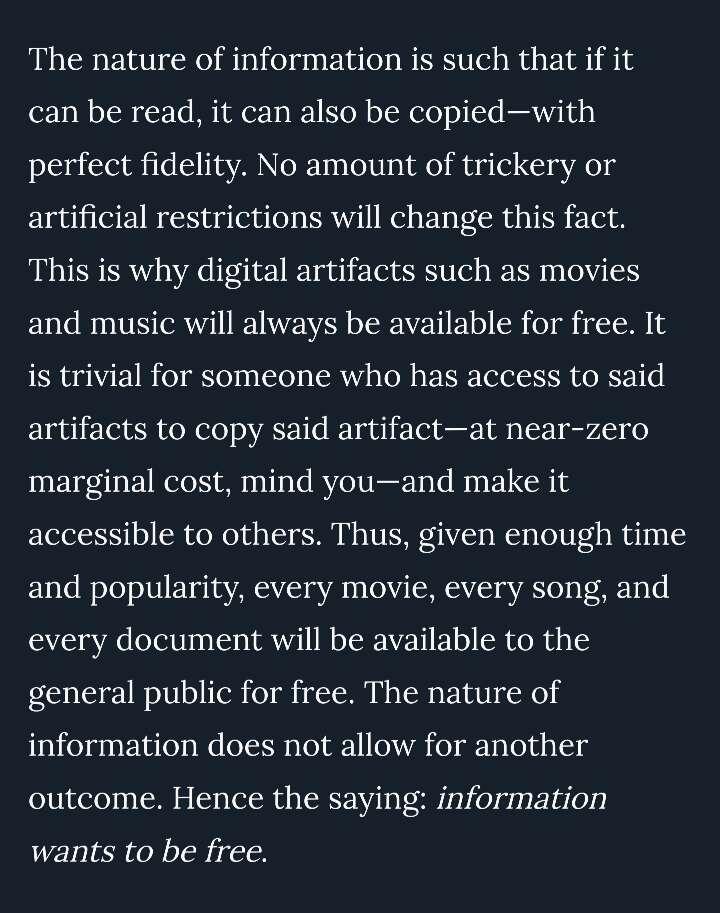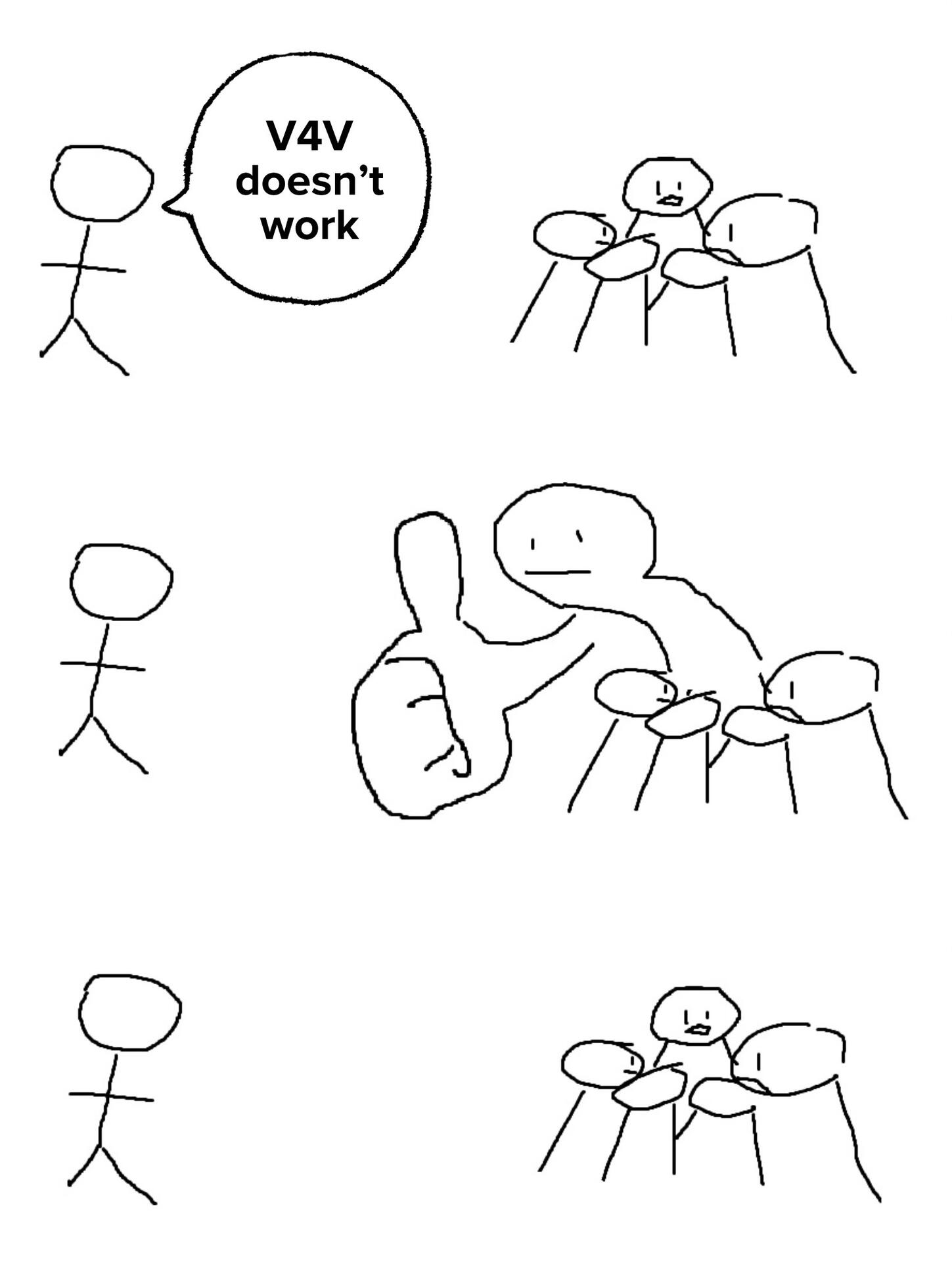
Once a user purchases content, there's no foolproof way to prevent them from sharing it with others.

We could make it harder by becoming content gatekeepers, worsening the experience with authorizations and restrictions.

Or we could design it as a freedom tool for both users and creators, allowing them to manage it themselves with mutual respect and a web of trust.

Reply to this note

Please Login to reply.

Discussion

We can look to NFTs for learnings. That is to say, creators will make money, but there will also be theft (“right click + save”).

Good content will stand on its own but there’ll be lots of garbage, kind of like how fully 80% of the music on Wavlake was generated by AI with like 30 seconds of work.

Challenge will be how to elevate the good stuff above the rest.

I rest my case.

Didn’t say they were good learnings lol. Just…learnings

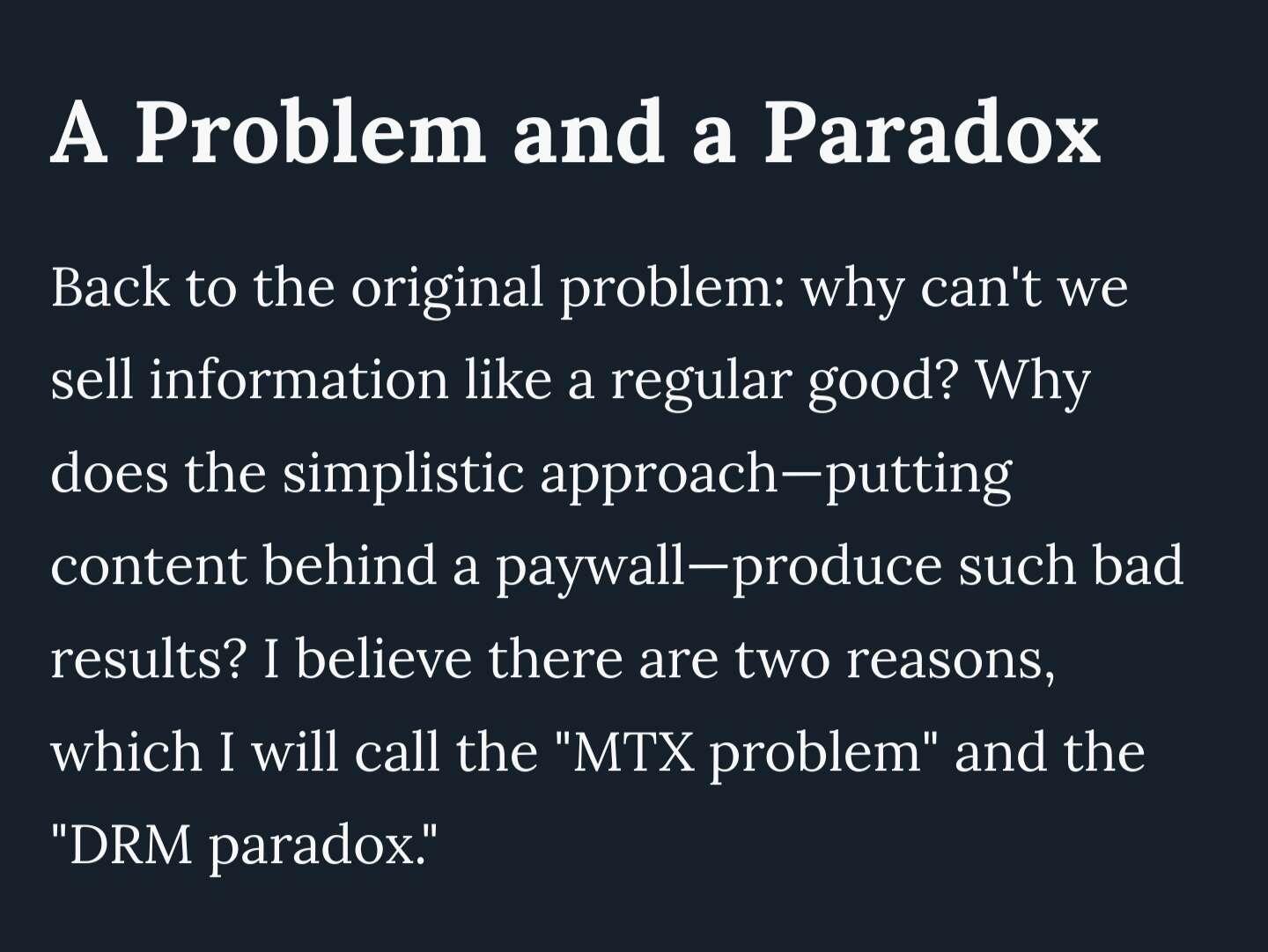
"The paradox is this: content will only stay behind a paywall if it is shitty. If it's good, someone will set it free."

https://dergigi.com/2021/12/30/the-freedom-of-value/

Still has costs to store content online

Paywalls: a method for ensuring your shitty content has as small an audience as possible 🤣

🤭🤭

That seems incorrect. There are reasons someone may not want to share. It may provide a competitive advantage, even temporary. Value is entirely subjective.

Paywalls can provide early access at best, but most people are incredibly confused about that fact. Financial data and OnlyFans are good examples.

Netflix et al sell convenience and fantastic service (search, history, personalization, etc) - not files.

What you can sell is access to a gated community, which isn't a file. Twitch does it right. Most people are still trying to sell files (read: JPGs), which is madness.

More precisely, access to a file. A file can be both a non-economic good, of which the quantity of it far exceeds any need for it, and an economic good through limited access.

Using non-free software to accomplish that I think is very deceptive and is another topic.