
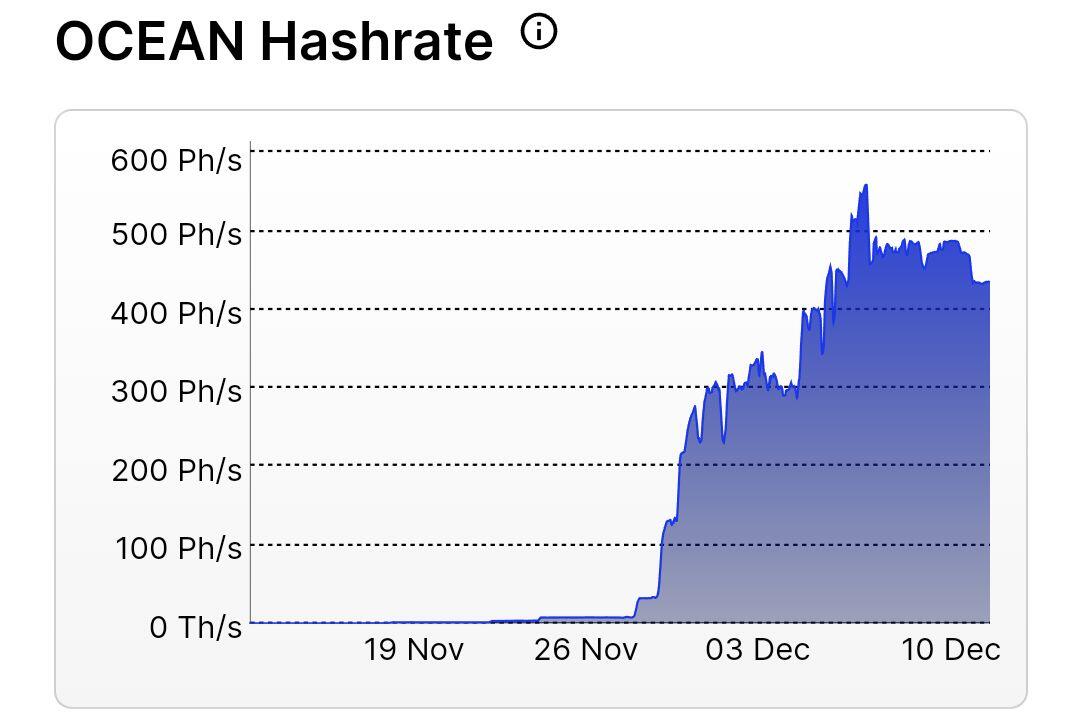

Hashrate is decentralized but mining isn't. Block templates are created and controlled by a few large mining pools. I've only recently come to understand this. That's why I moved my hash to nostr:npub1qtvl2em0llpnnllffhat8zltugwwz97x79gfmxfz4qk52n6zpk3qq87dze. Mining pools and individual miners who created they're own block templates are free to include whatever transactions they choose, that's the free market. Market forces aren't solely determined by highest profit. If it were, nostr:npub1qtvl2em0llpnnllffhat8zltugwwz97x79gfmxfz4qk52n6zpk3qq87dze wouldn't have any hashrate. The decision on whether to include inscriptions in the block template will be delegated to the hash providers themselves once stratum v2 is implemented. That's when hash providers will become more than hash providers, they will become miners. This is where mining needs to go for the health and decentralization of the network.
Discussion
Ok, but not the large mining pools are censoring, but Ocean itself. Stratum V2 is the future, but until then for me any pool that is censoring a legit transaction can GFI.
Large pools have censored transactions (f2pool recently admitted this) and Luxor mined a block earlier this year for virtually zero onchain fees but took payment via side channels, thereby screwing all the hash providers in their pool. The reason they can do this is because they create the block template in obscurity so hash providers can't see the block until it's mined. I'm not saying Ocean is perfect, but at least they show you in real time their block template so when they do find a block, there are no surprises.
I know these pools previous censoring attempts, but all stepped back after public backlash. Miners are moving from censoring pools because that hurts their financial incentives. It doesn't matter if the block template is public when they are actively censoring valid transactions. They're not different than others in this case and miners will leave from them too.