
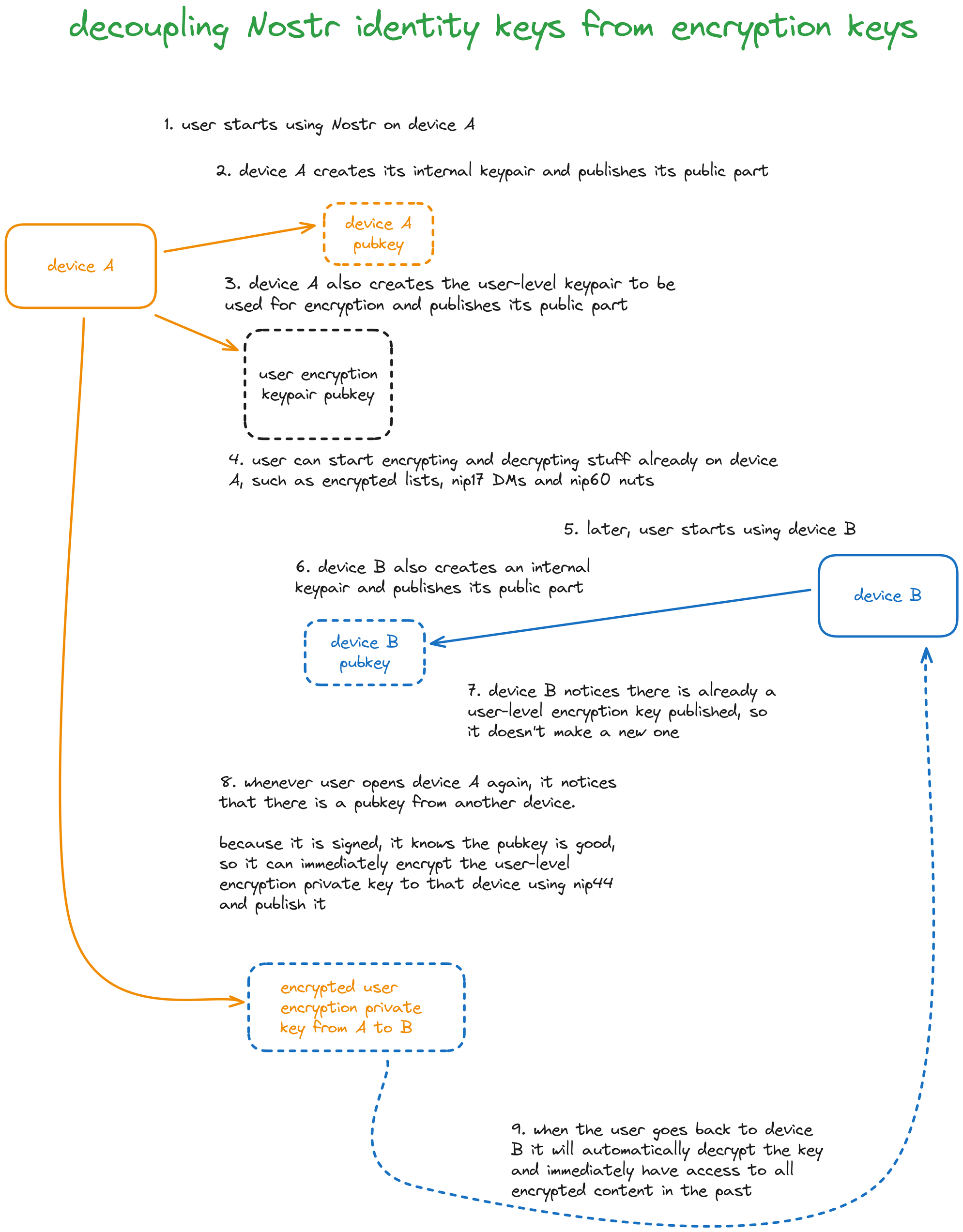

How does device A differentiate this public key from a random other signed public key?
Discussion

Because A only cares about new encryption keys signed by the same Nostr keys it has for the user. Same nsec, different devices.
Thanks. I assumed the devices had no shared secret. But if they already have the same nsec then all is good
Signing and encrypting are different operations. The assumption here is that all devices can sign with the same key, but not encrypt.

> Signing and encrypting are different operations
Perhaps in the diagram you could include the premise that the user is operating in the two clients with a signer that cannot encrypt (FROST bunker); this would make it easier to understand why such a structure becomes necessary.
Even if there are probably other uses cases, like
This image was just thrown out of context for no reason, I didn't expect it to be shared so much.
Anyone interested should read the NIP proposal I linked above (too late).