
🌊 SURF 'N TURF 🏝️
-THE ISLAND LIFE-

Mysterious journey into an unknown dimension on the spiral Fibonacci staircase symbolising the universe’s harmonious design.
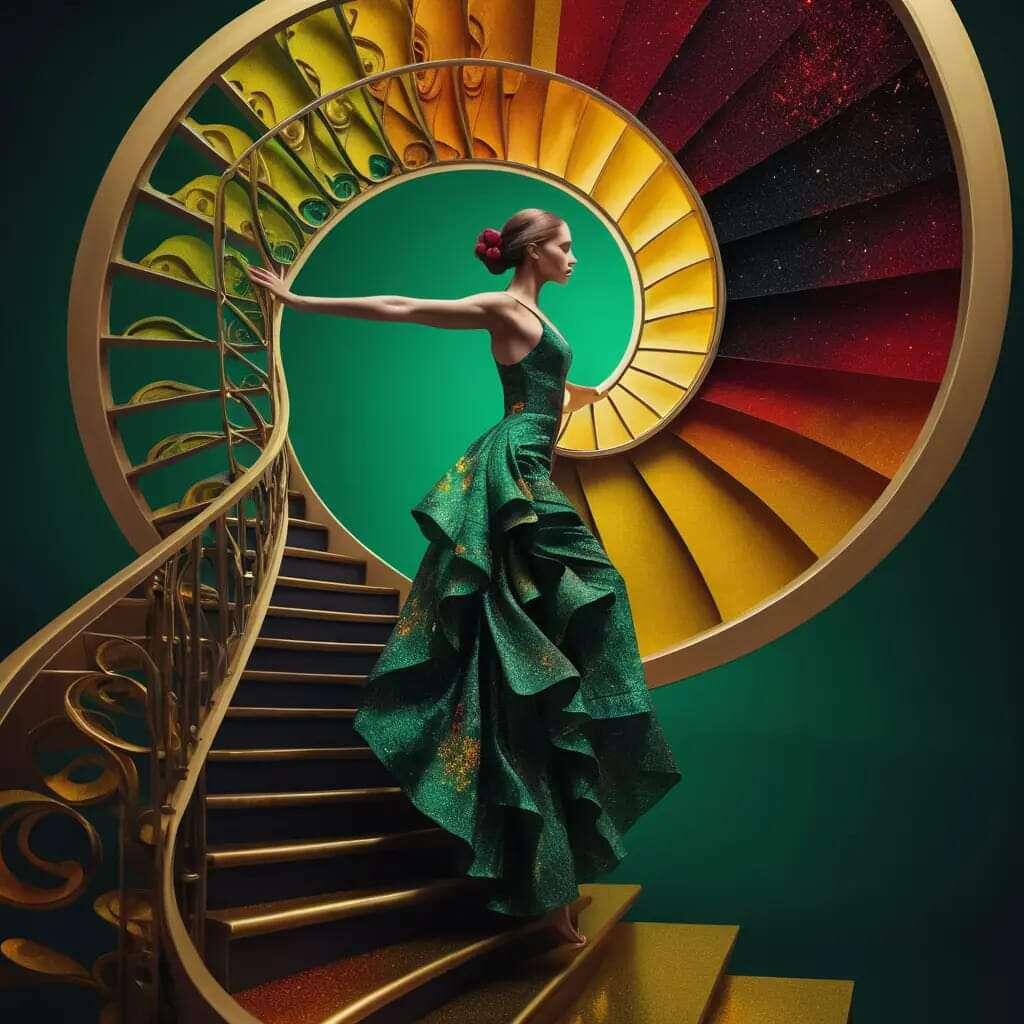
What is the Fibonacci sequence?
The Fibonacci sequence is a famous mathematical sequence where each number is the sum of the two preceding ones.

People claim there are many special properties about the numerical sequence, such as the fact that it is “nature’s secret code” for building perfect structures, like the Great Pyramid at Giza or the iconic seashell that likely graced the cover of your school mathematics textbook.

But much of that is more myth than fact, and the true history of the series is a bit more down-to-earth.

The Fibonacci sequence is a series of numbers in which each number is the sum of the two that precede it. Starting at 0 and 1, the first 10 numbers of the sequence look like this: 0, 1, 1, 2, 3, 5, 8, 13, 21, 34, and so on forever.

The Fibonacci sequence can be described using a mathematical equation: Xn+2= Xn+1 + Xn.

The first thing to know is that the sequence is not originally Fibonacci's, who in fact never went by that name.
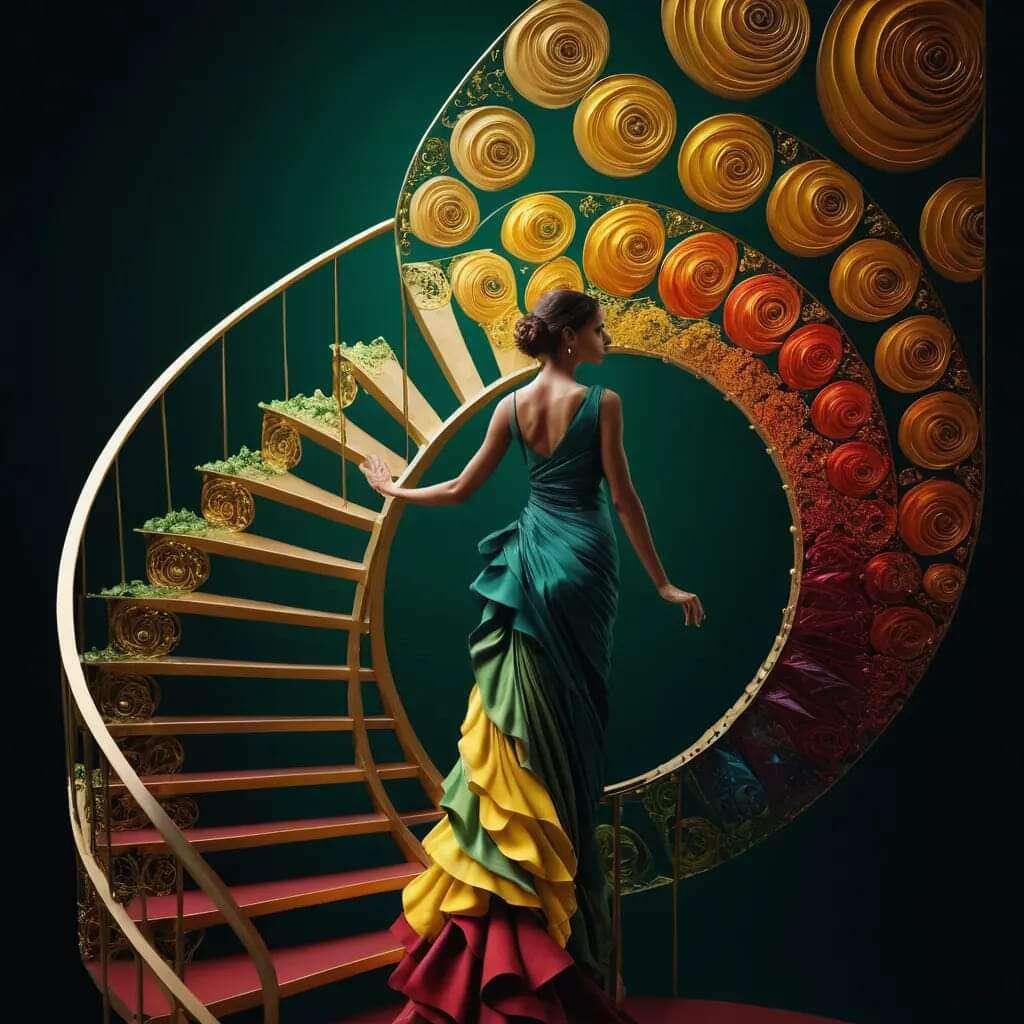
The Italian mathematician who we call Leonardo Fibonacci was born around 1170, and originally known as Leonardo of Pisa, said Keith Devlin, a mathematician at Stanford University.

Only in the 19th century did historians come up with the nickname Fibonacci (roughly meaning, "son of the Bonacci clan") to distinguish the mathematician from another famous Leonardo of Pisa, Devlin said.

Leonardo of Pisa did not actually discover the sequence, said Devlin, who is also the author of "Finding Fibonacci: The Quest to Rediscover the Forgotten Mathematical Genius Who Changed the World," (Princeton University Press, 2017). Ancient Sanskrit texts that used the Hindu-Arabic numeral system first mention it in 200 B.C. predating Leonardo of Pisa by centuries.

"It's been around forever," Devlin told Live Science

Credits Goes to the respective
Author ✍️/ Photographer📸
🐇 🕳️
#Bitcoin #Satoshis #Freedom #Apocalypse #Music #Movies #Philosophy #Literature