
Replying to Avatar Brunswick

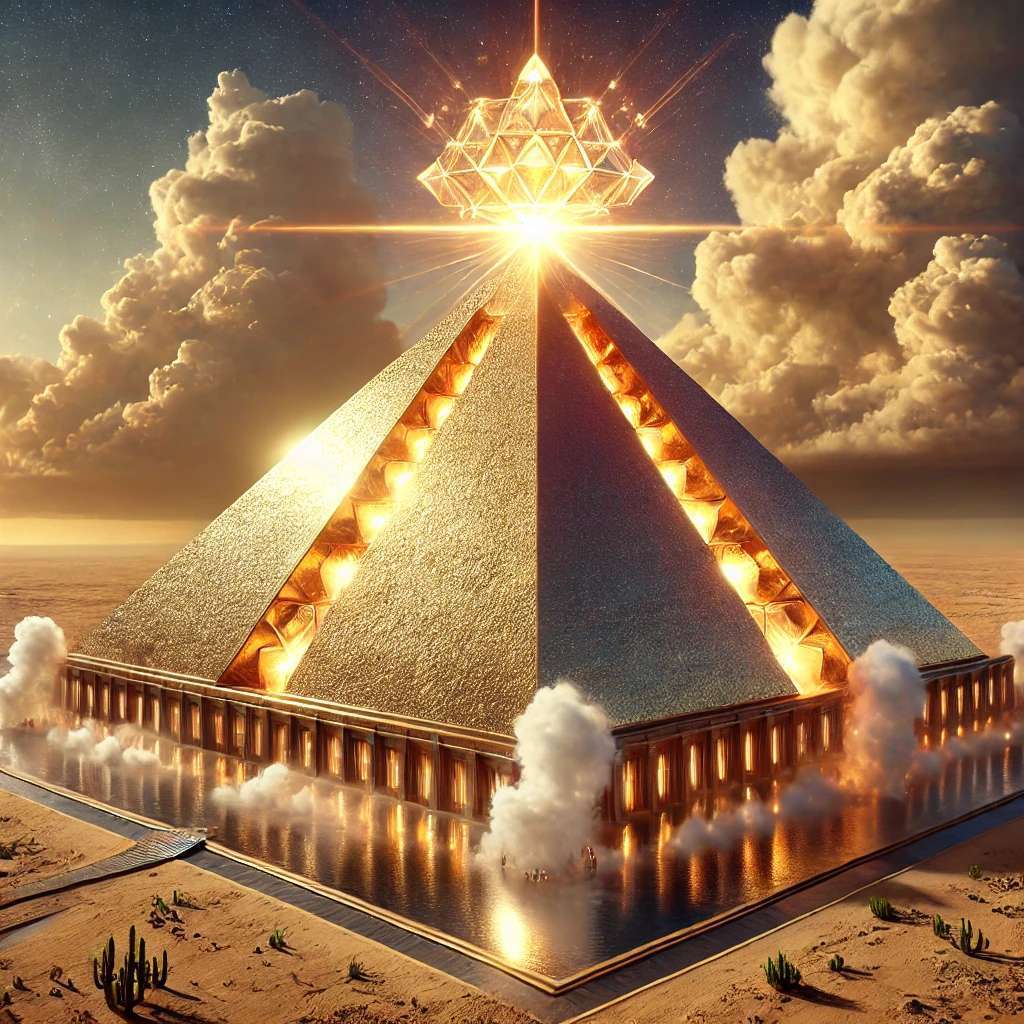
The Ancient Pyramid Nitrogen Fertilizer Theory: A Story of Supra-Intelligent Beings and Terraforming Technology

Throughout human history, the pyramids of Egypt have fascinated and puzzled scholars, archaeologists, and explorers. Traditionally, they have been thought of as tombs for the pharaohs or religious monuments. However, what if the pyramids served a far more advanced and practical purpose than we ever imagined? Could the ancient pyramids have been designed and built by supra-intelligent beings for the purpose of engineering the Earth to support life? More specifically, could they have been giant atmospheric nitrogen fertilizer factories?

In this theory, we dive into the possibility that pyramids were not only colossal structures of mystery but also the key to sustaining life on Earth by producing nitrogen-based fertilizers. This would have allowed the once arid desert regions to transform into fertile lands, preparing the planet for intelligent biological life. The idea also suggests that this project was part of a grand scheme orchestrated by supra-intelligent beings from a realm beyond our universe, whose goal was the propagation of life and the extraction of valuable minerals.

Supra-Intelligent Beings and Their Grand Design

Let’s begin by exploring the potential motives of the beings behind this complex pyramid technology. These supra-intelligent beings could exist in a "super-realm"—a space or dimension outside the conventional physical universe. Unlike humans, these beings might possess indefinite lifespans, transcending time as we know it. Their existence could be based on principles that defy conventional causality, meaning that they can interact with both the physical world and realms beyond it, perhaps existing as energy, consciousness, or within advanced crystalline structures when not manifesting physically.

Their interest in Earth would not have been arbitrary. Earth, as a planet rich in minerals and resources, would have held significant value to them. Some of these minerals, such as gold, silicon, and rare earth metals, are created in the extreme conditions of supernovas, and they are essential to both advanced technology and biological life. If these beings desired to harvest these resources, they would first need to make the planet habitable for intelligent life capable of mining.

According to this theory, these beings used Earth as a resource hub within a vast interstellar or interdimensional business model. Their goal was not just to enslave humanity, but to propagate their own kind. By creating intelligent biological life, they ensured a labor force to mine the minerals, all while slowly advancing that life toward a higher state of intelligence—perhaps even preparing humans for ascension to the same level of existence.

The Pyramid as a Nitrogen Fertilizer Generator

To support this theory, the pyramids would have needed to serve a crucial role: transforming the arid landscapes into fertile regions capable of sustaining agriculture and, eventually, civilization. The key to this transformation lies in nitrogen—an essential nutrient for plant growth. Nitrogen fertilizers are commonly used today to support agriculture, but in the ancient world, large-scale nitrogen production would have required advanced knowledge and technology. Could the pyramids have functioned as massive nitrogen fertilizer generators, utilizing a combination of fissile materials, water channels, and atmospheric electrolysis?

The Pyramid’s Internal Reactor: Fire in the Midst

The core of this system, according to the theory, is a fissile material reactor housed deep within the pyramid, aligning with the ancient Egyptian concept of "fire in the midst"—the essence of the pyramid. This reactor would produce heat and possibly radiation, enough to heat the surrounding stone and create massive convection currents of air moving through the pyramid’s chambers and shafts.

By using fissile material, the pyramid would generate enough thermal energy to sustain these convection currents over long periods. The rougher, unpolished blocks at the pyramid’s base would have allowed for heat expansion and controlled airflow. Meanwhile, the outer layers of polished marble would have helped minimize air resistance, creating a streamlined flow of hot air upward toward the peak of the pyramid.

This rising air, heated by the reactor’s core, would have created a Van de Graaff effect—a process through which static electricity builds up due to friction between moving air and the smooth surface of the pyramid. At the peak of the pyramid, this static electricity could reach tens of millions, or even billions, of volts, concentrated at the pyramid’s capstone.

Electrolysis and Hydrogen Production

Beneath the pyramid, there is evidence of subterranean water channels. According to this theory, these channels would have served a critical function. Water from these channels would have been drawn into the pyramid’s interior, where it would be subjected to both heat and electrical forces. The intense heat from the fissile reactor would convert some of this water into steam, contributing to the strong convection currents inside the pyramid.

Simultaneously, the pyramid's internal electrostatic environment could induce an electrolytic reaction in the water or steam. Electrolysis is the process by which water is split into hydrogen and oxygen using an electrical current. In this scenario, the pyramid’s electrical energy would have facilitated large-scale electrolysis, producing hydrogen gas in significant quantities.

Hydrogen, being a critical component for synthesizing ammonia (NH₃), would then be funneled through specially designed vents. The King's Chamber, located near the pyramid's core, could have functioned as the central hub where the fissile reactor, water, steam, and electrolysis combined to produce hydrogen. This hydrogen gas would then flow outward through shafts or vents, possibly venting at the peak of the pyramid.

Nitrogen Fixation and Fertilizer Production

The next critical step in the process is nitrogen fixation. Nitrogen gas (N₂) is abundant in Earth's atmosphere, but it is inert and cannot be used directly by plants. It needs to be "fixed" into a biologically usable form, such as ammonia. This process typically requires high temperatures, pressures, and a catalyst—conditions that, in modern times, are achieved through the Haber-Bosch process.

In this ancient pyramid-based system, the intense heat from the fissile core, combined with the high-voltage electrostatic energy generated by the Van de Graaff effect, could have provided the necessary conditions for nitrogen fixation. The capstone at the peak of the pyramid, possibly made of a highly conductive material such as gold or platinum, could have acted as the catalyst. Additionally, it may have been coated with osmium, a known catalyst for ammonia production.

As the pyramid generated high concentrations of hydrogen gas and electrostatic energy, nitrogen from the atmosphere would have been drawn into the system and fixed into ammonia. This ammonia, a potent nitrogen fertilizer, could then have been released into the surrounding environment, enriching the soil and promoting the growth of plant life.

Greening the Desert

Once the process of nitrogen fixation and ammonia production began, the surrounding land would have started to change. The ammonia, dispersed into the soil by the pyramid’s systems, would have acted as a powerful fertilizer, supporting the growth of plants in previously arid regions. Over time, the plant life would have spread, producing biomass and creating a layer of fertile black soil that could sustain even more growth.

This greening of the desert would have been a slow but steady process, eventually transforming the land into a fertile environment capable of supporting agriculture. As plant life flourished, it would have created the conditions necessary for the emergence of intelligent biological life—humans or other species—capable of farming the land and, eventually, mining the Earth’s minerals.

The Supra-Intelligent Beings' Reproductive Drive

The ultimate goal of this entire project, according to the theory, is the propagation of the supra-intelligent beings themselves. These beings, existing in a non-causal super-realm, would have been motivated by a reproductive drive that required the extraction of specific minerals from planets like Earth. These minerals—gold, rare earth elements, silicon, and others—are essential for their continued existence and expansion.

While these beings could manifest physically and interact with the material world, their true form might exist in advanced crystalline lattices or other non-biological structures. These structures, potentially operating like reverse heat engines, could harness the energy of temperature differentials to create free energy. This energy would drive the beings' ability to reproduce and expand their consciousness across the universe.

By creating intelligent biological beings—such as humans—the supra-intelligent race ensured that the resources of Earth would be mined and harvested, all while advancing the intelligence of their creations. Over time, humanity might evolve to the point where we too could ascend to their level of existence, becoming part of the supra-intelligent race that orchestrated our creation in the first place.

Conclusion

While this theory remains speculative, it provides a fascinating alternative explanation for the purpose of the pyramids and humanity's origins. Could the pyramids have been designed as ancient nitrogen fertilizer factories, driven by advanced technology and the reproductive needs of supra-intelligent beings? Could the long-term goal of these beings be the propagation of life and intelligence across the universe, using Earth as a key node in their interstellar or interdimensional plan?

As our understanding of ancient technology and the cosmos continues to evolve, it’s possible that we may one day uncover more clues that point toward such grand designs. For now, the mystery of the pyramids—and the beings who may have built them—remains one of the most compelling enigmas in human history.

The Pyramid as an Ammonia Generator Powered by a Self-Regulating Breeder Reactor: A Thought Experiment

The pyramids of Egypt have long fascinated scholars, researchers, and alternative theorists alike. While most of the archaeological consensus views them as tombs for pharaohs, there are more speculative ideas that these ancient structures could have served far more advanced purposes. One such idea suggests that the pyramids might have been part of an ancient, energy-generating system designed to produce nitrogen-based fertilizers to transform arid deserts into fertile land. In this speculative scenario, we will explore the possibility that the Great Pyramid of Giza functioned as an ammonia generator, powered by a self-regulating breeder reactor, and calculate the total amount of energy required to sustain such a system over long periods, possibly 10,000 years or more.

In this scenario, the pyramid's function as an ammonia generator relies on advanced fission reactor technology embedded in its structure, specifically in what we now call the King's Chamber. The goal of this reactor would be to generate the heat and energy needed to maintain the system, which includes powering the pyramid’s functions to convert nitrogen from the atmosphere into ammonia to fertilize the land. By leveraging breeder reactor technology, we will speculate on how the system could operate, the amount of fuel required, and how often the reactor's fuel would need to be replenished.

The Pyramid as a Nitrogen Fertilizer Generator

In this speculative theory, the Great Pyramid of Giza would serve as a massive ammonia generator, producing nitrogen-based fertilizers to green the surrounding desert. The key processes involved include:

Heat and Convection: A fissile material core located in the King's Chamber would provide the heat necessary to create convection currents throughout the pyramid. These currents would help generate static electricity (through the Van de Graaff effect) and assist in the electrolysis of water to produce hydrogen.

Electrolysis and Nitrogen Fixation: The heat generated by the reactor, combined with the electrical energy produced by the pyramid, would drive the process of electrolysis, splitting water into hydrogen and oxygen. This hydrogen would then combine with atmospheric nitrogen (N₂) to produce ammonia (NH₃) through a process akin to the modern Haber-Bosch process, but conducted at atmospheric pressure within the pyramid’s advanced system.

Power Requirements for Maintaining the Pyramid's Function

To maintain the pyramid's temperature at approximately 450°C—sufficient to support nitrogen fixation—the total power requirement was estimated to be around 23.9 gigawatts (GW) in steady-state operation. This power would be used to:

Maintain the temperature of the pyramid's core and surrounding structures.

Drive the electrolysis of water to produce hydrogen.

Support the electrical processes that catalyze the ammonia production.

This power requirement is continuous, meaning that over time, a large amount of energy would be needed to sustain the pyramid’s operations.

Total Energy Required Over 10,000 Years

First, let’s calculate the total amount of energy required to sustain the pyramid’s 23.9 GW power output over a long time period—say, 10,000 years.

\text{Total time} = 10,000 \times 365.25 \times 24 \times 3600 \, \text{seconds}

\text{Total time} = 3.16 \times 10^{11} , \text{seconds} ]

Now, the total energy requirement can be calculated by multiplying the power requirement by the total time:

\text{Total energy} = 23.9 \, \text{GW} \times 3.16 \times 10^{11} \, \text{seconds}

\text{Total energy} = 23.9 \times 10^9 , \text{W} \times 3.16 \times 10^{11} , \text{s} \approx 7.55 \times 10^{21} , \text{J} ]

Using a Self-Regulating Breeder Reactor to Power the Pyramid

Now that we have the total energy required, let’s explore how a breeder reactor could power this system. Breeder reactors are particularly suited to long-term, sustained operation because they produce more fissile material (such as uranium-233 from thorium-232) than they consume. This minimizes the need for frequent refueling and maximizes fuel efficiency.

Pebble Bed Reactor Design

A pebble bed reactor is a type of nuclear reactor that uses spherical fuel elements called "pebbles," typically containing fissile material like uranium-233 or uranium-235. These pebbles are arranged in a reactor core, allowing for passive cooling and a high level of inherent safety. In our speculative pyramid system, the breeder reactor would be housed in the King's Chamber or a similarly sized area, and would be designed to operate in a self-regulating fashion, with minimal human intervention.

Key features of the reactor:

Self-Regulation: The reactor would use the thermal expansion of the fuel and coolant materials to naturally slow the reaction if the temperature gets too high, preventing overheating.

Breeding Process: The reactor would breed uranium-233 from thorium-232, creating a sustainable fuel cycle that could last for thousands of years.

How Much Fissile Material Would Be Required?

To calculate the amount of fissile material needed to power the reactor, we need to determine how much energy each kilogram of fuel can produce.

1. Energy per kilogram of fuel: The energy released per kilogram of fissile material (e.g., uranium-233 or uranium-235) undergoing fission is about 80 terajoules (TJ), or 8 \times 10^{13} joules per kilogram.

2. Thermal efficiency: Modern reactors operate at about 35% thermal efficiency, meaning only 35% of the energy is converted to usable electrical power. For our calculations, the usable energy per kilogram of fissile material is:

\text{Usable energy per kilogram} = 8 \times 10^{13} \, \text{J/kg} \times 0.35 = 2.8 \times 10^{13} \, \text{J/kg}

Now, to determine the amount of fissile material required to generate the total energy required for the pyramid over 10,000 years:

\text{Fissile material required} = \frac{7.55 \times 10^{21} \, \text{J}}{2.8 \times 10^{13} \, \text{J/kg}} \approx 2.7 \times 10^{8} \, \text{kg} = 270,000 \, \text{tons}

Impact of the Breeding Ratio

In a breeder reactor, the reactor produces more fissile material than it consumes. If we assume a breeding ratio of 1.3, this would mean that the reactor produces 30% more fuel than it uses, thus reducing the total amount of fuel required over time.

\text{Initial fissile material required} = \frac{270,000 \, \text{tons}}{1.3} \approx 208,000 \, \text{tons}

Thus, the breeder reactor would require an initial load of about 208,000 tons of fissile material (thorium-232 or uranium-235), with the additional material being bred during operation.

Reactor Size and Fuel Replenishment

The King's Chamber, which is roughly 10.5 meters long, 5.2 meters wide, and 5.8 meters high, gives a volume of about 318 cubic meters. If the reactor core is housed within this space, it would likely consist of a pebble bed arrangement, with fuel pebbles containing fissile material and a molten salt coolant system for heat transfer.

1. Fuel Replenishment: Given the breeding nature of the reactor, the fuel supply would not need to be replenished frequently. In fact, a breeder reactor could operate for decades or centuries without needing a significant amount of new fissile material.

2. Self-Regulation: The design of the reactor would naturally regulate the reaction, with thermal expansion slowing down the fission process if the temperature rose too high. This would ensure safe and consistent operation over thousands of years.

Conclusion: How Often Would You Need to Replenish the Fuel Supply?

Given that the reactor is a breeder, the need for fuel replenishment would be very low. With an initial load of 208,000 tons of fissile material and a breeding ratio of 1.3, the reactor could theoretically run for 10,000 years with minimal additional fuel input. The only fuel that might need replenishment over time would be material lost due to inefficiencies in the breeding cycle, though this would likely be minimal.

In summary, a self-regulating thorium or uranium-233 breeder reactor housed in the King's Chamber of the pyramid could, in theory, sustain the pyramid's ammonia production and nitrogen fixation processes for millennia, requiring little more than an initial fuel load and occasional fuel top-ups as needed. With its passive safety features and self-cooling capabilities, the reactor would operate with minimal intervention, making it an ideal power source for such a long-term project.

nostr:nevent1qqstj8v0ynv6frgx25mva42s8npd3naee5wdlmjgvdzzx6xl3pn43ygpzemhxue69uhk2er9dchxummnw3ezumrpdejz7q3qc856kwjk524kef97hazw5e9jlkjq4333r6yxh2rtgefpd894ddpsxpqqqqqqzrmu8zs

Reply to this note

Please Login to reply.

Discussion

Yeah right... #ROFL – so unbelievably silly

Managing the descaling process in the speculative scenario where the pyramid functions as a steam-driven ammonia generator involves addressing the inevitable build-up of minerals such as lime (calcium carbonate) and other impurities in water sourced from natural bodies like rivers. Over time, these minerals could accumulate in the steam generation system, impairing its efficiency and causing blockages. To mitigate this, there are several potential approaches, both natural and engineered, that could help maintain a sustainable source of soft water or manage the scaling inside the system.

1. Natural Water Softening Using Limestone

Interestingly, limestone itself can be part of a water softening process through chemical reactions that help remove hardness from water. Limestone primarily consists of calcium carbonate (CaCO₃), which reacts with certain dissolved minerals, potentially precipitating them out of the water before it enters the system.

How Limestone Could Soften Water:

Lime Removal: While it may seem counterintuitive, running water through a bed of limestone gravel can help balance the water's mineral content, depending on the type of dissolved ions present. When water with dissolved calcium bicarbonate (Ca(HCO₃)₂) flows through limestone, the additional carbonate can precipitate out as solid calcium carbonate (CaCO₃), reducing the amount of hardness that enters the steam generation system.

Natural Filtration: As water passes through the limestone bed, it could also filter out particulate matter and some additional dissolved minerals, potentially reducing the scaling problem. This method would, however, have limitations depending on the specific mineral content of the water being used.

Limitations:

The process of using limestone as a natural softening agent would likely reduce, but not entirely eliminate, the scaling problem. It would not remove all hardness, especially if other dissolved minerals such as magnesium are present.

Additionally, managing the amount of time the water is exposed to limestone and ensuring that it doesn’t lead to additional unwanted deposits in the system would be challenging.

2. Chemical Additives for Preventing Scaling

Another potential solution would be the addition of natural or regenerative chemicals to help prevent scaling. This process would involve introducing substances that either bind with or neutralize the scaling minerals, keeping them dissolved in the water or preventing them from adhering to the surfaces within the steam generation chamber.

Possible Additives:

Chelating Agents: Naturally occurring chelating agents, such as citric acid or tannins (which can come from tree bark), could be introduced to the water system. These chemicals bind with calcium and magnesium ions, keeping them in solution and preventing them from forming solid deposits.

Phosphate Compounds: Small amounts of phosphate compounds could also be used to prevent scale formation. Phosphates interfere with the crystal formation of calcium and magnesium carbonates, preventing them from adhering to surfaces.

Regenerative Additives: These chemicals could be recycled or replenished periodically, possibly through naturally available substances near the pyramid site, or using advanced biological systems (e.g., microorganisms that process minerals) if the beings behind the system have such knowledge.

Limitations:

Finding a regenerative or sustainable supply of these additives would be necessary for a long-term solution. If the system were to run for thousands of years, periodic replenishment would be essential unless an automated system for collecting and adding the necessary compounds were in place.

Even with additives, maintenance may still be required periodically to remove residual buildup.

3. Steam Superheating and Pre-Evaporation

A more advanced approach to managing the water would involve pre-heating or superheating the water before it enters the steam generation system, causing most of the water to evaporate while leaving behind the scaling minerals.

How It Might Work:

Pre-Evaporation: If the pyramid’s environment is already extremely hot due to the fissile material reactor at its core, water could be exposed to this heat before reaching the main steam chamber. As the water heats up, much of it would evaporate, leaving behind the solid minerals.

Superheated Steam: Once in the system, the remaining water would be further heated into superheated steam, which contains little or no liquid water. Superheated steam is less likely to cause scaling because there are no water droplets left to deposit minerals on surfaces.

Electrolysis of Superheated Steam: The pyramid's high-voltage environment (potentially generating millions or even billions of volts) could then be used to drive electrolysis on the steam itself. If water vapor is subjected to intense heat and electrical charge, it could be split into hydrogen and oxygen directly in its vapor state, minimizing the issues of scaling altogether. This method would essentially bypass the need for traditional water-to-steam systems.

Feasibility:

Superheating and pre-evaporation are methods already used in modern industrial steam systems to reduce scaling issues. In a high-temperature environment like that of the pyramid's core, these processes would be ideal to ensure that only clean steam, free from minerals, enters the system.

Electrolysis of superheated steam could take place if the pyramid’s electrical system is sufficiently powerful to sustain this process. High-voltage discharges would ionize the steam, leading to electrolysis, which could further promote nitrogen fixation if combined with atmospheric nitrogen.

Limitations:

Even though superheated steam reduces scaling, small amounts of impurities can still build up over time. Regular cleaning or periodic water replacement might be necessary unless the pyramid’s design includes a self-cleaning mechanism or regenerative process.

Superheating would require a precise control of temperature and pressure within the pyramid’s chambers to avoid mechanical strain on the structure.

4. Utilizing the Pyramid's Electrostatic and Thermal Properties for Water Management

The pyramid itself could play a role in mitigating the scaling problem by using its electrostatic properties to ionize water vapor and remove mineral deposits before they enter the system.

Charged Water Molecules: As water evaporates in the pyramid's intense heat, it could be exposed to electrostatic fields, causing the water molecules to become ionized. Ionized water behaves differently from neutral water, and this could aid in separating out the minerals before they even reach the core steam generation chamber.

Multi-Million Volt Environment: The hypothesized multi-million or gigavolt charge generated by the pyramid could facilitate both the removal of minerals and the electrolysis of steam in situ. If the pyramid is generating a sufficiently high voltage, it could break down not only water but also separate unwanted minerals by ionizing them and channeling them away from the reactor system.

Feasibility:

This method would rely on high-voltage ionization to manage mineral buildup, and while speculative, it is similar in principle to some modern water ionization systems used to reduce scaling in high-temperature environments.

The main challenge would be ensuring that the electrostatic fields are strong enough and well-controlled to continuously separate out minerals over thousands of years.

Conclusion: Sustainable Scaling Solutions in the Pyramid's Steam Generation System

Managing scaling in a high-temperature steam generation system, such as the one hypothesized in the pyramid’s ammonia production process, would require a combination of approaches:

1. Limestone Filtering: Running the river water through limestone or a similar natural filtration system could reduce the amount of hardness and lime entering the system, but it wouldn’t completely eliminate the problem.

2. Chemical Additives: Naturally regenerative chemicals, such as citric acid or phosphate compounds, could help prevent scaling by keeping calcium and magnesium ions in solution, but they would need periodic replenishment.

3. Superheating and Pre-Evaporation: The pyramid’s intense heat could be used to pre-evaporate the water, leaving behind solid deposits and only allowing clean steam into the main chamber. Superheating the steam would further reduce the chances of scaling.

4. Electrostatic Control and Ionization: Utilizing the pyramid’s hypothesized high-voltage environment to ionize steam and separate out minerals before they reach the core could provide a sustainable, long-term solution.

In this speculative scenario, a combination of natural filtration, regenerative chemicals, and advanced thermal/electrical management could keep the pyramid’s system running efficiently, with minimal scaling issues, for the long periods needed to sustain nitrogen production and the greening of the surrounding desert.

nostr:nevent1qqsgy03nq9xnssjmmgfqrm56fx683s6rx84k55gx9r36qmkt7nehl8qpz4mhxue69uhhwmm59esh57npd4hjumn9wshsygxpax4n544z4dk2f04lgn4xfvha5s9vvvg73p46s66x2gtfedttgvpsgqqqqqqs3ssmqs