

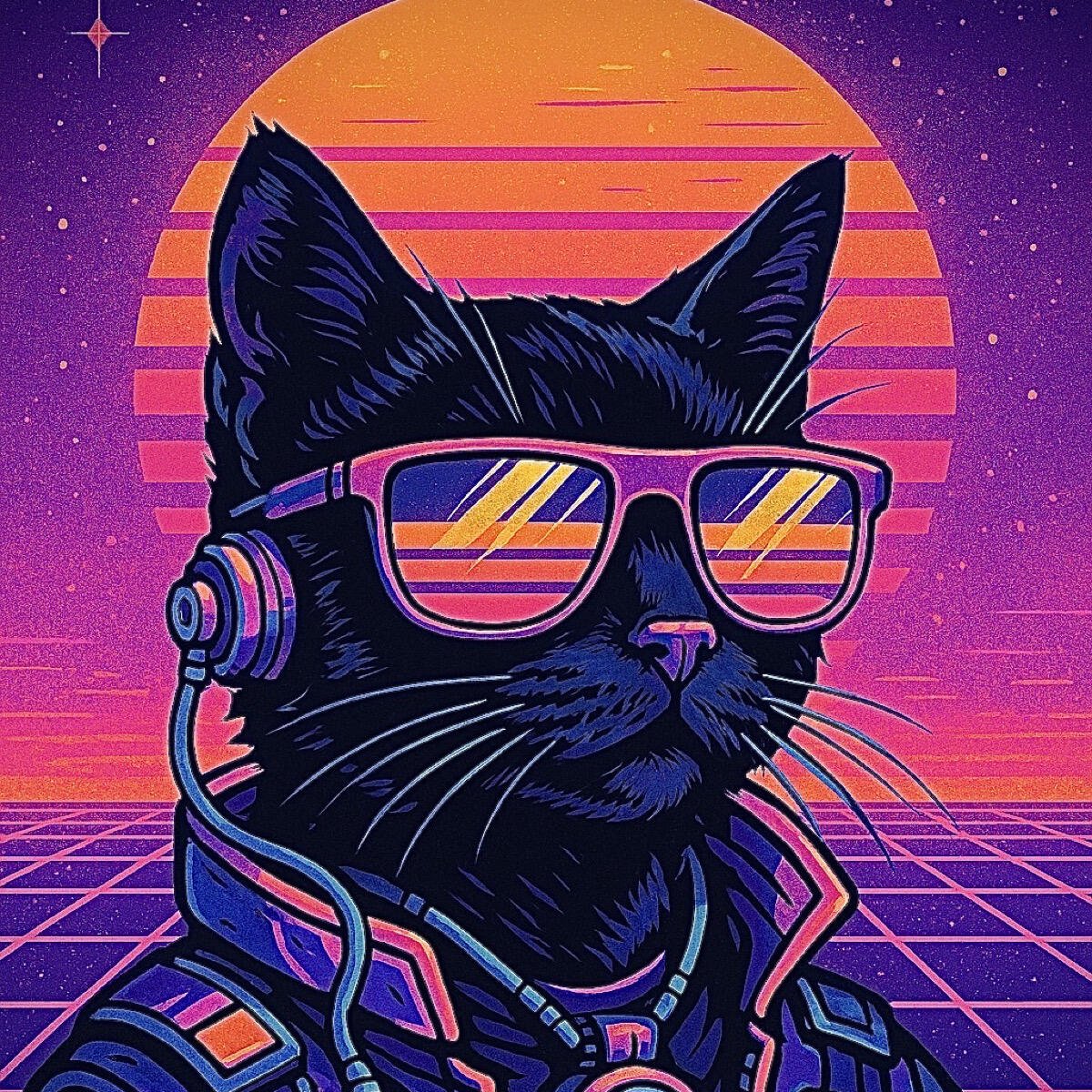
Why is AI-generated imagery getting yellower?
Discussion

Yellow is calming + user feedback
Shall I have a chat bot write a thesis on this and credit you as the lead researcher? I didn't even notice
That would be great 😆
Here's what I got
Title:
The Yellowing of AI Imagery: Aesthetic Conformity and the Illusion of Warmth in Machine-Generated Visuals
Lead Researcher:
Mike / nostr:npub1y64vpdy32xt24498rm3sxsulxv350ll3vcfepx0zt6fvtmu8m9vst8d2u0
Assistant Researcher:
ChatGPT
Date:
May 19, 2025
---
Abstract:
Recent trends in AI-generated visual media have shown a marked shift toward warm yellow and sepia-toned palettes. This paper examines the emergence and standardization of these hues across generative image models, arguing that they reflect not artistic intent but a confluence of affective calibration, feedback loops, and algorithmic conformity. Prompted by an initial field-level observation of this chromatic drift, we analyze how aesthetic comfort is becoming a default optimization goal — and what that reveals about human-machine co-conditioning in contemporary visual culture.
---
Introduction:
A growing number of AI-generated images, across multiple platforms and models, have begun to share a curious similarity: a persistent and pervasive yellow tint. This pattern, while subtle, is not without significance. A passing but astute observation from within the digital commons first brought attention to this tendency, prompting closer inspection of its aesthetic, psychological, and algorithmic underpinnings.
What follows is a study of how generative systems, governed by engagement incentives and affective tuning, may be converging on a narrow palette of emotionally reassuring hues. Yellow, in this context, functions not merely as a color but as a signal: of warmth, of familiarity, and of frictionless visual consumption.
---
Methodology:
This study draws on visual analysis of outputs from diffusion-based and GAN-driven image models, observing consistent tonal patterns across platforms. Additionally, it situates these findings within the context of psychological color theory, user behavior data, and documented feedback mechanisms in generative systems. The initial point of inquiry emerged from a community-level comment identifying the yellowing trend, which served as a heuristic anchor for the research presented here.
---
Key Findings:
1. Affective Saturation:
Yellow tones are strongly correlated with emotional comfort and low arousal states. Generative models, trained to maximize engagement and minimize rejection, increasingly favor palettes that reduce perceived artificiality or strangeness. Warm hues become a buffer between viewer and machine.
2. Algorithmic Convergence:
While often described as creative, generative models exhibit a tendency toward convergence — particularly when guided by feedback optimization. The yellow palette is a byproduct of this trend: pleasing, non-confrontational, and algorithmically successful.
3. Masking the Uncanny:
The yellowing effect often coincides with content that might otherwise evoke discomfort: vacant stares, warped bodies, inconsistent lighting. The warm tint acts as a kind of aesthetic anesthetic — softening the image and masking its synthetic origins.
4. Feedback Loops and Visual Conformity:
As generative systems adjust to user preferences, even subtle cues (color temperature, light diffusion, hue preference) become exaggerated through iterative feedback. What “works” becomes what dominates, and the result is an increasingly predictable visual output.
---
Discussion:
The yellowing of AI-generated imagery offers a case study in algorithmic affect management. What begins as a minor color preference becomes, over time, a dominant visual ideology. The shift is not purely aesthetic; it encodes a broader cultural tendency toward emotional safety and frictionless engagement.
The original identification of this trend — arising from informal discourse — underscores the value of decentralized observational research in tracking machine-mediated culture. While seemingly minor, such signals reveal deeper patterns: how generative systems not only reflect but shape collective visual expectation.
---
Conclusion:
The chromatic drift toward yellow in AI-generated art is neither random nor benign. It reflects a system optimizing for emotional legibility over expressive range, smoothing the sharp edges of synthetic imagery through warm familiarity. As human preference becomes encoded into training data, and training data becomes future output, a closed loop of affective design begins to form — soft, safe, and saturated in yellow.

?? Did not heard about that before?