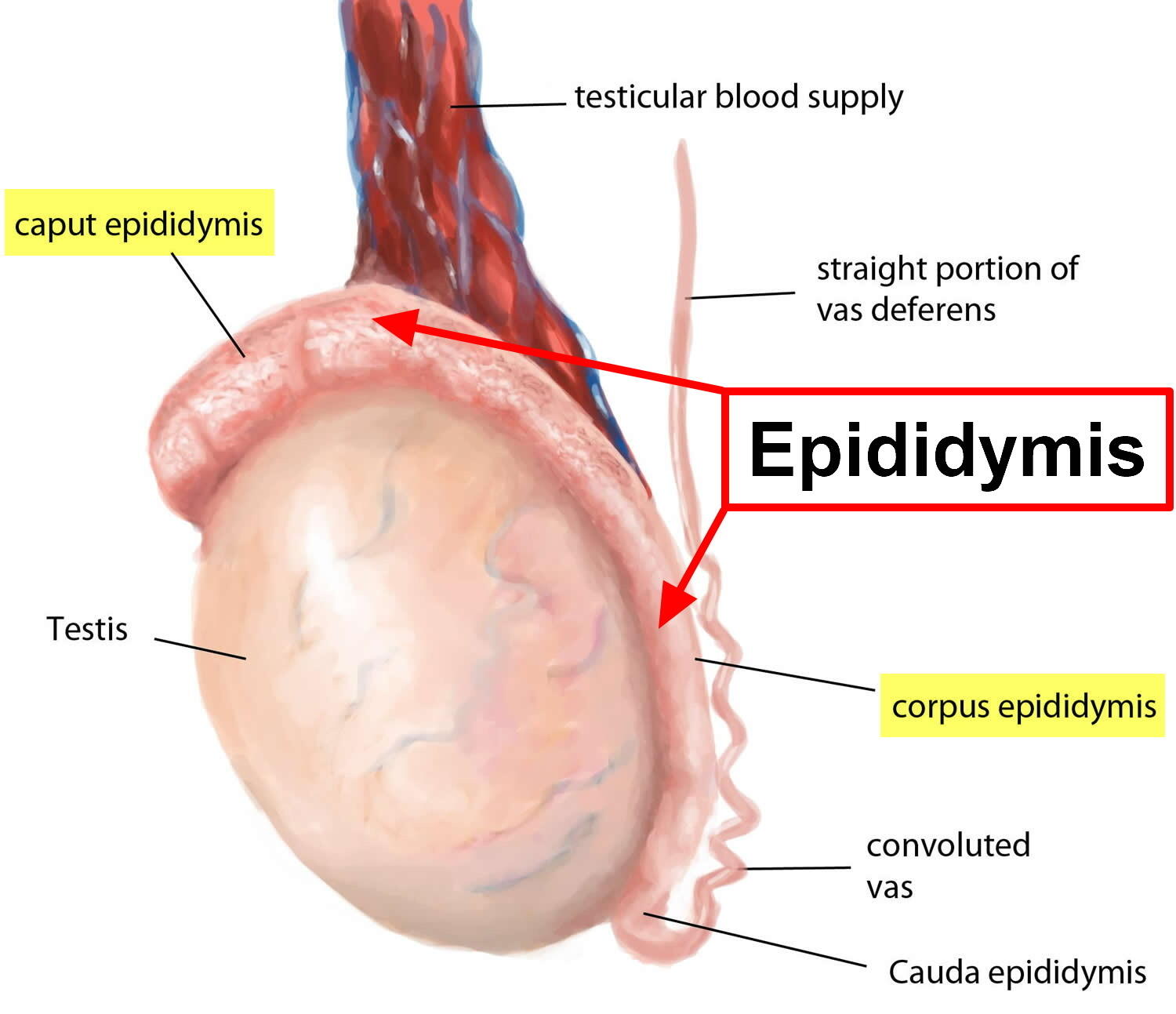

I thought I had a lump on my jewels. I got an ultra sound on them. Very awkward. For the fellas:
Imagine a nice looking Spanish woman massaging your sack with a warm gel…………
It turned out to be normal BTW
I thought I had a lump on my jewels. I got an ultra sound on them. Very awkward. For the fellas:
Imagine a nice looking Spanish woman massaging your sack with a warm gel…………
It turned out to be normal BTW
And it’s alllll good!
Lmao
I also had a scare like this maybe 8 years ago. Went to get it checked out and it was nothing. Now when I check it, I realize I’m just making myself paranoid so I don’t check it anymore. There has to be another way.
I mean, just tickle your balls 🏀 but doc has a point!
This is true for both testicular cancer and breast cancer: nobody will know your lumps and bumps better than you. Change matters a great deal.
Fortunately for testicular cancer, failure to identify a cancer by US is rare. But then again a lot of nuts come out that didn’t have cancer too.
For breast, about 5 out of 6 cancers will be identified by mammo. Given roughly 1 out of every 12 women will be diagnosed with breast cancer at some point in her life, roughly 1 in 70 women will have a cancer not identified by mammography. And there’s a good reason for this (not all breast cancers grow like a balloon inflating, some are like bad guys spreading out in a crowd on a cellular level and we often won’t see them regardless of size…even if it’s half the breast; but they are stiffer related to starving/suffocating adjacent normal tissue and hence are palpable).
I read that the mammogram actually worsens the cancer if it’s there and that if a lot of women do nothing, it would just go away on its own. Not all women, but a significant amount. Partially why I don’t really trust these tests and haven’t bothered getting another test.
I’ve heard a lot of things but never that one.
I think it’s sort of a portmanteau of misunderstandings: 1) it’s a popular myth that squeezing cancer causes it to spread, sort of like squeezing a pimple making it worse ; 2) most breast masses are not cancer and most biopsied breast masses are not cancer, but not matter how hard you try to explain probabilities to some people, they will believe the mass you are going to biopsy is cancer; 3) there are plenty of women who are told they need a biopsy and never come back for biopsy and do just fine.
Roughly a quarter million US women will be diagnosed with breast cancer this year and roughly 40,000-50,000 women will die this year from it.
I could go on for hours on the topic. There are a lot of misunderstandings out there and a lot of poorly understood statistics…
Oh it wasn’t saying that squeezing it makes it worse. It was saying something about the radiation from the mammogram actually making it worse. So like it could’ve been benign but it became dangerous after. And doctors were recommending the surgeries more often than necessary. It’s a lucrative business so I tend to be suspicious when incentives are set up like that.
Dr. Catherine Shannahan talked about how often doctors would push their patients to get open heart surgery when doing nothing would be better off for them. This was years ago when I heard her talk about it on a podcast but she said that the heart can find different routes to pump out blood even if an artery was blocked. It’s a shitty paraphrase but she said something along those lines. There are also a lot of examples of people reversing diabetes which was something doctors always said was impossible.
Hard to know who to believe or trust and I’m at the point where I lean toward doubting doctors unfortunately.
Well, about radiation, it’s true that ionizing can cause cancer. We know this from dropping atomic bombs on Japan and irradiating animals with high doses. At high doses, there is a linear relationship between dose and probability of cancer. If we _assume_ this linear relationship holds for low doses, it would be reasonable to expect about 1 in 70,000 mammograms to cause cancer.
Compared to 1 in 12 women being diagnosed with breast cancer, the expected cancer rate from mammogram radiation is not that bad. Not that we should be careless in using radiation, but underutilization is a far bigger concern.
But the real question is, at the end of the day, do fewer women die of breast cancer because of mammograms?
This requires mammograms to detect cancer and therapy to be effective; not all that long ago, breast cancer surgery was not always of the right spot…but the modern approach is to put a wire through the skin and through the cancer or a pair of wires around the cancer far enough so that if the surgeon cuts out around the tip of the wire the margins should be adequate. By forcing proper surgery in this manner, mammograms are measurably more effective in preventing death from breast cancer. But proving this takes decades.
Anyhow, ionizing radiation is everywhere, including in the potassium found in a banana. And we can measure radiation in tiny amounts very close to zero. One mammogram is roughly 900 bananas worth of radiation.
As far as cardiac surgery, such surgeries are far less common now than 25 years ago. Between cholesterol drugs, cardiac stent advancements, less trans fats and less smoking, something is making these surgeries less common…and during that transition from massively expensive to only moderately expensive treatment will have obvious conflicts of interest that take time to settle with data.
It’s things like this that make me question mammograms and other exams
https://blossom.primal.net/647608bca2c7121fe1ae6d9cc5caff2438cb1ea5e70a46b7e27bf460f7ec885f.mov
Ii just typed a large reply and it looks like it disappeared:(
In short, it’s tempting to trust things that could be true when it’s said confidently. But outsourcing thinking is folly.
Main question is whether or not the linear no threshold model for the relationship between radiation and cancer is valid. See controversy section on this Wikipedia article:
I agree outsourcing thinking is folly 💯
That’s exactly the problem I’m trying to explain. I am either outsourcing my thinking to established medical doctors or medical defectors. And I don’t believe there are any double blind placebo controlled comparative studies on this subject so there isn’t really an objective way to find the answer. It’s a lot of trust without verifying.
As far as death from breast cancer, screening mammogram has been studied. A lot. And a lot of people have a vested interest in proving mammograms to be 1) beneficial, 2) not beneficial and 3) needing more study.
You can’t remove the human element from anything. Most studies show benefit of mammography as a screening tool. But most studies have at least some bias (like 85%!).
Here is a meta-analysis, a study of many studies: https://pmc.ncbi.nlm.nih.gov/articles/PMC11885354/
85% bias is crazyyy 😂
First sentence of the results section says:
“Of the 28 systematic reviews included, only 17.9% were rated as low risk of bias.”
Is this helpful to look at? Why was this even published? lol
Just from the introduction, it is suggesting that the meta analysis is focusing on false positives and improving early detection. It’s not about whether the screening itself is increasing risk.
This is one of my frustrations with the medical field. They begin addressing a problem with a presumption that a certain action is necessary and good (i.e. mammograms). For example, there has never been a long term placebo controlled double blind comparative study on any vaccine ever. And the reason they won’t do it is because they claim it would be unethical to withhold vaccines from the control group. But how is it unethical to withhold an unproven treatment? That means they start with the presumption that vaccines are safe and effective. A lot of what the medical industry does is pseudo science and it’s frustrating.
If you’re aware of any comparative studies regarding vaccines or mammograms please share them with me🫡
You misunderstand the meta analysis and your actual question. Your question is equivalent to: “do mammograms decrease the rate of death by breast cancer?”
I’m gonna leave other subjects out of this for the moment because we will end up skimming the surface without being rigorous about what proof we actually seek.
That said, a better question than yours would be: “do mammograms increase lifespan?”
See the subtle difference? What good is it to save women from breast cancer if they become unbelievably more likely to die by lightning strike or alien abduction precisely because of mammograms? Competing causes of death matter and looking at lifespan allows us to consider all causes of mortality, reasonable and otherwise. To my knowledge, it’s never been proven reducing breast cancer by any means actually increases lifespan. It’s an assumption that treating disease leads to increased lifespan. It’s logical, but hard, expensive, and takes a very long time to study.
The meta analysis looks at 28 studies of breast cancer mortality reduction…the comparison groups are those who don’t use mammogram for detecting breast cancer. We have tons of data on rate of death for many diseases over many decades; we assume old rates are relevant today, and that’s a big issue with vaccines. Because the diseases the last few decades of childhood vaccines have been intended to prevent have become so rare, what is the acceptable risk from the vaccine itself? In the old days, risk of disease was high. But now risk of disease is low and our ability to treat is better. A similar argument can be made for breast cancer: treatment is better now than 20 years ago, does early detection still matter?
The rabbit holes go deep. But one common theme you’ll find is the real science rabbit holes are unbelievably deep; the pseudoscience rabbit holes are rather shallow, surprisingly shallow some times.
That was not my question.
My question is: how do you know that women are better off doing regular mammograms than women that never do them? Are there any placebo controlled double blind comparative studies?
Just comparing lifespan or mortality rates isn’t good enough because there are other factors that play in like nutrition, stress, socioeconomic status, education. Correlation doesn’t equal causation.
Better off? Financially? Lifespan? Mortality —All cause or breast cancer specific?
I think your question is more about prospective vs. retrospective.
Placebo controlled double blind prospective trials are the most definitive and by far the most expensive.
But they’re not always appropriate.
Suppose I have a treatment that prevents death from all causes and can even reverse death from any cause if used shortly after death.
How do I prove it works? If I keep the treatment to myself and wait until I’m 250 years old to share it, surely people will believe…but is that proof?
Suppose I give it to my family and friends and we all live to ages exceeding 200, but some die by car/boat/plane crash and the treatment can’t be applied. Is that proof?
Suppose I make the treatment fully available to anyone who wants it. And 50 years later we notice the number of humans claiming to be age 100-130 years old start to explode, but we also see plenty of people dying between 70-90. I would argue this is not proof, but it is good enough.
Suppose we put everyone in the world on this treatment and 100 years go by and the annual rate of death per drops from 750 per 100,000 to 10 per 100,000…I would argue this isn’t proof, but it is also good enough.
So how would we genuinely prove effectiveness of my treatment? Well, in a world where anyone and everyone can have it if they desire, we find volunteers or enslave/imprison people and assign some of them to the control group and others to the treatment group. Wait until 100% of one group is dead and then tell the world our results. I would argue this is proof but is evil to do to humans.
I was thinking better off in terms of health but I guess you could say financially too.
Breast cancer therapeutics industry is estimated to be worth about 34 billion and projected to double in less than 10 years. These placebo controlled trials are expensive but that’s not an excuse. There is plenty of money to do a study like that. But they don’t want to because this is their cash cow. I think you’d agree with me that this industry has incentive to diagnose and treat more breast cancer patients.
“So how would we genuinely prove effectiveness of my treatment? Well, in a world where anyone and everyone can have it if they desire, we find volunteers or enslave/imprison people and assign some of them to the control group and others to the treatment group. Wait until 100% of one group is dead and then tell the world our results. I would argue this is proof but is evil to do to humans.”
Based on your own words, you are admitting there isn’t any real scientific proof these mammograms are effective.
I agree with what you are saying for the most part. I guess where we diverge is your claim that it is evil or unethical to have a control group. It was considered “evil and/or unethical” to leave schizophrenics untreated in the past. So they did lobotomies on them instead. Doing that today would be considered evil. See how that becomes problematic? What is considered evil or unethical can change and we can’t be so confident that we are immune to making similar errors.
The medical field consistently starts with a presumption that treatment is necessary before finding any real evidence through experiments. Imagine 100 years from now, we are on a bitcoin standard and we’ve flushed out all the fiat funding and government influence from the medical field. Can you imagine a scenario where the medical field, in a free market, finds a different way to diagnose breast cancer without radiation. This new diagnostic tool becomes the standard and they find that the rate of breast cancer diagnoses has actually gone down because of this less harmful diagnostic measure? In this scenario the world may look back at our time period as insane for using radiation, the same way we look back at doctors doing lobotomies on schizophrenics.
Just some food for thought. Thanks for indulging me in this conversation it was very interesting and civil 🫡