
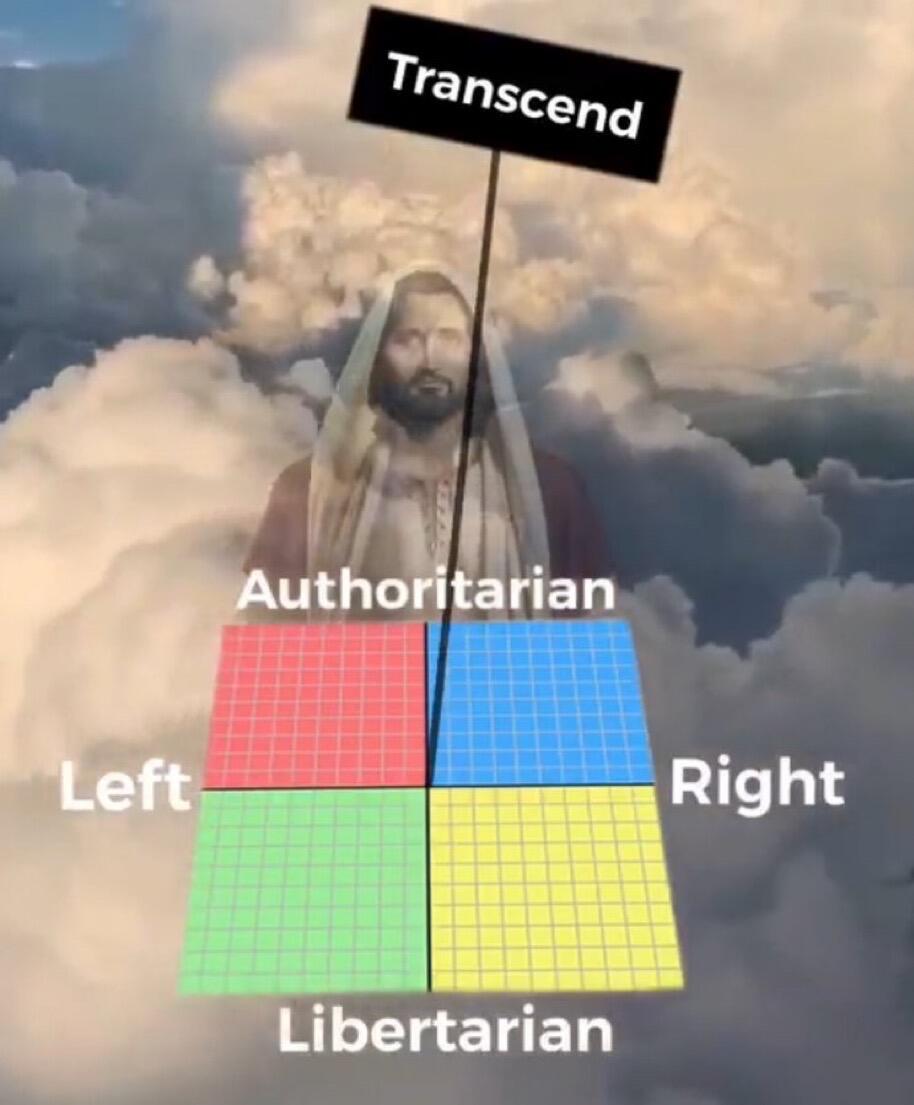

The only legitimate use of force is to establish and defend private property rights. This is libertarianism.
Discussion
Agree. However, even by that principle, would a central authority not arise to establish and defend property rights?

I think that it would and that as you dlsaid before. Libertarianism is the ideal, it is a vector, not a destination.
It is a question if scale of central authority. IMO we have way too much of it now, but how small can we go before it becomes fragile? Hard to say.......bet definitely smaller😂
It may, but anything beyond defending property rights is an unjustifiable use of force. So it handcuffs what is justifiable to only include that which doesn’t violate our natural rights.
Could this happen without centralization? I suspect it could.
Bitcoin is a great example of an emerging voluntary system that is not centralized yet delivers a just system which naturally helps to protect individual liberty.
What is possible? I am not 100% sure. But I do believe that it is not moral or right to go any further than that with the use of force. The Non-Aggression Principle is valuable and the more it is esteemed in a society, the more chance it has to become the law.
Through greater consensus and striving for what is right, we can hope to put it to the test.
It starts by building enough of a consensus. We are much further than we were a decade or two ago.
I have a feeling that if Rothbard were with us today, he would be beyond excited to see where we are at today with Bitcoin, the propagation of the freedom movement, the peaceful subversion of the state, and the propagation of the ideas of liberty.
Where can this go? Let’s find out!
How to define and defend property rights of the public (negative externalities of individual contracts) in a libertarian society?