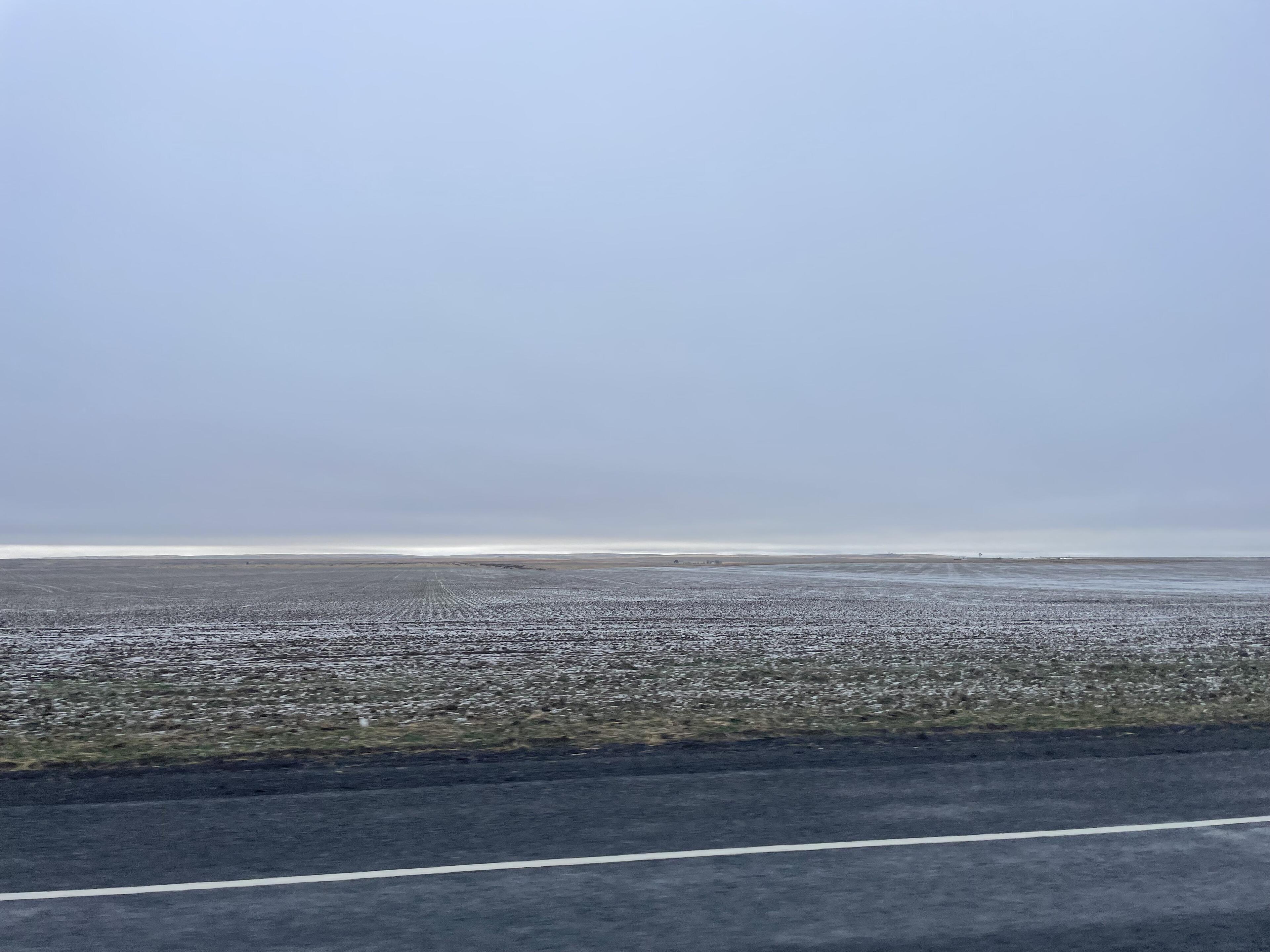
Drove through a huge part of the American west that has been completely ravaged by monoculture wheat and corn farming. This place would not exist if it weren’t for US federal agricultural subsidies.

There is a huge opportunity for ecosystem renewal in these places with proper livestock grazing. Within just a couple years there would be marked increases in soil fertility and local biodiversity. There would also be a massive reduction in watershed pollution as millions of metric tons of pesticides wouldn’t need to be used here anymore.

I really hope to see this trend emerge in my lifetime.
Reply to this note

Please Login to reply.

Discussion

I spent some time learning about soil health summer of last year, and one thing that came up repeatedly is that more and more of these monocrop farms are experiencing ecological collapse. It's getting to a point where the fertilizer simply doesn't work anymore.

The soil can still be revitalized, but the farmers either can't afford to shift from the subsidized crops, or are otherwise afraid to make the necessary changes to adapt. Ending the subsidies will be a painful ripping off of the band-aid, but it's sorely needed.

Wheat and corn = slave fodder.

Keep spreading the word. There is nothing complicated about growing. Nature does its thing, striving for balance. We just interfere with ecosystemd that we could never build ourselves. We impose insane demands and introduce ridiculous incentives.

Sadly mega farmers are technicians working on behalf of corporate bosses. The business models are slave models. I'm not talking based on newspaper reports. I am surrounded by farmers getting sucked in and spat out. Some can afford principles and call out the middlemen, but most are in debt so they just mutter into their beers and fold to whatever the Man says,

Consumers need to step up to help out. Demand quality so the farmers can cut back on quantity. ( Nutrition is all about nutrients not bulk). That's a tall order though when the disconnect with the land has never been greater.