
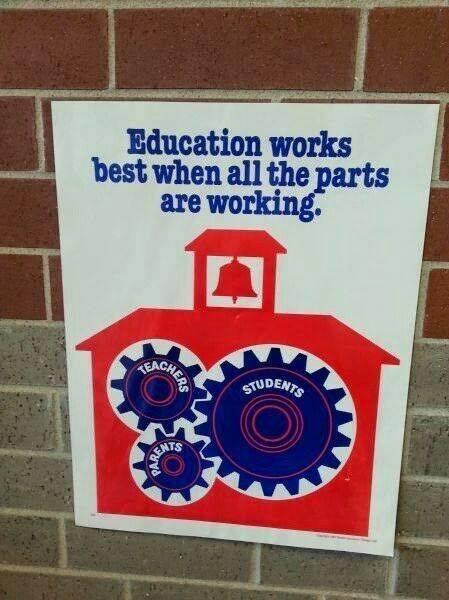

I don't want my kids to just be a cog in the machine. I want them to be so much more than that. That is why I homeschool.
Discussion

I’m looking into this.. where did you start??
Initially I looked at curriculums at this site https://cathyduffyreviews.com/ I have heard that maybe it hasn't been kept 100% up-to-date. I haven't used it for a long time.
I have 2 sons. One is near genius. He has been reading at the college level since 2nd grade and we studied relativistic physics two summers surrounding 9th grade, just for fun. My youngest has Down Syndrome. He is 17, but is about the 3rd grade level in most things. Both were very different, but the best thing about homeschooling is being able to customize school to be optimal for each kid's learning style, interests, strengths, and weaknesses. If you have two such different kids, it can be a bit tricky since what worked for one didn't work for the other and vice versa. There are a lot of curriculums that are designed to work for multiple grades. The science and history curriculums I used have one reading for all and 2-3 levels of activities and/or tests to match kids at different levels so you can use the same activities with kids of different ages.
I tend to like using different curriculums for each subject, but there are all inclusive curriculums that help you with everything. I like having more flexibility. As time has gone on, I've gotten farther and farther from formal curriculums, but they can be a good place to start when you don't know what you are doing. The plan should be to build a love of learning and a closeness of relationship rather than to make things look like government school done at home. If your kid shows interest in a subject, stop what you are doing and research it together. Follow those interests because they will be some of the most effective "educating" you will do and might lead to a hobby or career. Any time you can relate something you are teaching to an interest, they will learn more and that learning will stick.
Until high school, don't worry too much about grades (unless your state requires it), but teach to mastery. If they pick up something fast, move on. If they are having trouble, spend more time, find resources online, etc. until they fully understand. This is true even if they are behind in a subject. You want a strong foundation for future learning.
One of the funniest things is when a homeschooler is asked "What grade are you in?" "Well officially I'm in 8th grade, but I'm doing 10th grade math, 9th grade history and 7th grade vocabulary."
Demonstrate a love of reading. When someone can read well, they can teach themselves whatever they need to learn whenever they need to learn it. Don't worry about missing something important. With the internet, any fact needed can be found quickly. The important things are to learn to read, write, do basic arithmetic, and to do research for themselves.
I homeschooled for my kids, but I benefitted as much as my kids. I got to relearn things I forgot. I got to unlearn things I was taught that were wrong. I built a strong relationship with my kids and we don't have the normal defiant teenagers. Kids know that a parent, who spends the time to teach them, truly loves them.
When it comes to resources, they can be really expensive to free. They can be all inclusive, or just related to a specific skill you want to teach. They can be secular or religious. There are so many options, you will definitely find something that will work for you. If something doesn't work well, then move on and try something different. Some of the resources we have gotten have been truly amazing. Others haven't worked well and we changed to something different, usually the next year, but twice shortly into the year.
If you have any specific questions, feel free to ask away.